Did you know that the scent of lemon is scientifically proven to lift your mood? Combine that with the tropical comfort of coconut, and you don’t just have a cake—you have a slice of sunshine! This isn’t just another dry sponge; we are talking about a dense, moist crumb packed with shredded coconut and engaged with fresh lemon zest. Whether you are baking for a summer potluck or a cozy winter tea time, this recipe brings a burst of flavor that feels like a getaway. Let’s dive into how you can bring this tropical dessert to life in your own kitchen.
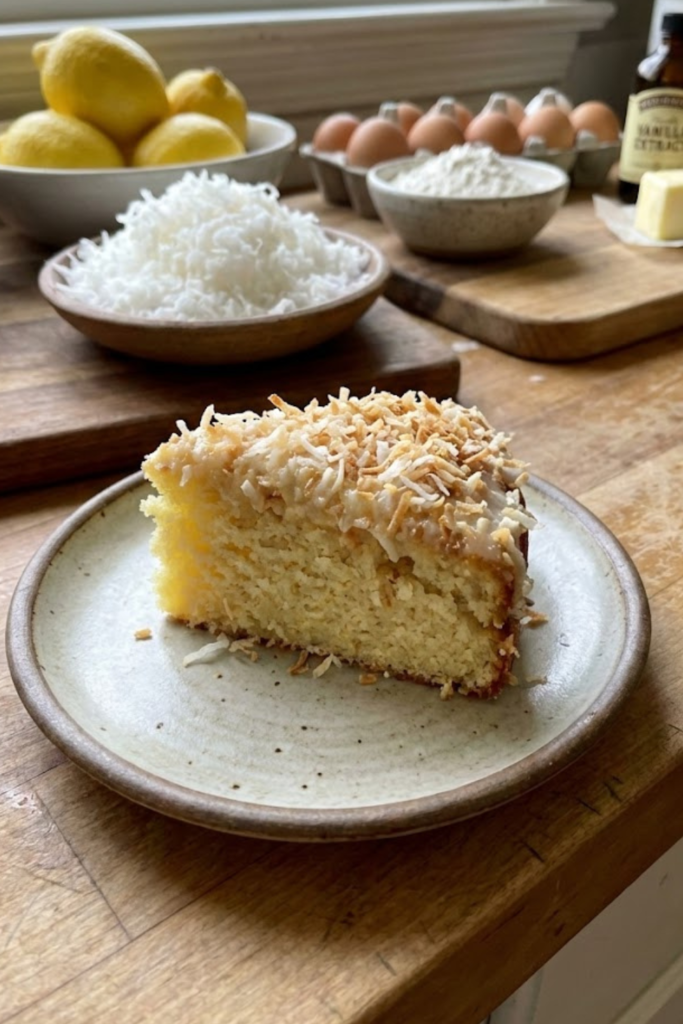
The Science Behind the Sweet and Sour
Honest truth? I used to think putting lemon and coconut together was a bit weird. I mean, one is super sour and the other is creamy and tropical. But then I tried baking a lemon coconut cake with shredded coconut for a school bake sale about ten years ago, and it clicked.
It’s actually all about balance.
See, coconut is rich. It’s got a lot of natural fats that coat your tongue. If you just have a plain coconut cake, it can feel a little heavy or greasy after a few bites. That’s where the lemon comes in to save the day. The acidity in the lemon juice and the oils in the zest cut right through that richness. It cleans your palate. It makes you want to take another bite immediately. It’s like how pickles work on a burger, but way tastier.
It’s All About That Texture
We need to talk about texture because flavor isn’t the only thing that matters here. A lot of sponge cakes are just… soft. Boringly soft.
When you add shredded coconut to the batter, you are changing the game. You get this soft, fluffy crumb from the flour and butter, but then every few seconds, you get a little chew from the coconut. It’s a surprise for your mouth.
I made the mistake once of using desiccated coconut (the super fine powdery stuff) instead of shredded. Big mistake. The cake turned into a dense brick. The shredded kind holds its shape better and creates little pockets of air and moisture. It keeps the lemon coconut cake interesting.
Versatility Is Key
Another reason this combo works is that it’s tough to mess up the format. I’ve baked this batter in everything from a fancy bundt pan to a simple 9×13 sheet pan.
- Bundt Cakes: The crust gets caramelized and chewy, which highlights the coconut.
- Layer Cakes: You can put lemon curd in the middle to amp up the tartness.
- Cupcakes: They bake faster and stay super moist.
It’s a forgiving batter. Because coconut holds so much moisture, it’s actually harder to overbake this than a regular vanilla sponge.
Don’t Skimp on the Zest
Here is a tip I learned the hard way. Do not rely on lemon extract. Just don’t do it.
Extracts taste fake, like cleaning supplies. For this lemon coconut combination to really shine, you need the zest. The essential oils in the yellow skin are where the actual flavor lives, not the juice. The juice gives the sour kick, but the zest gives the perfume.
When I rub the zest into the sugar before creaming the butter (a little trick called macerating), the whole kitchen smells like summer. It ensures the lemon flavor is deep inside every crumb, not just floating on top.
So, if you are worried this cake might be too “tropical” or too “sour,” don’t be. The two flavors cancel out the extreme parts of each other and leave you with something that just tastes like happiness. It’s a proven winner.
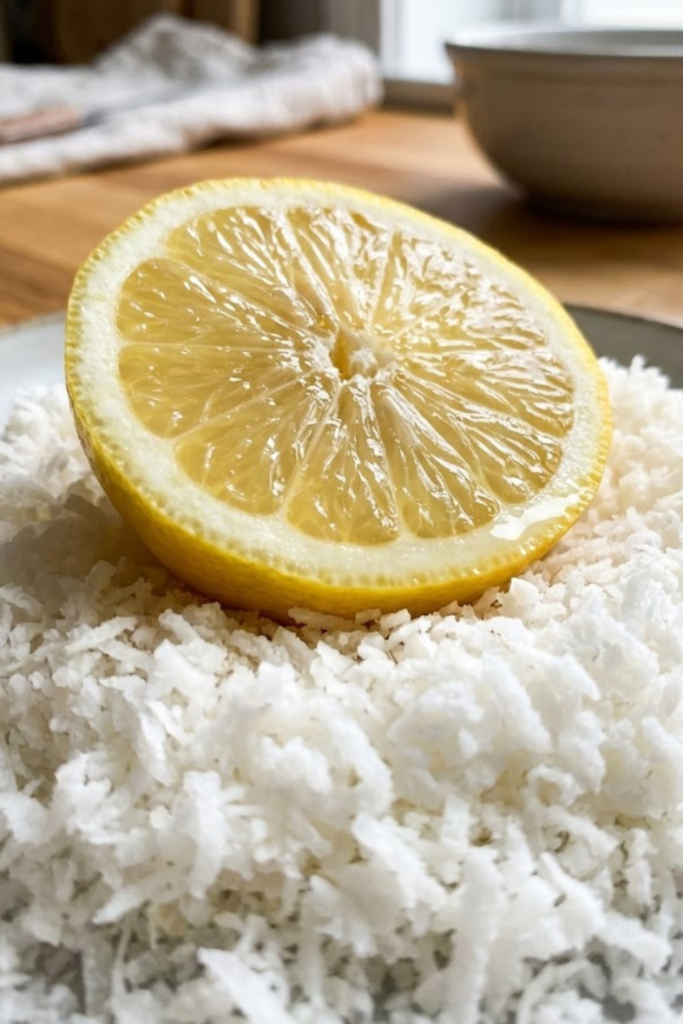
Essential Ingredients for the Perfect Crumb
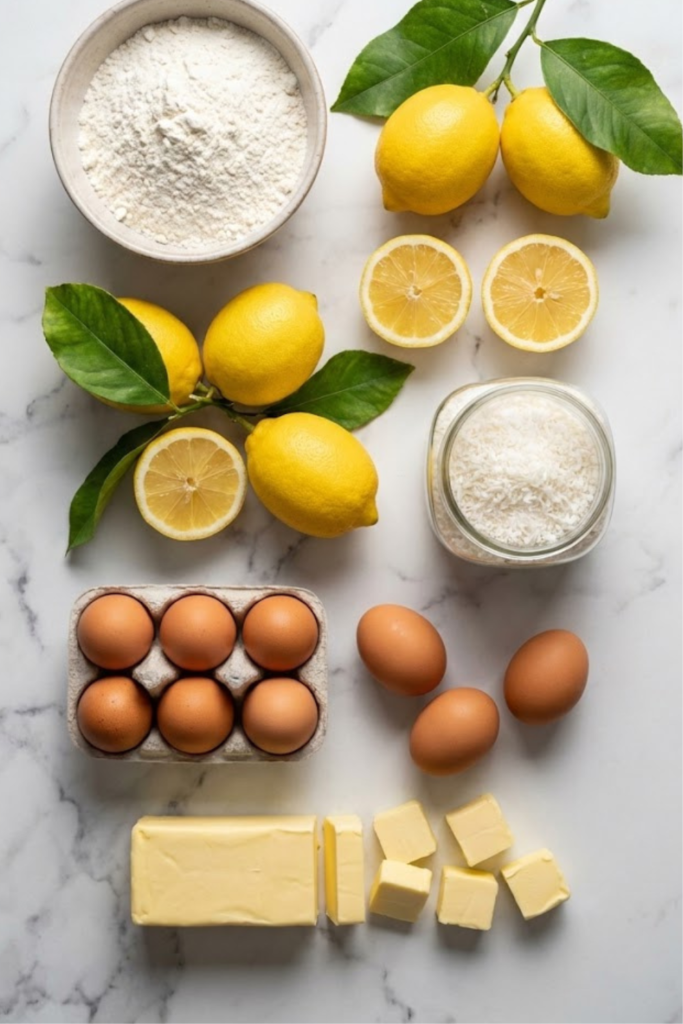
You can’t just throw whatever is in your pantry into a bowl and hope for the best. Baking is basically chemistry that tastes good. If you mess with the formula too much, you end up with a weird science experiment instead of a lemon coconut cake.
I’ve spent years tweaking this list, so save yourself the trouble and stick to these basics.
The Coconut: Sweetened vs. Unsweetened
This is where most people get tripped up. You will see bags of “desiccated” coconut or “unsweetened flakes” in the health food aisle. Put those back.
For this cake, you want the sweetened shredded coconut. It’s usually found in the baking aisle near the chocolate chips. Why? Because the sweetened kind is treated with sugar and moisture, which keeps it soft during baking. If you use the dry, unsweetened kind, it tends to suck the moisture right out of your batter, leaving you with a dry, crumbly mess. Plus, the sweetened shreds get nice and chewy, which is exactly the texture we want.
The Lemon: Fresh is Non-Negotiable
I mentioned this before, but it is worth repeating. Please do not use the lemon juice that comes in a little plastic lemon-shaped bottle. It has preservatives that give it a funny aftertaste.
You need real, fresh lemons. We are going to use both the juice and the zest. The zest (the yellow skin) is actually more important than the juice for flavor. It contains the lemon oil, which doesn’t bake out as easily as the juice does. Get a decent rasp grater—it makes zesting way easier and keeps you from grating your knuckles.
Fats: Butter vs. Oil
There is always a big debate in baking: butter or oil?
- Butter: Gives great flavor and a nice structure.
- Oil: Keeps cakes moist for days because it stays liquid at room temperature.
For this recipe, I lean towards butter. Since we are using shredded coconut, which is naturally high in oil, adding a cup of vegetable oil can make the cake feel greasy. Butter gives it that classic cake taste. Just make sure your butter is soft (room temperature) before you start. If it’s cold, it won’t mix right, and you’ll have lumps.
Dairy: The Secret Weapon
If a recipe calls for milk, I almost always swap it for buttermilk or sour cream.
Here is the science-y part: Buttermilk is acidic. When that acid hits the baking soda, it creates bubbles (carbon dioxide). Those bubbles are what make the cake rise and get fluffy. If you just use regular milk, you lose that extra lift. Plus, the thick texture of sour cream or buttermilk relaxes the gluten in the flour, making the cake tender instead of tough.
If you don’t have buttermilk, don’t panic. Just add a tablespoon of white vinegar or lemon juice to a cup of regular milk and let it sit for five minutes. It works just as well.
Step-by-Step Baking Instructions
Okay, let’s get our hands dirty. This isn’t rocket science, but if you rush through the steps, your cake won’t turn out right. I’ve ruined enough batches to know that the order you do things matters.
Prep Work: Toasting the Coconut
This is an optional step, but honestly? You should do it. It makes a huge difference. Grab a baking sheet and spread your shredded coconut out in a thin layer. Pop it in the oven while it’s preheating (around 350°F). Keep an eye on it! Coconut burns fast. You just want it to turn a light golden color. It usually takes about 5 minutes. Why bother? Toasting brings out a nutty flavor that makes the cake taste richer. If you skip this, the cake will still be good, just a little less “wow.”
The Creaming Method: Patience is Key
Most cake recipes start with “cream butter and sugar.” Do not just mix them until they look combined. You need to beat them until the mixture looks pale yellow and fluffy, almost like cloud. This takes about 3 to 5 minutes with an electric mixer. I know, it feels like forever. But this step punches air bubbles into the butter. Those bubbles expand in the oven and make your cake light. If you rush this, your cake will be dense and heavy. Scrape down the sides of the bowl halfway through. There is always a chunk of butter hiding at the bottom that didn’t get mixed.
Folding Techniques: Be Gentle
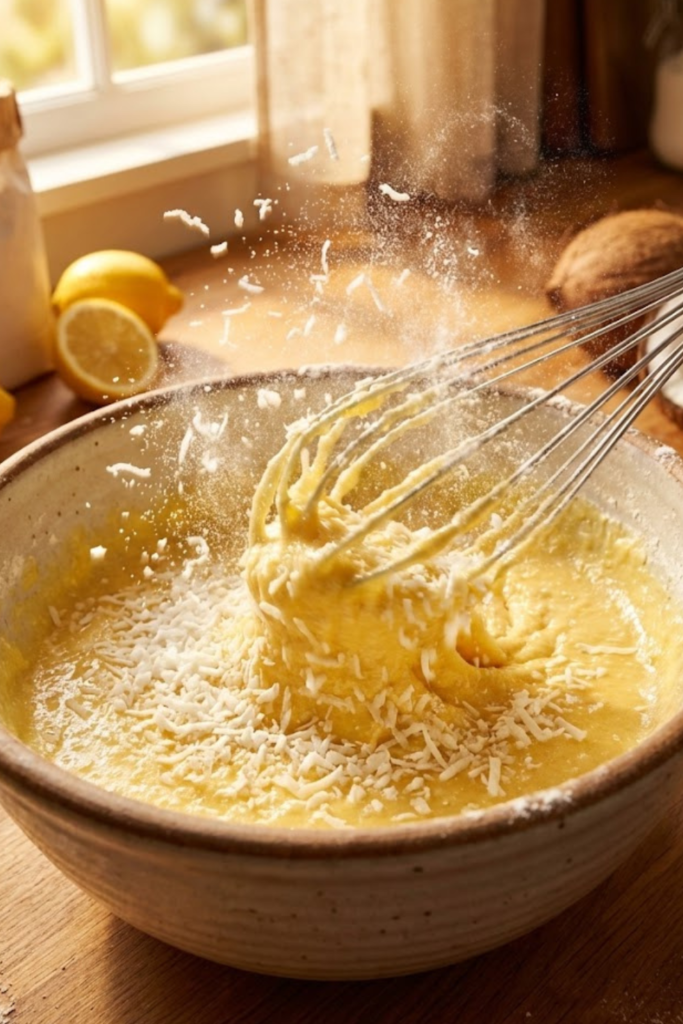
Once you add the flour and the buttermilk, put the mixer away. Switch to a rubber spatula. You want to “fold” the ingredients together. Cut down the middle of the bowl, scrape along the bottom, and flip the batter over the top. Do this just until the flour disappears. If you overmix now, the gluten in the flour gets tough. You want a tender cake, not bread. When you add the shredded coconut (and maybe some nuts if you like crunch), just stir them in gently at the very end.
Baking Cues: Trust Your Eyes, Not Just the Timer
Ovens are liars. My oven says 350°F, but it runs hot. Yours might run cool. So, use the time in the recipe as a guideline, not a rule. Start checking your cake about 5 minutes before the timer goes off. Here is what to look for:
- The Edges: They should be pulling away slightly from the sides of the pan.
- The Top: It should look dry and spring back when you poke it gently with your finger.
- The Toothpick Test: Stick a toothpick in the center. It should come out with a few moist crumbs attached. If it’s totally wet, it needs more time. If it’s totally clean, you might have overbaked it a tiny bit, so get it out fast!
Let the cake cool in the pan for about 10 minutes before trying to flip it out. If you try to move it while it’s piping hot, it might fall apart. Patience is the hardest ingredient to find, but it pays off.
The Lemon Cream Cheese Frosting
You could eat this cake plain, and it would be fine. But we aren’t here for “fine.” We are here for “can I have a second slice?” That is where the frosting comes in.
I’ve tried a lot of different toppings—glazes, buttercream, whipped cream—but nothing beats cream cheese frosting for this recipe. The tanginess of the cheese matches the lemon perfectly. It cuts the sugar so you don’t feel like your teeth are going to hurt after one bite.
The Ingredients Matter
Here is the big secret: Do not use the cream cheese in a tub. You know, the kind you spread on bagels? It has too much water/air whipped into it. If you use that, your frosting will turn into a puddle. You need the solid blocks of full-fat cream cheese.
You also need:
- Unsalted Butter: Softened, just like for the cake batter.
- Powdered Sugar: Sift it if you have lumps. I usually don’t bother, but if yours is old and hard, sift it.
- Lemon Zest & Juice: We need about a tablespoon of juice and a teaspoon of zest.
Getting the Right Consistency
Making frosting is messy if you aren’t careful. I’ve covered my entire kitchen counter in white dust before because I turned the mixer on high too fast.
Start by beating the butter and cream cheese together until they are totally smooth. No lumps allowed. Then, turn your mixer to the lowest speed and add the powdered sugar about half a cup at a time. If you dump it all in at once, you will regret it.
Once the sugar is mixed in, add the lemon juice and zest. Turn the mixer up to medium-high and beat it for about 2 or 3 minutes. It should get pale and fluffy.
If it looks too runny to spread, add a little more sugar. If it’s too stiff, add a tiny splash of milk or more lemon juice. It should hold its shape on a spoon but still look creamy.
Topping It Off
Now for the fun part. Spread the frosting all over the cooled cake. It doesn’t have to look perfect. In fact, I think it looks better with some swirls and swoops.
Remember that toasted coconut we talked about earlier? Grab a handful and sprinkle it all over the top. It adds a nice crunch and, honestly, it hides any spots where your frosting job isn’t perfect. If you want to get fancy, you can add some candied lemon peel or thin slices of fresh lemon, but the toasted coconut is usually enough to make people say “wow.”
Put the cake in the fridge for about 20 minutes before you slice it. It helps the frosting set up so it doesn’t squish out when you cut it.

Troubleshooting Common Baking Mistakes
Even after baking for twenty years, I still mess up sometimes. It happens. You get distracted by the dog, or you misread a number, and suddenly your batter looks weird. Don’t throw it out! Most of the time, you can fix it.
Here are the big three problems I run into with this lemon coconut cake and how to save the day.
The Coconut Sank to the Bottom
This is super annoying. You cut into your beautiful cake, and all the shredded coconut is sitting in a dense layer at the bottom crust, leaving the top just plain sponge.
This happens because the coconut pieces are heavy. Gravity pulls them down while the batter is still liquid in the oven.
The Fix: Before you fold the coconut into the batter, toss it in a small bowl with one tablespoon of the flour mixture. Coat it really well. The flour gives the coconut a rough surface to grip onto the batter so it stays suspended where it belongs.
The Cake Tastes Dry
Maybe you left it in the oven five minutes too long. Or maybe you scooped the flour too heavy-handed (always spoon and level, don’t scoop!). Now you have a cake that feels a bit like a dry sponge.
The Fix: Make a quick lemon syrup.
- Mix 1/4 cup sugar and 1/4 cup lemon juice in a small pot.
- Heat it until the sugar dissolves.
- Poke holes all over the warm cake with a toothpick.
- Brush the syrup over the top.
The cake drinks up the liquid, and suddenly it’s moist again. Plus, it adds an extra punch of lemon flavor. Honestly, I do this sometimes even if the cake isn’t dry, just because it tastes good.
The Batter Looks Curdled (Chunky)
You are mixing your butter and eggs, and suddenly it looks like cottage cheese. It looks separated and gross.
This usually happens because of temperature shock. If your butter was soft but your eggs were cold from the fridge, the cold eggs seized up the fat in the butter.
The Fix: Don’t panic. It will usually bake out fine, but to help it come back together, add a tablespoon or two of your flour mixture right now and beat it on high for a few seconds. The flour helps emulsify (bind) the fat and liquid back together. Next time, just remember to set your eggs out on the counter an hour before you start.
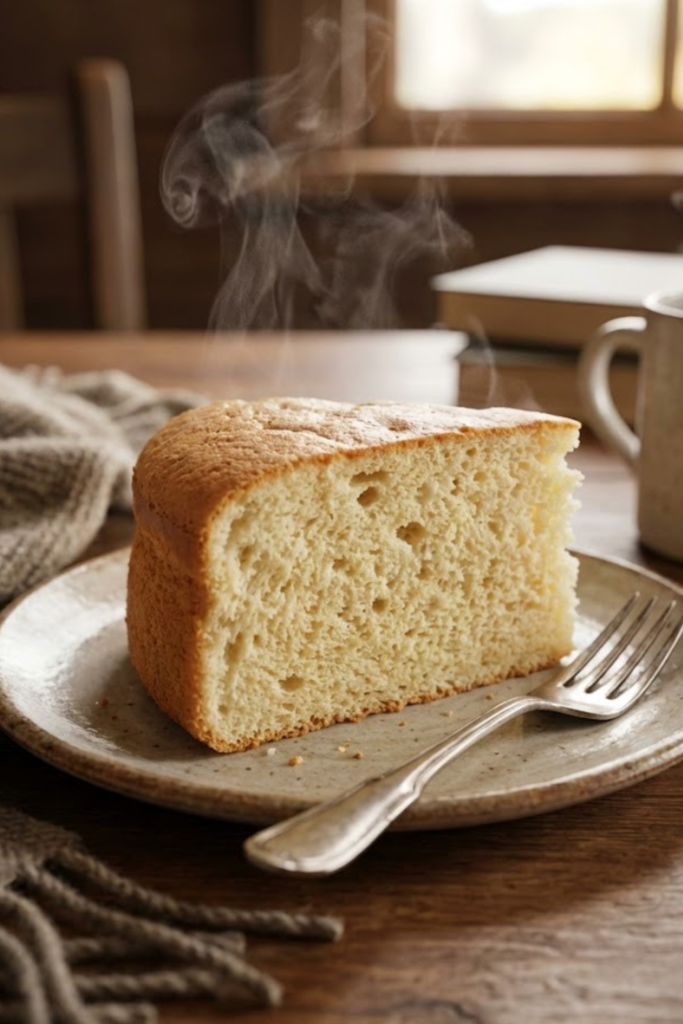
So, there you have it. That is pretty much everything I know about making this lemon coconut cake. It really is a bright spot on a cloudy day. I know it might seem like a lot of steps when you read it all at once, but once you bite into that moist crumb with the zesty frosting, you will get it. It is just good, simple baking.
This cake has become a regular in my kitchen. The mix of the sour lemon and the sweet coconut is just right—not too fancy, but it tastes like it came from a real bakery. Don’t worry if it isn’t perfect the first time. My first one was a bit lopsided, but it still tasted great. The most important thing is that you have fun making it.
If you give this recipe a try, let me know how it goes! I love seeing what you guys bake. And hey, if you liked this recipe or plan on baking it this weekend, do me a huge favor and pin it to your favorite dessert board on Pinterest. It helps other people find it and, honestly, it just makes my day to see my recipes out there.
Thanks for hanging out with me today. Now, go preheat that oven!