Listen, I’ve burned my fair share of garlic in 2026 already! It happens to the best of us, but there is nothing worse than wasting good seafood. Did you know that nearly 70% of home cooks overcook their scallops on the first try? It’s a tragedy! I’m here to make sure your Lemon Garlic Shrimp Scallops over Linguine turns out like a five-star meal every single time.
You want that perfect, golden-brown crust on the scallops and shrimp that snap when you bite them. It’s all about the heat and the timing. We are going to dive into the zesty, buttery goodness of this dish. Get your pans ready, because we are making magic happen in the kitchen today!
Searing Seafood Like a Pro
Cooking shrimp and scallops can feel a bit scary because they cook so fast. I have messed this up more times than I can count! One time, I had people over for dinner and the scallops turned out like little pieces of rubber. It was pretty embarrassing. But once you get the hang of the sear, your Lemon Garlic Shrimp Scallops over Linguine will taste just like it came from a fancy kitchen. The goal is to get a crust that is crispy and brown while the inside stays soft and juicy. It takes a little practice, but if I can do it, you can too.
The Secret is Dry Seafood
The biggest mistake I see folks make is taking the seafood right out of the bag and putting it in the pan. If there is water on the outside of your shrimp or scallops, they will not brown. They will just steam in their own juices. I always get a big stack of paper towels and pat them down until they feel very dry. Sometimes I even let them sit on a fresh towel for a few minutes while the pan gets hot. You want that surface to be bone dry so the heat can do its job right away. If they are wet, you will never get that golden color we are looking for.
Get the Pan Screaming Hot
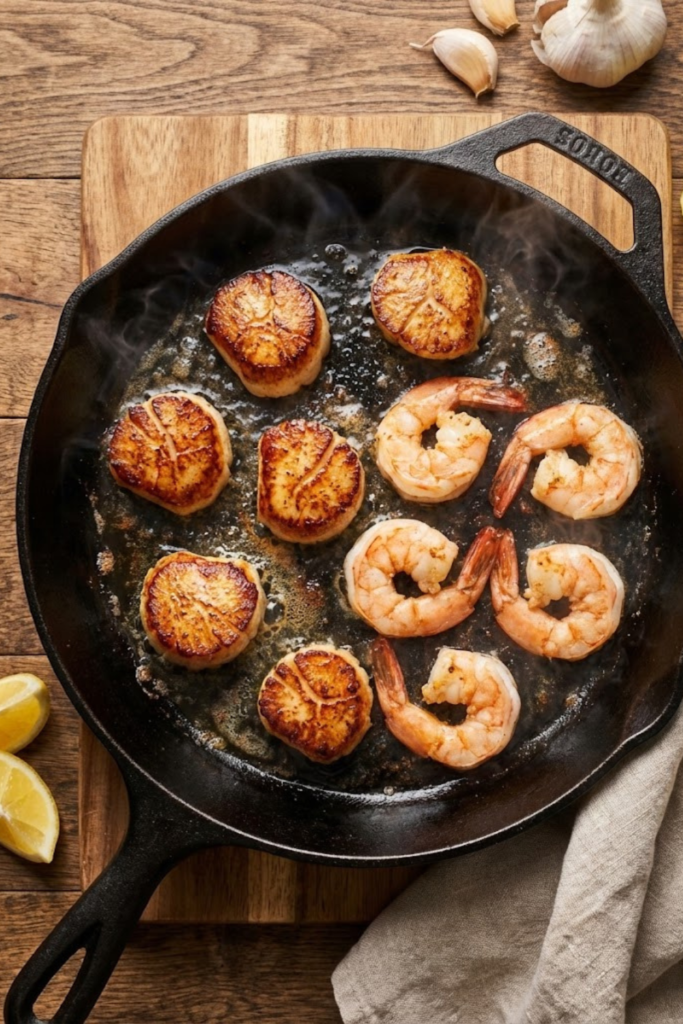
I like to use a heavy pan, like a cast iron one, because it holds heat really well. Put a little bit of oil in there and wait until you see a tiny bit of smoke. That is when you know it is ready. Don’t crowd the pan! If you put too many things in at once, the temperature drops and you lose that sizzle. I usually do the scallops first and then the shrimp in a second batch. When you drop them in, you should hear a loud hiss. That is the sound of flavor happening. If it’s quiet, your pan is too cold.
Leave It Alone
This is the hardest part for me because I always want to move things around. But you have to let them sit. If you try to flip a scallop too early, it will stick to the pan and rip. Just wait about two minutes. You will see the edges start to turn a beautiful golden color. That is your sign to flip them over. Shrimp are even easier. Once they turn pink and make that “C” shape, they are done. Don’t let them turn into an “O” or they will be tough to eat!
Crafting the Perfect Zesty Butter Sauce
Now that your seafood is looking good, we gotta talk about the sauce. This is really the best part of the whole Lemon Garlic Shrimp Scallops over Linguine dish. For a long time, I thought a sauce was just butter and some lemon squeezed on top, but it always tasted a bit flat. I finally figured out that the order you put things in the pan changes everything. You want a sauce that is velvety and clings to every single noodle. If your sauce is just thin and oily, you are missing out on a lot of flavor. It should feel rich but also light because of the citrus.
Don’t Burn the Garlic
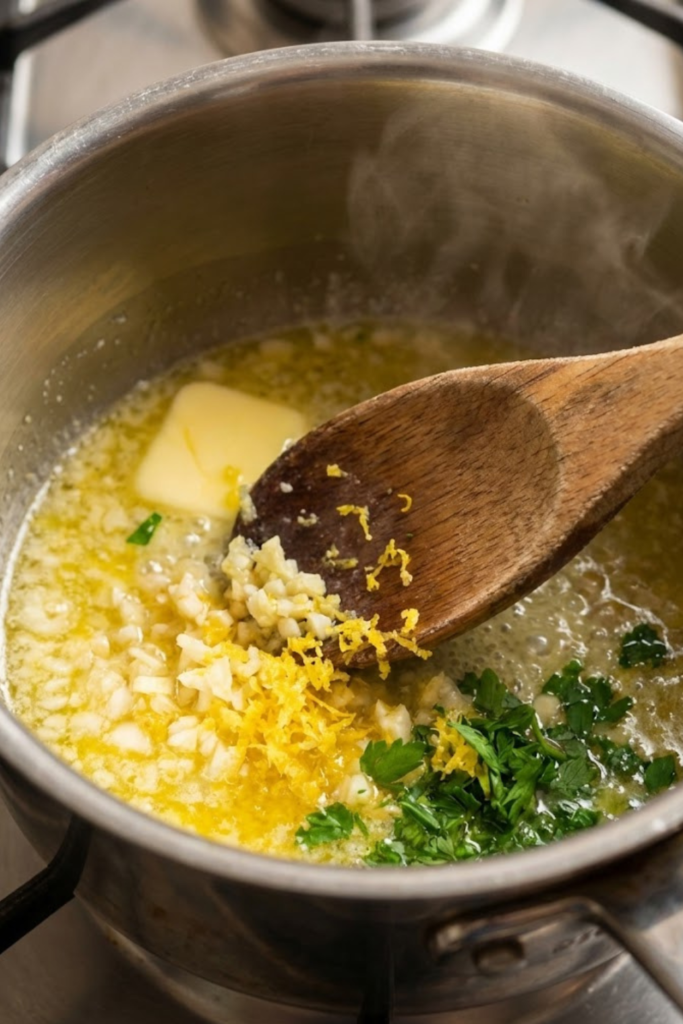
Garlic is tricky. It smells amazing when it first hits the pan, but it turns bitter fast. I used to put my garlic in at the very start with the oil. That was a big mistake. By the time I was done searing the shrimp, the garlic was black and tasted like burnt toast. Now, I wait. I take the seafood out of the pan first and set it on a plate. Then, I turn the heat down a bit and toss the garlic in. You only need about thirty or forty seconds. Once you can smell it, move on to the next step. If you let it go too long, you might as well start over because you just can’t fix burnt garlic.
Liquid Gold Pasta Water
Before you drain your linguine, grab a mug and scoop out some of that cloudy water. I call this liquid gold. Most people just pour it down the drain, but that is a waste! The starch in that water helps the butter and lemon juice mix together. It makes the sauce stick to the pasta instead of just sitting at the bottom of your bowl. I usually add about half a cup right into the pan after I add the lemon juice. It makes the whole thing look much more professional and keeps the pasta from sticking together.
Finish with Cold Butter and Lemon
This is a trick I learned a while back. Instead of melting all the butter at the start, save a few tablespoons in the fridge. Right at the end, after you turn the stove off, stir in those cold chunks. This makes the sauce thick and creamy. Stir in your lemon zest and juice at the same time. The zest gives it that bright smell that really wakes up the seafood. If you do this, your dinner guests will think you are a pro, but it really just takes a minute or two of extra work.
Perfecting Your Linguine and Plating
Pasta seems like the easy part of the meal, but it’s actually where a lot of folks trip up. I’ve seen so many people spend a ton of money on fresh scallops only to serve them over mushy, flavorless noodles. It’s a real shame! If you want your Lemon Garlic Shrimp Scallops over Linguine to be a hit, you have to treat the linguine with some respect. I used to just toss the box in and walk away to check my emails, but that’s how you end up with a mess. You’ve got to stay focused and keep an eye on that timer. I’ve learned that the pasta can make or break the whole experience, so don’t treat it like an afterthought.
Salt Your Water Like the Sea
One thing I tell my students all the time is that you have to salt your pasta water. I mean really salt it! If the water doesn’t taste like the ocean, your noodles are going to be boring. I used to be stingy with the salt because I thought it was bad for me, but most of it stays in the water anyway. The noodles soak up just enough to make them taste good. When you skip this, no amount of garlic butter can save the dish later. It’s the foundation of the whole plate. I usually add about a tablespoon of salt once the water is at a rolling boil. If you wait until the end to season the pasta, it just won’t taste right.
Aim for Al Dente
You want your linguine to have a little bit of a bite to it. In the cooking world, we call this “al dente.” If you cook it until it’s soft and floppy, it won’t hold onto the sauce very well. It just falls apart. I usually start tasting a noodle about two minutes before the box says it should be done. Since we are going to toss the pasta back into the pan with the hot lemon garlic sauce, it’s going to cook a little bit more in there. If you start with overcooked noodles, you’ll end up with mush by the time you sit down to eat. I like to keep a timer going so I don’t lose track of time while I’m busy with the seafood.
Bringing It All Together
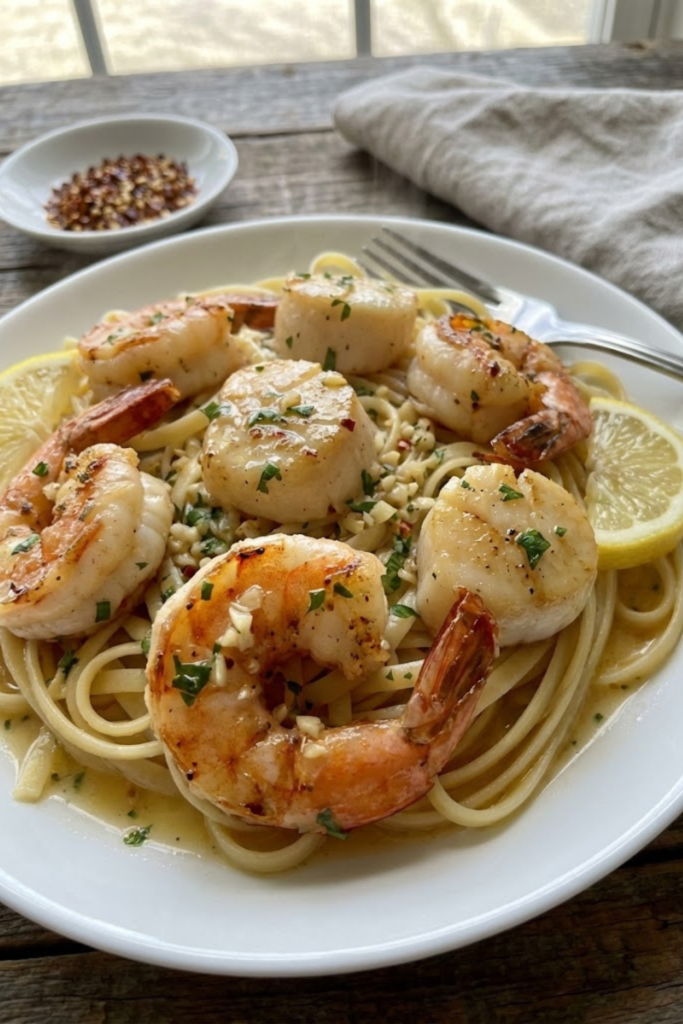
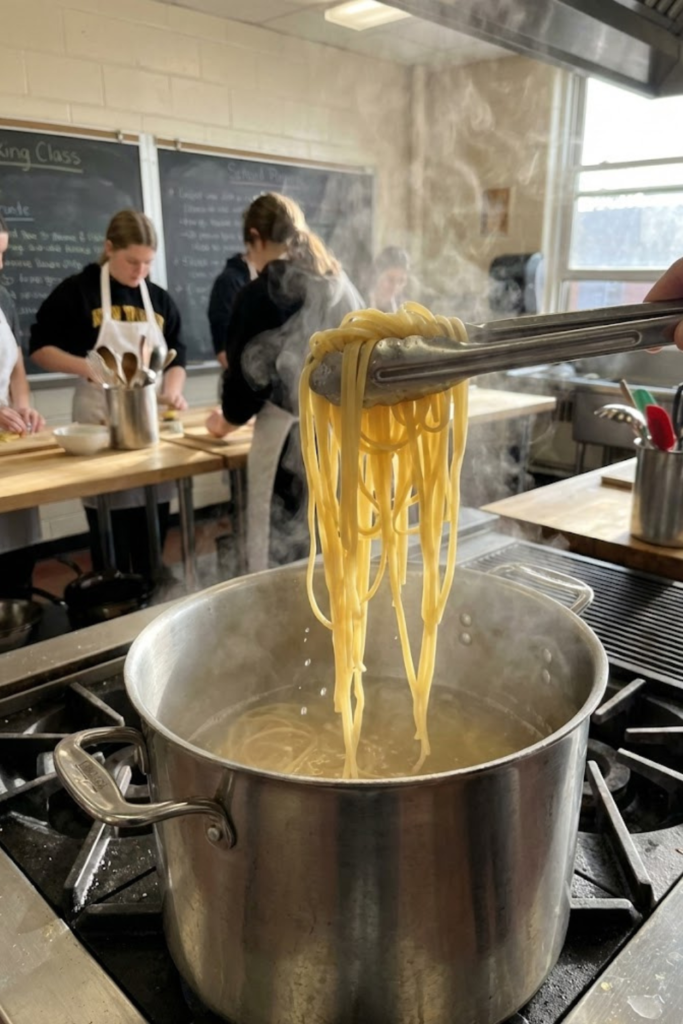
The final step is the most exciting part! Once the pasta is ready, don’t rinse it. Rinsing washes away the starch that helps the sauce stick. Toss the linguine right into the pan with your garlic, butter, and lemon juice. I like to use a big pair of tongs to swirl everything around so every strand gets coated. Add back your seared shrimp and scallops at the very end so they stay warm but don’t get tough. If the pan looks a little dry, splash in some of that pasta water we talked about earlier. I usually finish it with a big handful of fresh parsley and maybe some extra red pepper flakes if I’m feeling spicy. It looks beautiful and tastes even better!
Bringing It All Together
Well, we finally reached the end of our cooking lesson! I hope you are feeling way more excited about getting into the kitchen now. I know I was pretty shaky the first time I tried to handle expensive seafood. Making Lemon Garlic Shrimp Scallops over Linguine isn’t just about reading a list of steps on a page. It is about learning to trust your senses while you cook. Once you see that perfect golden crust on your scallops, you are going to feel like a pro. This is one of those meals that looks like it took hours, but we both know it was pretty quick. It’s the perfect trick for a busy weeknight or a special dinner!
Why This Dish is a Winner
I think the reason I love this recipe so much is because it hits all the right spots. You get the butter for richness, the lemon for a bit of a zing, and the garlic for that savory smell that fills up the whole house. When I make this for my friends, they always think I spent all afternoon in the kitchen. I usually just smile and let them think that! The truth is, once you get the hang of the timing, you can put this whole thing together in about twenty minutes. It’s all about having your ingredients ready to go before you even turn on the stove. I call that “prep work,” and it saves me from a lot of stress.
A Few Final Pointers
One last thing I should mention is about the ingredients. If you can, use fresh lemons instead of the juice that comes in a plastic bottle. The taste is much brighter and it really makes the seafood pop. Also, don’t be afraid to add extra red pepper flakes if you like things spicy. My husband likes it hot, so I usually put a big pinch in his bowl at the end. If you have leftovers, try to eat them the next day for lunch. Just heat them up slowly in a pan with a tiny bit of water so the shrimp don’t turn into rubber balls.
Save This for Later
I really hope your dinner turns out amazing. If you enjoyed making this Lemon Garlic Shrimp Scallops over Linguine, please save this post and share it on Pinterest! It helps other people find these tips and helps me keep sharing my kitchen stories with you all. There is nothing better than a home-cooked meal that tastes like a restaurant, and I’m glad I could help you make it happen. Happy cooking, and I’ll see you in the next lesson!