Did you know that nearly 60% of home cooks cite “dry meat” as their number one fear when roasting a whole chicken? I used to be exactly the same! I remember staring at the oven, fingers crossed, hoping I hadn’t just turned a beautiful bird into flavorless cardboard. But let me tell you, once you nail this Lemon Herb Roasted Chicken with Spring Vegetables, you’ll never look back. It’s fresh. It’s vibrant. And honestly? It’s easier than you think.
We are going to dive deep into making a dinner that screams “Spring has sprung!” You’ll learn how to lock in moisture, get that skin delightfully crispy, and time your vegetables so they aren’t mushy. Get your apron on, because we are about to make your kitchen smell absolutely divine!
Selecting the Freshest Ingredients for Your Spring Roast
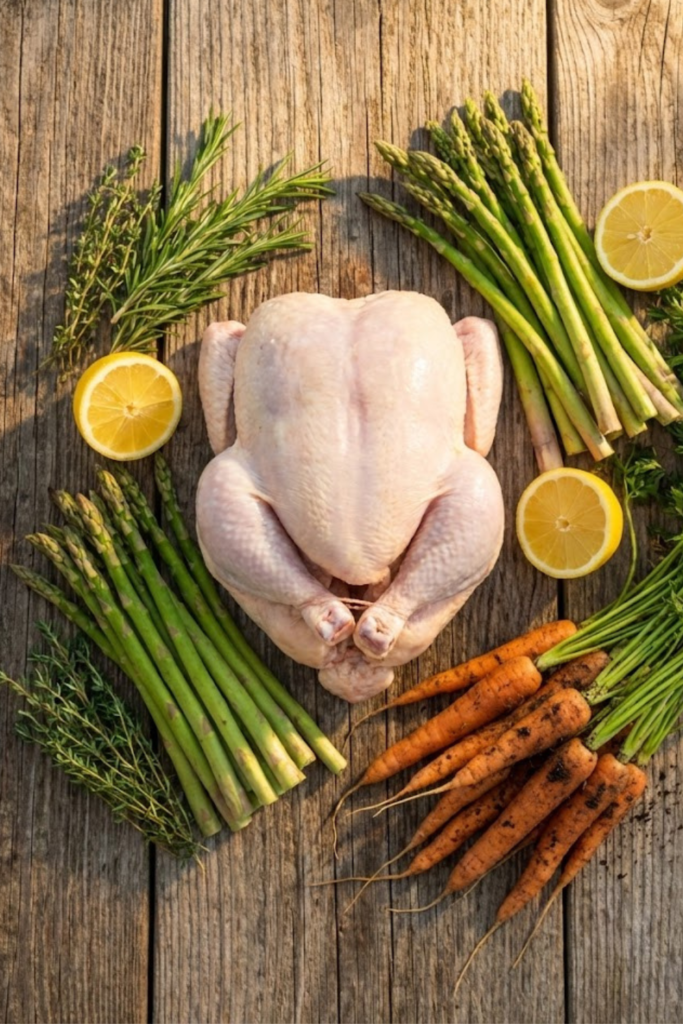
You know, the best meals actually start at the grocery store, not the stove. I learned this the hard way after trying to roast some sad-looking vegetables I found at the bottom of my fridge. It didn’t end well! For a dish this simple, the quality of your ingredients is what makes it taste amazing. You don’t need to buy the most expensive stuff, but you do need to know what to look for.
Choosing the Right Chicken
I used to just grab the biggest, cheapest bird I could find. But here is a tip that changed my Sunday dinners: look for “air-chilled” chicken. Most chickens are cooled in big vats of water, so they absorb a lot of liquid. When you roast them, that water steams out and makes the skin soggy. Air-chilled chickens don’t have that extra water, so the skin gets much crispier. If you can’t find that, just try to get an organic one. They usually have a better “chicken-y” flavor.
Picking Your Spring Vegetables
Since we are doing a spring roast, we want veggies that are tender and sweet.
- Asparagus: Look for stalks that are firm and stand up straight. If they look limp or the tips are mushy, leave them there. I like the medium-sized ones; the really thin ones cook too fast and turn into string.
- Baby Carrots: I’m not talking about the shaved “baby” carrots in the bag. I mean actual young carrots, maybe with the green tops still on. They are sweeter. If you can only find the big ones, just cut them into sticks.
- New Potatoes: These are the little red or yellow potatoes. You want them firm with no green spots. The best part? The skin is so thin you don’t have to peel them! Just give them a wash.
Fresh vs. Dried Herbs
I know it is easier to just shake a jar of dried rosemary, and usually, I am all for shortcuts. But for this lemon herb chicken, please grab the fresh stuff. Fresh rosemary and thyme have oils in them that smell incredible when they hit the heat. Dried herbs can sometimes taste a bit like dust if they have been sitting in your cupboard too long. Grab a small bundle of fresh parsley too; it makes the finished dish look like a magazine photo.
The Power of Citrus
We are using lemons for two things: the juice and the zest (the yellow skin). When you pick lemons, hold them in your hand. You want the ones that feel heavy for their size. Heavy means juicy! If a lemon feels light or has thick, bumpy skin, it is probably mostly rind and won’t give you much juice. Also, give it a little squeeze—it should have a tiny bit of give, not be hard as a rock.
Mastering the Lemon Herb Marinade and Prep
Okay, this part gets a little messy, but it is totally worth it. If you just rub herbs on the outside of the chicken, they tend to burn before the meat is cooked. I used to do that and wonder why my bird looked black but was raw inside! The trick is getting all that flavor where it counts—under the skin.
The Magic Butter Mixture
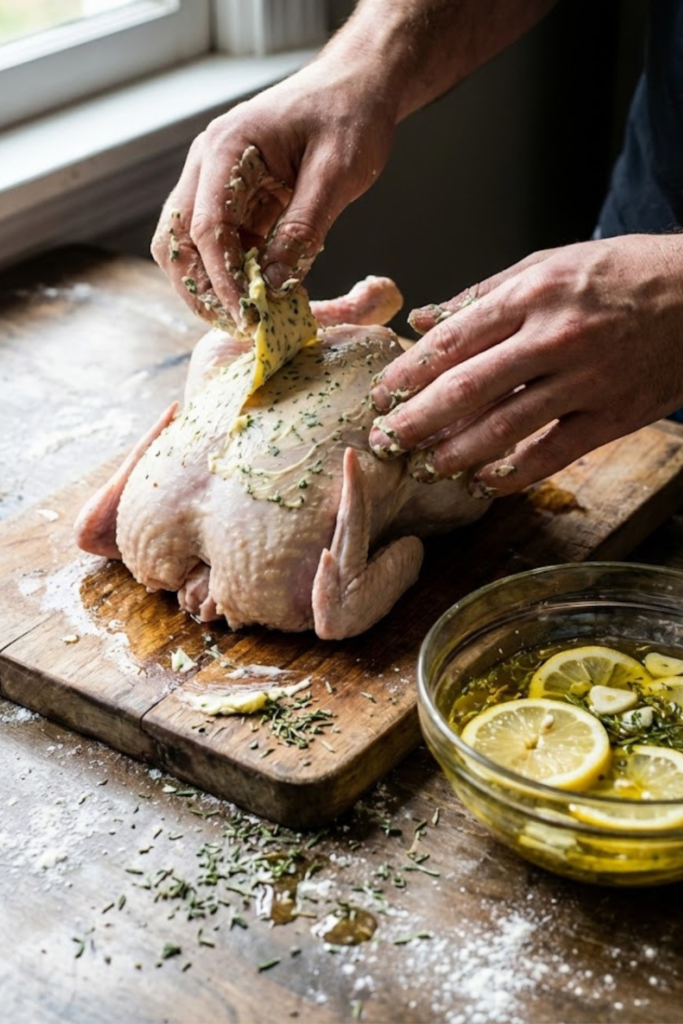
First, take a stick of butter and let it get soft on the counter. Don’t melt it in the microwave; you want it squishy, not liquid. Mash it up in a bowl with your chopped rosemary, thyme, minced garlic, plenty of salt, and the zest from your lemons. This paste is going to keep the meat juicy while it cooks.
Going Under the Skin
This part feels a little weird if you haven’t done it before. Place your chicken on a cutting board or in your roasting pan. Start at the neck end (the opening near the breast) and gently slide your fingers between the skin and the meat. You have to be gentle so you don’t rip the skin. Once you’ve made a little pocket, shove that herb butter right in there. Massage it around so it covers the breast meat. Believe me, this makes a huge difference.
Why You Should Tie It Up (Trussing)
I used to skip this step because I couldn’t find string, but my chickens always cooked unevenly. The legs would dry out while the breast was still cooking. You don’t need a fancy knot. Just take a piece of kitchen twine, cross the legs, and tie them together tight. It keeps the bird in a nice compact shape so it cooks evenly. Tuck the wing tips under the body so they don’t burn, too.
The 30-Minute Rule
Here is a big mistake people make: taking the chicken out of the fridge and putting it straight into a hot oven. Don’t do that! Cold meat cooks unevenly. Let your seasoned, tied-up chicken sit on the counter for about 30 minutes before you roast it. It helps the bird cook faster and stay juicier. While it sits, you can chop your veggies.
Roasting Techniques for Crispy Skin and Juicy Meat
Okay, here is where the magic happens. A lot of people just set the oven and walk away, but there is a specific trick to getting that skin super crispy without drying out the meat. If you just throw it in, it might come out okay, but we want it to be amazing.
The “High-Low” Heat Trick
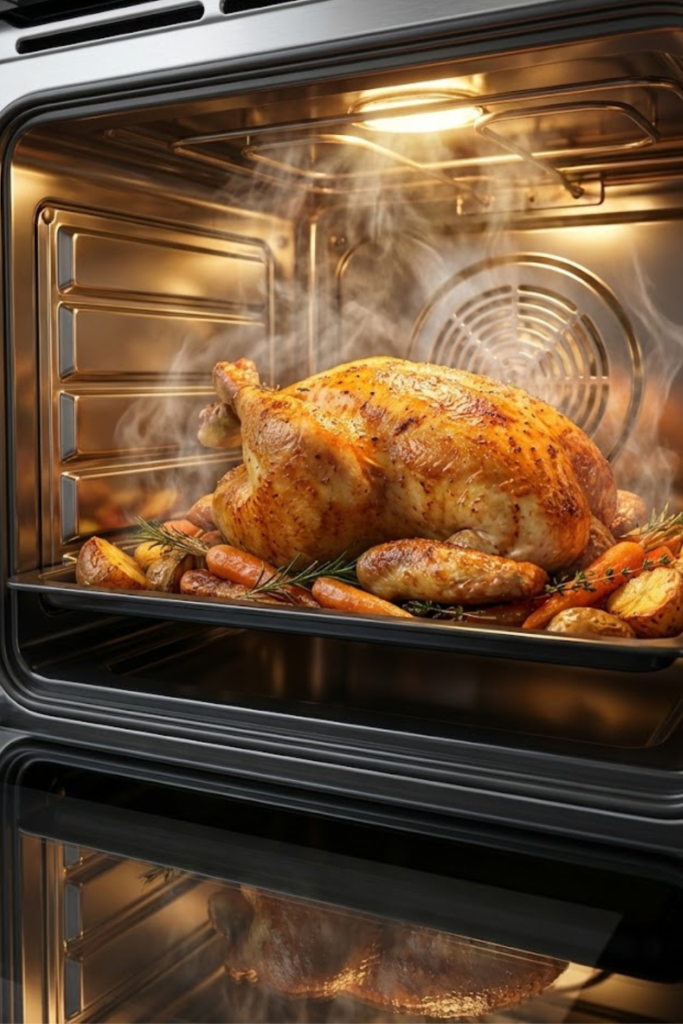
If you roast at a low temperature the whole time, the skin stays kinda rubbery. Nobody likes that. I like to start my oven really hot—like 425°F (220°C). Put the chicken in for about 15 or 20 minutes. You’ll see the skin start to sizzle and get brown pretty fast. Then, without opening the door, turn the heat down to 375°F (190°C) to finish cooking. This blasts the skin first to crisp it up, then cooks the inside gently so it stays moist.
Timing Your Vegetables
This is where I messed up a lot in the beginning. Spring veggies are really tender. If you put asparagus in the oven for an hour, it turns into mushy green strings. Yuck.
- Potatoes and Carrots: These are hard, so they need time. I usually toss them in the pan around the chicken after that first 20-minute high-heat blast.
- Asparagus: Wait! Don’t put these in yet. Throw the asparagus on the pan just for the last 10 or 15 minutes of cooking. They stay crunchy and bright green that way.
Stop Opening the Oven!
I know you want to look at it. And maybe you think you need to baste it with juices every ten minutes because you saw someone do it on TV. Don’t. Every time you open that door, the oven loses a ton of heat. It makes the cooking take longer and the temperature swings can make the meat tough. Since we put that herb butter under the skin, the bird is basically basting itself from the inside. Just let it be.
Please Use a Thermometer
Do not slice the chicken to check if it’s done. Seriously, don’t do it. All the juice runs out and the meat gets dry instantly. Get a cheap digital meat thermometer. Poke it into the thickest part of the thigh (try not to hit the bone). When it says 165°F (74°C), pull it out. It is the only way to be safe and make sure you aren’t eating dry leftovers for a week.
Serving and Storing Your Lemon Herb Chicken
You have just pulled this beautiful bird out of the oven, and it smells absolutely amazing. You probably want to grab a knife and dig in right now. I get it! But there are a few final steps that separate a dry dinner from a juicy one.
Resting is Mandatory
I can’t stress this enough: do not cut that chicken yet! If you slice into it the second it comes out of the oven, all those delicious juices are going to run out onto your cutting board. You want that juice inside the meat, not on the counter.
Take the chicken out of the pan and put it on a platter or a clean board. Cover it loosely with a piece of aluminum foil—don’t wrap it tight, just make a little tent. Let it sit there for at least 15 minutes. It gives the juices time to settle back into the meat. It makes a huge difference in how tender it is.
Plating Presentation
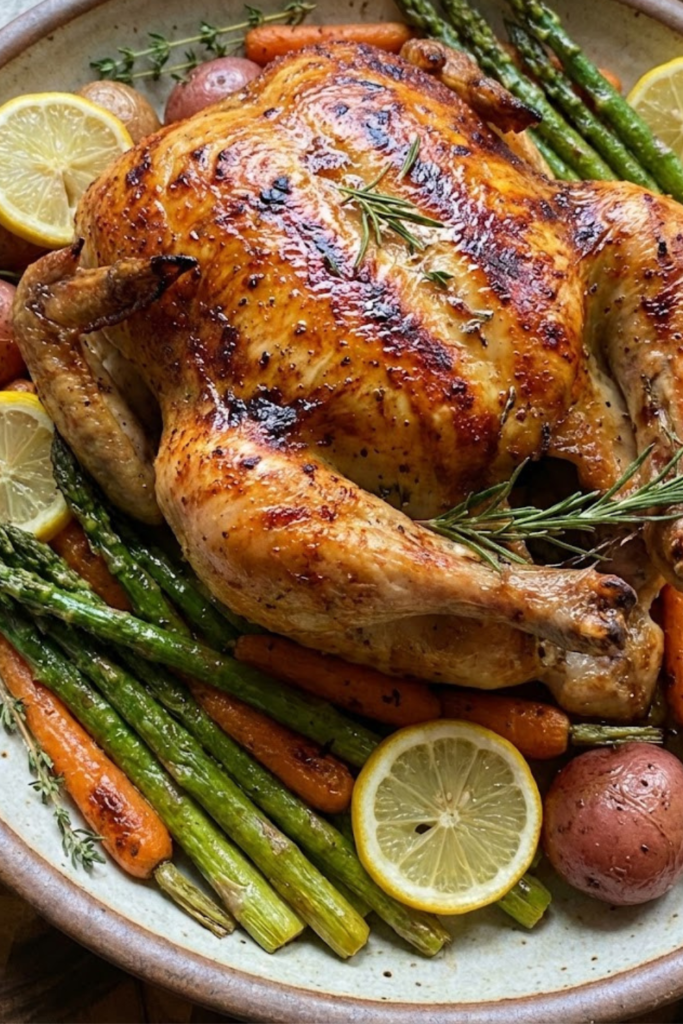
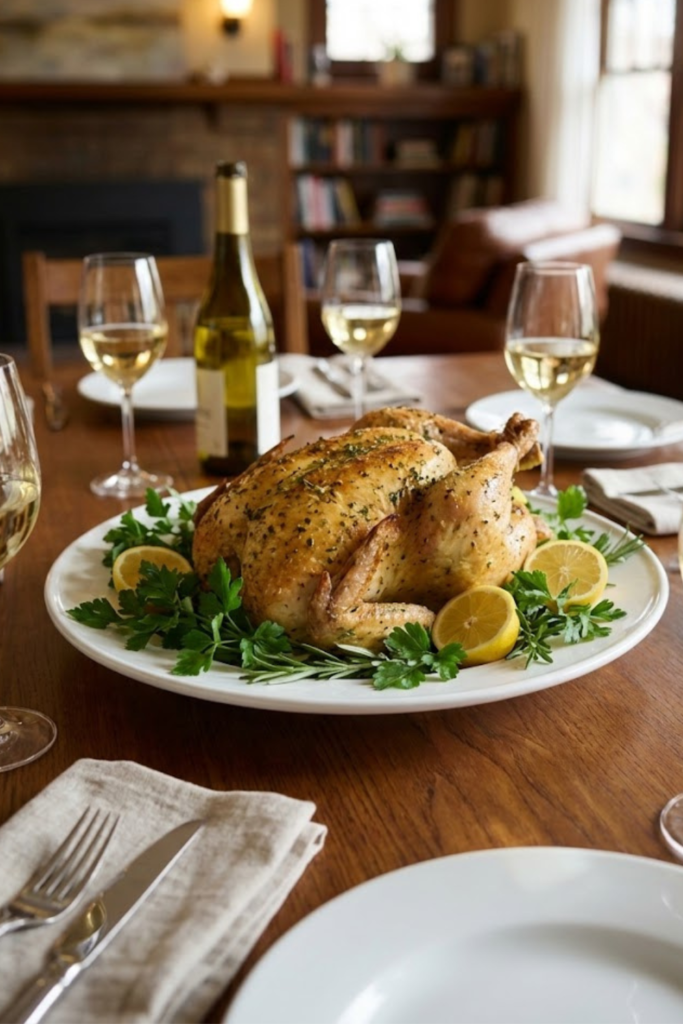
We eat with our eyes first, right? You don’t have to be a fancy chef to make this look good. I like to keep the chicken whole in the center of a big serving dish. Then, I spoon all those roasted carrots, potatoes, and asparagus around the edges. It looks colorful and impressive, like something from a magazine, but it took zero extra effort. Sprinkle a little fresh parsley over the whole thing for a pop of green before you bring it to the table.
Leftover Magic
Honestly, I sometimes like the leftovers better than the fresh meal. Cold roast chicken is perfect for lunch the next day. I usually pull the meat off the bone and make a quick chicken salad with some mayo and celery. Or, just toss the shredded meat into a green salad.
- Don’t toss the bones! If you have time, throw the carcass in a pot with water and some veggie scraps. Simmer it for a few hours, and you have homemade chicken stock. It is practically free and tastes way better than the boxed stuff.
Reheating Tips
Reheating chicken can be tricky because it dries out fast. Please try to avoid the microwave if you can; it makes the skin rubbery and the meat tough.
- The Oven Method: Put the chicken pieces in a baking dish and add a splash of water or broth. Cover it with foil and heat it at 350°F (175°C) until it is warm. The steam keeps it moist.
- The Skillet Method: If you stripped the meat off the bone, warm it up in a pan on the stove with a little butter or oil. It is quick and keeps the flavor fresh.
Making this Lemon Herb Roasted Chicken with Spring Vegetables really isn’t just about getting dinner on the table. It is about slowing down a little bit and enjoying the fresh stuff that starts popping up this time of year. I know roasting a whole bird can feel a bit scary at first—I used to worry I’d mess it up too! But once you smell that rosemary and lemon wafting through your kitchen, you are going to be so glad you tried it.
I really hope this guide helps you feel a bit more confident in the kitchen. It is one of those meals that looks fancy but is actually pretty simple once you get the hang of it. Give this recipe a shot this weekend—your family (and your stomach) will thank you!
If you found this helpful, please save it and share it on Pinterest so you can find it easy next time you need a great spring dinner idea!