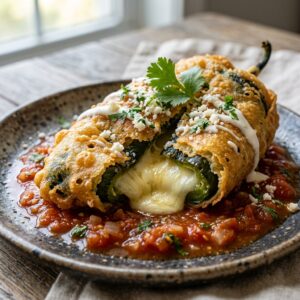
I’ll never forget the first time I bit into a real-deal street food wrap in a crowded market. My face was covered in tahini, and I didn’t even care! It’s estimated that over 12% of the global population is now leaning into plant-based diets, and honestly, with food this good, it’s easy to see why. Making a veggie falafel wrap at home can feel like a chore, but once you master the crunch, you’ll never go back to the store-bought cardboard versions. Trust me, I’ve made enough “chickpea hockey pucks” to know what works and what doesn’t!
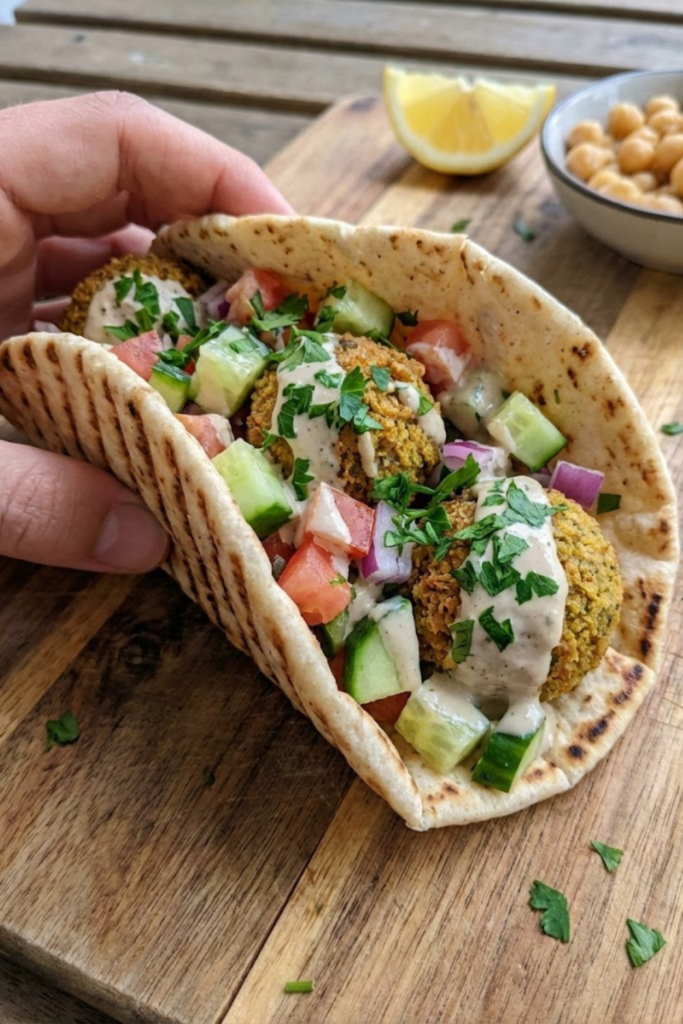
The Secret to the Perfect Crispy Falafel Base
You can’t have a great veggie falafel wrap if your falafel balls are sad and soggy. I’ve spent years trying to get that perfect crunch, and honestly, my first few tries were pretty bad. I remember making a batch that just melted into the hot oil like wet sand. It was a total mess and I almost gave up! But after a lot of trial and error in my own kitchen, I figured out what actually works. It isn’t magic, just a few simple steps that most people skip because they are in a hurry. If you want that golden-brown crust and a light, fluffy inside, you have to follow the rules.
The Dried Chickpea Rule
The biggest mistake I see—and I’ve done it too—is using canned chickpeas. Just don’t do it. Canned beans have way too much moisture. If you use them, your falafel will be mushy on the inside and won’t ever get that snap you want. Instead, buy a bag of dried chickpeas. You have to soak them in water for at least 12 hours. I usually just put them in a big bowl before I go to bed. By morning, they’re plump and ready. They have the right kind of starch to hold everything together without needing a ton of extra flour. This is what gives the base its structure.
Pulse, Don’t Puree
When you put your soaked beans into the food processor with your herbs and spices, you have to be careful. If you run the machine too long, you’ll end up with green hummus. We want texture! I tell people to pulse it just until it looks like coarse meal. You should still see tiny bits of the beans. This creates little air pockets that get super crispy when they hit the heat. Throw in plenty of fresh parsley and cilantro too. It makes the inside look like a bright green garden, which is exactly what you want for a vibrant veggie falafel wrap.
Why the Fridge is Your Friend
After you mix it all up, you might want to start frying right away. Resist that urge! Put the mix in the fridge for about 30 or 40 minutes. This helps the flavors meld and, even more importantly, it helps the starches set. If the mix is cold, the balls stay together much better. I used to skip this step because I was hungry, but then I’d spend the whole time fishing broken pieces out of the pan. Take the break, grab a drink, and let it chill. Your future self will thank you when those patties stay perfectly round.
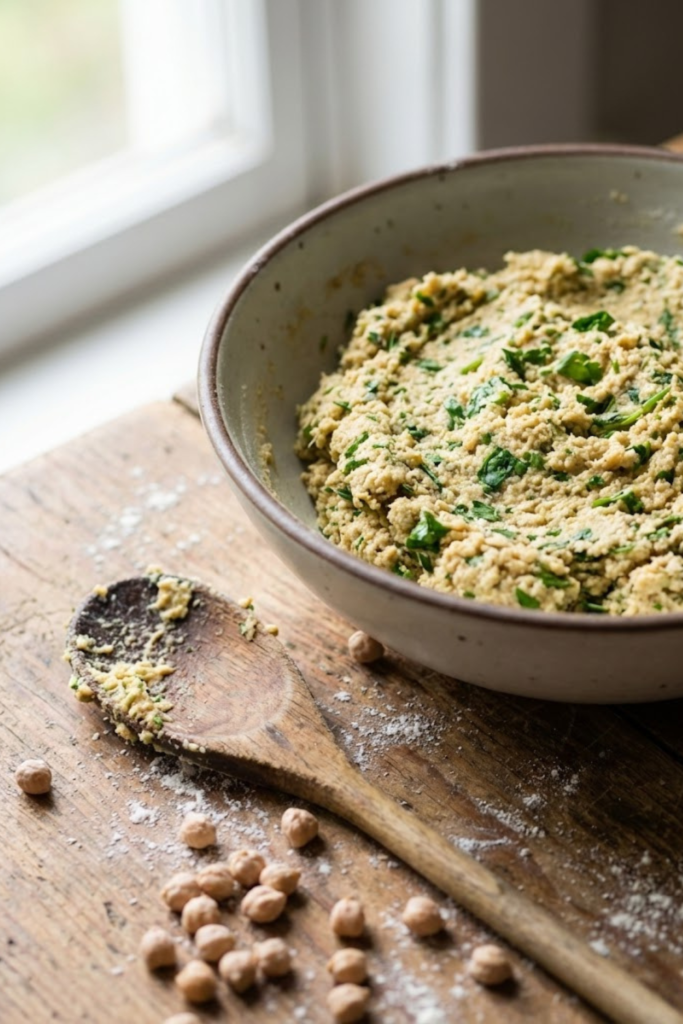
Choosing Your Wrap: Pita vs. Flatbread
Now that you have those crispy chickpea balls ready, we need to talk about the house they live in. Choosing the bread for your veggie falafel wrap is a huge decision. I used to think any bread would work, but I learned my lesson. I remember one lunch where I tried to use a thin, cheap wrap. The second I put the tahini on, the whole thing just fell apart in my hands. I had to eat my lunch with a fork off my lap! It was pretty embarrassing, especially since I was trying to show off my cooking skills to a friend.
The Classic Pita Pocket
Most people go for the pita bread. It’s the traditional way to do it. The best part is the pocket. It’s like a little pouch that holds all the goodies so they don’t slide out. But you have to be careful. If the pita is even a little bit stale, it will split down the side the moment you try to open it. I always look for the softest ones at the store. If you want to be extra careful, you can steam the pita for a few seconds to make it more flexible. Just don’t overcook it or it gets gummy. It’s a great choice if you’re eating on the go because it’s less messy than other options.
The Big Flatbread Roll
If you want a giant wrap that feels like a meal from a food truck, go with a flatbread or a large tortilla. This is my favorite way because I like a lot of toppings. You can lay everything out in a line and then roll it up tight. It keeps all the flavors squished together. I usually go for a whole wheat version because it has more fiber, and it actually stays together better than the white flour ones. Just make sure you don’t overfill it, or you won’t be able to close the ends. I’ve made that mistake many times!
The Warming Secret
The most important tip I can give you is to always warm your bread. I can’t say this enough! Cold bread is brittle and tastes like cardboard. I usually just toss mine on a hot skillet for about twenty seconds on each side. It makes the bread smell amazing and makes it stretchy. If the bread is warm, it can handle the weight of the falafel and the moisture from the sauce without breaking. Plus, it just tastes way more professional. It’s a small step, but it makes a world of difference for your lunch.
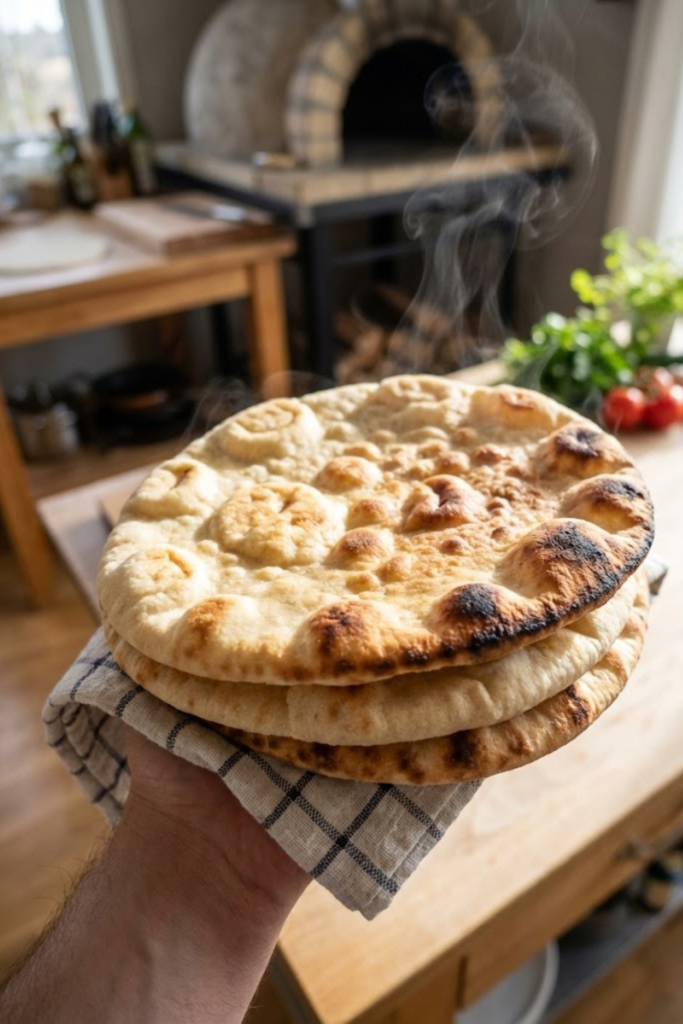
Layering Your Toppings for Maximum Flavor
I used to think more was always better. I’d stack my veggie falafel wrap with every single thing I could find in the fridge. I’d have tomatoes, pickles, olives, lettuce, and extra cheese—you name it. But then I couldn’t even close the thing. I remember one lunch where the bottom of my wrap gave out and all my pickled onions fell right onto my laptop keyboard. It was a total nightmare! I spent twenty minutes cleaning vinegar out of the keys. Lesson learned: layering is actually about balance. You want every bite to have a bit of crunch, a bit of creaminess, and a whole lot of flavor without the giant mess.
The “Crunch Factor” is Key
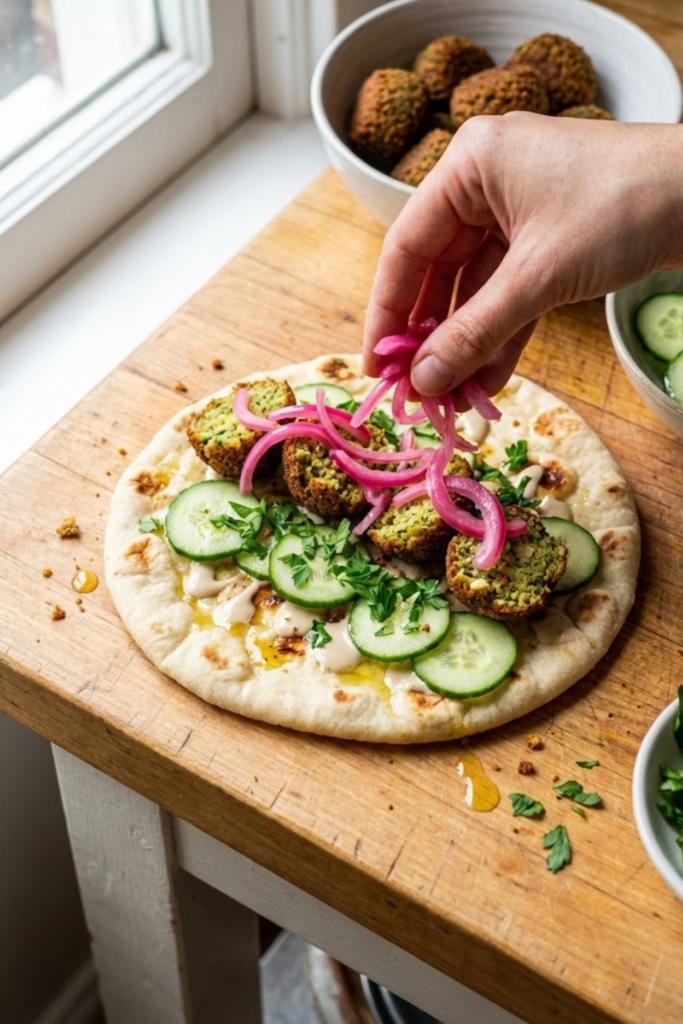
For a good wrap, you need textures that contrast. The falafel is already crunchy on the outside, but you need fresh veggies to brighten things up. I love using English cucumbers because they aren’t as watery as the regular ones. If you use the watery ones, your bread will get soggy in about five minutes. I also always add pickled red onions. They give a nice zing that cuts through the fried taste of the falafel. Radishes are another good one for a bit of a peppery bite. Just slice them thin so they don’t poke holes through the bread. I once used thick chunks and it felt like I was eating marbles. Thin slices are much better for the mouthfeel.
Keep it Creamy but Not Sloshy
You need a “glue” to hold everything together. Hummus is the standard, but I like to spread it thin on the bread first. Think of it like paint on a wall. It acts like a barrier so the veggies don’t make the bread wet. Then, I add my falafel. On top of that, I’ll do a little drizzle of tahini. Don’t go overboard here. If you drown it in sauce, it’s going to be a disaster. I usually keep a little extra sauce on the side for dipping instead. That way, the wrap stays solid while I’m eating it and I don’t get sauce on my shirt.
The Order of Operations
The way you stack matters for how well the wrap stays together. Put the heavy, dry stuff like the falafel at the bottom or the middle. Put the wetter stuff like tomatoes or extra sauce in the center where it’s protected by other ingredients. If you put tomatoes right against the bread, you’re asking for a blowout. I’ve learned to be a bit more strategic about where things go. It makes the whole eating experience so much better when you aren’t fighting to keep your food inside the bread. It takes an extra minute to think it through, but it saves you a lot of napkins and frustration.
Making Your Own Zesty Tahini Drizzle
You can have the best falafel and the freshest bread, but if you don’t have a good sauce, your veggie falafel wrap is going to feel dry and unfinished. I used to be one of those people who just bought the pre-made tahini from the grocery store. I figured it was easier, right? But man, that stuff is often so bitter and thick it tastes like you’re eating liquid chalk. I remember one time I invited my neighbors over for dinner and served them that store-bought stuff. Nobody finished their wraps, and I could see them reaching for their water glasses after every single bite. It was a bit of a wake-up call that I needed to step up my game.
The Mystery of the “Seize”
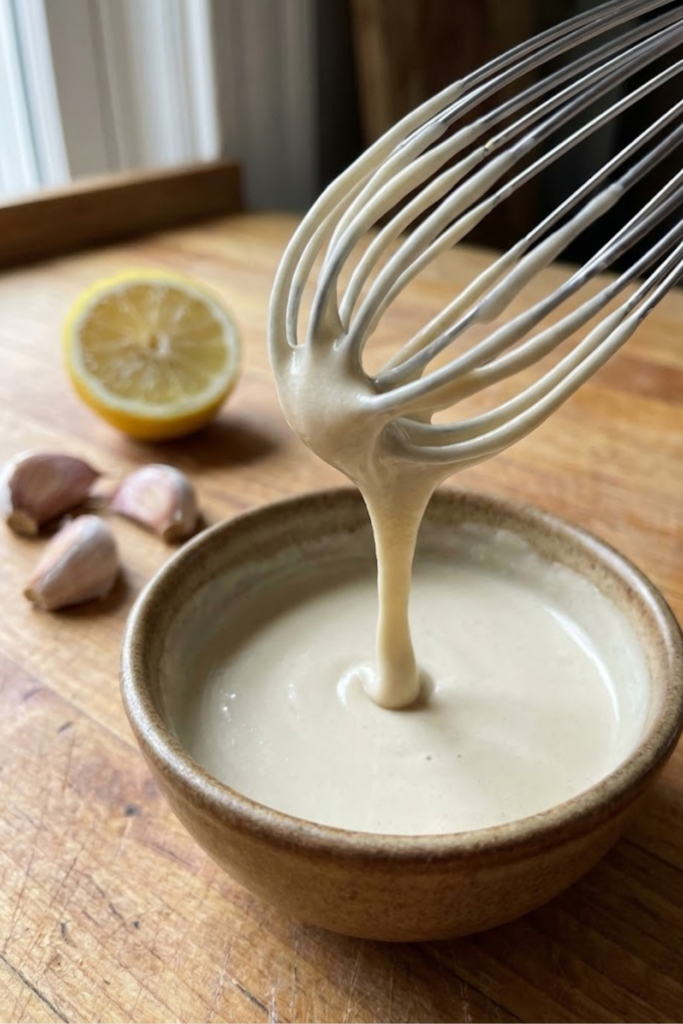
When I first tried to make my own sauce, I had a total “kitchen fail.” I put the tahini in a bowl and added a little bit of lemon juice, and suddenly, the whole thing turned into a solid, grainy rock. I thought I had ruined it! I actually threw the first batch away because I didn’t understand what happened. But here is what I learned: tahini is full of oil, and when you add a tiny bit of liquid, it “seizes” up. The trick is to keep adding liquid—specifically ice-cold water—and keep whisking. It feels like it’s getting worse before it gets better, but eventually, it turns into this beautiful, creamy, pale sauce that looks like velvet.
Finding the Balance of Flavor
The basic recipe is just tahini, lemon, garlic, and water, but you have to taste it as you go. Some tahini brands are more bitter than others. If mine tastes too sharp, I’ll add a tiny drop of maple syrup or honey to take the edge off. It doesn’t make it sweet; it just balances the flavors. I also love adding a lot of fresh garlic. I used to just chop it, but now I grate it really fine so you don’t get a giant chunk of raw garlic in the middle of your lunch. That’s a mistake you only make once!
Customizing Your Drizzle
Once you get the base down, you can start having some fun. If I’m in the mood for something spicy, I’ll stir in a spoonful of harissa or some red pepper flakes. It gives the veggie falafel wrap a nice kick that goes great with the cool cucumbers. If you want it extra fresh, you can even blend in some mint or dill. The main thing is to make sure it’s thin enough to drizzle but thick enough to stay on the falafel. It should be about the consistency of heavy cream. Don’t be afraid to experiment until you find the mix that you love the most. It really is the part of the meal that brings everything together.
Bringing Your Wrap Together
So, there you have it—my whole guide to making the absolute best veggie falafel wrap you’ve ever tasted. I know it sounds like a lot of steps when you read it all at once, but honestly, once you do it a couple of times, it becomes second nature. It’s funny because my kids used to complain whenever I made anything green for dinner. They’d look at the plate like I was trying to feed them grass from the backyard! But the first time I made these wraps with the crispy falafel and the creamy sauce, they actually asked for seconds. That was a huge win for me, and it made all those messy kitchen experiments totally worth it.
Putting it into Practice
If you take anything away from this, remember the big three: soak your beans, warm your bread, and don’t be afraid of the sauce. Those are the things that turn a boring sandwich into a real meal. I really believe that anyone can be a good cook if they just slow down and enjoy the process. Don’t stress out if your first wrap looks a bit lopsided or if you get some sauce on your shirt. That’s just part of the fun of cooking at home! I’ve had plenty of “oops” moments myself, like the time I forgot to add salt to the whole batch. It tasted like cardboard, but we just laughed and added extra pickles to fix it.
Why This Recipe Wins
This veggie falafel wrap is also great because it’s so cheap to make. You can buy a giant bag of dried chickpeas for just a few dollars, and it will last you for months. In 2026, where everything seems to be getting more expensive, having a healthy and filling meal that doesn’t break the bank is a total lifesaver. Plus, it’s a meal you can feel good about eating. It’s packed with protein and veggies, so you won’t feel that heavy “food coma” after lunch.
I really hope you give this a try in your own kitchen soon. It’s a game-changer for lunch or a quick weeknight dinner. If you enjoyed this recipe and found my tips helpful, please do me a huge favor. Pin this to your favorite Pinterest board so you can find it again! It really helps more people find my blog, and I love seeing your recreations. Happy cooking!