I have to be honest with you—I used to absolutely hate cooking chicken breast! It always came out dry, rubbery, and totally uninspired. I would chew through it wondering why anyone would choose this over a thigh. But then, everything changed when I discovered the power of the right herb butter and oven temperature!
Did you know that overcooking lean meat by just 5 degrees can rob it of 50% of its moisture? That is exactly why we are here today. I’m going to show you how to make a garlic herb roasted chicken breast that is actually juicy, tender, and packed with so much flavor you’ll want to lick the plate. Let’s get cooking!
Choosing the Right Chicken for Roasting
I have to tell you, for the longest time, I thought all chicken was the same. I’d just grab the biggest, cheapest package at the supermarket and head home. But after dozens of dry, flavorless dinners, I realized that the bird you pick is just as important as the garlic you rub on it. If you start with meat that’s been pumped full of salt water, it’s going to taste like rubber no matter how much butter you use. You want to look for meat that looks pink and firm, not pale or sitting in a pool of liquid.
Why Air-Chilled Makes a Difference
One of the best tips I can give you is to look for “air-chilled” on the label. Most big companies cool their chicken by dunking it in tubs of cold water. The meat soaks up that water like a sponge. When you put it in a hot oven, all that extra water leaks out. Instead of roasting, your chicken basically boils in its own juices. Air-chilled chicken is cooled with cold air, so the flavor stays concentrated. It might cost a couple of dollars more, but it’s a unique way to make sure the meat actually browns properly. I promise, once you try it, you won’t go back to the watery stuff.
Size and Shape for Even Cooking
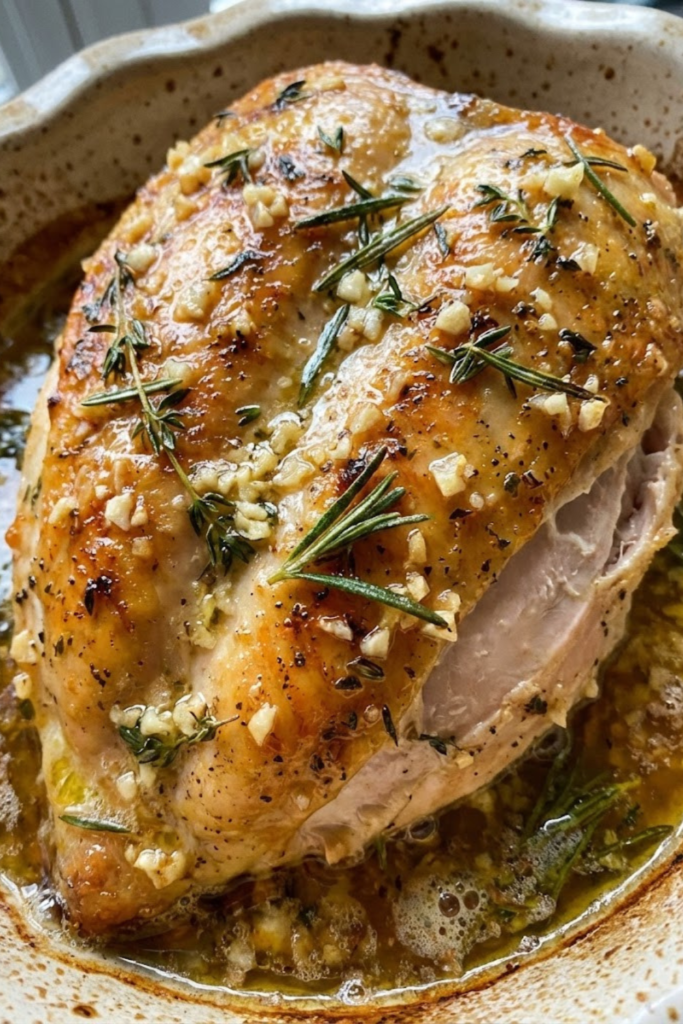
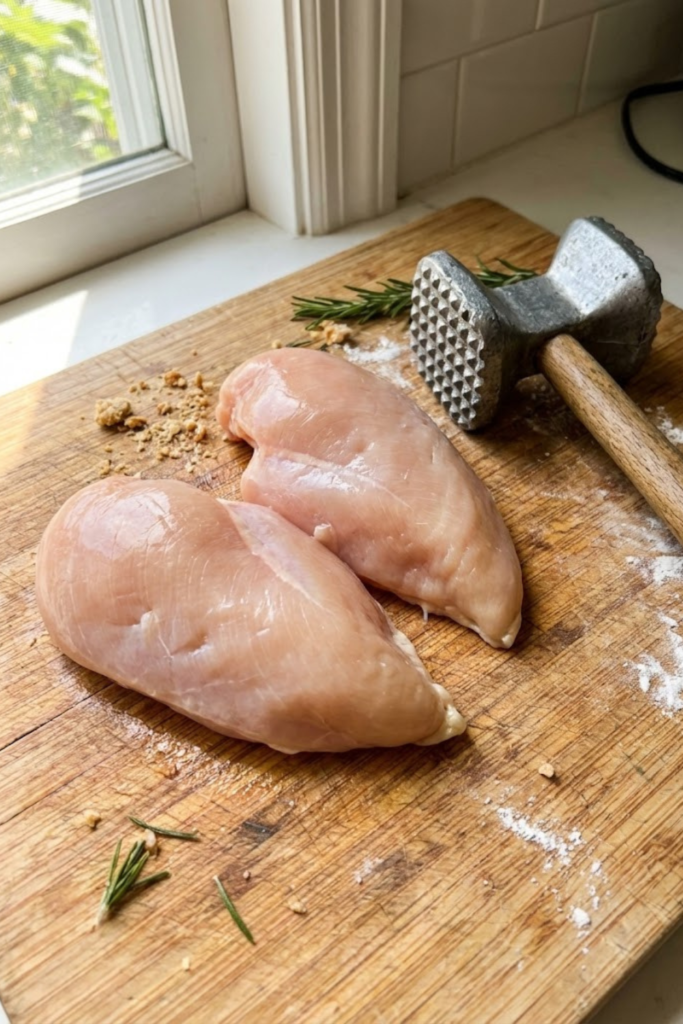
Regarding the size, try to find breasts that are similar in weight. If you have one huge piece and one tiny one, they won’t finish at the same time. Also, chicken breasts are naturally shaped like a teardrop—thick at the top and skinny at the bottom. This is why the skinny part usually gets dry. I always take a heavy pan or a meat mallet and gently pound the thick part until the whole piece is about the same thickness. You don’t need to be too aggressive here; you just want to even things out so the heat hits everything at the same rate.
The Room Temperature Trick
Lastly, don’t throw your chicken into the oven while it’s still ice cold from the fridge. I usually let mine sit on the counter for about 15 or 20 minutes. Taking the chill off helps the muscles relax, which helps ensure the heat travels to the center of the meat faster. This simple habit prevents the outside from getting tough while the inside is still trying to cook. It’s a small trick that makes a big impact on how tender the meat stays!
The Secret Garlic Herb Butter Marinade
I used to think a little salt and pepper was enough to make a good meal. Boy, was I wrong! My neighbor, who has been a chef for thirty years, once told me that chicken is like a blank canvas, and the marinade is the paint. If you want that garlic herb roasted chicken breast to really pop, you need a “liquid gold” mixture to coat every single inch of it. This isn’t just about dumping stuff in a bowl and hoping for the best; it’s about how those flavors talk to each other. When you get this part right, the chicken smells so good while it’s baking that you’ll have people wandering into the kitchen asking when dinner is ready.
Fresh Herbs vs. Dried Herbs
A lot of my students ask me if they can just use that dusty jar of “Italian Seasoning” that has been sitting in the back of the pantry since 2022. You can, but honestly, you might be a little sad with the results. Fresh rosemary and thyme are usually pretty cheap at the store, and they change everything about this dish. I like to chop them up really fine so they stick to the meat like a second skin. When they hit the heat of the oven, they release these natural oils that make the flavor much deeper. If you absolutely have to use dried herbs, remember they are way more concentrated. Use about a third of what the recipe calls for so you don’t overdo it.
Why I Mix Butter and Oil
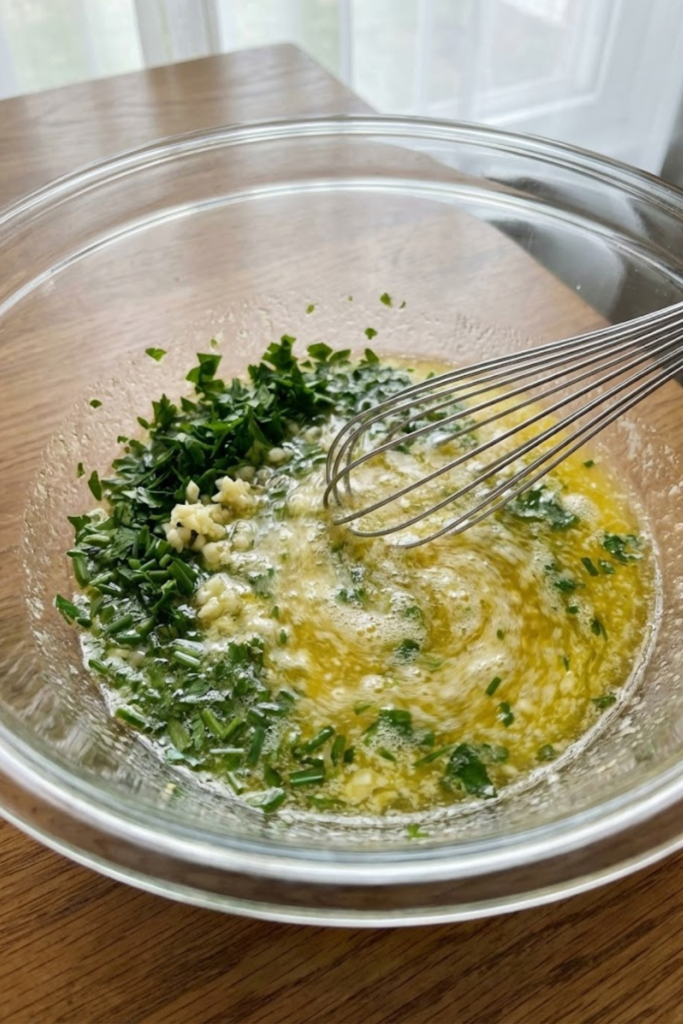
I had a phase where I used only butter, but I found it would burn and turn bitter before the chicken was actually cooked through. Then I tried using only olive oil, and while it worked, it just didn’t have that rich, “home-cooked” taste. Now, I always use a mix. I melt a few tablespoons of salted butter and whisk in some good extra virgin olive oil. The oil helps keep the butter from smoking too much at high heat, and the butter gives you that beautiful golden color and creamy mouthfeel. It is the best way to make the herbs stay on the chicken instead of just sliding off into the bottom of the pan.
Getting the Most from Your Garlic
Since we are making garlic herb chicken, we really can’t be shy with the cloves. I usually use four or five big ones for just a few pieces of meat. Instead of just slicing the garlic, I use the side of my big knife to smash it into a paste on the cutting board. Smashing it breaks open the little cells inside the garlic and lets out all that sticky juice where the real flavor lives. I mix that paste right into my butter and oil blend. By the time I rub it on the chicken, the meat is basically getting a flavor spa treatment. Just try to get some of that mixture under the skin if you left it on!
Step-by-Step Baking Instructions
I remember my first few times trying to bake chicken at home. I would set the oven to a low temperature, like 325 degrees, thinking that “low and slow” was the way to go for everything. Well, I was wrong! All that did was turn my dinner into a dry, sad sponge that tasted like cardboard. Now, I always crank that dial up to 400 degrees. It might sound a bit scary, like you’re going to burn the house down, but that high heat is exactly what makes the garlic herb roasted chicken breast get that beautiful golden color while keeping the middle soft.
Why 400 Degrees is the Magic Number
When you use a lower temperature, the chicken has to stay in the oven for a really long time to cook through. The longer it sits in that hot, dry air, the more moisture it loses to the wind. By going to 400°F (which is about 200°C for my friends across the pond), you cook it much faster. You are basically searing the outside using the air. I always wait for that little “beep” on the oven to make sure it is fully preheated before I slide the pan inside. Putting meat into a cold oven is a mistake that will ruin your meal every single time.
Lining Your Pan for Easy Cleanup
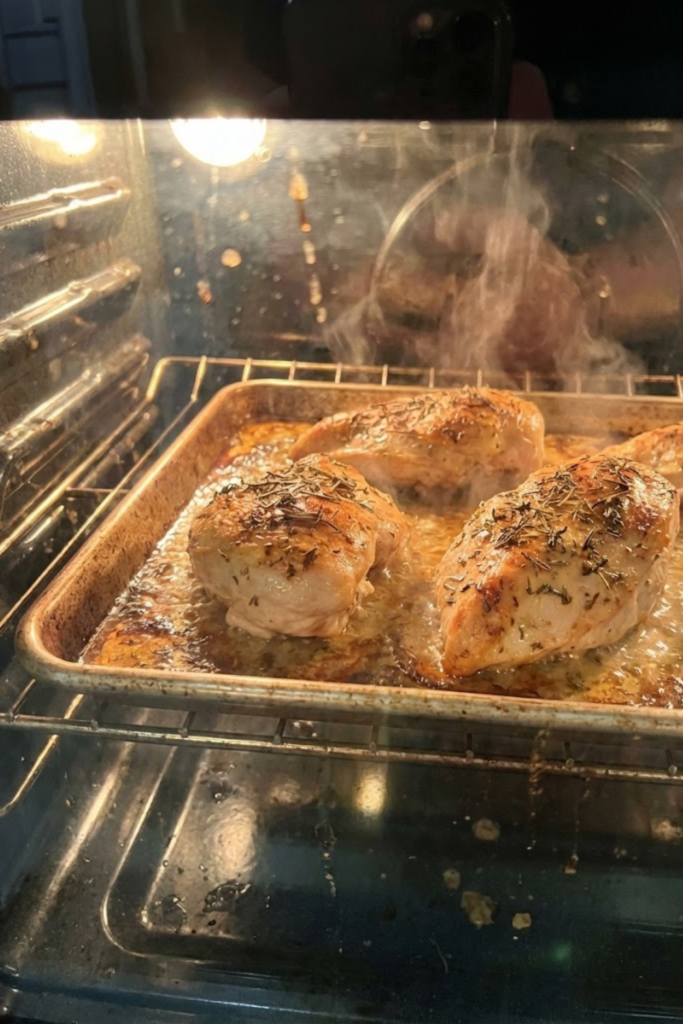
I’m going to be real with you—I absolutely hate doing dishes. If I can avoid scrubbing a metal pan for twenty minutes after dinner, I’m going to do it. That is why I always use a rimmed baking sheet and line it with parchment paper. Some people like to use aluminum foil, but I find that the chicken or those delicate herbs sometimes stick to the foil. Parchment is great because nothing sticks to it. I lay the chicken breasts out so they aren’t touching each other. If you crowd the pan, the meat starts to steam instead of roast, and we want that crisp herb crust. Give those pieces of chicken some personal space!
The Mid-Way Spoon Trick
About halfway through the cooking time—usually around the 12 or 15-minute mark—I like to open the oven and check on things. This is where the flavor really gets locked in. I take a big spoon and scoop up some of that melted garlic herb butter that has pooled on the bottom of the pan. I pour it right back over the top of the meat. This keeps the top from getting tough and helps the rosemary and thyme get nice and crispy. It only takes a few seconds, but it makes a massive difference in how the chicken looks when it comes out. Just be quick so you don’t let all the hot air out of the oven!
How to Tell When Chicken is Done
Nothing ruins a nice dinner party faster than cutting into a piece of meat and seeing pink. I remember one time I was hosting my in-laws, and I was so worried about overcooking the garlic herb roasted chicken breast that I actually served it raw in the middle. It was so embarrassing! But on the flip side, if you leave it in too long because you’re scared, you end up with something that feels like you’re chewing on a shoe. Finding that perfect middle ground is the hardest part of cooking for most people, but I’ve got a few tricks that will make you feel like a pro every time.
The Magic of the Meat Thermometer
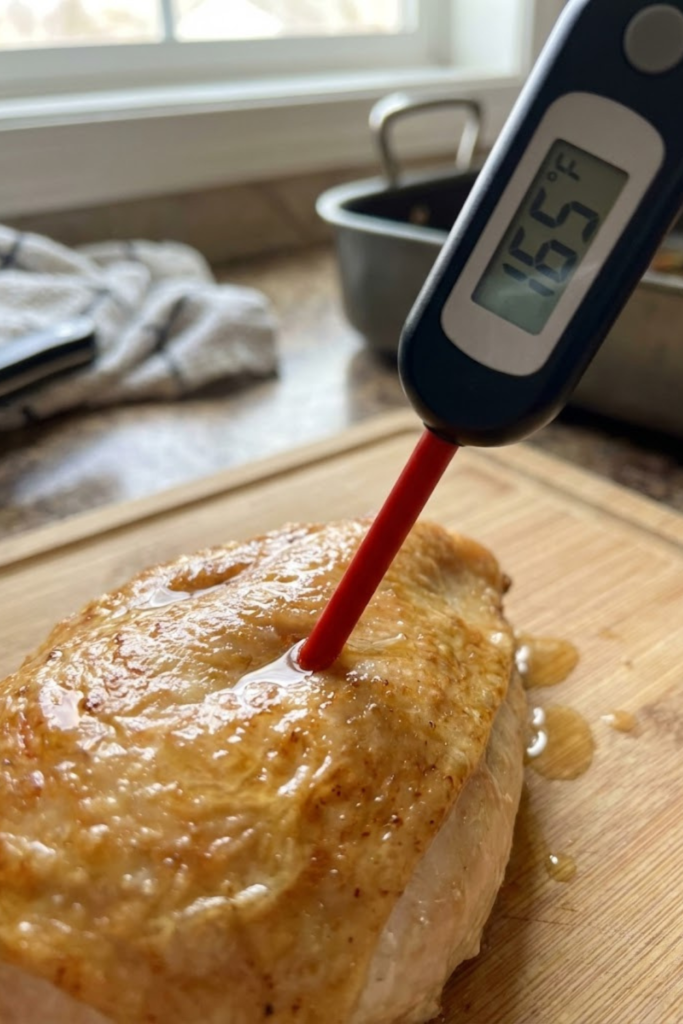
If you don’t have a digital meat thermometer yet, please go get one. They only cost about ten bucks, and they are the only way to really know what’s happening inside that meat without cutting it open and letting all the juices leak out. You want to stick the needle into the thickest part of the breast. For a safe and tasty garlic herb meal, the magic number is 165°F (74°C). I usually start checking my chicken about five minutes before the timer goes off just to be safe. Every oven is a little different, so don’t just trust the clock; trust the temperature!
Checking the Juices
If you are in a pinch and don’t have a thermometer, you can use the old-school “clear juice” test. Take a small knife or a fork and poke a tiny hole in the thickest part. If the juice that runs out is clear or has a slightly yellow tint from the butter, you are usually good to go. If that juice looks even a little bit pink or cloudy, it needs more time in the heat. It’s a simple check that has saved my dinner more than once. Just try not to poke it too many times, or you’ll lose all that moisture we worked so hard to keep inside.
The Secret of Carryover Cooking
Here is something they don’t always tell you in the big cookbooks: chicken keeps cooking even after you take it out of the oven. This is called carryover cooking. If I see my thermometer hit 160°F, I actually pull the pan out right then. While the chicken sits on the counter, the heat on the outside moves toward the center and brings the whole thing up to that safe 165°F mark. This is a great way to make sure the meat stays tender. If you wait until it’s 170°F in the oven, it’s going to be dry by the time it hits the dinner plate. Just trust the process and let it finish its job on the counter!
Resting and Serving Suggestions
So, you just pulled that beautiful tray of garlic herb roasted chicken breast out of the oven. It smells amazing, and you probably want to dive right in. I get it! I’ve been there myself, especially after a long day at work when the kids are asking when we’re finally going to eat. But if you take one thing away from my little lesson today, let it be this: put the knife down for a second. This last step is the difference between a good meal and a great one. If you cut into that meat right now, all that garlic butter we worked so hard on is going to spill out all over your cutting board. You want that juice inside the chicken, not on the wood.
The Magic 10-Minute Wait
I usually take a piece of aluminum foil and just drape it loosely over the chicken. You don’t want to wrap it tight like a birthday present, or the skin will get soggy from the steam. Just let it rest there for about 5 or 10 minutes. While it sits, the fibers of the meat relax and soak those juices back up. It’s almost like the chicken is taking a quick nap after being in that hot oven! Use this time to set the table or finish up your sides. I promise that the wait is worth it when you finally take that first tender bite.
Perfect Sides for Your Plate
Since this chicken has such a strong garlic herb flavor, you want sides that don’t fight with it. My go-to is always some roasted asparagus with a little lemon squeezed on top. The brightness of the lemon really cuts through the rich butter. If I’m feeling like I need some comfort food, I’ll make a big bowl of mashed potatoes. The best part is using the chicken juices as a natural gravy for the potatoes. You can also throw some green beans on the same sheet pan while the chicken cooks to save time. It makes everything taste like a fancy Sunday dinner without all the extra dishes.
Prepping for the Week
If you are smart like me, you probably made an extra piece or two. This garlic herb roasted chicken breast is a lifesaver for lunch the next day. I slice it up and put it in an airtight container in the fridge. It stays good for about three or four days. You can toss the cold slices over a green salad or even put them inside a wrap with some mayo and lettuce. It is way better than buying those expensive pre-cooked strips at the grocery store that taste like plastic. Plus, you know exactly what’s in it!
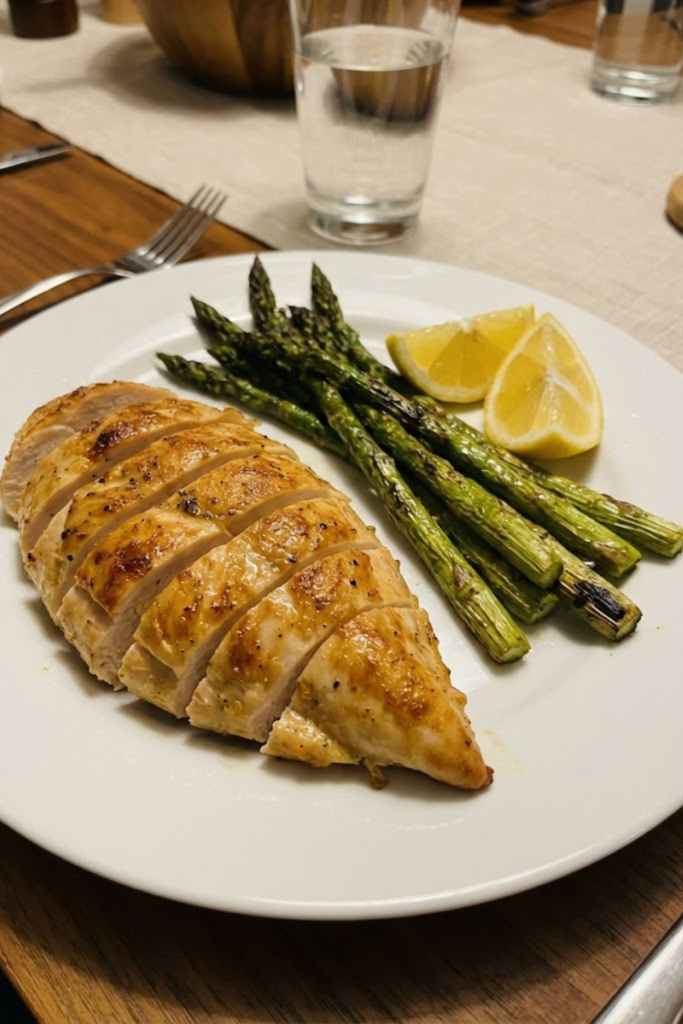
There you have it! Making restaurant-quality garlic herb roasted chicken breast isn’t magic, it’s just about respecting the ingredients and watching that temperature. I really hope you give this recipe a try this week; your family (and your tastebuds) will thank you.
If you loved this guide, please share it on Pinterest and tag us in your delicious creations!