You know that sinking feeling when you pull a cheesecake out of the oven, and it looks like the Grand Canyon? I’ve been there! After years of cracked tops and rubbery textures, I finally cracked the code (pun intended). Did you know that 30% of home-baked cheesecakes fail simply due to temperature shock? This isn’t just another dessert; it’s a love letter to the aromatic complexity of real vanilla beans. We are going to make a cheesecake so smooth and rich, your guests will think you bought it from a fancy bakery. Let’s dive into the creamy goodness!
Why Vanilla Bean Paste Beats Extract Every Time
Let’s talk about the flavor foundation of this cheesecake. For a long time, I just grabbed whatever vanilla extract was on sale at the grocery store. I thought vanilla was just vanilla, right? I was so wrong. When I finally made the switch to vanilla bean paste, my baking changed forever. If you want that professional look and a taste that lingers, you have to understand why the paste is the real winner. It makes a massive difference in the final product.
Those Gorgeous Little Black Specks
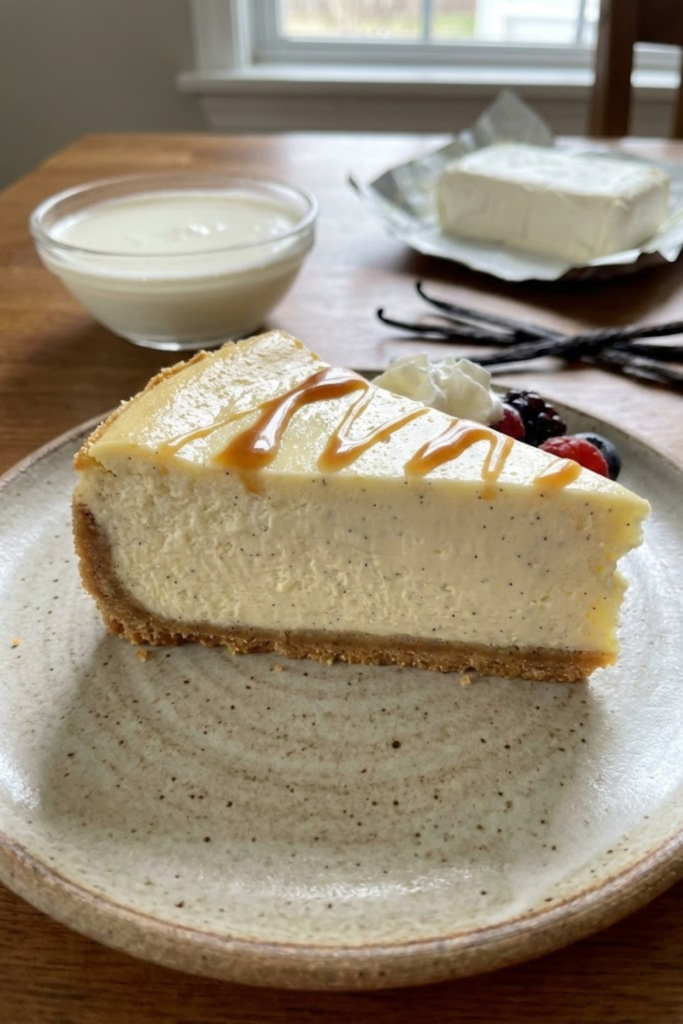
One of the best things about using paste is the visual. You get those tiny, beautiful black seeds scattered throughout the white cheesecake. It tells everyone who looks at your dessert that you used real, high-quality ingredients. Extract is just a brown liquid. It gives flavor, but it doesn’t give that special look. Those little specks are like magic for bakers. People usually eat with their eyes first. Seeing those seeds makes them think of expensive gourmet shops or fancy bakeries in the city.
Pure Flavor Without the Alcohol Smell
Most vanilla extracts are mostly alcohol. If you ever smelled the bottle right after opening it, the scent hits your nose pretty hard. Vanilla bean paste is different. It is thick, like a syrup, and it’s packed with the actual insides of the vanilla pod. The flavor is deeper and much more earthy and floral. It doesn’t cook off as easily as extract does when it gets hot in the oven. In a recipe like cheesecake, where the bake time is over an hour, you want a flavor that stays strong. Paste makes the vanilla a main star instead of just something in the background.
It is Easier Than Scraping Pods
Look, I love the idea of scraping fresh vanilla pods. It feels very old-school and cool. But honestly? It’s a lot of work and those pods are so expensive these days. Sometimes the pods you buy are dry and hard to work with, which is super frustrating. Vanilla bean paste gives you the same exact result as a whole pod but you just measure it with a spoon. One tablespoon of paste is usually equal to one whole bean. It saves so much time when you are trying to get the batter mixed and in the oven. It’s the perfect middle ground.

The Secret to a Buttery Graham Cracker Crust
Honestly, a lot of people think the filling is the only thing that matters in a cheesecake. They spend all their time on the cream cheese and then just throw some crumbs in a pan and call it a day. That is a big mistake! The crust is the base. It is what gives you that salty-sweet crunch that balances out the rich vanilla center. If your crust is soggy or tasteless, the whole dessert feels off. I had to learn this the hard way after making a few “mushy” cakes for family dinners. A good crust should be able to stand on its own.
Getting the Ratio Just Right
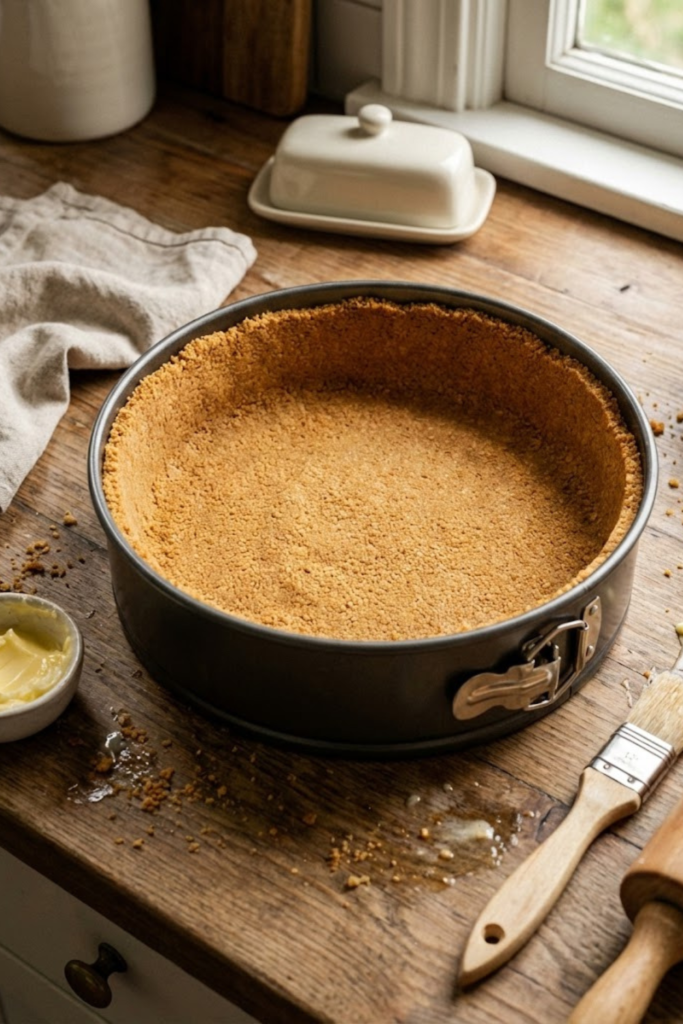
You can’t just eyeball the butter. If you use too little, the crust will fall apart as soon as you try to cut a slice. If you use too much, you’ll end up with a greasy mess that pools at the bottom of the pan. For a standard 9-inch springform pan, I usually use about one and a half cups of graham cracker crumbs. Then I add about five or six tablespoons of melted unsalted butter and a quarter cup of sugar. The sugar isn’t just for sweetness; it actually helps the crust stay together. When it bakes, the sugar melts and acts like glue. I always add a tiny pinch of salt too. It makes the graham cracker flavor pop and keeps it from being too sugary.
The Magic of Pre-Baking
This is a step that many beginners skip because they are in a hurry. Don’t do that! Once you press your crumbs into the bottom and up the sides of the pan—I use the bottom of a flat measuring cup to get it really tight—you need to pop it in the oven for about 10 minutes at 350 degrees. This “sets” the crust. It makes it crunchy and creates a barrier so the batter doesn’t soak in and make things soggy. It also brings out a toasted, nutty smell that is just incredible. Let it cool down a bit before you pour in your vanilla bean mixture.
Switching Up the Cookies
If you want to try something a bit different, you don’t have to stick to graham crackers. I’ve used Biscoff cookies before and they are amazing because they have a bit of spice. Ginger snaps work great during the holidays too. If you have someone in your family who can’t eat gluten, almond flour mixed with a little oat flour works pretty well as a swap. Just keep an eye on the butter levels because different cookies absorb fat differently. No matter what you choose, just make sure you press it down hard so it stays put! This makes the eating experience much better for everyone at the table.
Room Temperature Ingredients: The Non-Negotiable Rule
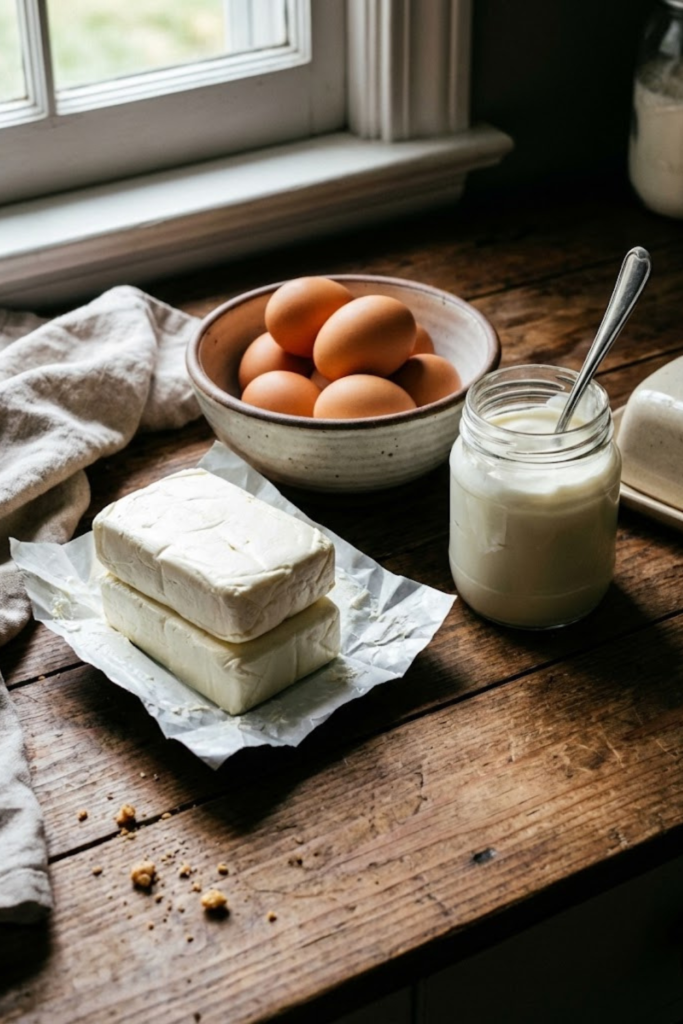
I can’t tell you how many times I rushed into baking because I wanted a snack right then. I would grab the cold cream cheese straight from the fridge and think, “Eh, the mixer will take care of it.” Big mistake. If your ingredients are cold, your cheesecake is doomed to be lumpy. It does not matter how long you beat it, those cold chunks will never fully smooth out. It is the number one rule of cheesecake baking, and it is something I never skip anymore. If you want that perfect dessert, you have to plan ahead just a little bit.
The Science of Smoothness
Why does it really matter? Well, cream cheese is full of fat. When it is cold, that fat is hard and solid. When you try to mix sugar into cold cream cheese, the sugar can’t actually blend in. It just sits on top of the lumps. But when it is room temperature, it is soft and pliable. It opens up and allows the sugar and eggs to join in. This is what gives you that silky, velvety texture that makes a New York style cheesecake so famous. If you want a dense cheesecake that still melts in your mouth, you need the ingredients to be warm. It is about how the molecules move together.
Preventing the Dreaded Lumps
Lumps are the enemy of a good vanilla bean cheesecake. If you see tiny white dots in your batter, that is cold cream cheese. Once you add the eggs, those lumps are basically locked in. Cold eggs are another trap. If you drop a cold egg into room temperature cheese, it can actually cause the fat in the cheese to seize up and get hard again. It is like a chain reaction of bad textures. I always set my eggs, sour cream, and cream cheese on the counter at least two hours before I start. It seems like a long time, but it saves you from a dessert that feels like eating cottage cheese.
How to Quickly Warm Your Ingredients
If you are like me and you forget to take things out early, do not panic. You can speed things up. Put your eggs (still in the shell) in a bowl of warm water for about ten minutes. For the cream cheese, you can unwrap it and cut it into small cubes. Spread them out on a plate, and they will warm up in about 20 minutes instead of two hours. Just do not use the microwave unless you are really desperate, because it can melt the edges and mess up the consistency. Taking this extra time makes a huge difference in how your cheesecake looks and tastes. You will be glad you did it when you take that first bite.
Mastering the Water Bath (Bain-Marie) Method
Let’s talk about the part of cheesecake making that scares people the most: the water bath. I remember the first time I read a recipe that mentioned a “bain-marie.” I thought it sounded like some fancy French torture device. I tried to skip it for years because I was lazy. I figured my oven was good enough without it. But after pulling out dozens of cakes that looked like they had a canyon running through the middle, I had to admit defeat. The water bath isn’t just a suggestion; it is the secret to that perfectly flat, creamy top that looks like it came from a professional bakery. It really makes a difference in the final look.
The Science of Gentle Steam
So, what does the water actually do? Think of it like a protective blanket for your dessert. Cheesecake is basically a custard, and eggs are very sensitive to high heat. If the edges of the pan get too hot, the eggs on the outside cook way faster than the ones in the middle. This causes the cake to puff up like a balloon and then crash as it cools, which is where those ugly cracks come from. The water keeps the temperature of the pan at a steady level. It also creates a lot of steam in the oven. This moisture stops the top of your vanilla bean cheesecake from drying out and getting tough. It stays soft and creamy while it bakes.
How to Stop the SOG
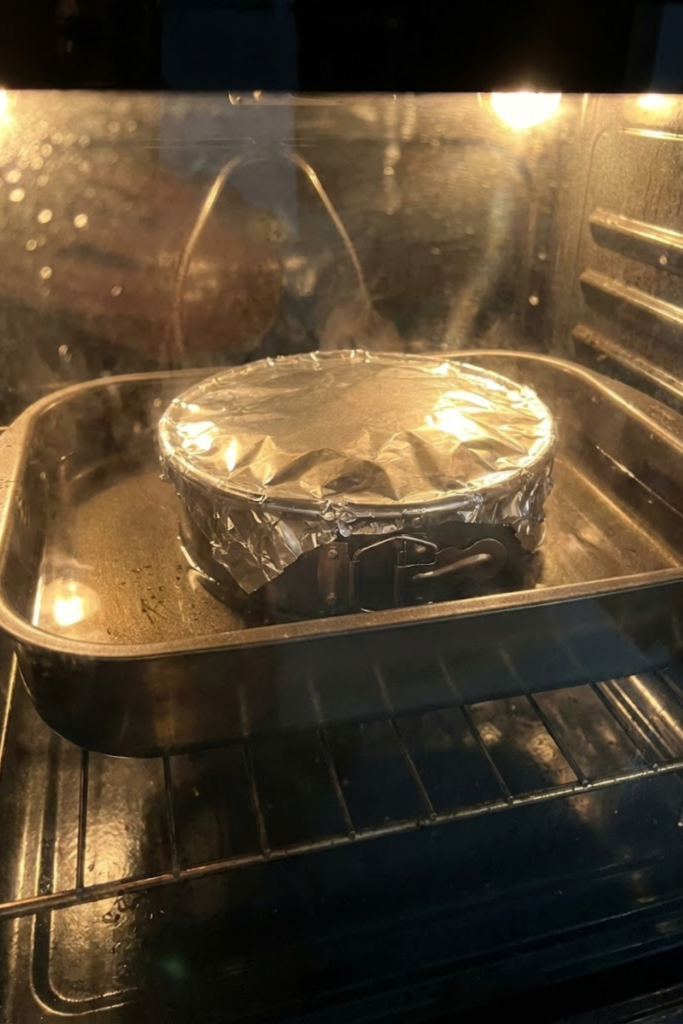
The biggest fear with a water bath is water leaking into your crust. I have had a few “soggy bottom” disasters in my time, and it is a total bummer to waste all those ingredients. The trick is to use heavy-duty foil. Don’t use the cheap, thin stuff; it tears way too easily when you are moving the pan. I wrap the bottom of my springform pan in three or four layers of wide foil. I make sure the foil comes up almost to the top of the sides. If you want to be extra safe, you can even put the wrapped pan inside a slightly larger cake pan before putting it in the water. It sounds like a lot of work, but it keeps your crust crunchy.
Setting it Up Safely
When you are ready to bake, put your wrapped cheesecake inside a large roasting pan. I usually put the pans in the oven first and then pour the boiling water in using a kettle. This way, I’m not trying to carry a heavy pan full of sloshing hot water across the kitchen. You only need about an inch or two of water. Just be careful not to splash any water onto the cake batter itself. It’s a bit of a process, but when you see that smooth, crack-free surface at the end, you’ll know it was worth the extra effort. It makes the cake look so much more expensive.
Cooling and Chilling: Patience is a Virtue
You have done all the hard work. Your house smells like a dream, and that vanilla bean cheesecake looks incredible sitting there in the oven. Your first instinct is going to be to grab a fork and dive right in. I am telling you right now: don’t do it! I have made this mistake more times than I want to admit. If you try to eat a cheesecake while it is still warm, the texture is all wrong. It feels more like a sweet omelet than a creamy dessert. The cooling process is actually just as important as the baking process. It is where the magic really happens and the flavor settles in.
The Oven Door Crack Trick
Once the timer goes off, don’t just pull the cake out into the cool air. That big change in temperature is exactly what causes the surface to split. Instead, turn the oven off and prop the door open just a tiny bit—maybe an inch or two. Let the cake sit in there for about an hour. This lets it cool down slowly. Think of it like a gentle landing for a plane. I usually use a wooden spoon to keep the door propped open. This slow cooling helps the center finish setting without the top drying out. It is a simple trick, but it makes a huge difference in how professional the final result looks.
Why 6 Hours is the Minimum
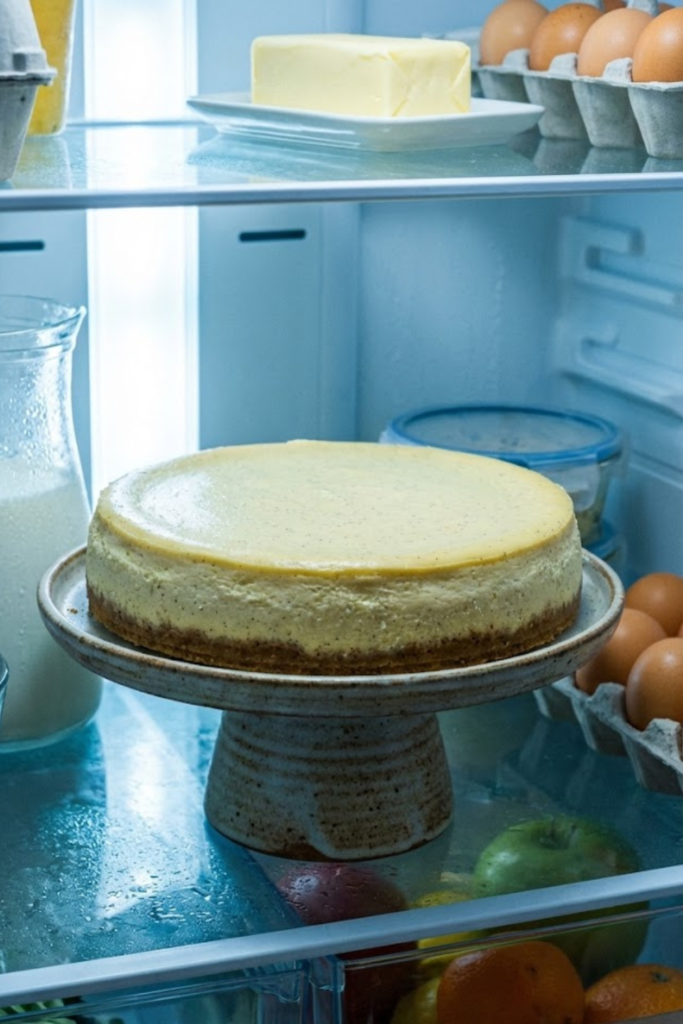
After the hour in the oven, let it sit on your counter until the pan is no longer hot to the touch. Then, it needs to go into the fridge. I know it’s hard to wait, but you need at least six hours for the fats in the cream cheese and sour cream to firm up. If you can leave it overnight, that is even better. When the cheesecake is cold, the vanilla bean flavor actually tastes stronger and the texture becomes dense and velvety. I like to cover mine with a bit of plastic wrap once it’s cool, but make sure it isn’t touching the top of the cake so it doesn’t leave marks.
How to Get Those Perfect Slices
When you are finally ready to serve, don’t just hack into it with a dull knife. To get those beautiful, clean slices you see in pictures, use a large, sharp knife and a tall glass of hot water. Dip the knife in the hot water, wipe it dry with a clean towel, and then make one clean slice all the way down. Wipe the knife clean after every single cut. It sounds like a lot of work, but it keeps the vanilla bean seeds from smearing and keeps each slice looking sharp. Your guests will be so impressed with how pretty it looks on the plate!
Wrapping Up Your Vanilla Bean Cheesecake Journey
Well, we finally made it to the end of the recipe. I know I probably talked your ear off about water baths and room temp cream cheese, but I promise it is because I want your vanilla bean cheesecake to be the absolute best one you have ever tasted. Baking is a lot like teaching school; you have to follow the steps in order, but you also have to put a little bit of heart into it. This dessert isn’t just about mixing sugar and fat together; it’s about creating something special for your friends and family. Whether it’s for a big holiday or just a random Tuesday night, a good slice of cheesecake makes everything feel a little bit better.
A Quick Recap for Success
If you take away anything from my rambling, remember these three things: don’t rush the ingredients, use the water bath, and be patient with the cooling. I used to be the person who tried to cut corners to save twenty minutes, and my cakes always suffered for it. Taking the time to get those blocks of cheese soft and wrapping that pan in heavy-duty foil is what separates a “good” cake from a “wow” cake. And please, don’t forget those vanilla beans! The taste of real vanilla bean paste is something you just can’t get from a little brown bottle of imitation flavor. It really is the star of the show here.
Don’t Stress the Small Stuff
Even if you do everything right, sometimes things happen. Maybe your crust is a little crumbly or you missed a tiny lump in the batter. Honestly, it is okay! I have been baking these for over twenty years and I still get a little nervous every time I open that oven door. If you do end up with a small crack on top despite your best efforts, just remember that whipped cream and fresh berries are a baker’s best friend. They cover up any mistakes and make the plate look even prettier. The most important thing is that it tastes amazing, and with these high-quality ingredients, I know it will.
Share the Cheesecake Love
I really hope you enjoy making this as much as I do. There is something so satisfying about seeing those tiny black vanilla specks in a perfectly smooth slice of cake. If you tried this recipe and loved it, I would be so happy if you shared it with others! You can pin this vanilla bean cheesecake recipe to your “Best Desserts” or “Holiday Baking” boards on Pinterest so you can find it easily next time you have a craving. Also, tag me if you post a photo—I love seeing how your bakes turn out in your own kitchens! Happy baking, y’all!