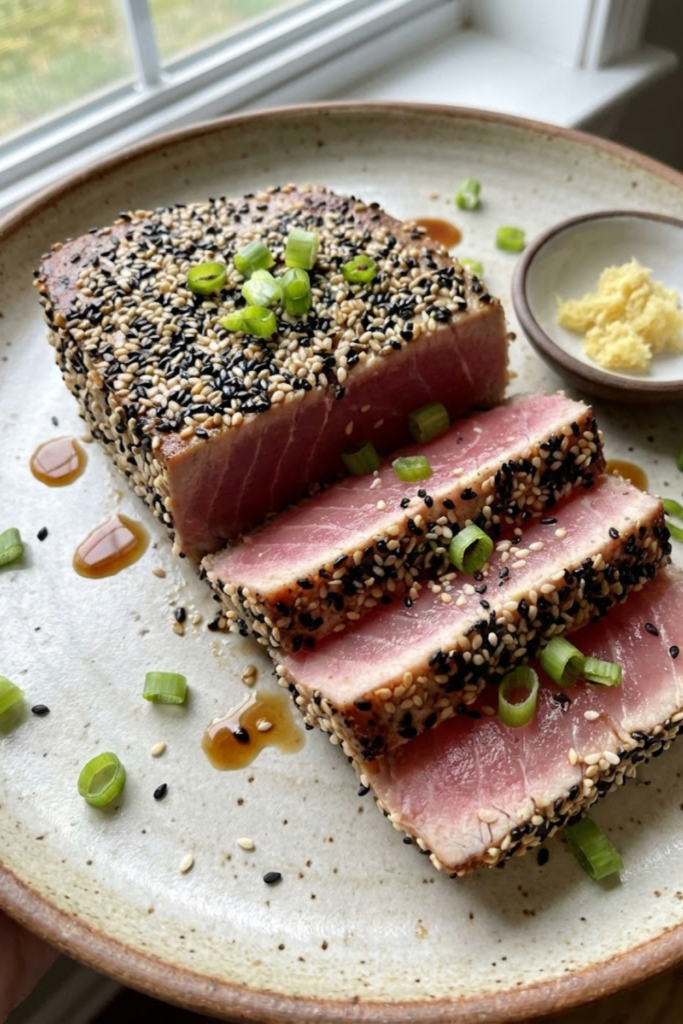
You know, the first time I tried to make sesame crusted tuna steak at home, I was terrified I’d ruin perfectly good fish. I remember staring at that gorgeous slab of Ahi tuna on my counter—it cost more than my weekly coffee budget—and thinking, “Please don’t turn this into cat food.” But here’s the thing I learned after a few trials (and one slightly overcooked disaster): it is shockingly easy. Like, easier than boiling pasta properly.
This isn’t just about slapping seeds on fish; it’s about that contrast between the nutty, crunchy crust and the cool, buttery center. My friends always think I spent hours in the kitchen, but honestly? It takes ten minutes. If you can heat a pan, you can make this. We’re going to dive into exactly how to get that sear right without cooking the tuna through, because nobody wants gray tuna. Let’s get cooking!
Choosing the Right Fish: Why “Sashimi Grade” Matters
I have to admit something embarrassing. The first time I decided to make sesame crusted tuna steak at home, I just bought a random slab of tuna from a discount grocery store. I didn’t talk to the butcher, and I certainly didn’t check the label. I was just excited to save a few bucks.
That night, I spent three hours on Google at 2:00 AM convinced I had given myself a parasite. It was not my finest moment! But mistakes were made, and I learned a valuable lesson that I’m going to share with you so you don’t panic-scroll through medical websites like I did.
The “Sashimi Grade” Myth and Reality
You might see terms like “sushi grade” or “sashimi grade” thrown around a lot. Here is the truth I wish I knew earlier: there is actually no official governing body that regulates the term “sashimi grade” in the US. It’s mostly marketing! However, it generally signals that the fish has been treated to kill parasites.
To be safe for raw or rare consumption, fish needs to be “flash frozen” at extremely low temperatures. This process kills the nasty stuff you don’t want in your body. When you buy tuna for this recipe, you need to ask your fishmonger if the fish is safe to be eaten raw. If they look confused or say “maybe,” walk away. Seriously, just leave. It is generally advised to only buy from a trusted source where they can explicitly tell you it has been flash-frozen for raw consumption.
Trust Your Eyes (and Your Nose)
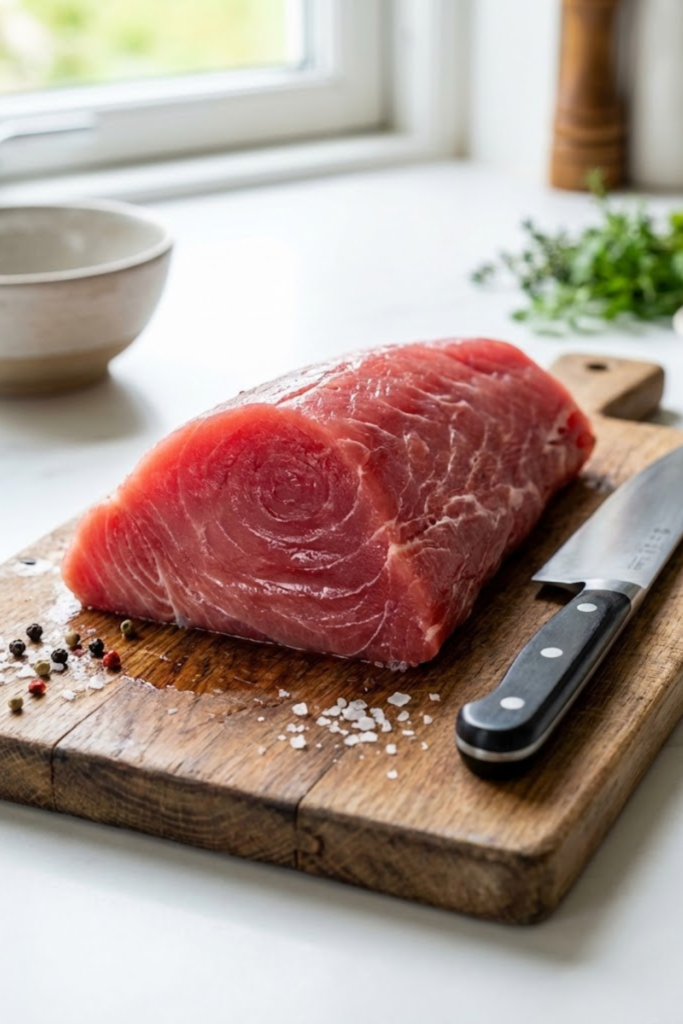
When you are picking out your sesame crusted tuna steak, you need to get up close and personal with the glass case. Fresh Ahi tuna should look like a jewel.
- Color: Look for a deep, vibrant ruby red. If it looks brown, dull, or has a rainbow sheen (and not in a good way), it’s old.
- Texture: The meat should look firm. If you see the muscle fibers separating or “gaping,” that piece of fish has been sitting there too long.
- Smell: If you can smell a strong “fishy” odor before they even wrap it up, that’s a bad sign. Good tuna smells like the clean ocean, not low tide.
Lean vs. Fatty: What Works Best?
For searing, I actually prefer a leaner cut. You might hear people raving about “Toro” (the fatty belly), which is delicious for sushi, but for a seared recipe, the structural integrity of the lean red meat holds the crust better. Plus, it’s usually cheaper!
I remember asking a fishmonger once why my crust fell off, and he told me my fish was too wet and oily. He was right. Leaner maguro (red meat) is perfect here. It provides that beautiful color contrast against the white and black seeds.
Don’t be afraid to ask questions at the counter. I used to be intimidated, thinking they’d judge me for not knowing everything. But honesty is the best policy. Just tell them, “I’m making a seared tuna dish and I need a piece that is safe to eat rare.” They will usually steer you toward the best block they have in the back.
The Secret Marinade for Sesame Crusted Tuna Steak
I used to think marinating was just about drowning food in sauce and hoping for the best. One time, I left a beautiful piece of tuna in a bath of straight soy sauce for two hours while I got distracted by a laundry mountain. By the time I cooked it, the thing was basically a salt lick. It was inedible! I learned the hard way that when it comes to sesame crusted tuna steak, less is definitely more.
You aren’t trying to mask the flavor of the fish; you just want to wake it up. If you have ever felt frustrated because your home-cooked Asian dishes taste flat compared to a restaurant, it’s usually because the balance is off.
The Holy Trinity of Flavor
I’ve messed around with a dozen variations, but I always come back to three core ingredients. You don’t need a pantry full of exotic stuff.
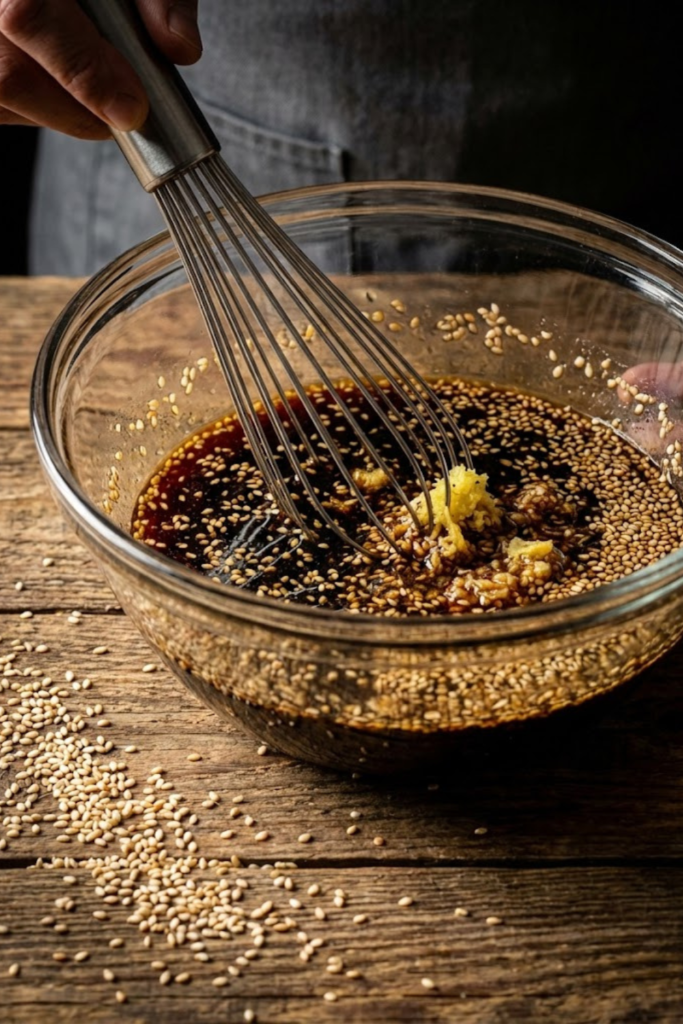
- Soy Sauce: This is your salt element. I prefer low-sodium so I can control the saltiness better.
- Toasted Sesame Oil: Notice I said toasted. The regular stuff is fine, but toasted oil has that nutty, deep aroma that makes your kitchen smell amazing.
- Fresh Ginger: Please, put down the powdered ginger jar. It’s not the same. Grating fresh ginger adds a zing that cuts through the richness of the fish.
I usually mix these in a small bowl first. I used to just dump them on the fish, but then one side would get all the ginger and the other side got nothing. Whisk it up first!
Watch the Clock!
Here is a specific tip that changed my game: do not over-marinate. Tuna is delicate. If you leave it in the marinade for too long, the acid and salt start to break down the proteins. It basically starts to cure the meat, like ceviche, but in a mushy way.
I aim for 15 to 30 minutes, tops. That is just enough time to prep your veggies or pour a glass of wine. I remember feeling so rushed the first time I made this, thinking 15 minutes wasn’t enough. I was wrong. The flavor penetrates quickly.
Adding a Little Kick
If you are like me and enjoy a bit of heat, this is where you can get creative. Sometimes I whisk in a little sriracha or a tiny dab of wasabi paste into the liquid. It adds a subtle heat that you only notice after you swallow.
Just be careful with the sugar or honey. I’ve added honey before, and while it tastes good, the sugar burns really fast in the hot pan. If you aren’t careful, you end up with a burnt black crust that tastes like charcoal. Stick to the savory stuff for the marinade and save the sweetness for a dipping sauce later. Trust me, keeping it simple is the smartest move here.
Crusting and Searing Techniques for Perfect Texture
I have to be real with you—I ruined my fair share of sesame seeds before I finally nailed this. There is nothing sadder than watching all your expensive, beautiful seeds fall off the tuna and burn at the bottom of the pan while the fish sits there naked. It is so frustrating!
I remember standing over the stove one Tuesday night, scraping burnt seeds off my skillet, thinking, “Why does the restaurant version look like a jewel and mine looks like a mess?” But I learned that confidence is key here. You can’t be timid with the crust or the heat. If you hesitate, you lose.
The Sesame Strategy
First off, let’s talk about the visual appeal. I always use a mix of black sesame seeds and white sesame seeds. You can use just one type, sure, but mixing them gives you that gourmet look that makes people think you are a professional chef.
Here is the trick I learned: do not try to bread the fish in a bowl. It’s a nightmare. Pour your seed mix onto a flat dinner plate. Spread it out. Then, take your marinated sesame crusted tuna steak and press it down hard into the seeds.
I mean, really push it. You want those seeds embedded in the meat. Flip it and do it again. If you see a bald spot, patch it up with your fingers. The moisture from the marinade acts as the glue. If the fish is too dry, the seeds won’t stick; if it’s dripping wet, it turns into a sludge. You want it just damp enough to grab the seeds.
Bringing the Heat (Without the Fire Department)
Now, let’s talk about the scariest part for most home cooks: the heat. This is where most people mess up their searing techniques.
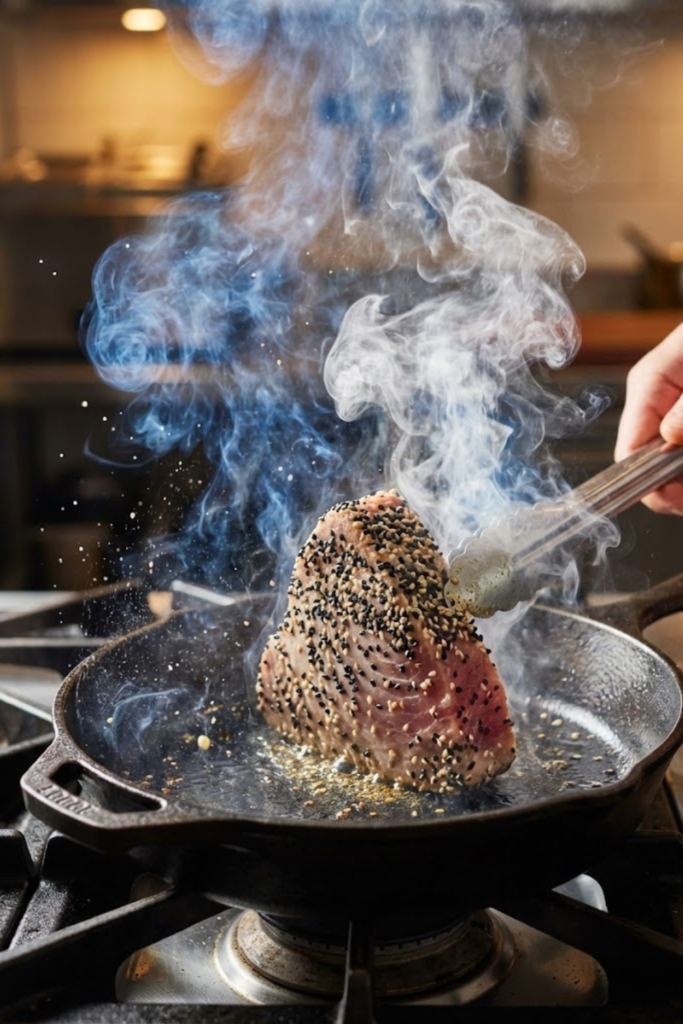
To get that crispy crust without cooking the inside, you need your pan to be smoking hot. Literally. If your smoke alarm isn’t threatening to go off, it might not be hot enough (okay, maybe crack a window just in case).
I prefer using cast iron skillet cooking for this. It holds heat like a champ. If you don’t have one, a heavy stainless steel pan works too. Just avoid thin, cheap non-stick pans if you can; they get too hot too fast and can ruin the coating.
Also, you have to use a high smoke point oil. I made the mistake of using extra virgin olive oil once. The kitchen filled with smoke instantly, and the fish tasted bitter. Stick to avocado oil, grapeseed oil, or canola oil. You need an oil that can handle the heat without burning.
The 60-Second Countdown
Once the oil is shimmering and just starting to smoke, lay the fish down away from you (so you don’t splash hot oil on your shirt—learned that one the hard way).
Then, apply the golden rule: Don’t touch it.
I know it’s tempting to peek. You want to see if it’s burning. But if you move it, you break the crust. I usually count to 60 in my head. That is it. Just 45 to 60 seconds per side.
You are looking for a golden, toasted exterior while the inside stays cool and raw. This is what gives you that perfect rare tuna steak. If you cook it for two or three minutes per side, you are just making expensive canned tuna. It’s a fast process, so don’t walk away to check your phone! A perfectly seared steak is a thing of beauty, but it waits for no one.
Sauces and Sides to Serve with Your Tuna
I once served a beautiful sesame crusted tuna steak alongside a heaping pile of heavy garlic mashed potatoes. I know, I know—what was I thinking? It was a total texture clash. The heavy potatoes completely overwhelmed the delicate, fresh flavor of the fish. It felt like a brick in my stomach.
I learned the hard way that when you are serving something this light and refined, the sides need to match that energy. You want balance, not a competition on the plate. Over the years, I’ve found that keeping the sides simple and crisp is the best way to go.
The Magic is in the Sauce
Let’s be real: dry fish is sad fish. Even if you cook it perfectly rare, you need a sauce to tie it all together. I usually rotate between two easy options depending on my mood.
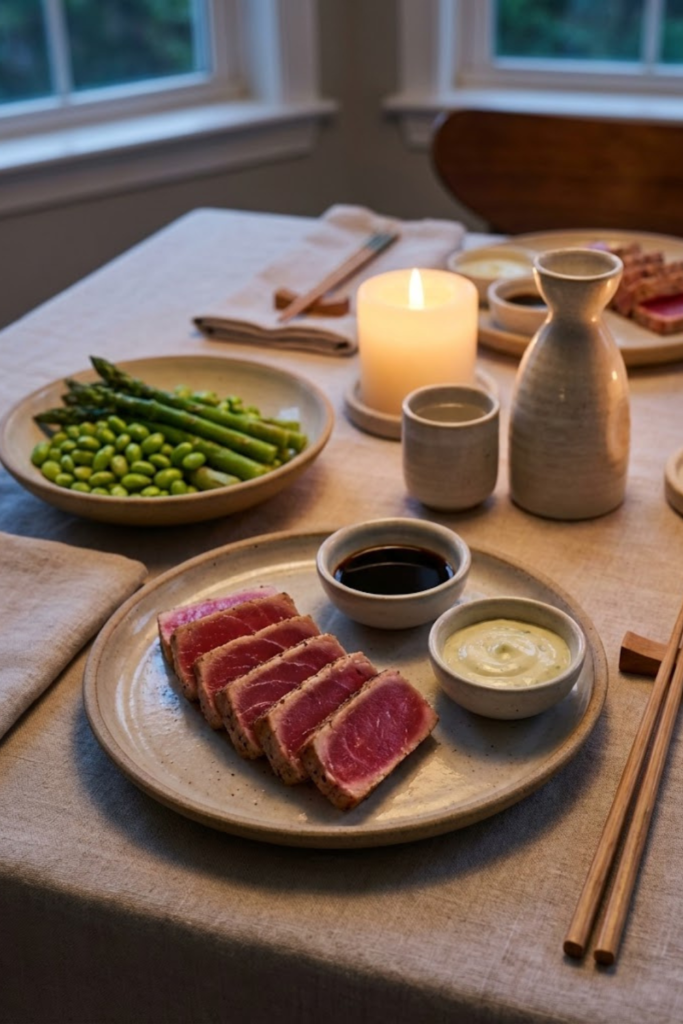
- Spicy Mayo: If I want comfort food vibes, I mix mayonnaise with sriracha and a drop of sesame oil. It’s creamy and packs a punch.
- Ponzu Sauce: If I want something cleaner, I go for a ponzu sauce. It’s basically soy sauce with citrus. You can buy it, but making it is cheaper. Just mix soy sauce with fresh lime juice and a little rice vinegar.
I actually prefer dipping the slices rather than pouring sauce all over the top. It keeps that sesame crust crunchy. There is nothing worse than a soggy crust after all that hard work searing it!
Picking the Right Veggies
Since the tuna is rich (especially if you use avocado oil for searing), I like sides that have a “snap” to them. A cold cucumber salad side is my go-to. I just slice cucumbers paper-thin and toss them in rice vinegar. The cold crunch against the warm, seared fish is honestly addictive.
If you want something cooked, steamed bok choy with a little garlic is fantastic. It takes like three minutes to cook. Just don’t overcook it until it’s mushy. You want that stem to still have a bit of a bite. Green beans work great here too.
The Starch Debate: Rice or Noodles?
You can’t go wrong with steaming hot jasmine rice. It soaks up the extra sauce and is just classic. But recently, I’ve been obsessed with cold soba noodles. They are made from buckwheat and have this nutty flavor that matches the sesame seeds perfectly.
I usually boil the noodles, rinse them under cold water (super important to get the starch off!), and toss them with a little scallion and oil. It makes the whole meal feel like something you’d get at a high-end Japanese bistro.
The Final Cut: Slicing Matters!
Okay, here is the most critical tip I can give you: get your sharpest knife. If you try to slice your sesame crusted tuna steak with a dull knife, you will squish it. You’ll end up with ragged, torn chunks instead of beautiful slices.
Also, look at the lines in the meat. You need to be slicing tuna against grain. If you cut with the grain, the meat can be stringy and chewy. Cutting across the fibers makes it fall-apart tender. I usually slice it about a quarter-inch thick and fan it out on the plate. It looks fancy, tastes amazing, and makes you look like a pro.
Making a restaurant-quality sesame crusted tuna steak doesn’t require a culinary degree, just a hot pan and good ingredients. Once you master that quick sear, you’ll wonder why you ever paid $30 for it at a bistro. Give this recipe a try this week—your tastebuds will thank you! If you loved this guide, please save it and share it on Pinterest!