Did you know that “German Chocolate” cake isn’t actually from Germany? It’s named after Samuel German, an American baker who developed a specific type of dark baking chocolate in the 1850s! That little fun fact always blows my mind.
If you are here, you are likely craving that distinct, irresistible combination of mild chocolate cake and that sweet, gooey coconut-pecan frosting. I know I am! In this guide, we aren’t just sticking to the traditional cake (though we will definitely cover that beauty). We are exploring the whole universe of German chocolate bakes. Whether you want a quick cookie fix or a show-stopping tower of decadence, you’re in the right place. Let’s get baking!
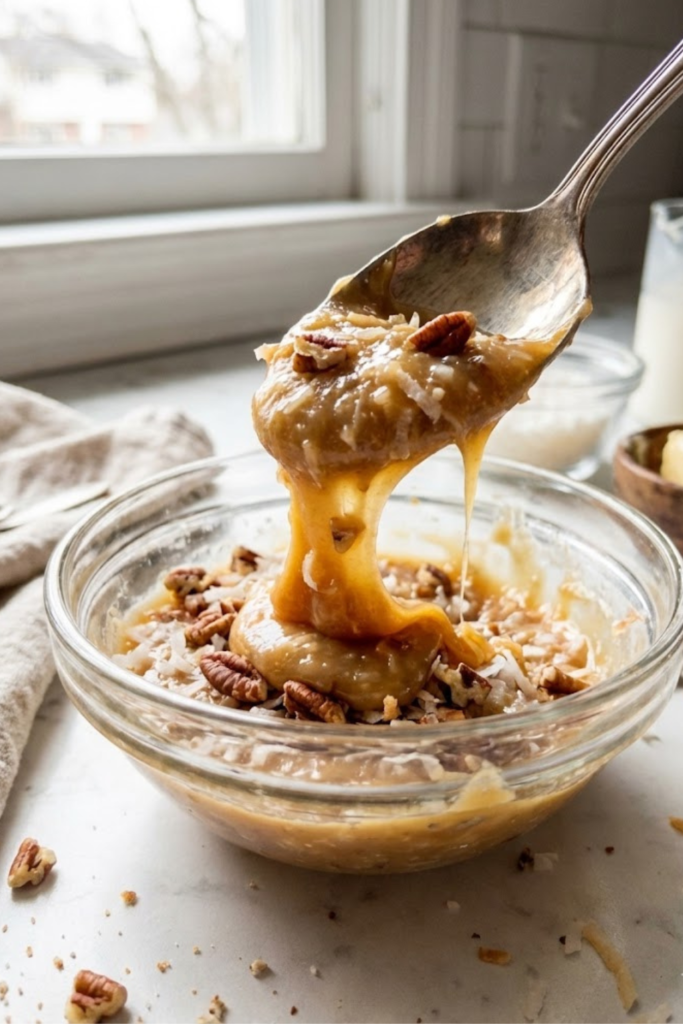
Mastering the Iconic Coconut Pecan Frosting
Look, I have to be honest with you. The first time I tried to make this frosting, it was a total disaster. I was rushing—classic mistake, right?—and I cranked the heat up way too high. Instead of that luscious, golden goo we all dream about, I ended up with what looked like sweet scrambled eggs swimming in milk. It was gross. I actually cried a little bit before scraping it into the bin. But hey, we live and we learn!
Through a lot of trial and plenty of error, I figured out that patience is literally the only secret ingredient that matters here. If you want your German chocolate bakes to taste like the real deal, you can’t rush the custard.
The Custard Base is Boss
The base of this frosting is a mixture of sugar, evaporated milk, butter, and egg yolks. It sounds simple, but it’s finicky. You have to cook it over medium-low heat. I mean it—keep it low.
I usually stand there stirring constantly for about 10 to 12 minutes. My arm gets tired, not gonna lie. But if you stop stirring, the yolks will cook too fast on the bottom of the pan. You’re looking for it to thicken up enough that it coats the back of your spoon. If it looks like thin soup, keep going.
One time, I pulled it off early because my phone rang. Big mistake. The frosting never set, and my cake layers slid right off each other like they were on a slip-and-slide. It was funny later, but not in the moment!
Toast Those Nuts (Seriously)
Okay, here is a hill I am willing to die on: you have to toast your pecans and coconut. I used to skip this step because I’m lazy sometimes. I figured, “It’s going in the oven anyway, right?” Wrong.
When you toast the pecans and the shredded coconut beforehand, it brings out this nutty, deep flavor that raw ingredients just don’t have. It adds a crunch that stands up to the sticky sweetness of the frosting.
- Tip: Spread them on a baking sheet and pop them in at 350°F for about 5-7 minutes. Watch them like a hawk! Coconut goes from “perfectly golden” to “burnt crisp” in about thirty seconds. I’ve set off my smoke detector more than once doing this.
Fixing the Slop
Sometimes, even when you follow the directions, the frosting comes out too runny. It happens to the best of us. If your coconut pecan frosting looks too loose to spread, don’t panic.
Just let it cool down completely. Actually, let it sit in the fridge for a bit. As the butter in the mixture cools, it stiffens up. I’ve definitely frosted a cake while the filling was still warm because I was impatient, and it just oozed out the sides. It looked like a delicious mess, but it wasn’t pretty.
So, take a breath. Let it cool. Your German chocolate bakes deserve that perfect, thick texture that stays put when you slice it. If it’s still too runny after cooling, you can stir in a little more toasted coconut to soak up the liquid. It works like a charm.
Baking the Perfect German Chocolate Cake Layers
I used to think all chocolate cakes were created equal. I mean, chocolate is chocolate, isn’t it? Well, I learned the hard way that is definitely not true when I tried to make my first German chocolate bakes using regular cocoa powder.
The result was a dark, rich devil’s food cake. It was delicious, sure, but it wasn’t German chocolate cake. The layers were too dark and the flavor was too intense for the frosting. I was so bummed out because I wanted that authentic, lighter color and milder taste.
The Chocolate Confusion
Here is the thing I wish someone told me earlier: you need to use sweet baking chocolate. This isn’t your standard semi-sweet chip or bitter dark bar. Sweet baking chocolate has a higher sugar content and fewer cacao solids.
That is what gives the cake layers that distinct, light reddish-brown color. When you melt it down, do it gently! I once nuked a bar in the microwave for two minutes straight and it seized up into a hard, grainy rock. I had to throw the whole bowl out.
Now, I melt it in short bursts, stirring in between. It’s annoying to stop and start, but it saves your chocolate from burning.
The Buttermilk Factor
If there is one ingredient you shouldn’t swap out, it’s buttermilk. I’ve tried using regular milk because I didn’t want to run to the store, and the cake came out dry. Like, “needs a glass of water with every bite” dry.
Buttermilk brings acidity to the batter. This breaks down the gluten and makes the crumb super tender. It’s basically a safety net for your cake layers. If you don’t have any, you can make a substitute by adding vinegar to milk, but honestly? The real stuff is better.
Handling Your Layers
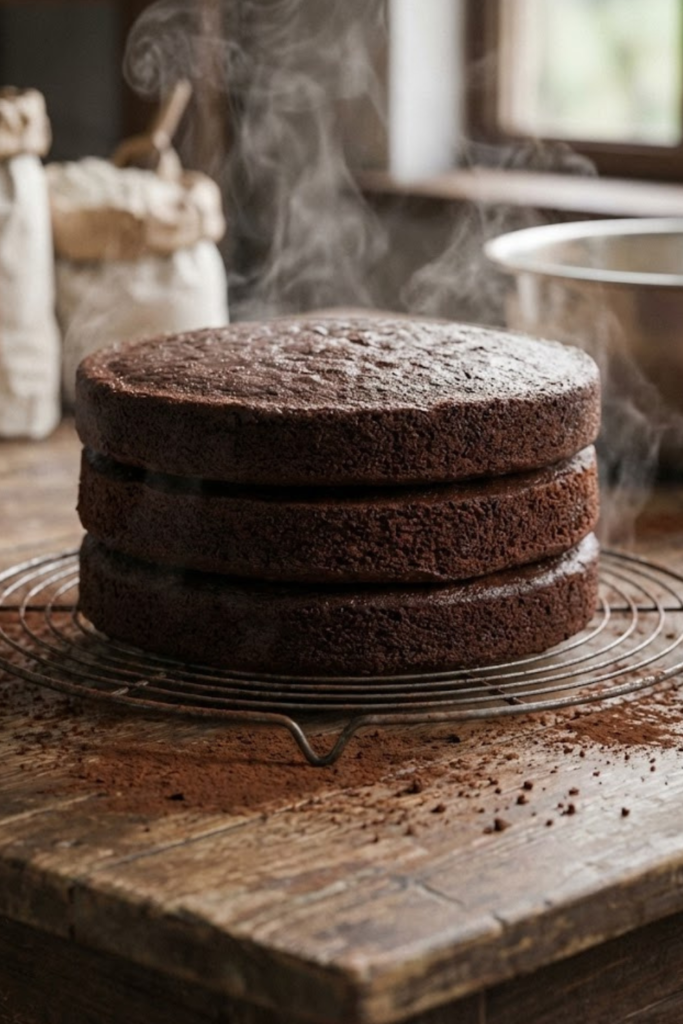
These cake layers can be a bit more delicate than your average birthday cake. I remember trying to flip one out of the pan while it was still piping hot. It cracked right down the middle.
I stood there staring at it, feeling total frustration. I ended up gluing it back together with frosting, but I knew it wasn’t right.
- Tip: Let the cakes cool in the pans for at least 15 minutes before you try to move them to cooling racks.
Also, consider using parchment paper rounds in the bottom of your pans. It is a total lifesaver. There is nothing worse than baking a perfect layer only to have the bottom stick to the pan. Be patient, let them cool, and treat them gently!
Transforming Classics: German Chocolate Cookies and Brownies
Let’s be real for a second. Sometimes you crave those German chocolate bakes, but you just do not have the energy to construct a three-layer cake. I have been there plenty of times. It’s Friday night, I’m tired from teaching, and the last thing I want to do is wash three cake pans and a stand mixer bowl.
That is usually when I decide to cheat and make brownies or cookies instead. I used to think this was “settling,” but honestly? I might actually prefer these smaller bites now. They pack all that punchy flavor without the stress of cake assembly. But, just like the cake, I have had my fair share of disasters trying to adapt these recipes.
The Brownie Experiment
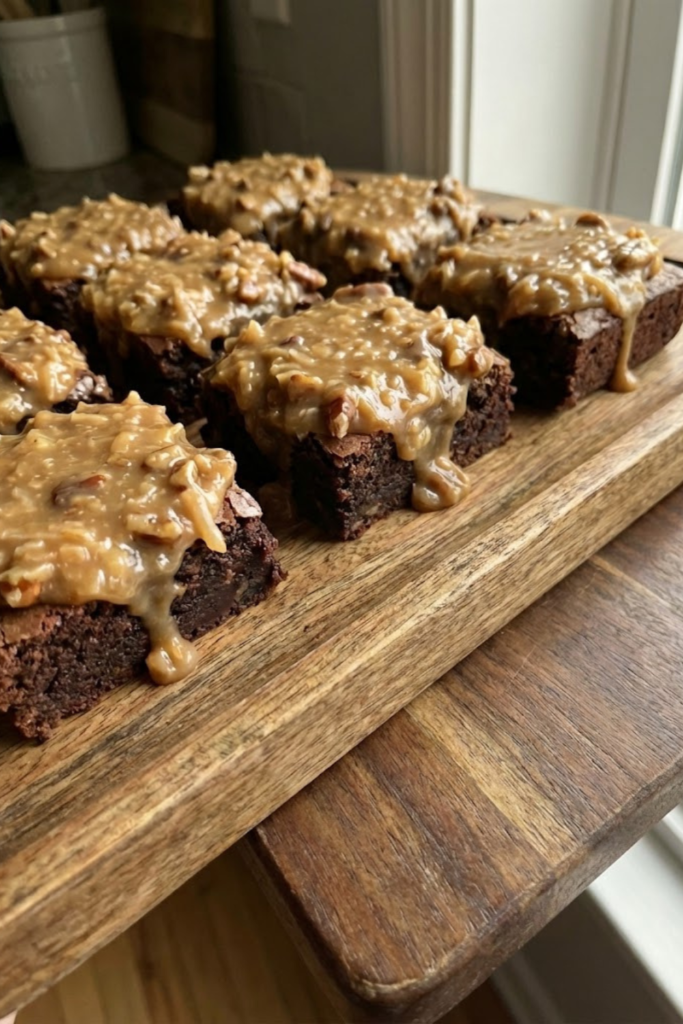
The first time I tried to turn this into a brownie, I made a huge mess. I thought I could just dump the coconut-pecan frosting on top of the brownie batter and bake it all at once.
Big mistake. The frosting is heavy, right? So, it sank right to the bottom and burned onto the pan while the brownie batter floated on top and stayed raw. It was a hot mess. I was so mad I almost threw the pan in the sink without washing it.
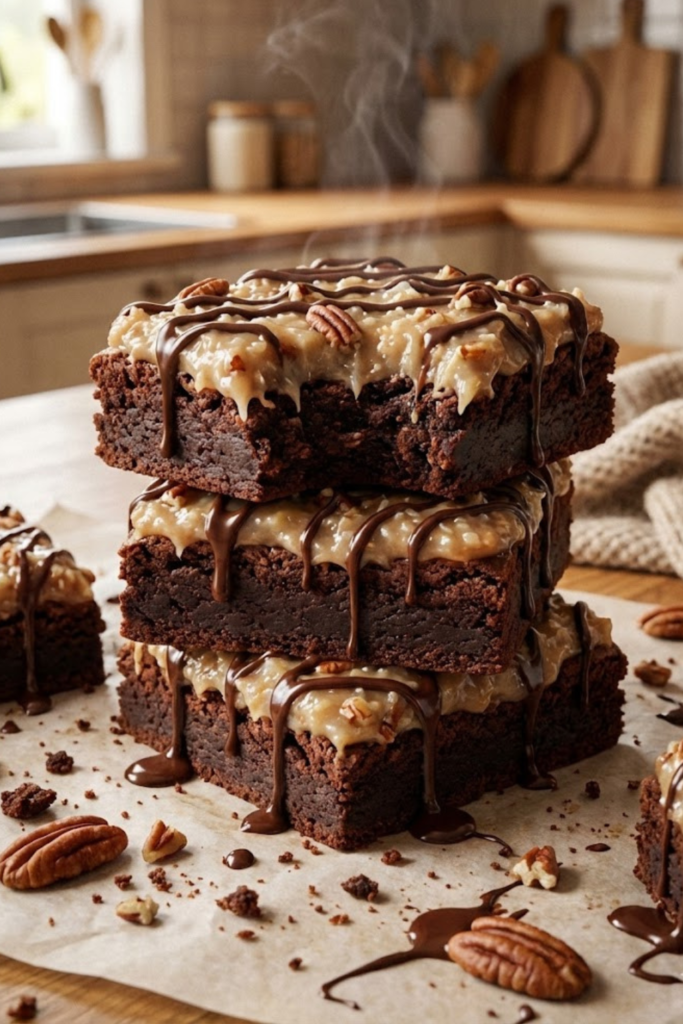
Now, I have a system. I bake the gooey brownie bases for about 20 minutes first. Then, I pull them out, dollop the topping on, and swirl it gently with a knife. You don’t want to mix it in completely; you just want it to marble. Pop it back in for another 10 minutes. This way, you get pockets of that sweet coconut goodness in every bite, and nothing burns.
The Thumbprint Trick
If you are more of a cookie person, you have to try chocolate thumbprints. But listen to me closely: make the well deep.
I made a batch last Christmas where I just barely pressed my thumb into the dough. When they baked, the cookies spread out, the “well” disappeared, and my expensive frosting slid right off onto the baking sheet. I was scrapping sticky pecans off the parchment paper and eating them by the handful. Delicious, but not presentable.
Use the back of a measuring spoon—like a 1/2 teaspoon—to press a serious dent into the dough balls immediately after they come out of the oven. The dough is soft then. It creates a perfect little cup for your frosting.
Keeping Them Fresh
One thing about German chocolate bakes is that they can dry out if you aren’t careful. Since the frosting is sticky, you can’t really stack these treats easily.
I learned that the hard way when I brought a tin of stacked cookies to the staff room. By lunch, they were all stuck together in one giant, ugly clump. Now, I layer them between sheets of wax paper. It keeps them separate and helps them stay moist. If you leave them out on the counter uncovered, that coconut topping gets crunchy in a bad way. Keep ‘em sealed tight!
Vegan and Gluten-Free German Chocolate Bakes
I have a confession to make. A few years ago, my best friend went vegan and gluten-free at the same time. I wanted to be supportive, I really did. So, for her birthday, I decided to adapt my grandmother’s recipe for German chocolate bakes.
I was confident. I was cocky. And the result was… interesting. The cake was dense enough to be a doorstop, and the frosting slid off like it was running away from a crime scene. It was embarrassing. We laughed about it later over store-bought sorbet, but I was determined to crack the code.
It took me about six tries and a lot of wasted ingredients, but I finally figured out how to make a version that doesn’t taste like “diet food.”
The Dairy-Free Frosting Dilemma
The soul of this dessert is that custard frosting. Traditionally, it relies on egg yolks and butter for thickness. When I first tried to swap that out, I used almond milk. Big mistake. It was watery and sad.
You have to use full-fat canned coconut milk. I’m talking about the stuff that separates in the can, not the stuff you put in your cereal. The fat content is crucial for getting that caramel-like texture.
- Tip: When you cook the coconut milk with brown sugar and cornstarch (to replace the eggs), keep the heat low.
If you boil it too hard, the oil separates, and you get a greasy mess. I ruined a whole batch that way. It looked oily and unappetizing. Patience is key here. Once it thickens, stir in your toasted pecans and coconut. The coconut flavor in the milk actually boosts the tropical vibe of German chocolate bakes, which is a happy accident.
Flour Power (and Pitfalls)
Gluten-free baking is tricky. I used to think I could just swap all-purpose flour for any gluten-free blend. Wrong.
My first attempt crumbled the second I looked at it. For a chocolate cake that can hold up to heavy frosting, you need a blend that includes xanthan gum. If your blend doesn’t have it, add a half teaspoon yourself. It acts like the glue.
I also like to swap about 1/4 cup of the flour blend for almond flour. It adds moisture. Gluten-free cakes tend to be dry, and the almond flour keeps things tender.
Just don’t overmix it! Even without gluten, you can mess up the texture. I usually mix it by hand with a spatula just until the dry streaks disappear.
Binding Without Eggs
This was the hardest part for me to get used to. Flax eggs are weird, guys. They look like slime. But they work wonders if you treat them right.
To make one flax egg, you mix one tablespoon of ground flaxseed meal with three tablespoons of warm water. Here is the trick I missed the first time: you have to let it sit.
I used to mix it and dump it right in. The cake fell apart. You need to let that goop sit on the counter for at least 10 to 15 minutes until it gets thick and gelatinous. It needs to look like an egg white.
If you rush this step, your German chocolate bakes won’t have the structure to hold up that heavy, delicious frosting. Trust me, nobody wants a cake that collapses into a pile of crumbs when you cut it.
We made it to the end! We have covered a serious amount of ground today. From learning the hard way that patience is the only secret to that iconic coconut pecan frosting, to realizing that sweet baking chocolate is the only way to get that authentic flavor, we have done it all.
I really hope you feel ready to tackle these German chocolate bakes. It might seem like a lot of steps, especially if you are separating eggs or waiting for flax meal to thicken, but it is so worth it. Remember my disaster stories? If I can turn a kitchen fail into a delicious dessert, you can too. Just keep an eye on your oven and don’t rush the cooling process.
If you found these tips helpful (or just enjoyed laughing at my baking mistakes), do me a huge favor. Pin this post to your “Best Desserts” board on Pinterest. It helps other bakers find these recipes, and it saves you from hunting for them later when that chocolate craving hits again. Now, go enjoy a slice!