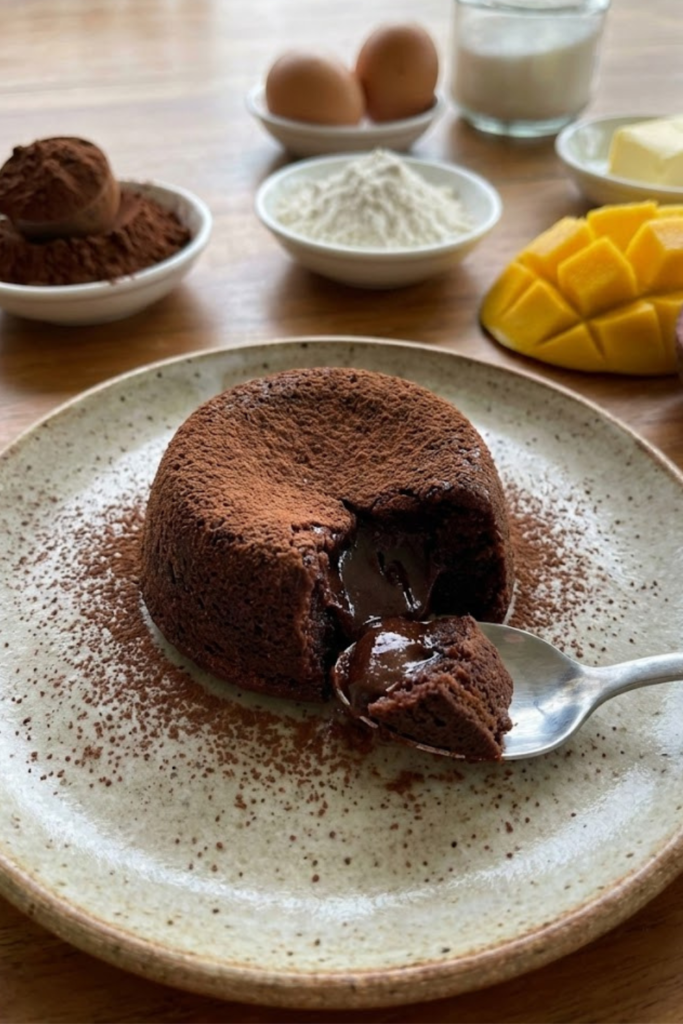
You know, there is nothing worse than craving something sweet, baking a massive 9-inch tower, and then watching half of it go stale on the counter because you just couldn’t finish it—I’ve definitely been there, guiltily throwing away dry crumbs after a week! That’s exactly why I started messing around with small batch baking; this small chocolate cake is my absolute go-to when I need a rich, fudgy fix without the commitment of a full-sized project. It’s honestly a lifesaver for those sudden chocolate cravings where you just want a slice or two, and let me tell you, getting that perfect moist crumb in a 6-inch pan was a bit of a trial-and-error journey (I burned a few before getting it right!), but the result is totally worth it.
Why Bake a Small Batch Chocolate Cake?
Honestly, I used to think that if I wasn’t destroying my kitchen to make a triple-layer masterpiece, I wasn’t really baking. I remember this one time I whipped up a massive sheet cake for a casual movie night with just my partner. We ate maybe three slices between us. The rest of it just sat on the counter, staring at me judgmentally for five days until it turned into a rock-hard brick. I had to throw the whole thing out. It felt like such a waste of good ingredients (and money!).
That was my lightbulb moment for small batch baking.
Switching to a small chocolate cake isn’t just about not having leftovers; it is a total lifestyle shift for anyone with a sweet tooth. You get that full, rich satisfaction of a homemade dessert without the guilt of tossing half of it in the trash later. It’s portion control that doesn’t feel like a punishment.
The “I Need It Now” Factor
Let’s be real for a second—when a chocolate craving hits, patience is not my strong suit. I want that brownie-like texture immediately. One of the biggest perks of scaling down is speed. A standard 9-inch cake can take forever to bake and cool.
My 6 inch cake recipe usually bakes up in about 20 to 25 minutes. Because the surface area is smaller, it cools down way faster too. This means I can go from mixing bowl to frosting my face in under an hour. If you are baking for a quick date night dessert or a solo treat, this speed is a total game changer.
Saving Your Pantry Stash
I can’t tell you how many times I’ve wanted to bake but realized I only had one egg left in the carton. Frustrating, right?
Another massive win for the mini chocolate cake is that it barely puts a dent in your pantry staples. You aren’t using a pound of butter or four cups of flour. It is surprisingly economical. This makes it perfect for those moments when you haven’t done a grocery run in a while but still need something sweet. You can usually scrape together the ingredients for a dessert for two without needing a special trip to the store.
It Just Feels Special
There is something undeniably cute about a tiny cake. It feels curated and intentional rather than mass-produced. I’ve found that making a small chocolate cake actually makes the occasion feel more intimate. It’s not a generic party dessert; it’s a little luxury made specifically for that moment. Plus, if you mess it up? It’s way less painful to toss a tiny layer than a massive one (ask me how I know!).
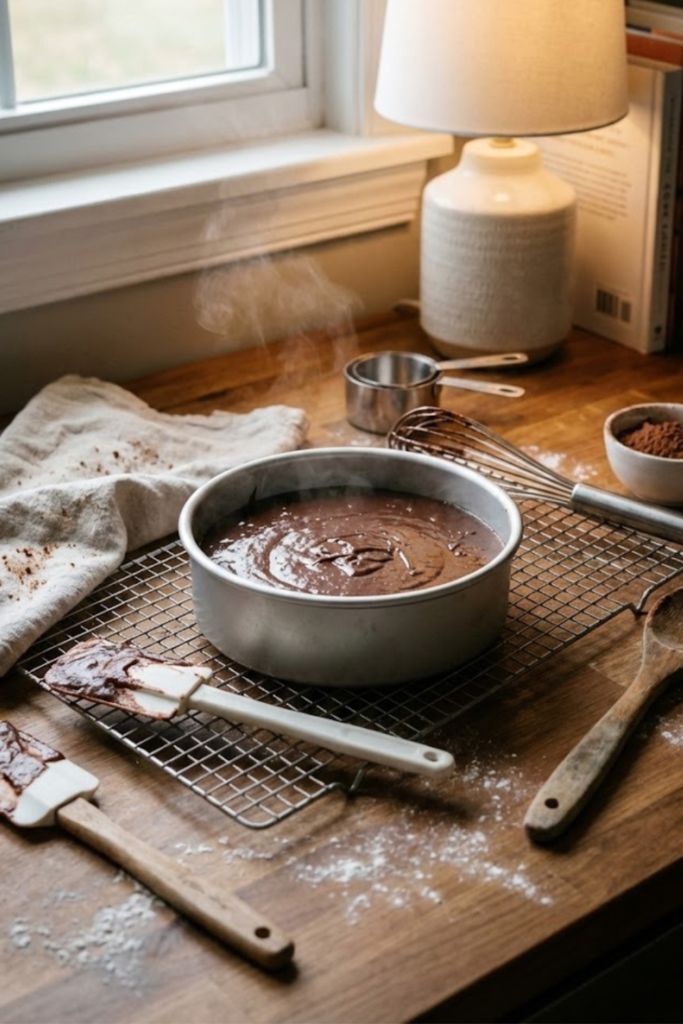
Essential Ingredients for a Moist Mini Cake
When you are making a massive sheet cake, you can sometimes get away with using “meh” ingredients because the sheer volume of sugar and frosting hides a lot of sins. But with a small chocolate cake, there is nowhere to hide. Every ingredient needs to pull its weight. I learned this the hard way when I tried to swap out ingredients on the fly and ended up with a mini chocolate cake that tasted like a dry sponge. Not my finest moment in the kitchen!
Since we are working with such small quantities, precision is everything. Here is what I’ve found actually works to get that super dark, moist chocolate cake texture we all want.
The Cocoa Conundrum
Okay, let’s talk about cocoa powder. I used to grab whatever was cheapest at the store, usually that generic “natural” cocoa. Big mistake.
For a really rich flavor in small batch baking, you generally want to use Dutch-process cocoa. It has been treated to reduce acidity, which gives it a darker color and a smoother, fudgier taste. I once used natural cocoa in a recipe that called for Dutch, and the cake came out weirdly pale and tasted kind of metallic. If your recipe uses baking powder, stick to Dutch. It makes the cake look like professional bakery quality.
Butter vs. Oil: The Great Debate
I love the taste of butter—who doesn’t? But for a truly moist chocolate cake, vegetable oil is actually the winner.
Butter is roughly 80% fat and 20% water, whereas oil is 100% fat. In a small cake that bakes quickly, butter can sometimes make the crumb a bit tighter and drier once it cools down. Oil keeps the cake soft for days. I usually grab a neutral oil like canola or vegetable oil. If you are feeling fancy and want that buttery flavor, you can do a 50/50 split, but honestly, oil is reliable and easier to mix by hand.
The Secret Weapon: Hot Coffee
If you hate coffee, don’t scroll past this! Adding hot liquid to the batter blooms the cocoa powder, releasing all that chocolatey goodness.
I always swap out the water or milk for hot coffee in my chocolate cake recipes. It does not make the cake taste like a latte; it just makes the chocolate taste more like chocolate. It deepens the dark chocolate dessert profile in a way that milk just can’t. If you absolutely can’t do coffee, hot water works, but you’re missing out on a flavor booster.
Don’t Eye-Ball the Leavening
This is where I have messed up the most. When a recipe calls for 1/4 teaspoon of baking soda, do not guess!
In a 6 inch cake recipe, a little too much leavening will cause the cake to rise too fast and then collapse in the middle, leaving you with a sad crater. Too little, and it’s a dense puck. I highly recommend using actual measuring spoons and leveling them off with a knife. It feels fussy, but baking science is unforgiving in small amounts. Also, make sure your baking soda isn’t three years old—freshness matters!
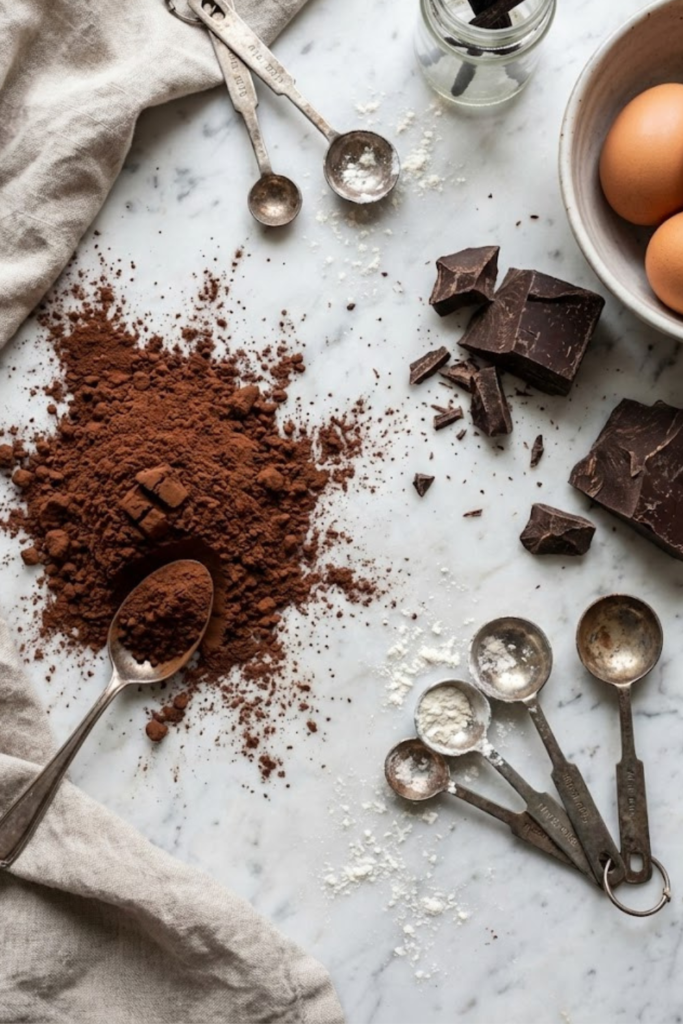
Equipment: The Secret to Small Batch Success
I remember the first time I tried to bake a small chocolate cake, I didn’t actually own any mini pans. I thought I could just pour a small amount of batter into my standard 9-inch round pan and watch it magically work out. Spoiler alert: it did not. I ended up with a sad, thin pancake that was burnt on the edges and raw in the middle. It was a total disaster and so frustrating!
Having the right tools makes all the difference in small batch baking. You don’t need a kitchen full of gadgets, but you do need a few specific items to keep your sanity intact.
The Right Pan Size Matters
If you are going to commit to making a 6 inch cake recipe, you really need to buy a 6-inch pan. It sounds obvious, but using a pan that is too big allows the batter to spread too thin, drying it out instantly. A 6-inch round pan is the sweet spot for a dessert for two (or four generous slices).
I prefer aluminum pans with straight sides rather than the dark non-stick ones. The dark pans tend to absorb heat too fast, which can scorch the sides of your mini chocolate cake before the center is set. If you only have dark pans, reduce your oven temp by about 25 degrees. Trust me, I learned that one the hard way after scraping burnt crust off a cake for twenty minutes.
Ditch the Stand Mixer
Here is some good news: you can leave that heavy stand mixer in the cupboard. When you are making a small cake, the volume of ingredients is often too small for the beaters to catch properly.
I’ve found that a simple balloon whisk and a medium bowl work way better. When I use my big mixer for small batches, I spend half the time stopping to scrape the bowl because the paddle just pushes the butter to the walls. Whisking by hand gives you more control and prevents over-mixing, which is the enemy of a moist chocolate cake. Plus, fewer dishes to wash is always a win in my book.
Ramekins to the Rescue
Don’t want to buy a new pan? I totally get it. If you have ceramic ramekins in your cupboard, you are already halfway there.
You can split this batter between two or three large ramekins for adorable, individual ramekin desserts. Just keep in mind that baking times will change. Ramekins are usually thicker than metal pans, so they hold heat differently. I usually start checking them about 5 minutes earlier than the recipe says. It’s a great hack for a date night dessert because everyone gets their own little cake, and there’s no fighting over who got the bigger slice!
The Paper Trick
One last tip that has saved me so many tears: parchment paper. In small pans, it can be tricky to get a knife in there to loosen the cake without wrecking the sides.
I always trace the bottom of my pan on parchment paper, cut out the circle, and line the bottom. Even if I grease the pan well, I don’t trust it completely. That little circle of paper guarantees your easy chocolate cake drops out perfectly smooth every single time. It takes two minutes and saves you from the heartbreak of a stuck cake.
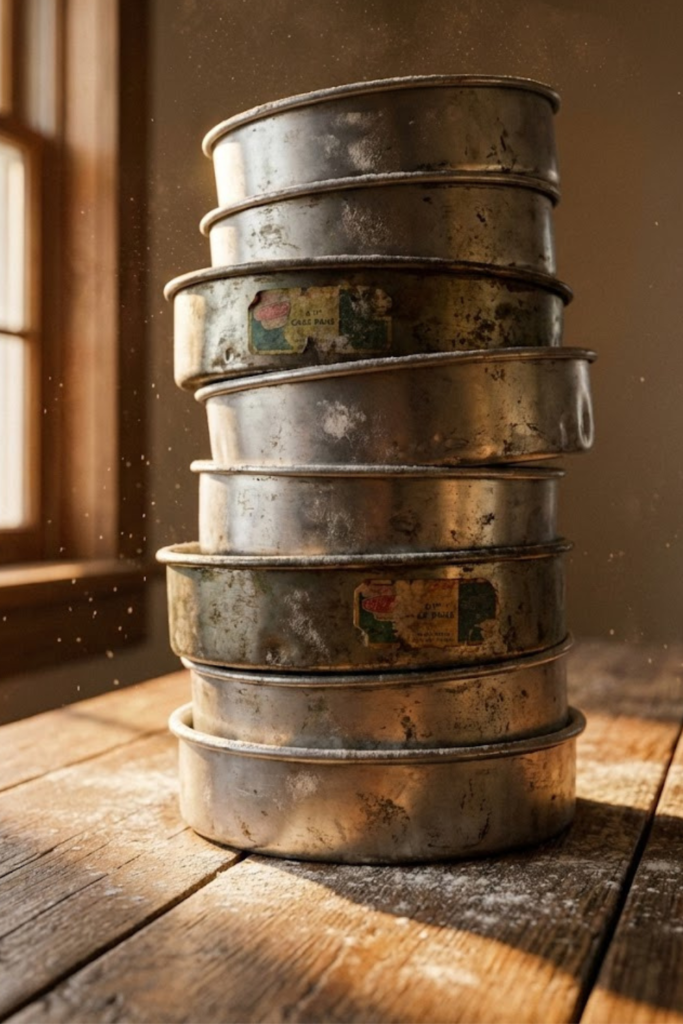
Step-by-Step: Making Your Small Chocolate Cake
I used to think that following a recipe was just a suggestion. I’d throw everything in the bowl, crank the oven to whatever, and hope for the best. That attitude resulted in a lot of “rustic” (read: burnt and sunken) cakes. When it comes to a small chocolate cake, the margin for error is tiny. Because the batter volume is so small, you can’t really wing it like you might with a big casserole.
This easy chocolate cake comes together quickly, but I’ve learned that the order of operations really matters if you want that tender, fudgy cake texture.
Prep Is Boring But Necessary
First off, turn your oven on before you do anything else. I’ve definitely mixed up my batter and then realized the oven was cold, leaving my poor cake to sit on the counter losing its lift while the oven preheated. For this 6 inch cake recipe, you want a steady 350°F (175°C).
Also, get your ingredients to room temperature. I know, I know—it’s annoying when you want cake now. But cold eggs hitting warm butter or oil can seize up and make your batter weirdly chunky. If I’m in a rush, I put my egg in a bowl of warm water for five minutes. It works like a charm.
The Muffin Method
Since we ditched the stand mixer, we are using what bakers call the “muffin method.” This is basically mixing your dry ingredients in one bowl and your wet ingredients in another, then combining them.
This is the most critical part for a moist chocolate cake: pour the wet into the dry and mix only until the flour just disappears. Seriously, stop! If you keep whisking until it’s perfectly smooth, you are developing gluten. I once over-mixed a batch thinking I was being thorough, and the cake came out rubbery and tough. It was basically a chocolate tire. Lumps are actually okay here; they will bake out.
The Baking Cue
Because every oven is different, the baking time is a guideline, not a law. My oven runs hot, so I always check my mini chocolate cake about 5 minutes early.
Don’t just rely on a timer. Use your senses. The cake is done when the top looks set and springs back when you gently poke it with your finger. If your finger leaves a dent, it needs more time. You can also use a toothpick, but be careful—for a fudgy cake, a few moist crumbs on the toothpick are actually a good thing. If it comes out totally clean, you might have overbaked it slightly.
The Hardest Part: Waiting
This is where I usually fail. The smell of baking chocolate fills the kitchen, and I just want to dig in. But you have to let the cake cool in the pan for at least 10 minutes.
If you try to flip a hot small chocolate cake out of the pan, it will likely crumble into a mess of hot crumbs. The structure needs time to set as it cools. I’ve ruined perfectly good cakes by being impatient and trying to dump them out too soon. Let it chill, then move it to a wire rack. It’s worth the wait, I promise.
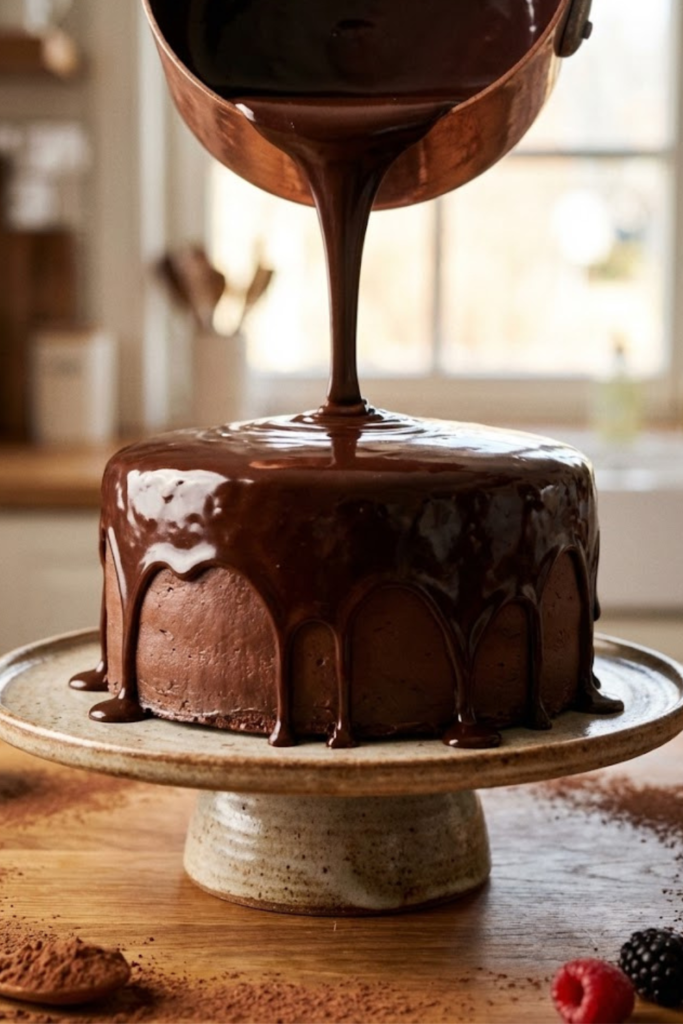
rosting and Decorating a Mini Cake
I have a bit of a confession to make: usually, I only bake the cake so I have a socially acceptable vehicle for eating frosting. But when I started getting into small batch baking, I ran into a weird problem. Most standard frosting recipes make enough sugary cement to cover a wedding cake, not a cute little 6 inch cake recipe.
I remember the first time I made this mini chocolate cake. I whipped up a full batch of chocolate buttercream, used maybe a third of it on the cake, and then… well, I sat on the kitchen floor and ate a shameful amount of the leftovers with a spoon. It was great in the moment, but my stomach hated me later.
Ganache vs. Buttercream
If you want my honest opinion, for a small cake, chocolate ganache is the way to go.
Buttercream is classic, sure, but it involves whipping butter and sugar and making a mess. Ganache is just hot cream and chocolate. That’s it. For a small chocolate cake, a rich ganache feels more elegant and less like a birthday party for a five-year-old. Plus, it is so much easier to scale down. I usually do a 1:1 ratio—half a cup of cream, half a cup of chocolate chips. It pours over the cake like a dream and hides any imperfections in your baking (which I definitely need sometimes!).
The Small Batch Frosting Struggle
If you are Team Buttercream all the way, you have to be careful with the math. Trying to divide a recipe by four is a headache.
I’ve found that for a dessert for two, you really only need about 1/4 cup of butter and 1/2 to 3/4 cup of powdered sugar. It looks like a tiny amount in the bowl, and you might panic thinking it’s not enough. Don’t worry! A small cake doesn’t need inches of frosting. A thin, swoopy layer looks rustic and homemade. If you try to pile it on too high, the ratio of frosting to cake gets all messed up, and it’s just too sweet.
Simple is Better
When it comes to cake decorating ideas for mini cakes, I have learned to embrace the “less is more” vibe. I used to try piping intricate roses on these tiny cakes, and it just looked cluttered and messy.
Now, I grab whatever fresh fruit I have. A pile of raspberries or strawberries right in the center gives it a pop of color and cuts through the richness of the dark chocolate dessert. It looks effortless, like you just threw it together for a magazine shoot. If I’m feeling lazy (which is often), a simple dusting of powdered sugar is totally acceptable. It highlights the dark color of the cake and takes zero effort.
The “Naked” Look
If you really hate frosting cakes, the “naked cake” trend is your best friend.
Basically, you just put a little frosting between the layers (if you sliced it) and maybe a smear on top, leaving the sides bare. It shows off the fudgy cake texture and saves you the stress of trying to get smooth, perfect sides. I love this style for a casual date night dessert because it feels relaxed. Plus, it means fewer calories from sugar, so you can totally justify having a second slice, right?
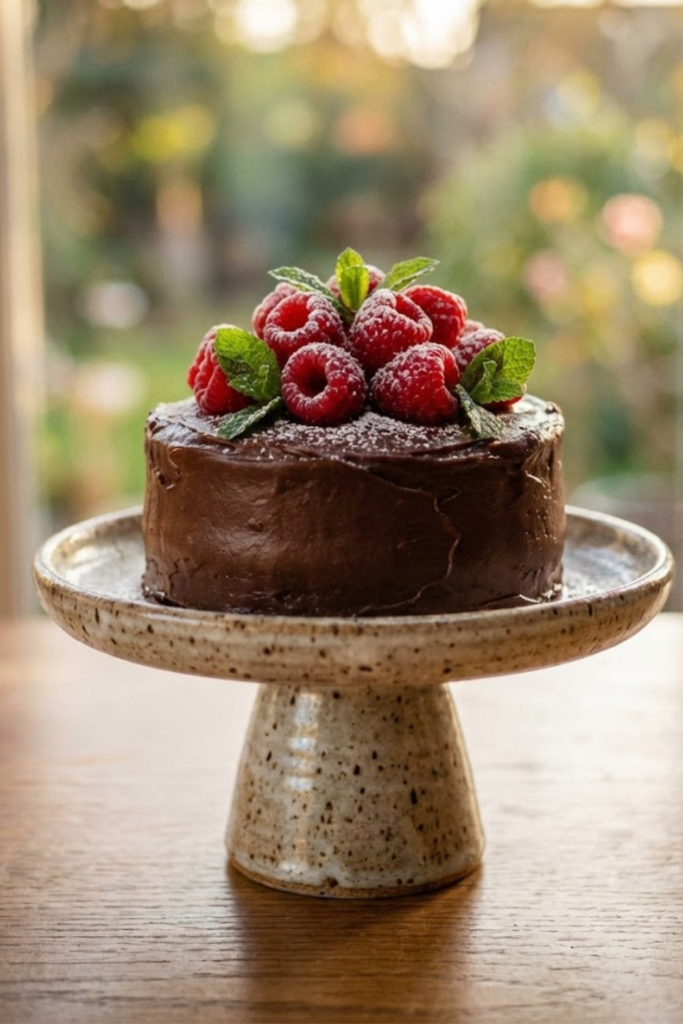
Honestly, making the switch to this small chocolate cake has kind of changed how I look at dessert in general. For the longest time, I thought baking had to be this huge production. You know, the kind where you need a free afternoon, a clean dishwasher, and an army of friends to help you eat the results . But really, who has time for that in 2026? Mastering this mini chocolate cake taught me that treating yourself doesn’t have to be a special occasion thing; it can just be a Tuesday night thing. There is something really satisfying about mixing up a quick batter, tossing it in the oven, and having a fresh, warm dessert for two ready by the time you’ve finished cleaning up dinner . It’s not just about portion control; it’s about that specific moment when you take the first bite of warm, fudgy cake and realize you didn’t have to stress to make it. You can dress it up with fancy berries for a date night dessert or just eat it straight from the pan with a fork while watching TV—I promise I won’t tell anyone! No leftovers tempting you for breakfast (okay, maybe just one slice), and absolutely no guilt about throwing away stale food .