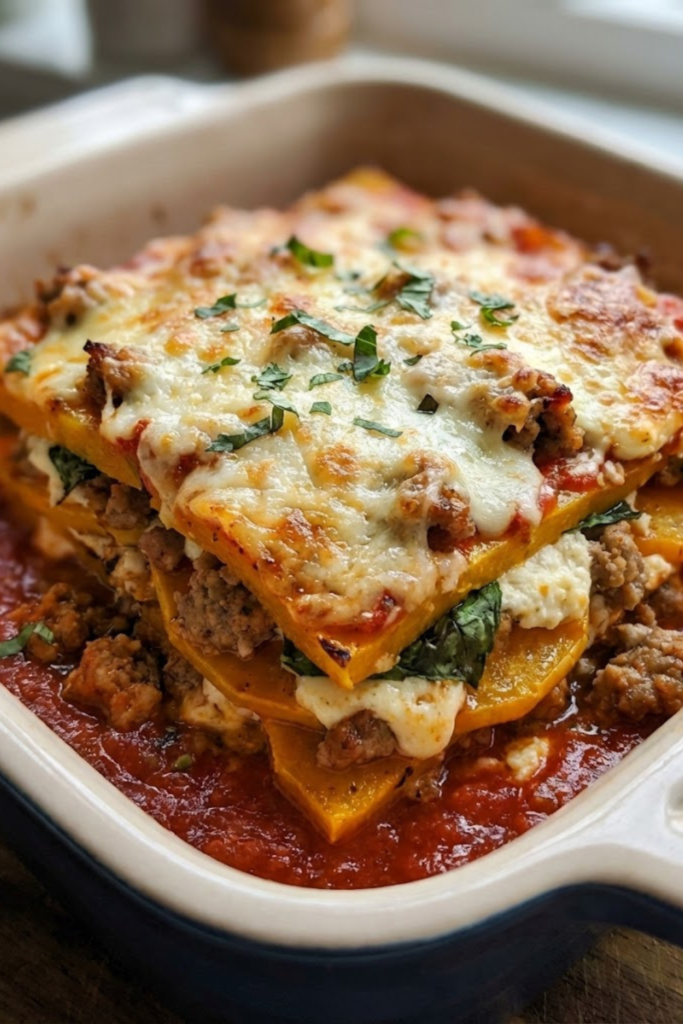
I used to think going low carb meant saying goodbye to real comfort food, and frankly, that made me pretty sad. After a few disastrous attempts with zucchini that turned my dinner into a watery soup—huge fail—I finally cracked the code with this recipe. This noodle less butternut sausage lasagna totally changed the game for our Sunday nights, giving us that cheesy goodness without the bloat. It’s got that rich, savory bite you crave without the heavy carb crash afterwards. By swapping in roasted butternut planks, you get a subtle sweetness that pairs wildly well with the spicy Italian sausage. Trust me, your family won’t even miss the wheat!
Why Swap Noodles for Butternut Squash?
Look, I used to be a total pasta purist. I grew up thinking that if it wasn’t made of semolina flour and boiled in salted water, it wasn’t lasagna. But then I hit my mid-30s, and suddenly, a big plate of regular noodles started putting me into a coma on the couch by 7 PM. It was brutal. I wanted the comfort without feeling like a stuffed turkey afterwards. That’s when I stumbled onto the idea of using veggies as the vehicle for all that cheese and sauce.
I tried zucchini first. Big mistake.
The Texture Triumph
Here is the thing about zucchini: it is made of water. My first attempt at a low-carb lasagna turned into a literal soup. The layers slid apart, and the sauce was watery. It was a disaster, and my kids definitely made fun of it. Butternut squash is different. It’s dense. It’s firm.
When you slice butternut squash into planks and roast them, they actually hold their shape. They give you that al dente bite that mimics real pasta sheets remarkably well. You can actually cut a square of this noodle less butternut sausage lasagna, lift it out of the pan, and it stays a square. It doesn’t turn into a pile of mush on the plate. That structural integrity is key when you are craving something hearty.
A Nutritional Powerhouse
Let’s talk numbers for a second because this part blew my mind. A cup of cooked pasta has roughly 40 to 45 grams of carbs. A cup of butternut squash? About 16 grams. That is a massive difference if you are watching your blood sugar or just trying to avoid the carb crash.
But it’s not just about what you are taking out; it’s about what you are putting in. By using squash, you are loading up on Vitamin A and C. Plus, did you know squash has more potassium than a banana? It’s true. So, you are basically eating a multivitamin covered in cheese.
Flavor Harmony
The flavor profile was the biggest surprise for me. Pasta is pretty neutral, right? But squash has this subtle, earthy sweetness. When you pair that sweetness with spicy Italian sausage and salty parmesan, magic happens. It creates a sweet-and-savory balance that you just don’t get with plain noodles. It feels more sophisticated, even though it’s just a rustic casserole.
Honestly, making the switch wasn’t just a “diet” choice for me; it became a preference. Now, even when I’m not strictly eating low carb, I still prefer the squash version. It’s lighter, tastier, and I don’t need a nap immediately after dinner. Win-win.
Choosing the Best Ingredients for Your Lasagna
I have learned the hard way that you cannot just throw any old ingredients into a pan and expect magic, especially when we are ditching the pasta. Since the ingredient list for this noodle less butternut sausage lasagna is pretty short, every single item needs to pull its weight. I remember one time I tried to use low-fat cheese and cheap sauce to save a few bucks. The result was a rubbery, bland mess that my husband politely ate while reaching for the salt shaker every two minutes. Never again.
The Squash Strategy
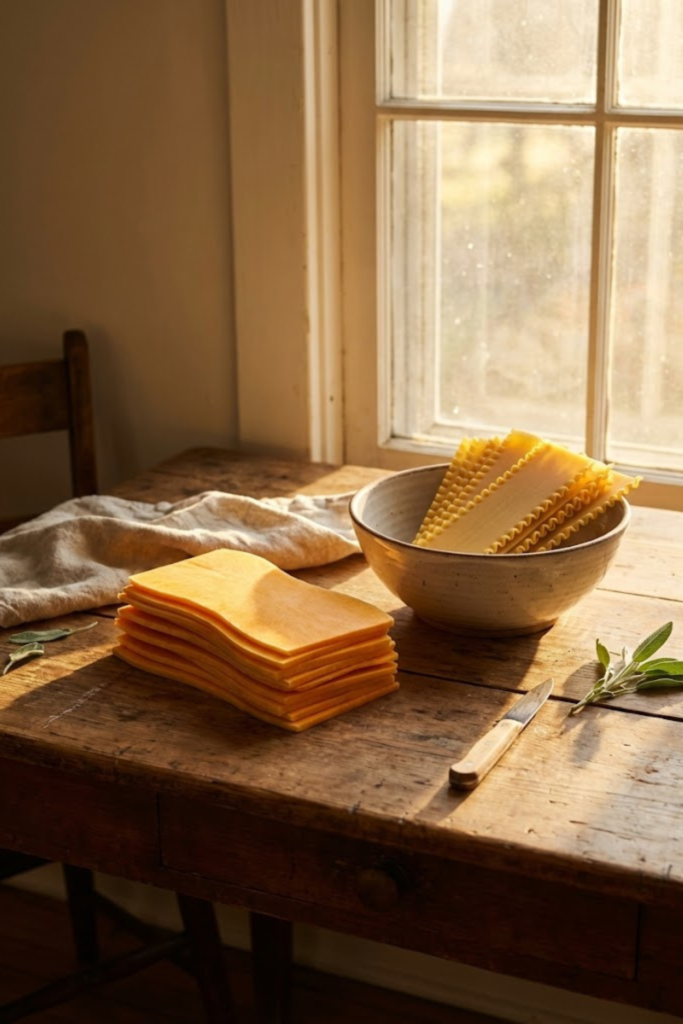
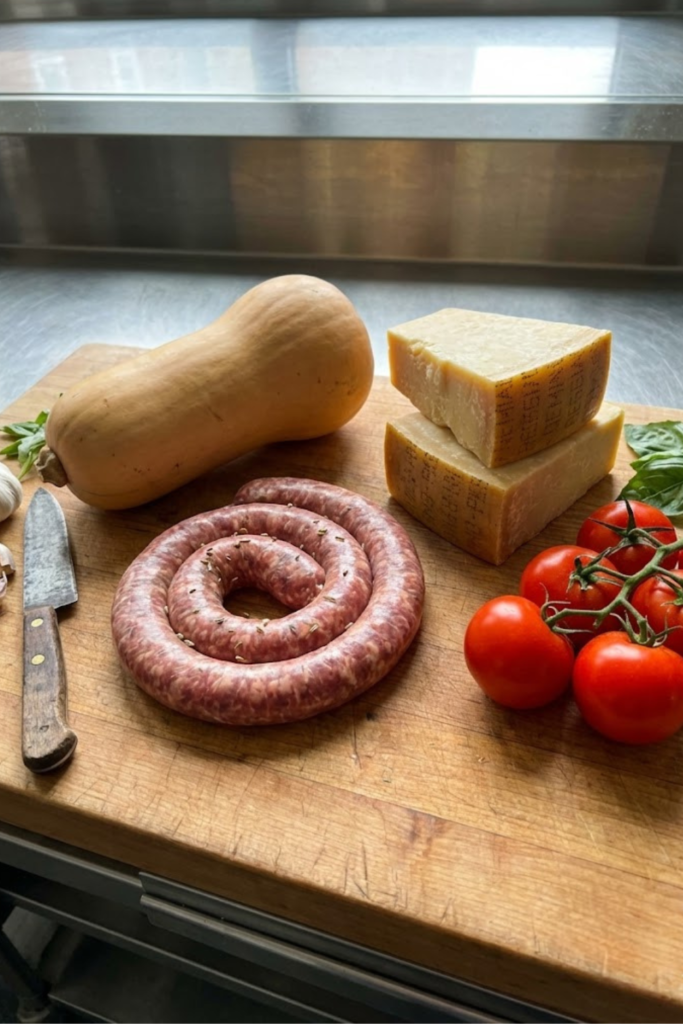
Picking the right butternut squash is actually the most critical step here. Do not just grab the first one you see in the bin! You want to look for a squash with a long, thick neck.
The bulbous bottom part where the seeds are? That is a pain to cut into nice, flat “lasagna” sheets. The neck is solid gold. I usually buy two medium squashes just so I can use the necks for the lasagna sheets and save the bottoms for soup later in the week. If you try to slice up the hollow bottom part for layers, you end up with weird, uneven pieces that don’t cook evenly. Trust me, go for the long neck.
Sausage Selection Matters
For the meat, I always go with bulk Italian sausage rather than links. Who wants to stand there squeezing raw meat out of casings? Not me. It is messy and takes way too much time.
I prefer using a spicy Italian sausage. The heat really helps cut through the natural sweetness of the squash. If you use sweet sausage and sweet squash, the whole dish can get a little cloying. Also, look for a sausage with a decent fat content. I know, we are conditioned to fear fat, but fat is flavor, folks. If the meat is too lean, your meat sauce will be dry and crumbly instead of rich and clingy.
The Cheese Trap
Here is a hill I am willing to die on: grate your own mozzarella. I know, I know, the bag of pre-shredded cheese is sitting right there and it is so easy. But those bags are coated in potato starch or cellulose to keep the shreds from clumping.
That coating prevents the cheese from melting into that gooey, stretchy perfection we all want in a lasagna. It usually just sits there looking waxy. Grab a block of low-moisture, part-skim mozzarella and spend the three minutes grating it. Your arm gets a mini workout, and the texture difference is night and day. Also, for the ricotta, always choose whole milk. The low-fat stuff is watery and can make your lasagna runny.
Sauce Warning
If you are keeping this low carb or keto, you have to be a detective in the pasta sauce aisle. You would be shocked at how much added sugar is in a standard jar of marinara. I once bought a “traditional” sauce that had more sugar per serving than a chocolate chip cookie.
Read the labels carefully. You want a sauce where the ingredients are basically tomatoes, oil, garlic, and herbs. Rao’s is my go-to if I am not making my own, but just check the carb count. A good sauce should bring acidity to balance the richness of the cheese and sausage in this noodle less butternut sausage lasagna. We want savory, not dessert!
Mastering the “Noodle” Prep: Slicing and Roasting
Okay, let’s get real for a minute. Staring down a raw, rock-hard butternut squash can be a little intimidating. I used to look at them on my counter and think, “How on earth am I going to turn that into pasta without losing a finger?” It feels like you need a chainsaw, right? But once I figured out the workflow for this noodle less butternut sausage lasagna, it actually became kind of therapeutic.
The Slicing Saga
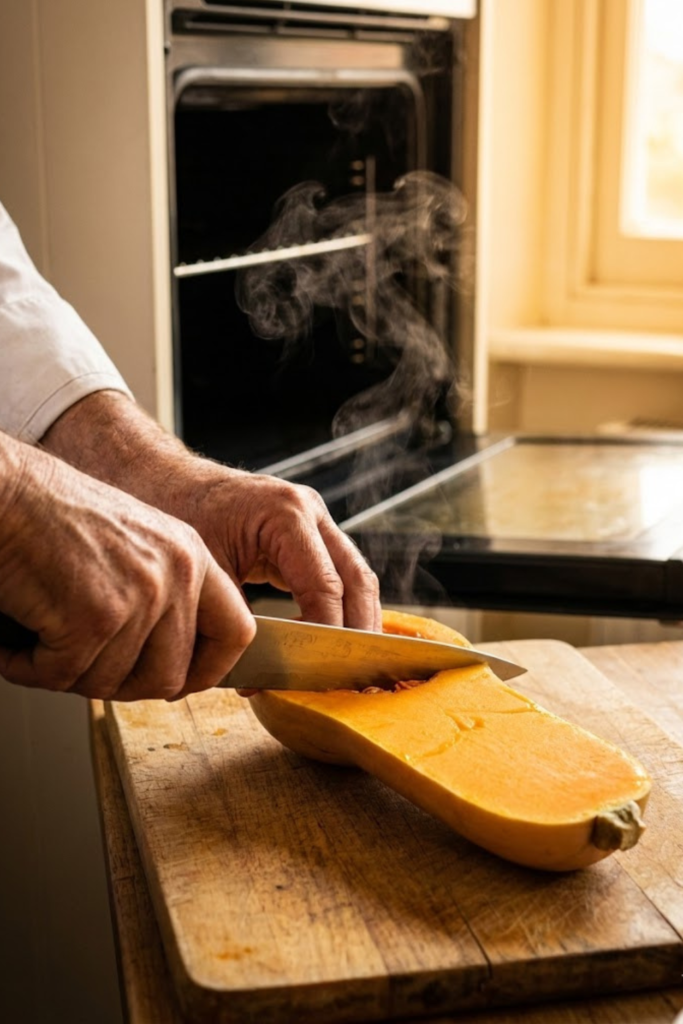
First off, you need a good peeler. Do not try to use a paring knife to peel the skin unless you want to be there all day. I use a sharp Y-peeler, and it cuts through that tough skin like butter. Once it is peeled, I slice the neck off the bulbous bottom. We are focusing on the neck here because that is where the uniform “noodles” live.
Now, you have a choice. You can use a sharp chef’s knife or a mandoline. I have a love-hate relationship with my mandoline. It gives me perfectly even, 1/8-inch slices which is amazing for consistent cooking. But I also sliced the tip of my thumb off a few years ago (it grew back, mostly), so I approach it with serious respect now. If you use one, use the hand guard! If you are using a knife, just take your time. You want planks that are about ¼ inch thick. If they are too thick, they won’t cook through; too thin, and they dissolve.
The Pre-Roast Rule
Listen to me closely because this is the most important tip I can give you: You must pre-roast your squash.
I learned this the hard way. The first time I made this, I thought I could save time by just layering the raw squash into the pan. “It bakes for an hour,” I told myself. “It’ll be fine.” It was not fine. The squash released all its water into the sauce, creating a lasagna soup, and the squash itself was still crunchy. It was gross.
By roasting the slices on a baking sheet for about 15-20 minutes at 400°F (200°C), you achieve two things. First, you cook out a lot of that excess moisture, so it doesn’t end up in your casserole dish. Second, you tenderize the vegetable so it is ready to absorb the flavors of the sauce.
Simple Seasoning
Before they go into the oven, I brush the slices with a little olive oil and sprinkle them with salt. That’s it. You don’t need to go crazy with spices here because the meat sauce is going to do the heavy lifting later.
Arrange them in a single layer on your baking sheets. It is okay if they touch a little, but don’t stack them. You want them to get slightly golden spots, not steam in a pile. When they come out, they should be pliable—like a cooked lasagna noodle. This step adds maybe 20 minutes to the process, but it is the difference between a soggy mess and a perfect, structured noodle less butternut sausage lasagna.
Crafting the Savory Sausage Meat Sauce
If the roasted squash is the body of this dish, the meat sauce is definitely the soul. I used to think I could just dump a jar of marinara over some browned meat and call it a day. While that is technically “food,” it is definitely not the rich, hug-in-a-bowl experience we are going for here. Since we are skipping the starchy pasta, the sauce needs to carry a lot of the weight. It needs to be bold, and it needs to be thick.
The Browning Basics
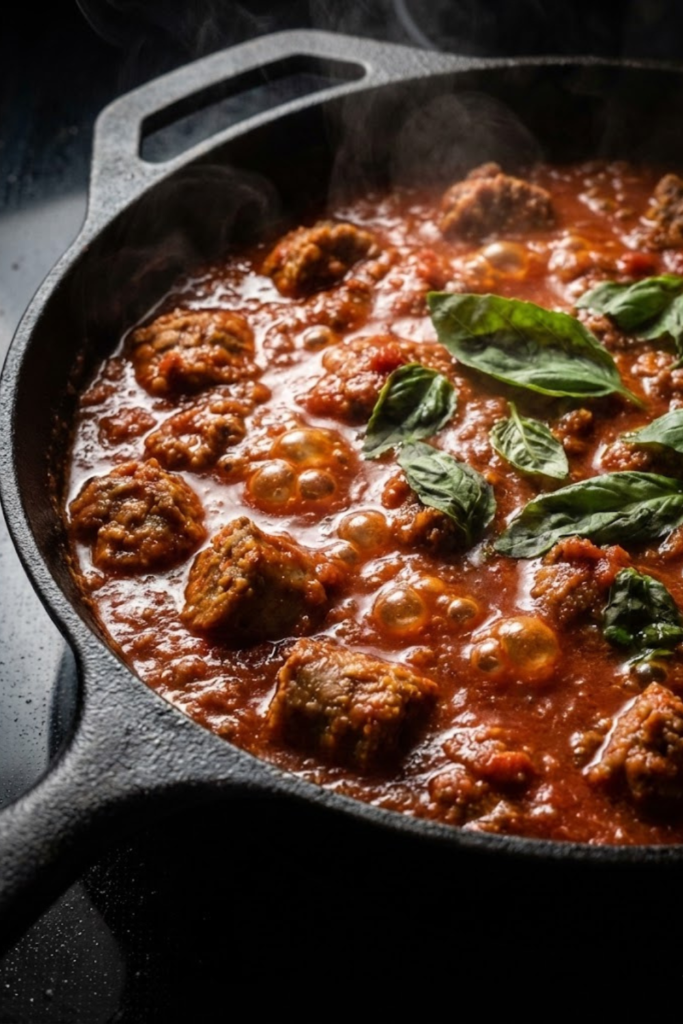
Start by heating up your largest skillet. I love using my beat-up old cast iron for this because it holds heat like a champ. Toss in your bulk Italian sausage.
Here is where I made mistakes early on: I didn’t break the meat up enough. You do not want giant, golf-ball-sized chunks of sausage in your lasagna. It makes the layers uneven and hard to cut later. Get in there with a wooden spoon or a potato masher—yes, a potato masher works wonders—and break that meat down into small, uniform crumbles. Brown it until it is nice and crispy on the edges. That brown stuff stuck to the bottom of the pan? That is pure flavor.
Building the Flavor Base
Once the meat is cooked, do not drain all the fat! Leave a little bit in there to cook your onions and garlic. I usually chop a yellow onion pretty fine because my youngest kid will pick out “slimey things” if he sees them.
Sauté the onions until they are soft and translucent, then hit it with the garlic for just a minute. You want to smell it, but you don’t want to burn it. Burnt garlic tastes bitter and ruins the whole pot. At this point, your kitchen is going to smell amazing. My neighbors usually start texting me right about now asking what’s for dinner.
Herbs and Simmering
Now, pour in your chosen low-carb marinara. But don’t stop there. I always doctor up jarred sauce.
I add a generous pinch of dried oregano and some red pepper flakes if the sausage wasn’t spicy enough. A pro tip I learned from a cooking show years ago: rub the dried herbs between your palms before dropping them in. It wakes up the oils and makes them taste fresher.
Here is the most critical part for a noodle less butternut sausage lasagna: you have to let it simmer. Turn the heat down to low and let it bubble for at least 15 to 20 minutes. We want some of the liquid to evaporate.
Why Thickness Matters
Remember, vegetables release water when they cook. Even though we pre-roasted the squash, it will still give off a little moisture. If your sauce is runny to begin with, you are going to end up with a sloppy mess. You want a meat sauce that is thick, almost like a sloppy joe mix. It should pile up on a spoon, not drip off it.
Before you take it off the heat, taste it! Does it need salt? A crack of pepper? This is your last chance to adjust the seasoning before it gets locked into the layers. I usually call this the “chef’s tax” and eat a spoonful just to be sure. It’s quality control, right?
Assembling and Baking for Perfect Layers
This is it. The moment of truth. You have roasted your squash, your kitchen smells like garlic heaven from the sauce, and your cheese is grated. Now we have to build this thing. Assembling a noodle less butternut sausage lasagna is basically like playing Tetris, but with food. It is honestly kind of satisfying, in a messy, artistic way.
The Foundation Strategy
Here is a rookie mistake I made the first time: I put the squash slices directly on the bottom of the casserole dish. Don’t do that! They stuck to the pan, and when I tried to serve it, I left the bottom layer behind. It was tragic.
Always, always start with a thin layer of your meat sauce on the bottom. It acts like a buffer. It keeps things from sticking and gives that bottom layer of “noodles” something to simmer in. Just a half-cup is enough to coat the glass.
The Squash Puzzle
Now, lay down your roasted butternut squash planks. Since squash doesn’t come in perfect rectangles like a box of Barilla, you are going to have gaps. This is where you have to get creative.
I treat it like a puzzle. Lay down the big neck pieces first. Then, take the smaller, weirdly shaped pieces and fill in the holes. It does not have to be pretty; nobody is going to see this part once it is covered in cheese. Just make sure you create a solid floor of squash. If you leave big gaps, your lasagna will have structural issues when you cut it. But also, don’t overlap them too much. A triple layer of squash in one spot just tastes gummy.
The Cheesy Glue
Next comes the cheese. I like to drop dollops of the ricotta mixture over the squash. Do not try to spread it with a spatula! If you try to spread it, the squash slides around, the sauce mixes in, and it gets messy fast.
Just drop little spoonfuls here and there, then sprinkle your shredded mozzarella over the top. The heat of the oven will make it spread out naturally. Repeat this process—sauce, squash, cheese—until you run out of ingredients. I usually get about three solid layers in a standard 9×13 pan.
The Foil Tent
Before you slide this bad boy into the oven, cover it with foil. But here is a trick: spray the underside of the foil with a little oil. If you don’t, that top layer of cheese will melt and fuse to the foil. When you pull the foil off later, you will rip all the best cheesy bits right off the lasagna. I have done this, and I literally cried.
Bake it covered for about 30 minutes at 375°F (190°C). This steams the layers together and gets the center hot without burning the top. Then, take the foil off and bake for another 15 minutes. This is when the magic happens—the cheese gets brown and bubbly, and the edges get crispy.
The Hardest Part: Waiting
Okay, this is the actual hardest part of the recipe. The timer goes off. The lasagna looks golden and perfect. You want to dive in immediately. Stop! Put the fork down.
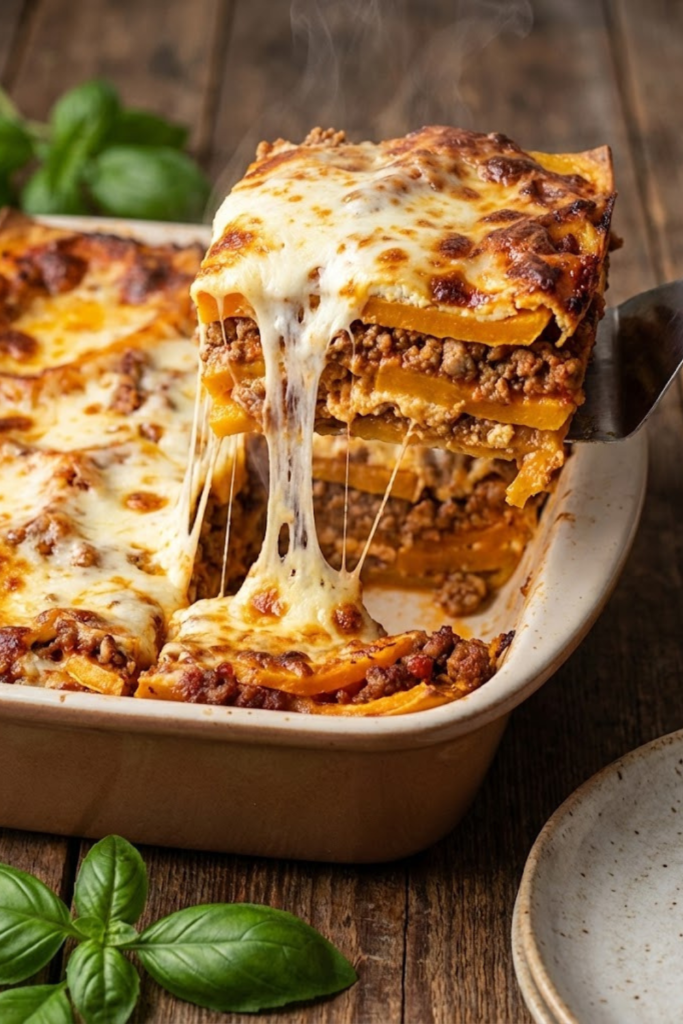
If you cut into a hot noodle less butternut sausage lasagna right out of the oven, it will collapse. The cheese is liquid lava, and the sauce is running wild. It needs to set. Let it rest on the counter for at least 15 to 20 minutes. I know, it is torture. But as it cools slightly, the layers firm up. This way, when you cut a square, it actually looks like lasagna and not a pile of ingredients. Use this time to make a side salad or pour a glass of wine. You earned it.
Storage, Freezing, and Reheating Tips
One of the absolute best things about making a huge 9×13 pan of food is the leftovers. Honestly, I think this noodle less butternut sausage lasagna tastes even better on day two. It is like the flavors have had a slumber party in the fridge and really got to know each other. But, because we are dealing with vegetables instead of starch, you have to treat it a little differently than your standard pasta bake if you want it to survive the week.
Fridge Life and the Plastic Peril
First things first: let the lasagna cool down completely before you even think about putting a lid on it. If you trap the steam in there, you are basically steaming the squash all over again. Hello, mush city.
Once it is room temp, transfer individual slices into airtight containers. I learned a hard lesson about cheap plastic containers with this recipe. The combination of red sauce and sausage grease will stain your plastic orange forever. I have a stack of “shame Tupperware” in the back of my cabinet that I can never use for anything else. Use glass meal prep containers if you have them. They don’t stain, and you can reheat right in them. It will stay good in the fridge for about 4 days, making it a killer lunch option.
The Freezer Game
Can you freeze it? absolutely. But there is a catch. Since squash has a higher water content than pasta, freezing it raw and then baking it later can sometimes result in a watery dish.
I prefer to bake the whole thing, let it cool, and then freeze individual portions. It is the ultimate “emergency dinner” hack. Wrap each square tightly in plastic wrap, then a layer of foil. This double-layer armor protects against freezer burn. If air gets to the squash, it dries out and gets weirdly chewy. Nobody wants chewy squash. You can keep these in the deep freeze for up to 3 months. Just don’t forget to label them! I once defrosted what I thought was chili and turned out to be lasagna sauce. confusing night.
Resurrecting the Leftovers
Now, let’s talk about reheating. The microwave is convenient, sure. But it is also a violent place for a delicate vegetable lasagna. If you nuke it on high for two minutes, the cheese explodes, and the squash turns into baby food.
If you must use the microwave, do it in short bursts at 50% power. It takes longer, but the texture stays way better. However, if you have the time (or an air fryer), that is the way to go. Pop a slice in the oven or toaster oven at 350°F (175°C) for about 10-15 minutes. If you use an air fryer, it takes maybe 5 minutes. This crisps the edges back up and makes the cheese bubbly again. It brings the whole dish back to life, almost like you just pulled it out of the oven fresh. Just cover it loosely with foil if the top starts getting too dark before the center is hot.
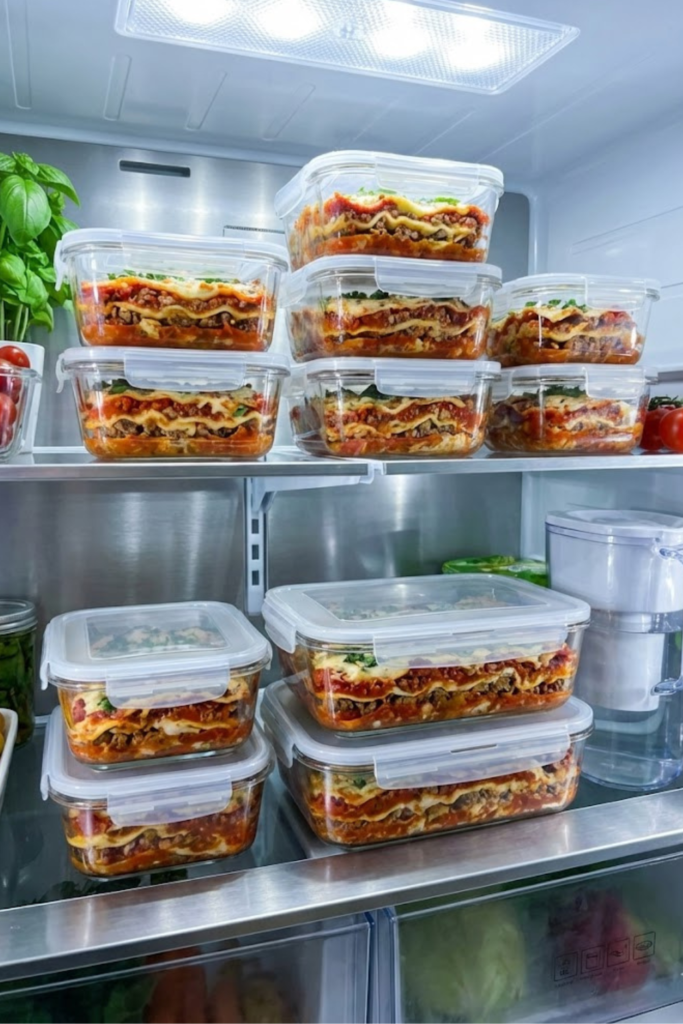
We have covered a lot of ground here, from wrestling with a rock-hard vegetable to pulling a bubbling, golden masterpiece out of the oven. Honestly, if you had told me five years ago that I would be craving noodle less butternut sausage lasagna over the “real” thing, I would have laughed in your face. I loved my pasta way too much. But tastes change, and frankly, so do our bodies. Finding a meal that hits that deep, cozy comfort food button without wrecking my energy levels for the rest of the night has been a massive win for my family.
I know it seems like a few extra steps—roasting the squash beforehand, grating the cheese yourself, waiting that agonizing 15 minutes for it to set. I get it. We are all busy, and sometimes the drive-thru looks really tempting. But I promise you, the effort you put into this dish pays back tenfold in flavor and nutrition. You are serving a meal that is nutrient-dense, lower in carbs, and completely free of processed junk. It is the kind of dinner that makes you feel like a pro chef, even if you are just in your pajamas listening to a podcast while you cook.
So, don’t be afraid to get messy. Maybe your layers won’t be perfect the first time, or maybe you will go a little heavy on the red pepper flakes (I have definitely done that). That is the beauty of home cooking. It is about the process as much as the result. Whether you are strictly Keto, avoiding gluten, or just trying to sneak more veggies onto your kids’ plates in 2026, this lasagna is a tool you want in your arsenal.
If you give this recipe a shot, I would love to hear how it turned out for you! Did you stick to the script, or did you throw in some spinach or mushrooms? Cooking is personal, so make it yours.
Pin It For Later! If you found this guide helpful, do me a huge favor and share this on Pinterest. Pin it to your “Keto Dinner Ideas” or “Healthy Comfort Food” boards so you can find it next time the craving strikes!