Let’s be real for a second: have you looked at the price of store-bought protein bars lately? It’s highway robbery! And half the time, they taste like cardboard mixed with regret. I used to spend a small fortune on those wrappers until I realized just how simple—and infinitely tastier—it is to make soft and chewy protein granola bars right in my own kitchen. Whether you need a post-workout boost or a midday savior to keep you away from the vending machine, this recipe is a total game-changer. We are going to ditch the preservatives and keep the flavor. Get ready to fuel your body with something that actually tastes like a treat!
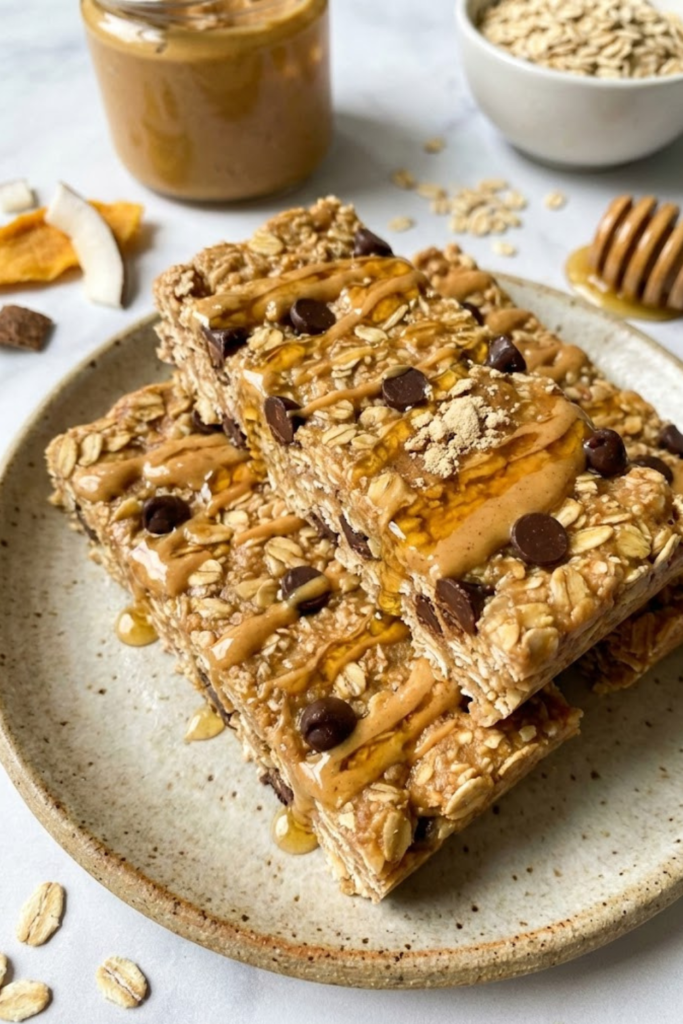
Essential Ingredients for the Perfect Protein Bar Texture
You know, when I first decided to start making my own snacks, I thought I could just throw whatever was in my pantry into a bowl and call it a day. I was so wrong. My first batch was supposed to be these amazing soft and chewy protein granola bars, but they turned out hard enough to break a window. Seriously, I almost chipped a tooth on what was supposed to be a “soft” snack.
It was super frustrating because I had wasted all those expensive ingredients. But after tossing out more batches than I care to admit, I finally figured out that the texture comes down to specific chemistry between a few key players. It’s not just about mixing stuff; it’s about using the right kind of stuff.
The Base: Why Oats Ain’t Just Oats
Here is the biggest mistake I see people make, and I made it too. Do not, and I repeat, do not use “quick oats” or “instant oats” for this. I tried that once because I was too lazy to go to the store, and the result was a mushy, gummy disaster that felt like eating raw oatmeal paste.
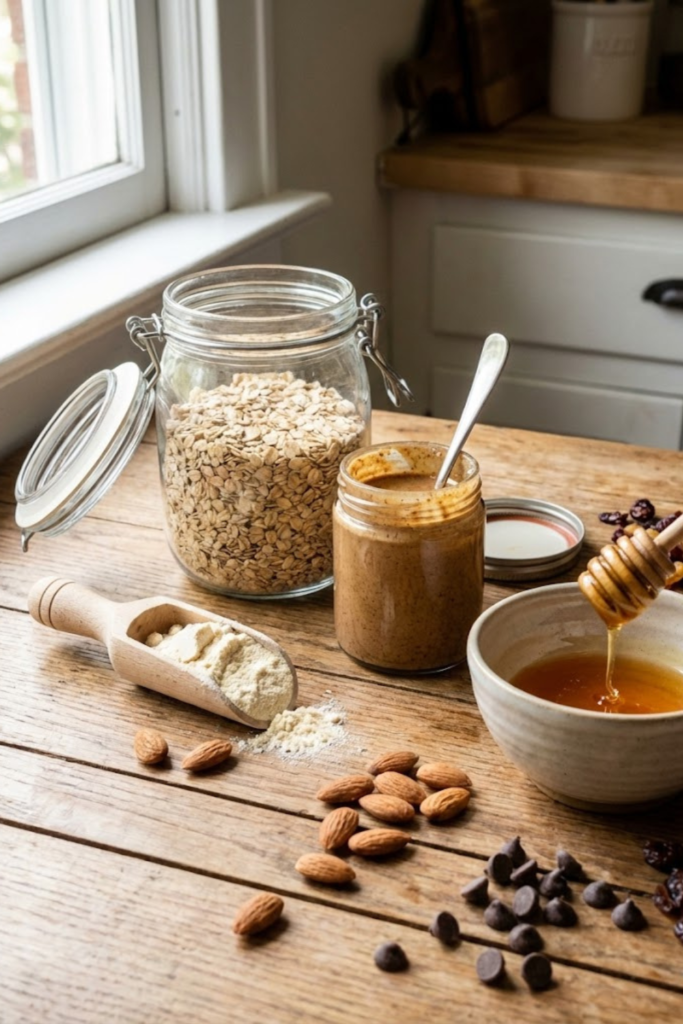
You need Old-Fashioned Rolled Oats. They are thicker and hold their structure way better when you mix them with heavy wet ingredients. They give the bar that nice chew without turning into baby food. If you want that bakery-style texture, stick to the rolled variety.
The Protein Powder Dilemma
Okay, this is where things get tricky. I usually stick to Whey Protein Isolate because it dissolves fairly easily, but man, it can get sticky. If you are using a plant-based protein like pea or soy, you have to be careful.
Plant proteins are thirsty! They soak up moisture like a sponge. I remember making a batch with pea protein using the same measurements I used for whey, and the mixture was so dry it turned into powder when I tried to cut it. If you swap protein types, you might need to add a tablespoon or two of milk (dairy or almond) to keep things moist.
The “Glue” That Holds It All Together
If you want soft and chewy protein granola bars that don’t crumble into a pile of granola the second you pick them up, your binder is everything. I learned the hard way that you can’t just use water or milk to bind these. You need a sticky, viscous liquid.
I use a combination of natural peanut butter and honey. The natural peanut butter (the drippy kind with oil on top) works best because it doesn’t have those added stabilizers that make the processed stuff stiff. If your nut butter is too dry, your bars will be dry. It’s that simple.
Also, honey or maple syrup is non-negotiable for the “chewy” factor. Granulated sugar just won’t work here because it creates a crunch rather than a chew. The liquid sweetener keeps the oats pliable even after they have been sitting in the fridge for a week.
Don’t Forget the Texture Enhancers
This is a little trick I picked up after my third failed attempt. Adding a tablespoon of chia seeds or flax meal isn’t just for health; it actually helps bind the bar.
When chia seeds get wet, they expand and create a gel. This helps lock in moisture so your bars stay soft for days. Without them, I found my bars would dry out by Wednesday. So yeah, toss a spoonful in there—you won’t even taste it, but you will definitely notice the difference in texture.
Mastering the “Chewy”: Tips to Avoid Rock-Hard Bars
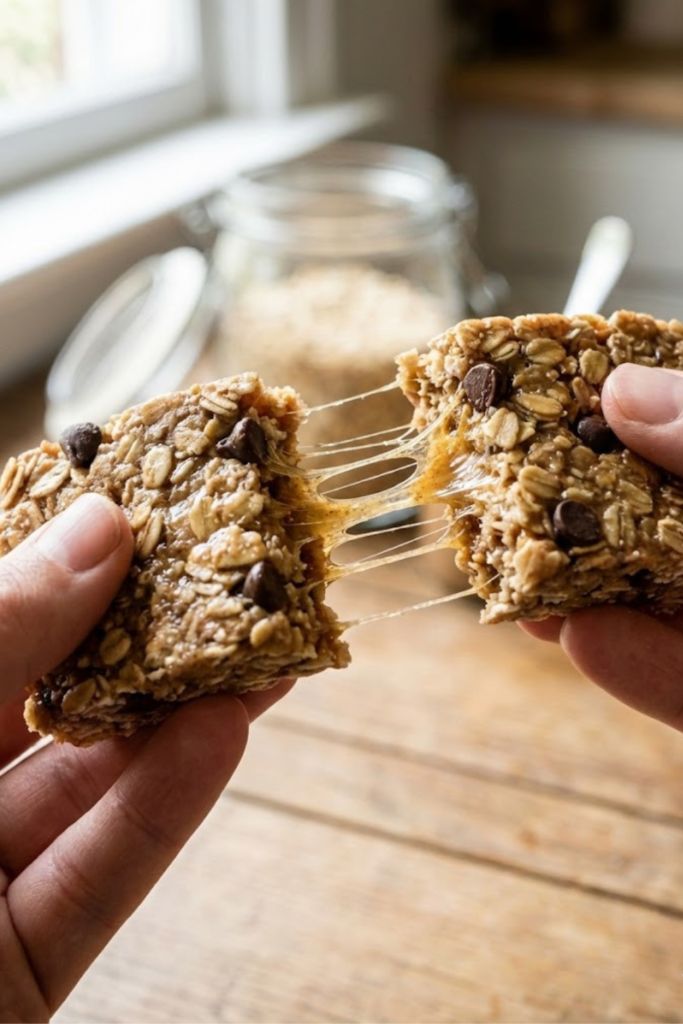
I can’t tell you how many times I’ve pulled a pan out of the fridge, excited for a snack, only to realize I’d basically made cement. There is nothing worse than looking forward to soft and chewy protein granola bars and getting a jaw workout instead. I remember one time I was so worried about them falling apart that I packed them so tight and boiled the syrup so long, I practically had to saw through them with a steak knife. It was a total fail.
Over time, I learned that keeping them soft isn’t magic; it’s just about respecting the ingredients. If you treat them rough, they turn out tough. Here is how I finally stopped making bricks and started making treats.
The Ratio Rule
This is the holy grail of no-bake bars. You have to get the balance between wet and dry ingredients right. If you have too many oats and not enough sticky stuff, you get a crumbly mess. But if you go too heavy on the liquid, you get a goopy pile of sludge that never sets.
My general rule of thumb is roughly one part “wet” (honey and nut butter) to two parts “dry” (oats and protein powder). But—and this is a big but—you have to trust your gut. If you are mixing it and it looks like dry sand, don’t just pray it will stick together. It won’t. Add a tiny bit more honey or a splash of almond milk until it feels like tacky cookie dough.
Don’t Overcook the Binder
Here is where I messed up the most in the beginning. Most recipes tell you to heat the peanut butter and honey so they mix easily. I used to let that mixture bubble and boil on the stove, thinking I was really “combining” the flavors.
Big mistake! When you boil honey or maple syrup, you are essentially making hard candy. Once it cools down, it snaps. You only want to warm the mixture gently until it’s fluid enough to pour. If you see bubbles, take it off the heat immediately. You want the sugars to stay flexible, not turn into a lollipop.
Protein Powder Mistakes
Protein powder is weird stuff. It sucks up moisture like you wouldn’t believe. I’ve noticed that different brands absorb liquid differently, too. One scoop of my chocolate whey might behave totally differently than a scoop of vanilla casein.
If you dump a ton of powder in at once, it can instantly dry out your mixture. I learned to add the protein powder slowly, folding it in a little at a time. If the mixture starts looking chalky, stop adding powder. It is better to have slightly less protein and a bar you can actually eat than a high-protein brick that tastes like dust.
Chill Time: Fridge vs. Freezer
Patience is not my strong suit. When I finish making a batch, I want to eat it now. I used to shove the pan in the freezer to speed up the setting process.
The problem? Freezing them freezes the moisture inside, making them rock hard. When you bite into a frozen bar, it’s not chewy; it’s solid. For the best texture, let them set in the fridge for at least two hours. It takes longer, but it keeps that perfect, pliable consistency that makes these bars so good. Trust me, the wait is worth it.
Step-by-Step No-Bake Method
You might think that because these are “no-bake,” you can just toss everything in a bowl and be done with it. I wish it were that simple! Honestly, the method is just as important as the ingredients if you want soft and chewy protein granola bars that actually hold together. I’ve ruined perfectly good batches by rushing through these steps, ending up with a pile of sticky granola rather than actual bars.
It’s not rocket science, but there is a bit of a technique to it. Here is the process I use to get them perfect every single time.
Preparation: Do Not Skip the Paper
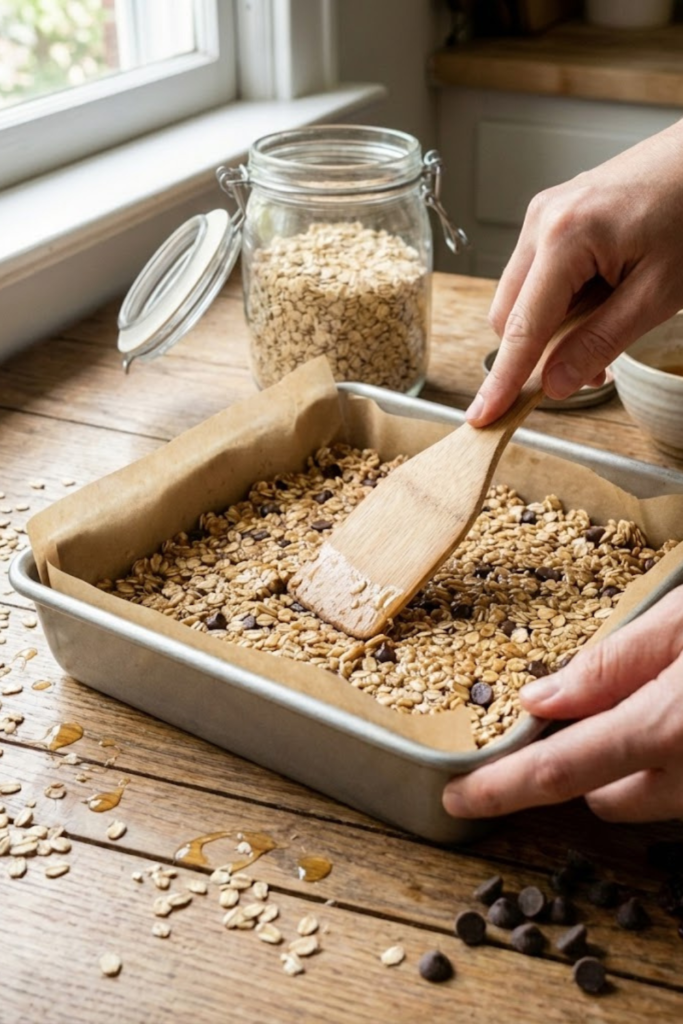
Okay, listen to me closely: use parchment paper. I once thought grease would be enough, and I spent twenty minutes trying to pry my bars out of the pan with a butter knife. I ended up scratching my favorite baking tin and ruining the bars. It was a disaster.
Cut a piece of parchment paper so that it hangs over the sides of your 8×8 square pan. This creates little “handles” so you can lift the entire slab out once it sets. It makes cutting them into clean slices a million times easier.
Mixing the Wet Ingredients
First, grab a medium bowl for your liquid stuff. You want to whisk your nut butter, sweetener (honey or maple syrup), and vanilla extract together until they are completely smooth. If your kitchen is cold and the nut butter is stiff, pop it in the microwave for like 15 seconds.
You want this mixture to be consistent. If there are lumps of peanut butter, you’re going to have dry spots in your bars later. I usually whisk it until it looks glossy and unified.
Combining Without Crushing
Now, dump your oats, protein powder, and any seeds into a large mixing bowl. Pour the wet mixture over the dry one. Here is where you need a bit of muscle. It’s going to seem like there isn’t enough liquid at first.
Don’t panic! Just keep folding it with a silicone spatula. It takes a minute or two of stirring to get everything coated. Be gentle, though. You don’t want to mash the oats into a pulp; you just want them covered. The final texture should look a bit like wet sand or crumbly cookie dough.
Pressing It Down: The Secret Technique
This is the most critical step. If your bars have ever crumbled apart in your hands, it’s probably because you didn’t pack them tight enough. Dumping the mixture into the pan isn’t enough.
I like to dump the mixture in, spread it out loosely, and then use a piece of wax paper or greased hands to press it down. But here is my pro tip: take a flat-bottomed drinking glass and press down hard all over the surface. You need to compress the oats so they stick to each other. If you skip this, you are just making granola, not bars.
Setting the Bars
Once you have packed it down into a dense, flat layer, cover the pan and stick it in the fridge. I know, it’s tempting to cut into it right away, but the oats need time to absorb that moisture.
Leave them in there for at least two to three hours. I usually make mine at night and let them set while I sleep. When you wake up, you can use those parchment handles to lift the whole block out and slice it up.
Flavor Variations and Healthy Add-Ins
I’m a creature of habit. I once ate the exact same peanut butter protein bar every single day for three months straight. By the end of it, I couldn’t even look at one without feeling a little queasy. I learned that even the best soft and chewy protein granola bars get boring if you don’t switch things up. The beauty of this recipe is that the base is basically a blank canvas. You can throw almost anything in there to keep your taste buds guessing.
I’ve experimented with dozens of combos—some were winners, and some were absolute trash. Here are the variations that actually work and keep me coming back for more.
Chocolate Lovers: Handle with Care
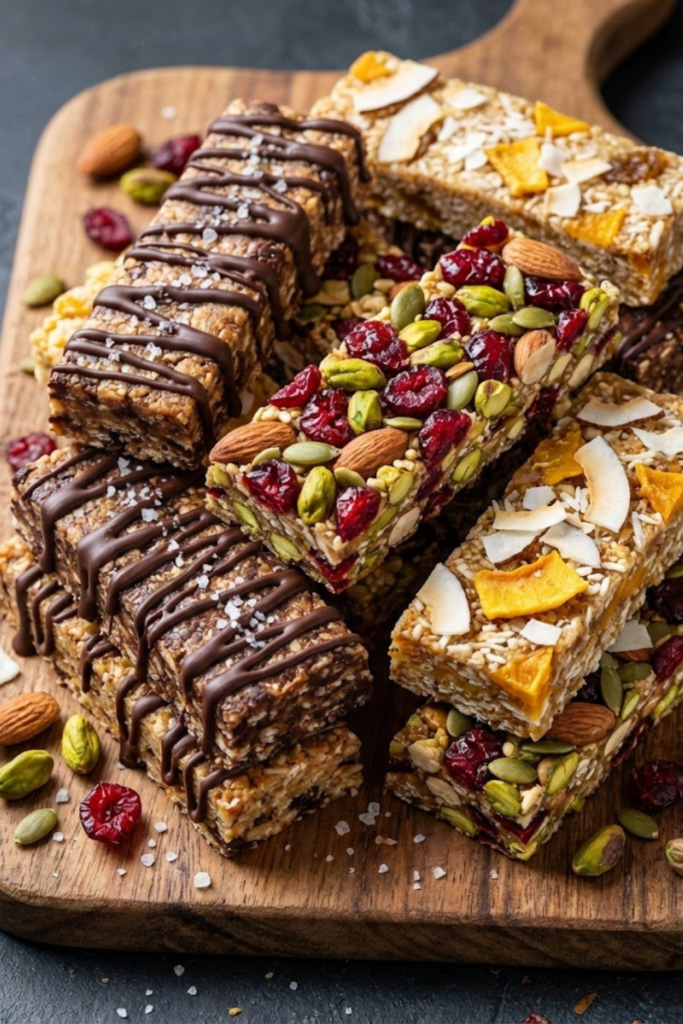
Okay, let’s be real. Everything is better with chocolate. I almost always toss in a handful of mini dark chocolate chips or cacao nibs for those dark chocolate antioxidants. But I have to warn you about a rookie mistake I made.
I once dumped my chocolate chips in right after mixing the hot honey and peanut butter. It was a disaster. The chips melted instantly, turning my nice granola bars into a muddy, brown sludge. It tasted fine, but it looked terrible. Now, I wait about five minutes for the mixture to cool down before folding in the chips. They stay intact and give you that nice snap when you bite in.
Nutty Crunch
If you are anything like me, you need a little texture contrast. The oats are soft, so adding something crunchy is satisfying. I love adding chopped almonds, pecans, or walnuts. It adds those healthy fats and makes the bar feel more substantial.
Just make sure you chop them up pretty small. I was lazy one time and threw in whole almonds. Bad idea. When I went to cut the bars, the knife hit the hard nuts and tore the bars apart. It was a crumbly mess. Chopping them ensures the bar stays together when you slice it.
Fruit Fusion
For a natural energy boost, dried fruit snacks are the way to go. I’m obsessed with adding dried cranberries or cherries. They add this tart, chewy element that cuts through the richness of the peanut butter.
You can also use chopped dates if you want extra sweetness without added sugar. Just be careful with larger dried fruits; like the nuts, you need to chop them up. I once used whole dried apricots, and it was just weird to chew through a giant piece of fruit in the middle of a bar. Keep it small and distributed evenly.
Spice It Up
People always forget about spices, but they make a huge difference. I used to think spices were just for baking cookies, but a dash of cinnamon or nutmeg in your protein bars is a game-changer. It gives them a warm, cozy flavor that feels like comfort food.
And please, do not skip the salt! A tiny pinch of sea salt enhances all the other flavors. It makes the chocolate taste more chocolatey and the nuts taste nuttier. It’s a small detail that takes the flavor from “meh” to “wow.”
Storage and Shelf Life: Keeping Them Fresh
You know what’s worse than a bad protein bar? A good one that has gone bad. I remember making a huge batch of soft and chewy protein granola bars on a Sunday, feeling like a meal prep genius. I left the container on the counter because, well, that’s where I keep the store-bought ones. By Tuesday, they were a greasy, melting disaster. By Friday, they tasted… off.
Since we aren’t using weird chemical preservatives, these bars behave differently than the ones wrapped in foil at the gas station. You have to treat them a bit more like real food. Here is how I keep mine fresh without wasting a crumb.
Room Temp vs. Fridge
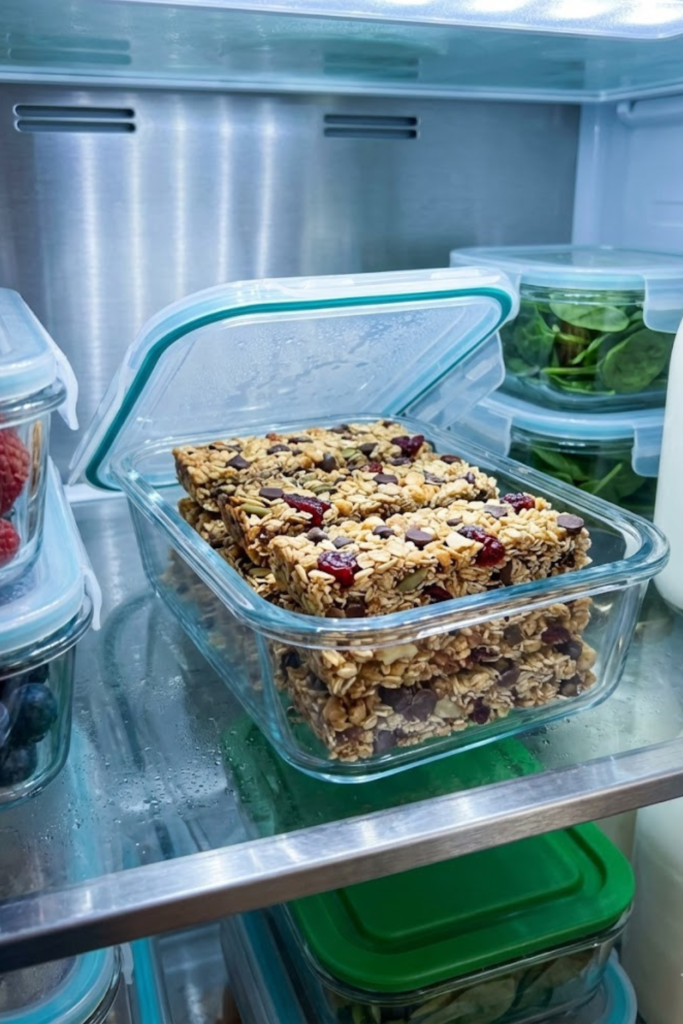
Here is the deal: your kitchen counter is not the place for these. Because we use natural peanut butter and honey to bind them, heat is the enemy. At room temperature, the oils start to separate, and the bar loses that structural integrity we worked so hard for.
I always store mine in the fridge. It keeps the healthy fats solid and maintains that perfect chewy texture. If you leave them out, especially in the summer, they turn into a sticky goo that you have to eat with a spoon. Trust me, keep them chilled.
Freezer Friendly
If you are like me and tend to make way too much food at once, the freezer is your best friend. These bars freeze surprisingly well. I actually like to make a double batch and stash half of them for later.
The trick is to wrap them individually in plastic wrap or parchment paper before tossing them in a freezer bag. If you don’t, they will stick together in one giant frozen lump. When you want a meal prep snack, just pull one out and let it sit on the counter for about 10 minutes. They thaw out perfectly and taste just as fresh as the day you made them.
Travel Tips
I used to just throw a bar in my gym bag and head out. Big mistake. I opened my bag later to find a flattened, squished pancake inside a Ziploc bag. It was edible, but it was messy.
If you are taking these as on-the-go snacks, you need a rigid container. I use a small Tupperware or a hard plastic soap travel case (a clean one, obviously!). It protects the bar from getting crushed by my sneakers or water bottle. Also, if you’re going to be out in the heat, maybe skip the chocolate chips or eat it quickly. They will melt faster than you think.
Signs of Spoilage
Since we are using organic ingredients without artificial junk, these won’t last forever. In the fridge, I find they are good for about two weeks max. After that, the oats start to get a little soggy, and the flavor just isn’t as sharp.
If you see any mold or they start smelling funky, toss them. It hurts my soul to throw away food, but it’s not worth the stomach ache. If you keep them in the freezer, though, they can last up to three months easily. Just make sure you label the bag with the date. I once found a mystery bar from six months ago… I did not eat it.
The Final Verdict: Why You Should Start Today
I sat down and did the math the other day. In 2026, with grocery prices being what they are, I realized I was spending over $150 a month on “healthy” wrapped snacks . That is absolutely insane. Since I started making these soft and chewy protein granola bars at home, that number has dropped to maybe $40 .
It’s not just about the cash, though. It’s the feeling of not getting ripped off. I used to get so mad opening a wrapper and seeing a bar that looked half the size of the picture on the box . When you make them at home, you control the size. If you want a monster bar for a heavy leg day, you cut a monster bar. You are the boss of your own snacks.
Taking Back Control of Your Nutrition
The biggest win for me wasn’t just the texture or the flavor; it was the peace of mind. I got really tired of reading ingredient lists that looked like a chemistry textbook . Why does a simple protein bar need “fractionated palm kernel oil” or weird syrups I can’t pronounce?
With this recipe, I know exactly what I’m putting in my body. It’s just oats, protein, honey, and nuts. That’s it. It feels genuinely good to feed my family something that I know is actually nutritious and not just marketed as “healthy” . It’s clean eating recipes made simple . You don’t have to guess if it’s good for you because you put the ingredients in the bowl yourself.
Don’t Be Afraid to Fail
Look, I’m not going to lie and say my first batch was perfect. I told you about the brick-hard bars I made earlier . It happens. You might mess up a batch. Maybe you add too much whey, or you don’t press it down hard enough, and it crumbles.
That is totally okay! Even my “failed” batches were still tasty when I crumbled them over some Greek yogurt . Don’t let the fear of a messy kitchen stop you. Cooking is about experimenting and finding what works for your taste buds. Maybe you hate almonds and love cashews. Swap them! That is the beauty of DIY protein bars . You can’t really break the rules because you make the rules.
Share the Love
Once you nail this recipe, your friends are going to start asking for it. I started bringing these to work, and now I’m basically the designated “snack dealer” at the office . It’s a fun way to help the people around you eat better too without being preachy about it.
If this guide helped you avoid the rock-hard granola disaster I went through, do me a huge favor. Pin this recipe to your Healthy Snacks board on Pinterest . It helps other people find real, honest advice and stops them from wasting money on cardboard snacks. Let’s get everyone eating better, one chewy bar at a time.