Did you know that nearly 40% of home cooks cite “dry meat” as their number one kitchen failure? I used to be exactly the same! I would stare at the skillet, praying the chicken wouldn’t turn into a rubber boot. But then, I discovered the simple magic of proper heat management. This isn’t just another recipe; it is your roadmap to savory success! We are going to make easy pan seared chicken that actually tastes like it came from a restaurant. Grab your skillet! Let’s get cooking.
Choosing the Right Chicken Cuts for Searing
I’ve gotta be honest with you. For years, I just grabbed whatever pack of chicken was cheapest at the grocery store. I didn’t think it mattered. Meat is meat, right? Wrong. I remember this one Tuesday back in my early cooking days. I bought these massive, dinosaur-sized chicken breasts because they were on sale. I threw them in the pan, expecting this delicious easy pan seared chicken dinner.
It was a total disaster.
Because the meat was so thick on one end and thin on the other, the thin part turned into shoe leather while the thick part was still raw in the middle. I tried to save it by blasting the heat, but I just ended up with burnt spices and a smoky kitchen. I literally cried. My family ordered pizza. It was humbling, to say the least. But hey, we learn from our mess-ups.
Breasts vs. Thighs: The Real Deal
Most people reach for boneless, skinless chicken breasts automatically. I get it. They are lean and popular. But they are also temperamental. Because they are so lean, there is zero fat to protect them from the heat. If you look away for two minutes, they dry out.
Personally? I’m a thigh girl. Boneless, skinless chicken thighs are way more forgiving. They have a little more fat, which keeps them juicy even if you accidentally leave them in the pan a minute too long. Plus, they usually cost less. If you are new to searing, start with thighs. They honestly taste better.
The Hammer Therapy
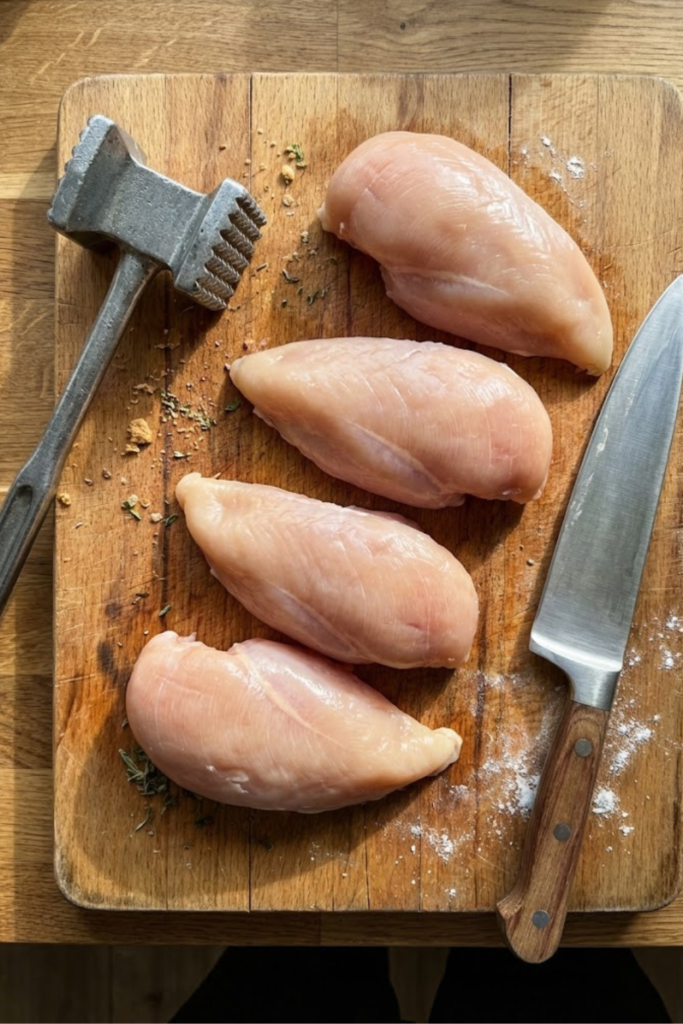
If you are dead set on using breasts for your easy pan seared chicken, you have to do one thing. You can’t skip this. You need to pound them.
I know, it’s an extra step. But hear me out. If your chicken breast is two inches thick on one side and half an inch on the other, it will never cook evenly. Never.
Get a meat mallet. If you don’t have one, use the bottom of a heavy saucepan. Put the chicken between two pieces of plastic wrap and give it a few good whacks. You aren’t trying to make it paper-thin; you just want it to be the same thickness all the way across. About half an inch is perfect. It’s also great stress relief after a long day of teaching!
Watch Out for “Plumped” Poultry
Here is a tip that took me way too long to figure out. Read the label. A lot of cheaper chicken is “enhanced” or “plumped” with a saline solution. It’s basically injected with salt water to increase the weight.
When you throw that wet chicken into a hot pan, all that water comes out. Instead of searing and getting that beautiful golden-brown crust, your chicken ends up steaming in a pool of gray water. Gross. Look for “air-chilled” chicken if your budget allows. It hasn’t been soaked in water, so it sears beautifully. It makes a huge difference in the final texture.
Essential Seasoning Blends and Marinades
I used to be scared of salt. I know, it sounds ridiculous now. But back when I first started cooking for myself, I thought a “pinch” meant literally three grains of salt. My poor family suffered through some incredibly bland meals. I remember serving this pale, sad chicken to my brother once. He took a bite, chewed for a long time, and finally asked, “Did you forget to turn the stove on?”
It wasn’t undercooked; it just had zero flavor profile. It was like chewing on a wet napkin. I was so embarrassed. I realized then that if I wanted to make easy pan seared chicken that people actually wanted to eat, I had to get comfortable with the spice cabinet.
You don’t need a fancy, expensive jar of “poultry rub” from a gourmet shop. In fact, those usually have too much salt and not enough actual flavor. I learned the hard way that making your own blend is cheaper and tastes way better.
My “Go-To” Dry Rub
Let’s keep it simple. If you look in my pantry right now, you’ll see my “House Blend” in a little mason jar. It’s not fancy, but it works every single time.
You need four things:
- Kosher Salt: Please, I am begging you, throw away the iodized table salt. It tastes metallic. Kosher salt has bigger grains and a cleaner flavor.
- Coarse Black Pepper: Freshly cracked is best, but the pre-ground stuff works in a pinch.
- Garlic Powder: Not garlic salt! If you use garlic salt, you’ll end up over-salting the meat.
- Smoked Paprika: This is the secret weapon. It gives the chicken that beautiful reddish-golden color and a hint of smokiness without needing a grill.
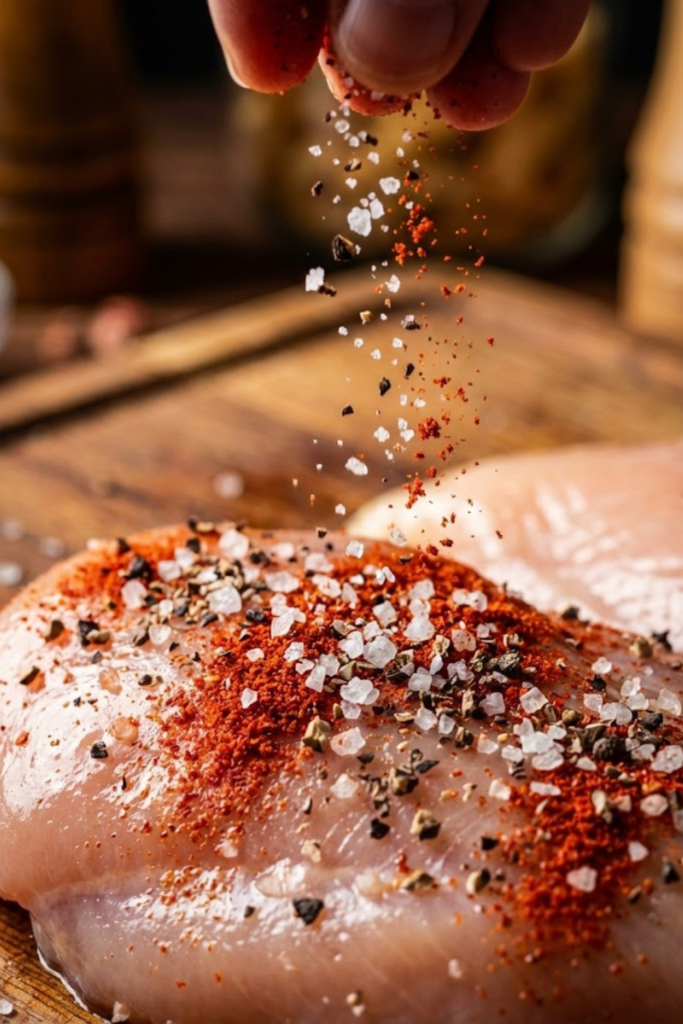
I usually mix about 1 teaspoon of salt, ½ teaspoon of pepper, ½ teaspoon of garlic powder, and ½ teaspoon of paprika for every pound of meat. It’s foolproof.
The Moisture Mistake
Here is a mistake I made about a hundred times before I figured it out. I would take the chicken out of the package, which is usually wet and slimy (sorry for the visual), and immediately sprinkle the seasoning on it.
Don’t do that.
If the chicken is wet, the spices just slide right off when it hits the pan. Or worse, the moisture creates steam. Remember, we want a sear, not a steam bath.
You have to pat the chicken dry with paper towels first. Like, really dry. Get in there and blot up all that moisture. Once the surface is dry, rub a tiny bit of olive oil on the meat, then add your seasoning. The oil helps the spices stick and conducts the heat better. It’s a small step, but it makes a huge difference in getting that crispy crust we all want.
To Marinate or Not to Marinate?
Sometimes I want to get fancy with a lemon juice and herb marinade. Marinades are great for flavor, but they can be tricky for searing.
If you soak your chicken in a liquid marinade, it acts like a sponge. When you put it in the hot pan, that liquid comes pouring out. I’ve ruined a good crust by using a super wet marinade.
If you do want to use a marinade—maybe some olive oil, lemon juice, and dried oregano—try not to leave it in there for more than 30 minutes. Acids like lemon juice can start to “cook” the meat and make the texture mushy if left too long. And just like with the dry rub, you gotta pat the excess liquid off before cooking.
Trust me on this. Stick to the dry rub for your first few tries. It is the fastest path to delicious, easy pan seared chicken without the headache of burning herbs or soggy skin. Keep it simple, get the technique down, and then you can start experimenting with the fancy stuff later!
Mastering the Pan: Heat and Oil Selection
I used to think “hot is hot” when it came to cooking. I would crank my stove burner all the way to “High,” throw in a stick of butter, and immediately toss in the chicken. Within thirty seconds, my kitchen looked like a foggy London street. The smoke detector would be screaming, my dog would be hiding under the sofa, and my dinner would be burnt on the outside and raw on the inside.
It was chaotic. I felt like a total failure in the kitchen.
It took me a long time to realize that controlling heat is actually more important than the recipe itself. If you want that perfect easy pan seared chicken, you have to respect the pan. You can’t just bully the meat with maximum fire and expect a gourmet result.
The Skillet Showdown
Let’s talk hardware. For the longest time, I only owned those cheap, lightweight non-stick pans. They are great for eggs, but for searing meat? They are kind of a letdown. You just can’t get a deep, dark crust on a non-stick surface because they aren’t designed to hold high heat.
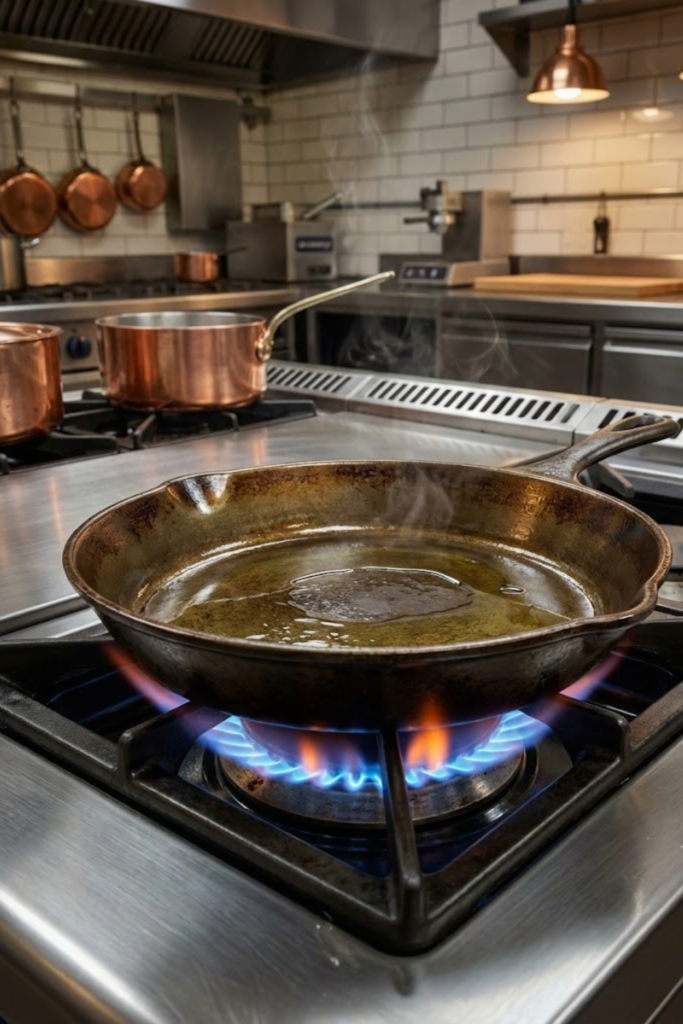
If you have a cast iron skillet, use it. It is the heavyweight champion of searing. It holds heat like a boss and gives you that golden-brown color we are chasing. A stainless steel pan is a close second. Yes, they are harder to clean, and yes, I have cursed at my stainless steel pan while scrubbing it. But the flavor it develops is worth the elbow grease.
Oil Choices: Don’t Burn the House Down
Here is a lesson I learned the hard way: Extra Virgin Olive Oil (EVOO) is not for searing.
I love EVOO. I use it on salads all the time. But it has a low smoke point. That means it starts burning and smoking at a lower temperature. When I used to sear chicken in it, the oil would turn bitter and acrid.
For easy pan seared chicken, you need a high smoke point oil. My absolute favorite is avocado oil. It can handle high heat without throwing a fit. If that’s too pricey (teachers’ budgets, am I right?), plain old vegetable oil or canola oil works perfectly fine. Save the fancy olive oil for drizzling over the finished dish.
The Shimmer and The Butter Trick
So, when is the pan ready? Don’t just guess.
Pour in your oil—just enough to coat the bottom—and watch it. You want the oil to “shimmer.” It will look like it’s rippling slightly, almost like a mirage on hot pavement. If it starts smoking like crazy, take it off the heat immediately; it’s too hot.
If you put the chicken in before the oil shimmers, it will just sit there and absorb grease. Yuck.
Now, here is the restaurant secret I wish I knew ten years ago. We all love the taste of butter, but butter burns fast. So, start your sear with oil. Then, in the last two minutes of cooking, turn the heat down and toss in a knob of butter. It melts and foams up, giving the chicken that rich, nutty flavor without burning black. It is a total game-changer.
Step-by-Step Instructions for Easy Pan Seared Chicken
I have a confession to make. When I first started cooking, I was a “poker.” I couldn’t leave the food alone. I would throw the meat in the pan and immediately start nudging it, lifting it to check the bottom, and pressing down on it with a spatula like I was trying to perform CPR. I just wanted to make sure it was cooking!
But here is the hard truth I had to learn: I was ruining my dinner. Every time I lifted that chicken breast to “check” it, I was interrupting the chemical reaction that creates flavor. My impatience resulted in pale, sad-looking meat that stuck to the pan. It was frustrating. I remember scraping shredded bits of chicken off the bottom of my skillet and thinking, why does this never look like the pictures?
If you want truly easy pan seared chicken, you have to learn the art of doing absolutely nothing.
The Splash Zone Strategy
Before we even get to the cooking, let’s talk about safety. I have a tiny scar on my right forearm from hot oil splatter. It’s my battle wound from 2018.
When you place your chicken into the hot oil, do not just drop it in. If you drop it, hot oil splashes up, and it hurts. Bad. You need to lay the chicken into the pan away from you.
Hold the chicken by one end (or use tongs if you are squeamish), place the bottom end in the oil closest to you, and gently lower the rest of the piece away from your body. Any oil that splashes will go toward the back of the stove, not onto your favorite sweater. It’s a small detail, but it saves you from a lot of pain.
The “Don’t Touch It” Rule
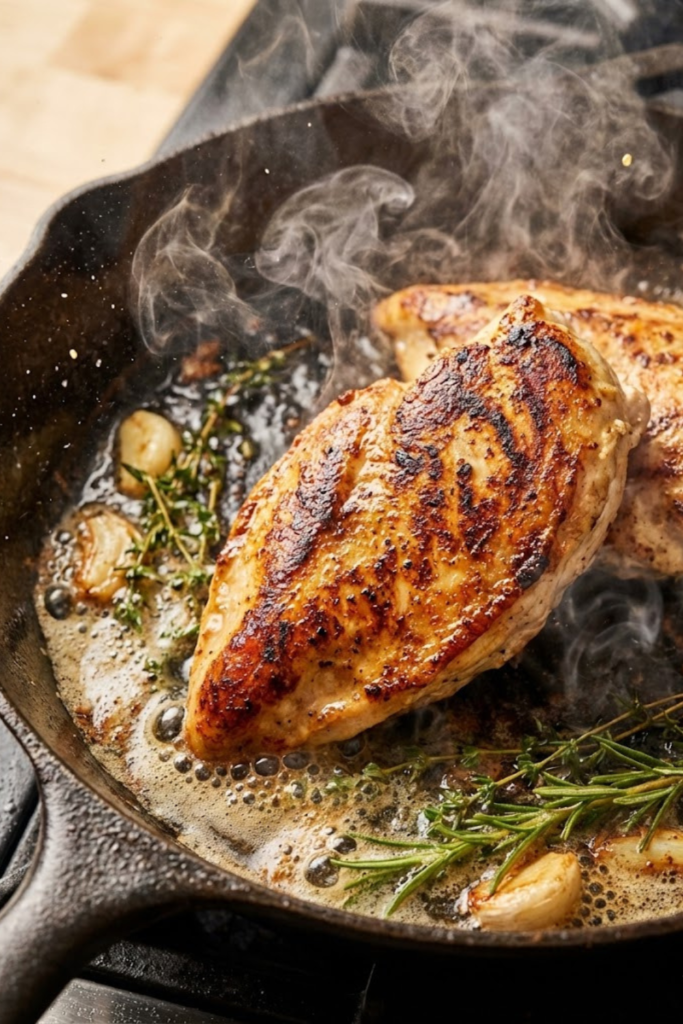
This is the most important part of the entire recipe. Once that chicken hits the pan, set a timer for 5 to 6 minutes and walk away. Seriously. Do not touch it. Do not poke it. Do not try to peek underneath.
We are looking for the Maillard reaction. That’s the fancy science term for “browning.” It takes time for the proteins and sugars to caramelize and form that golden brown crust. If you try to flip the chicken too early, it will stick to the metal. You will end up tearing the beautiful crust right off, leaving it stuck to the pan while you flip a mangled piece of white meat.
I learned this the hard way. If the chicken resists when you try to lift it, it’s not ready. It will release naturally from the pan when the crust is formed. If you have to force it, give it another minute. Patience is your best friend here.
Flipping and Finishing
After about 5 or 6 minutes, when the chicken releases easily, flip it over. The second side usually takes less time, maybe 4 to 5 minutes depending on thickness.
But how do you know when it’s actually done?
Please, for the love of food safety, stop cutting into the chicken to check. I used to do this. I would slice right into the middle of the breast while it was still in the pan. All the delicious juices would run out, and the chicken would end up dry as a bone.
You need a meat thermometer. It is the only way to be 100% sure. You are looking for an internal temperature of 165°F (75°C). Insert the probe into the thickest part of the meat. If it says 155°F, you can actually take it off the heat. The temperature will continue to rise a bit while it rests (we’ll get to that).
Using a thermometer changed my life. No more guessing, no more raw centers, and no more overcooked, rubbery hockey pucks. It’s the best investment you can make for your kitchen.
Resting and Serving Suggestions
I am about to tell you the hardest part of this entire recipe. It isn’t the seasoning, and it isn’t the flipping. It is the waiting.
For years, I served dinner the second it was done cooking. I would take the chicken out of the skillet, slap it on a plate, and cut right into it. I thought I was doing a good job by serving the food piping hot. But every time I sliced into the meat, a huge puddle of juice would flood the plate. By the time I took a bite, the chicken was dry and stringy. I couldn’t figure out why.
I was literally bleeding the flavor out of my dinner.
The Magic of the “Rest”
You have to let the meat rest. There is no way around it. When chicken cooks, the muscle fibers contract and squeeze the juices to the center of the meat. If you cut it immediately, all that liquid has nowhere to go but out onto your cutting board.
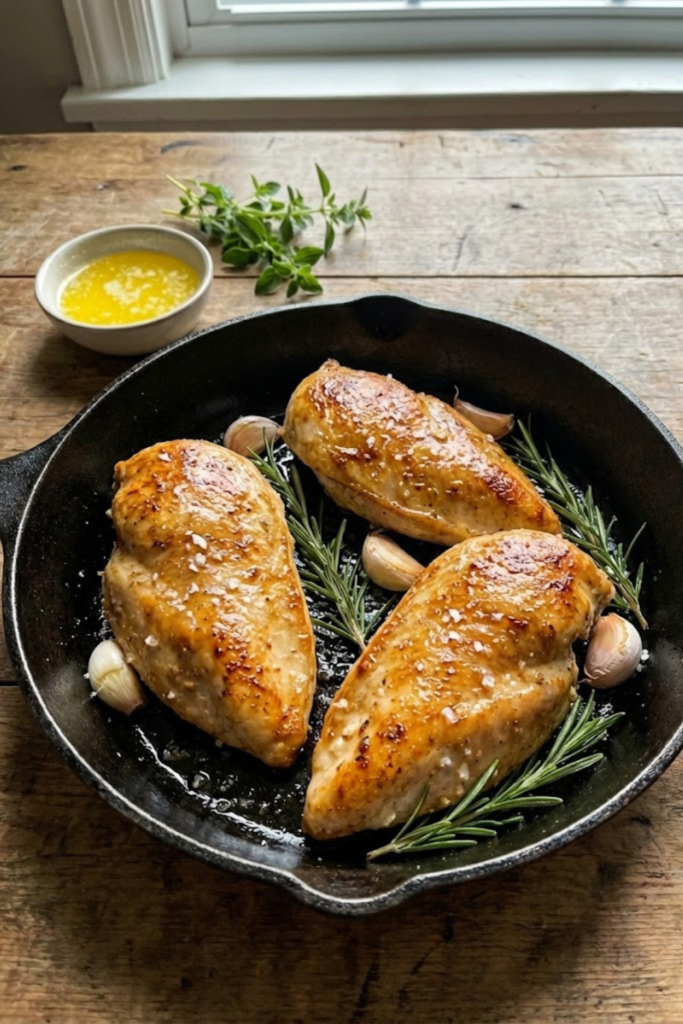
When you take your easy pan seared chicken off the heat, move it to a clean plate or cutting board. Then, take a piece of aluminum foil and “tent” it loosely over the top. This keeps it warm without making it sweat and lose its crust.
Give it 5 to 10 minutes. I know, it feels like an eternity when you are hungry. Use that time to yell at the kids to wash their hands or pour yourself a drink. During this time, the fibers relax, and the juices redistribute back through the meat. When you finally cut into it, the juice stays in the chicken, where it belongs.
Don’t Scrub That Pan Yet!
While the meat is resting, look at your pan. See those stuck-on brown bits at the bottom?
Do not—I repeat, do not—throw that in the sink.
That stuff is called “fond,” and it is pure flavor gold. If you want to feel like a fancy French chef with zero effort, pour a little chicken broth, white wine, or even just water into the hot pan. This is called deglazing. Use a wooden spoon to scrape up those brown bits while the liquid bubbles. Let it simmer for two minutes until it thickens slightly. Pour that over your chicken, and you will look like a culinary genius.
Pairing and Leftovers
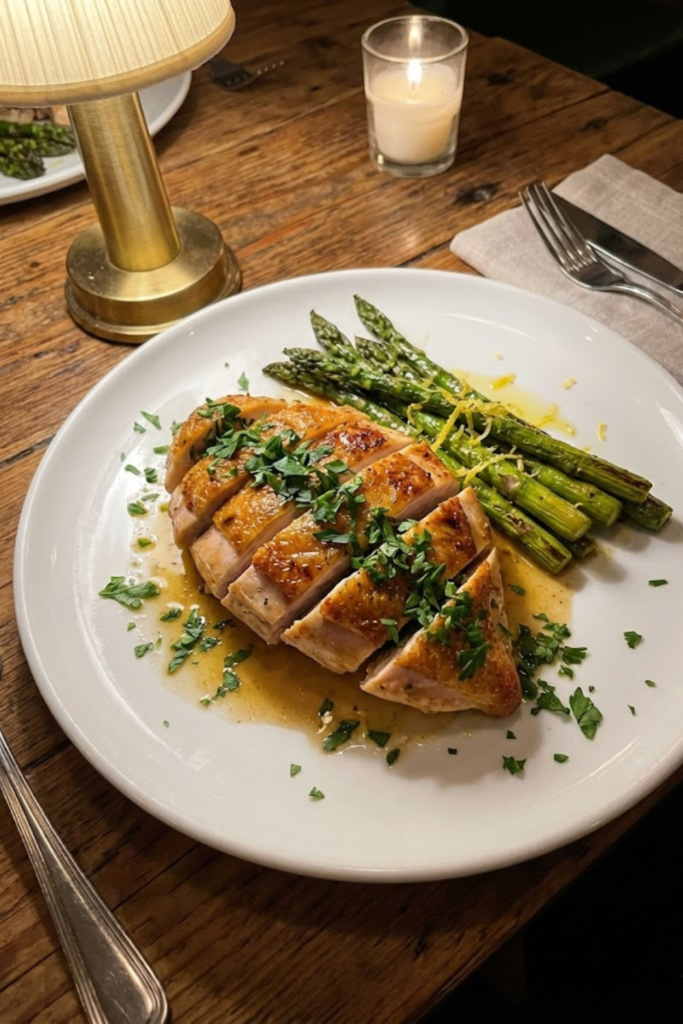
Since this easy pan seared chicken is so versatile, you can serve it with almost anything. On busy school nights, I usually just roast some asparagus or broccoli on a sheet pan while the chicken cooks. If I need comfort food, mashed potatoes are the way to go because they soak up that pan sauce perfectly.
If you have leftovers (which is rare in my house), this chicken is actually amazing cold. I chop it up the next day and throw it on top of a salad or mix it into a quick pasta. Store it in an airtight container, and it will stay good for about 3 days. It’s perfect for meal prep chicken bowls if you are trying to be organized for the week.
Just remember: cook it hot, don’t touch it, and let it rest. It really is that simple.
So, there you have it. You honestly don’t need a degree from culinary school to make dinner taste amazing. You just need a hot pan, a little bit of patience, and the self-control to stop poking the meat while it cooks.
I hope this guide helps you feel a little more confident standing in front of the stove. I know it can be intimidating, especially when you are tired and just want to feed your family. But once you nail this easy pan seared chicken, you will wonder why you ever settled for dry, boring meat.
If you try this method, I’d really love to hear how it went! Did you burn it the first time? Did it come out perfect? Let me know in the comments. And hey, if this helped you out, do me a huge favor and share it on Pinterest. Save it to your “Weeknight Dinners” board so you can find it when you’re standing in the grocery store wondering what to buy. Now, go conquer that kitchen!