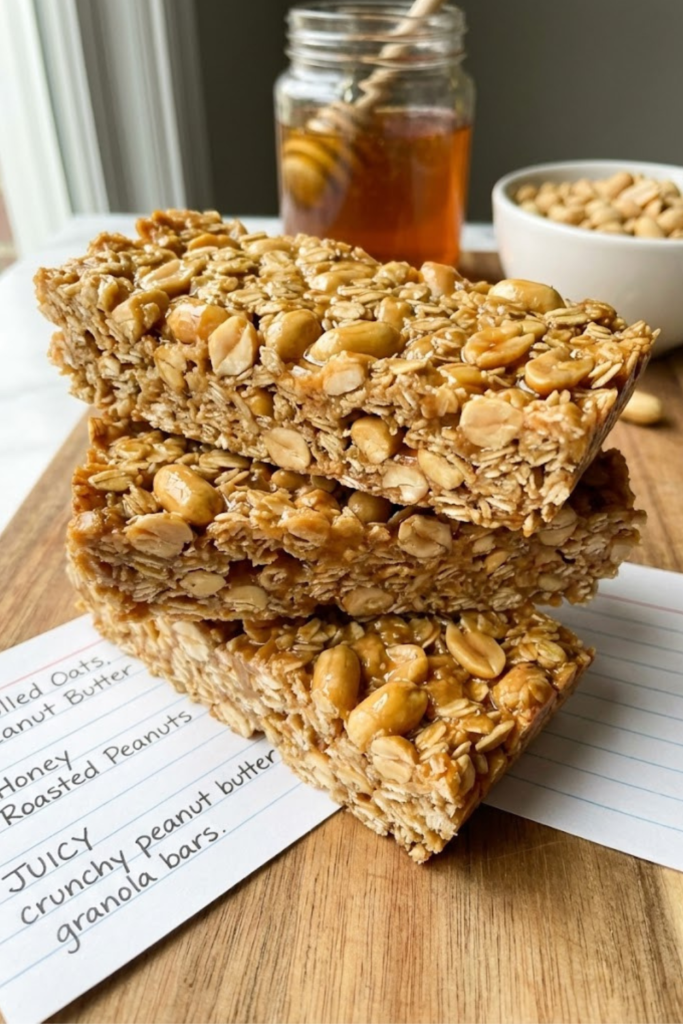
Did you know that many “healthy” store-bought granola bars contain just as much sugar as a standard candy bar? That is wild! I used to grab them off the shelf constantly until I realized I could make something way better at home. Today, we are diving into a recipe that actually delivers on its promise. These crunchy peanut butter granola bars are not just delicious; they are a total lifesaver for busy mornings! I’ve failed at this recipe a few times—ending up with crumbly messes—but I finally cracked the code to getting that satisfying snap. Let’s get baking!
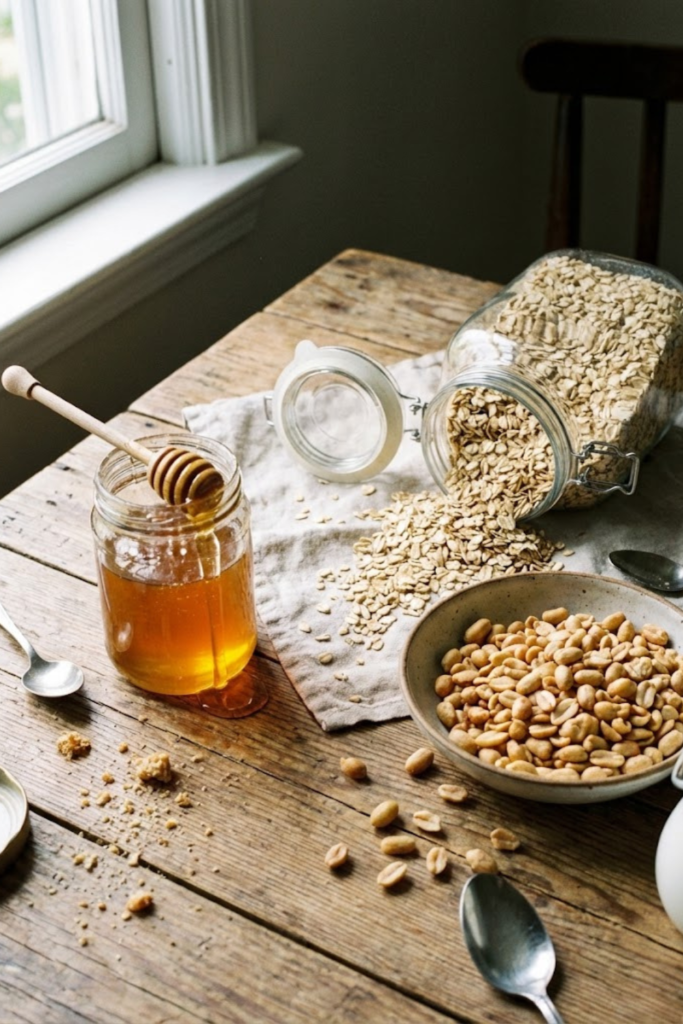
Essential Ingredients for the Perfect Crunch
I have to be honest with you; my first attempt at making crunchy peanut butter granola bars was a total disaster. I stood in my kitchen, staring at a pan of what looked like wet oatmeal, wondering where I went wrong. I tried to cut a square, and it just disintegrated into a sad pile of crumbs. It was super frustrating! But after about a dozen batches and a lot of sticky fingers, I realized that the secret isn’t just in the baking—it’s in using the specific ingredients that create structure. If you grab just any old thing from the pantry, you’re gonna have a bad time.
The Oats Debate: Rolled vs. Quick
This is where I messed up the first time. Do not, I repeat, do not use quick oats or instant oats for this recipe. Quick oats are cut too small, and they soak up moisture way too fast. When I used them, the bars turned out soft and chewy, which is fine if that’s what you want, but we are here for the crunch!
Old-fashioned rolled oats are the MVP here. They are flat, sturdy, and hold their shape even when mixed with sticky stuff. They provide that necessary chew and structural integrity so your crunchy peanut butter granola bars actually hold together. Plus, they toast up much nicer in the oven.
The Sticky Stuff
You need a binder that acts like glue. I tried using just maple syrup once because I ran out of honey. The flavor was great, but they didn’t get quite as hard as I wanted. Honey seems to crystallize a bit better when baked, giving you that candy-like snap.
Also, let’s talk about the peanut butter. I love the natural stuff where the oil separates, but you have to stir it really well. If you use the dry, crumbly stuff at the bottom of the jar, your mixture will be too dry to stick. Mistakes were made by me in the past, and dry bars are a choking hazard. Use creamy, well-stirred peanut butter.
The Secret Crunch Factor
Here is a trick I learned from a friend at a potluck. If you want that store-bought texture, add crispy rice cereal. Seriously! It sounds weird, but adding about half a cup of crispy rice cereal to the mix creates these little air pockets of crunch that oats alone just can’t give you.
It breaks up the density. Without it, your crunchy peanut butter granola bars can feel a bit like a brick. The rice cereal makes them light and snappy. You can also toss in roasted peanuts or chia seeds, but don’t skip the rice cereal if you crave that audible crunch.
Step-by-Step: How to Make Peanut Butter Granola Bars
Okay, so you have your ingredients gathered on the counter. Now comes the part where you actually have to work a little bit. I remember thinking during my first batch, “Can’t I just throw this all in a bowl and be done with it?” Well, I tried that shortcut. The result was edible, sure, but it wasn’t great. To get that real bakery-style quality, you have to follow a specific order of operations. It’s not hard, but you can’t just wing it.
Toast Those Oats!
Do not skip this step. Seriously, I used to be lazy and skip toasting the oats because I didn’t want to dirty a baking sheet. Huge regret. Raw oats taste kinda… dusty? You want to spread your old-fashioned oats out on parchment paper and bake them at 350°F for about 10 to 12 minutes.
But listen to me: Watch them like a hawk! I walked away to check my email once and came back to burnt oats. The smell of charred grain lingers in the house for days. You want them just golden brown. This toasting process gives your crunchy peanut butter granola bars a deep, nutty flavor that is honestly addictive. It completely changes the vibe of the snack.
The Melting Situation
While the oats are getting happy in the oven, grab a small saucepan. You need to melt the peanut butter and honey (or maple syrup) together. Keep the heat on low. I got impatient once and cranked the burner up to high because I was rushing to pick up the kids. The mixture seized up and got weirdly chunky. Not appetizing.
You just want it warm enough so it whisks together into a smooth, liquid gold. It usually takes about 2 or 3 minutes. If you are adding vanilla extract, wait until you take the pot off the heat. If you add it while it’s boiling, the alcohol evaporates and you lose all that flavor. I learned that the hard way, too.
The “Muscle” Step
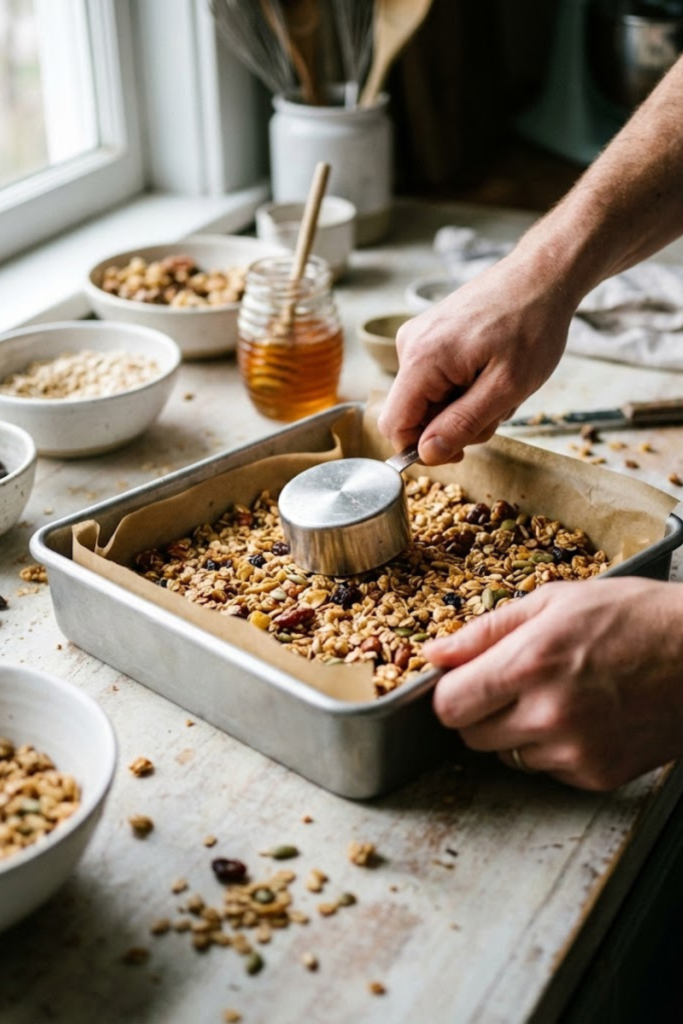
This is the most critical part of the whole recipe. Once you mix the toasted oats and the wet stuff in a big bowl, it’s going to be sticky. Dump it into an 8×8 square pan lined with parchment paper. Make sure you leave some paper hanging over the edges. I call these “handles.” If you don’t, good luck getting the block out of the pan later. I had to dig one out with a butter knife once and scratched my favorite pan.
Now, you have to press it down. I mean, really press it. The first time I made these, I just patted them down gently like I was tucking them into bed. When I cut them later, they turned into granola dust. You need to pack it down hard.
I use the bottom of a measuring cup or a glass jar. Press until your arm gets tired, then press some more. You want to remove all the air gaps. This compression is what makes the difference between a loose crumble and a proper bar that snaps. It’s a bit of a workout, but hey, you earn the snack, right?
Baking Secrets for Maximum Crunchiness
There is a huge misconception that granola bars are always a “no-bake” situation. If you want soft and chewy bars, sure, keep the oven off. But we are here for crunchy peanut butter granola bars that actually snap when you break them. Achieving that texture without burning the sugar is a bit of a science experiment. I admit, I have pulled trays out of the oven thinking they were done, only to have them turn floppy an hour later. It’s annoying! Through trial and error, I found that the baking method is just as important as the ingredients.
Low and Slow Wins the Race
My biggest mistake early on was treating these like cookies. I cranked the oven to 375°F thinking I could speed things up because I was hungry. Big mistake. The edges turned black while the middle stayed raw and gummy.
You have to bake these at a lower temperature, usually around 300°F or 325°F. You are essentially drying them out rather than cooking them rapidly. It takes longer, maybe 30 to 40 minutes, but it creates an even crunch all the way through. If you rush it, you ruin it. Just turn on a podcast and be patient. Keep an eye on the color; you want a deep golden brown, not dark brown.
The Hardest Part: Waiting
This is where I struggle the most. When the pan comes out of the oven, the house smells amazing, like roasted peanuts and honey. You will want to cut into them immediately. Don’t do it!
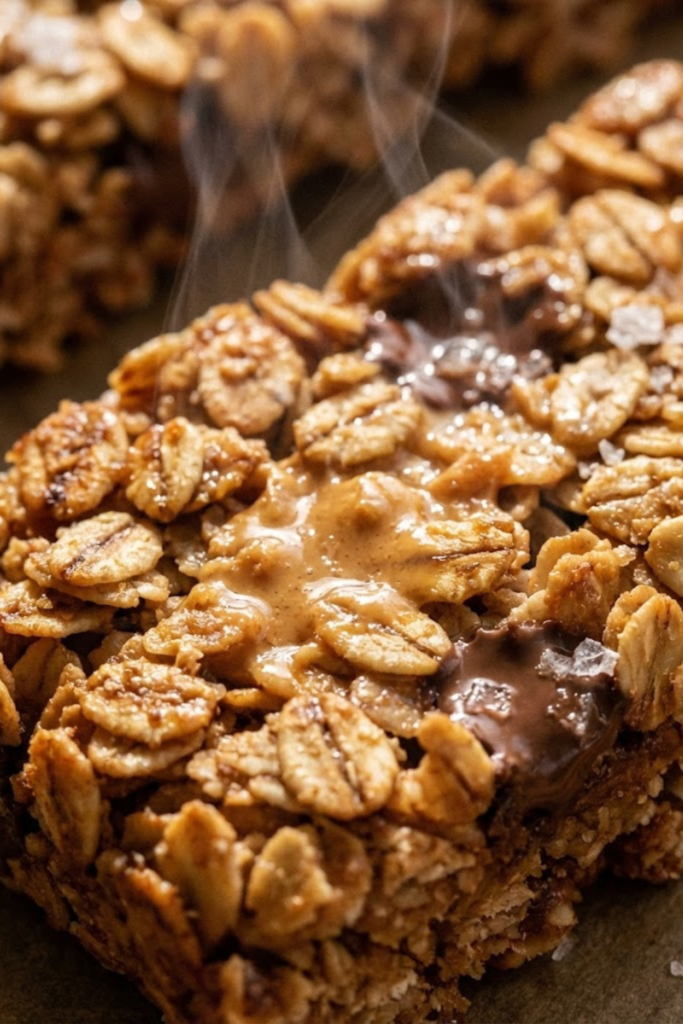
If you cut them while they are hot, they will crumble into a mess. I learned this the hard way when I tried to pack a warm bar for a hike. It turned into granola dust in my bag. The sugars need to cool down to harden and act like glue. Let the pan sit on a wire rack for at least two hours. Yes, two whole hours. They will feel soft when you first touch them out of the oven, but they firm up as they reach room temperature. Trust the process.
The “Biscotti” Technique
Okay, if you are someone who likes your bars rock-hard—like the kind that come in those green nature boxes—you need to try the double-bake method. This was a total game-changer for me.
After the bars have cooled completely and you’ve sliced them, spread the bars out on a baking sheet. Put them back in the oven at a very low heat (like 250°F) for another 15 to 20 minutes. It dries out any remaining moisture. It’s an extra step, but if you hate chewy bars, this is the way to go. It makes them super crisp and helps them last longer in the pantry too. Just don’t forget them in there, or you’ll be eating charcoal!
Storing Your Homemade Granola Bars
I used to think that once the baking was done, the hard work was over. Boy, was I wrong. Storing these things correctly is actually half the battle if you want to keep that snap. I remember one time I left a batch of crunchy peanut butter granola bars out on a plate, uncovered, just because I was lazy. By the next morning, they were sticky, soft, and totally unappetizing. It was a huge bummer to waste good ingredients like that. You have to treat them right if you want them to last.
The Counter vs. The Fridge
This is a debate I have with myself constantly. If you leave them at room temperature, they stay crisp but have a pleasant, bite-able texture. However, I live in a place that can get pretty humid in the summer. Humidity is the enemy of crunch.
If I leave them out in July, they basically melt. So, during warmer months, I toss them in the fridge. But here is the catch: the fridge makes them rock hard. I nearly chipped a tooth once trying to eat a cold bar straight from the refrigerator! If you store them cold, let them sit on the counter for five minutes before you take a bite. It saves you a trip to the dentist.
The Freezer Stash
If you are into meal prep ideas 2026, the freezer is your best friend. I love making a double batch and freezing half for later. But don’t just throw them all in a bag together. They will freeze into one giant, inseparable brick.
I learned one of my favorite parchment paper hacks for this. Wrap each bar individually in a small piece of parchment paper before putting them in a freezer bag. It takes a few extra minutes, but it’s worth it. When I’m rushing out the door, I can grab just one without wrestling the whole bag. They thaw out by lunchtime and taste surprisingly fresh. Just make sure you use a heavy-duty freezer bag, or they will taste like ice cubes.
Container Logic
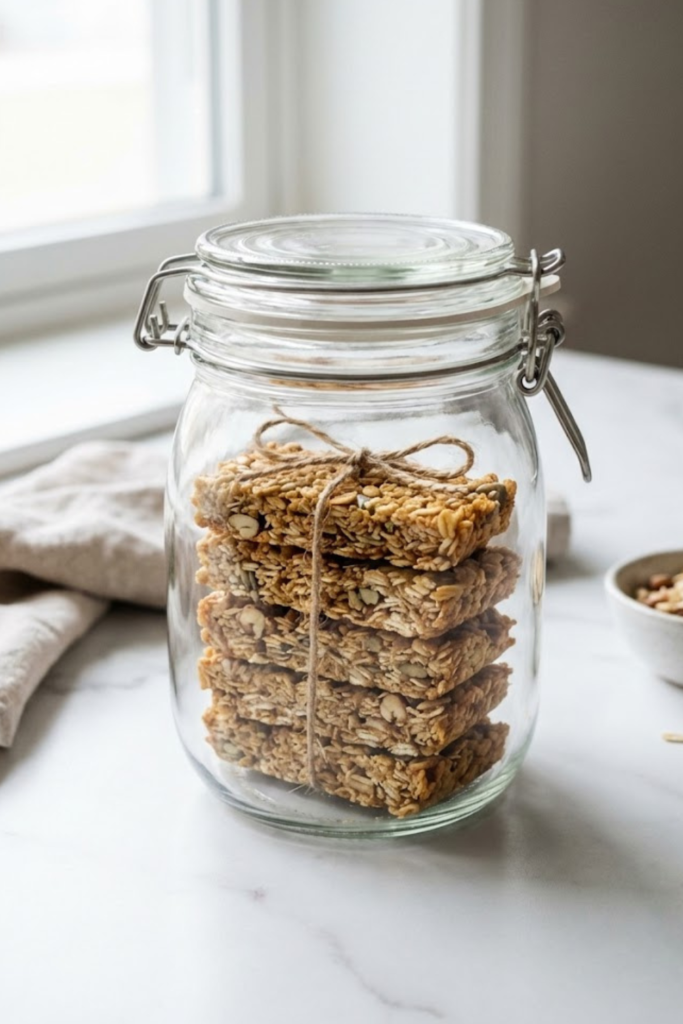
Please don’t use those cheap, flimsy plastic tubs for these. They don’t seal well enough. Air gets in, and your bars get stale in like two days. I switched to using glass jars with those rubber seal gaskets.
Using airtight containers is the only way to keep them fresh for up to a week. I actually hide the jar in the back of the pantry sometimes. If I leave them on the counter, my kids (and my husband) devour them in 24 hours. If you want them to last, keep them sealed tight and maybe keep them hidden!
Custom Variations and Dietary Swaps
One of the things I love most about cooking is tweaking things until they are just right for you. But let me tell you, swapping ingredients in baking is risky business. I once tried to swap out everything in a recipe because I didn’t want to go to the store, and I ended up with a pan of sludge that wouldn’t bake. It was a total fail. However, with these crunchy peanut butter granola bars, I’ve done enough experimenting to know exactly what works and what will ruin your day. Whether you have allergies or just want to switch it up, here is how to do it safely.
Making It Vegan
Since the classic recipe uses honey, it’s obviously not vegan. I have friends who are strictly plant-based, so I had to figure this out. You might think, “I’ll just use maple syrup!” Be careful with that.
Maple syrup is delicious, but it is much thinner than honey. If you use it as a 1:1 swap, your bars might not hold together as well. They tend to be softer. I found that brown rice syrup is actually the best maple syrup substitute for binding because it’s super sticky and thick. If you do use maple syrup, you might need to boil it down for an extra minute to thicken it up before mixing. It’s a small detail, but it makes a huge difference in the texture.
The Nut-Free School Safe Version
If you are packing these for school lunches, you probably have to deal with the “no peanuts allowed” rule. It’s a bummer because peanuts are cheap and tasty, but safety first!
I tried using sunflower seed butter as a replacement. It works great structurally, but I’ll be honest—it has a very distinct, earthy taste. To balance it out, I usually add a little extra cinnamon or vanilla. Also, tahini (sesame seed paste) creates a really interesting, grown-up flavor profile if you’re into that sweet and salty vibe. Just make sure whatever seed butter you use is creamy and stirred well, or you’ll have dry pockets in your bars.
For the Chocoholics
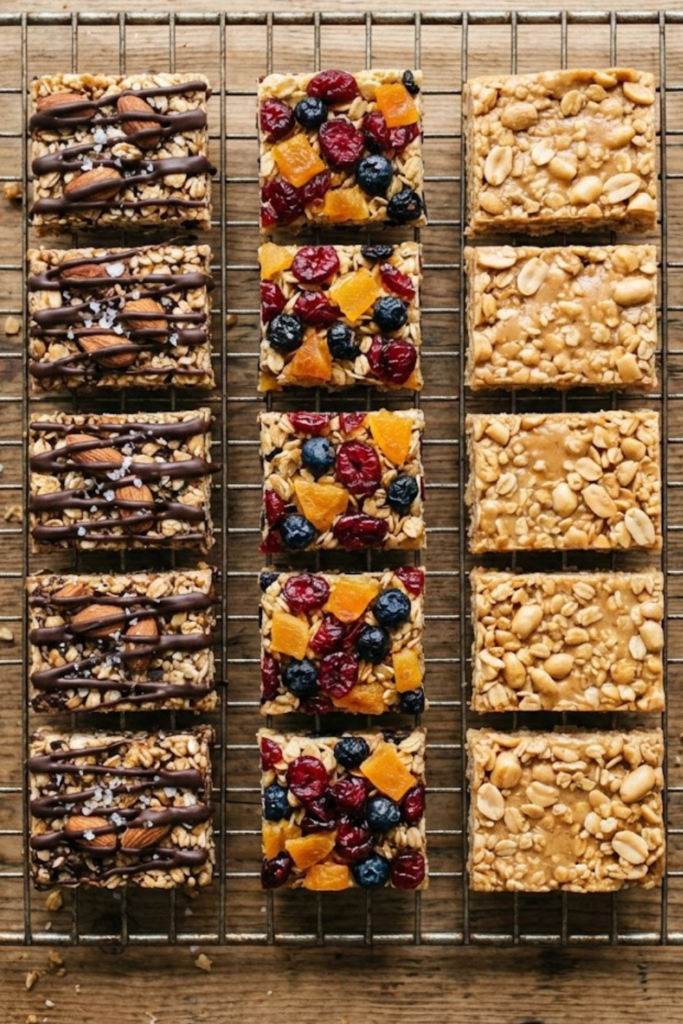
Okay, let’s get real. Everything is better with chocolate. But adding chocolate chip granola elements can be messy. My first time doing this, I dumped a cup of chocolate chips into the hot oat mixture.
Big mistake. The chips melted instantly, and the whole batch turned into a brown, muddy mess. It tasted fine, but it looked terrible. The trick is to wait. Let the oat mixture cool down for about 5 to 10 minutes before you fold in the chocolate chips. Or, even better, press the bars into the pan first and then press mini chocolate chips on top. That way, they stay intact, and you get that perfect bakery look.
I really hope you give these crunchy peanut butter granola bars a shot. It took me a long time to realize that making snacks at home doesn’t have to be complicated or perfect on the first try. Remember, if your first batch crumbles a little bit, don’t stress—it just means you have delicious granola for your yogurt!
The biggest takeaway I want you to remember is to press that mixture down into the pan like your life depends on it. That really is the secret to getting that satisfying snap we are all looking for. Whether you are meal prepping for a busy week or just need something sweet to go with your coffee, this recipe is a total winner in my book.
Pin This Recipe!
Did you enjoy this recipe? Please share it! Pin this image to your Healthy Snacks or Breakfast Recipes board on Pinterest. It helps me out so much and keeps this recipe saved for when the craving strikes!