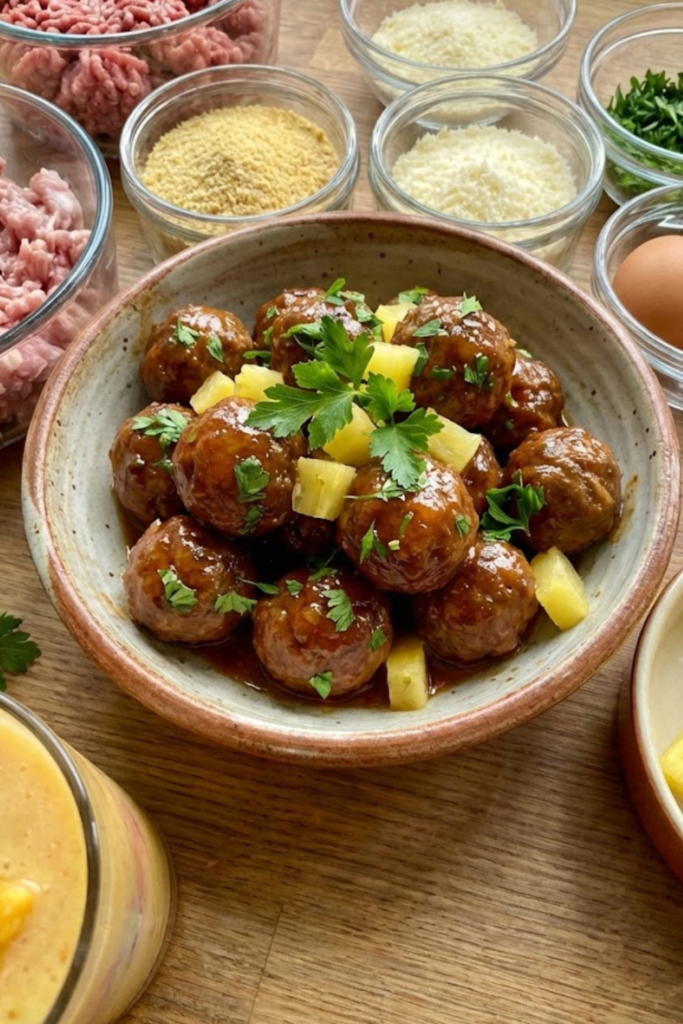
Have you ever bitten into a meatball that tasted more like a hockey puck than a hug? I have, and let me tell you, it’s heartbreaking! There is something truly magical about a perfectly cooked meatball—tender, savory, and swimming in a rich sauce. In fact, a recent poll showed that spaghetti and meatballs remains one of the top 5 comfort foods worldwide, and for good reason!
In this guide, I’m going to share my absolute favorite homemade meatballs recipe that I’ve tweaked to perfection over the years. We’re ditching the dry, tough spheres of sadness and embracing juicy, mouthwatering bliss. Whether you are prepping for a big family dinner or just want a cozy meal for yourself, this recipe is going to be your new best friend. Let’s get cooking!
Choosing the Best Meats for Juicy Meatballs
I still remember the first time I tried to make meatballs for a dinner date. I was trying to be “healthy,” so I grabbed the leanest package of ground beef I could find at the store. I’m talking 93% lean. Big mistake. Huge. When I pulled them out of the oven, those things were tougher than a greedy landlord’s heart. I literally had to saw through them with a steak knife, and my date was just polite enough to choke a few down. It was embarrassing, but hey, you live and you learn, right?
Through a lot of trial and error (and plenty of dry dinners), I realized that the meat you start with is the foundation of everything. You can’t build a house on sand, and you can’t build a juicy meatball on ultra-lean meat.
The Beef-Pork Ratio
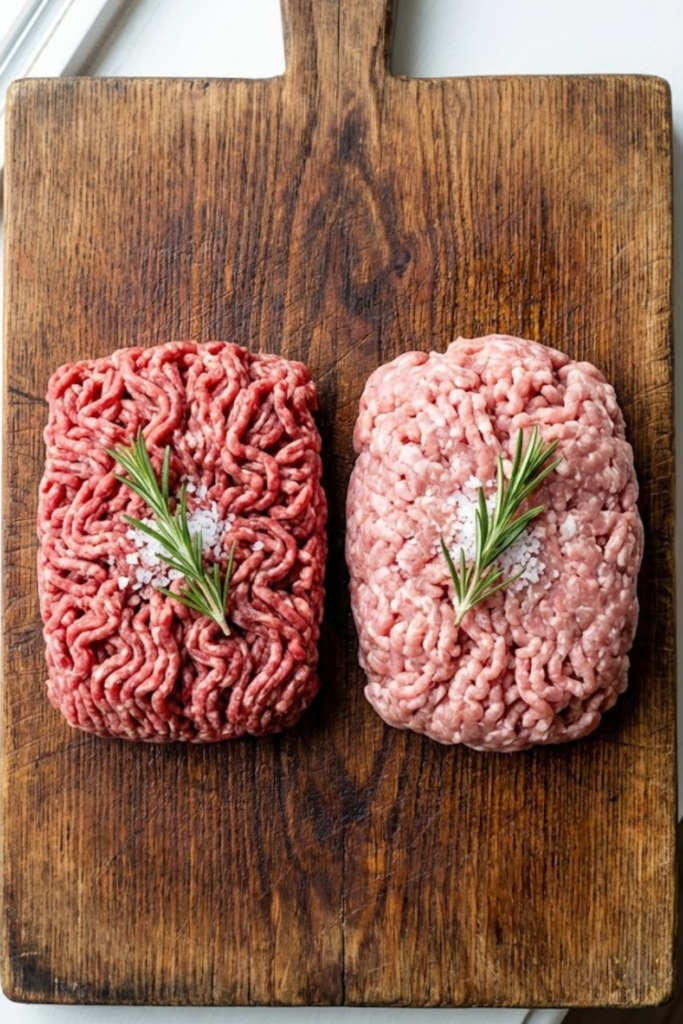
Here is the real secret that changed my cooking game forever: don’t just use beef. The best meatballs usually come from a mix of meats. I’ve found that a 50/50 split of ground beef and ground pork creates the absolute best flavor and texture profile.
Beef brings that deep, hearty flavor we all love. But pork? Pork brings the fat and a lighter sweetness that breaks up the density of the beef. If you use 100% beef, the meatballs can get a bit heavy and dense. Adding pork makes them tender and gives them that melt-in-your-mouth quality. If you can’t eat pork, that’s cool, but you might need to add a little extra olive oil or ricotta to the mix to compensate.
Fat Content Matters
Listen, I know we are all trying to watch our waistlines, but this is not the time to be afraid of fat. Fat equals flavor, and more importantly, moisture. When that fat renders out during cooking, it leaves behind little pockets of air that keep the meatball soft.
For the beef portion, you really want to look for an 80/20 ratio. That means 80% lean meat and 20% fat. If you grab the 90/10 stuff, your meatballs are gonna dry out faster than a puddle in the Sahara. I’ve tried using the lean stuff to save calories, but it’s just never worth it. The texture gets rubbery, and you lose that savory richness. It is recommended to stick to the 80/20 chuck for the best results.
Alternative Options
Now, I get asked a lot about turkey or chicken meatballs. Can you make them? Sure. Will they be the same? No. Poultry is naturally super lean. If I have to use ground turkey, I usually try to find dark meat rather than breast meat.
Also, if you want to get really fancy, you can throw some veal into the mix. The classic Italian “meatloaf mix” sold in stores is often equal parts beef, pork, and veal. Veal is super gelatinous, which adds a crazy amount of silkiness. But honestly? It’s expensive and sometimes hard to find. I stick to my beef and pork combo for weeknight meals, and nobody has complained yet! Just remember, whatever meat you choose, keep it cold until you are ready to mix. Warm fat gets sticky and weird.
The Secret Ingredients for Tenderness (The Panade)
For the longest time, my meatballs were just okay. They weren’t bad, but they definitely weren’t that restaurant-quality, fork-tender perfection I was dreaming of. I used to just dump a cup of dry breadcrumbs straight from the canister into the meat, crack an egg, and call it a day. The result? Slightly grainy, dense spheres that required a lot of sauce to swallow. I felt like a total failure in the kitchen, honestly. It wasn’t until I stumbled across an old recipe card that mentioned soaking the bread first that the lightbulb went on.
It turns out, the secret isn’t in the meat itself, but in the filler. We are talking about the panade.
What is a Panade?
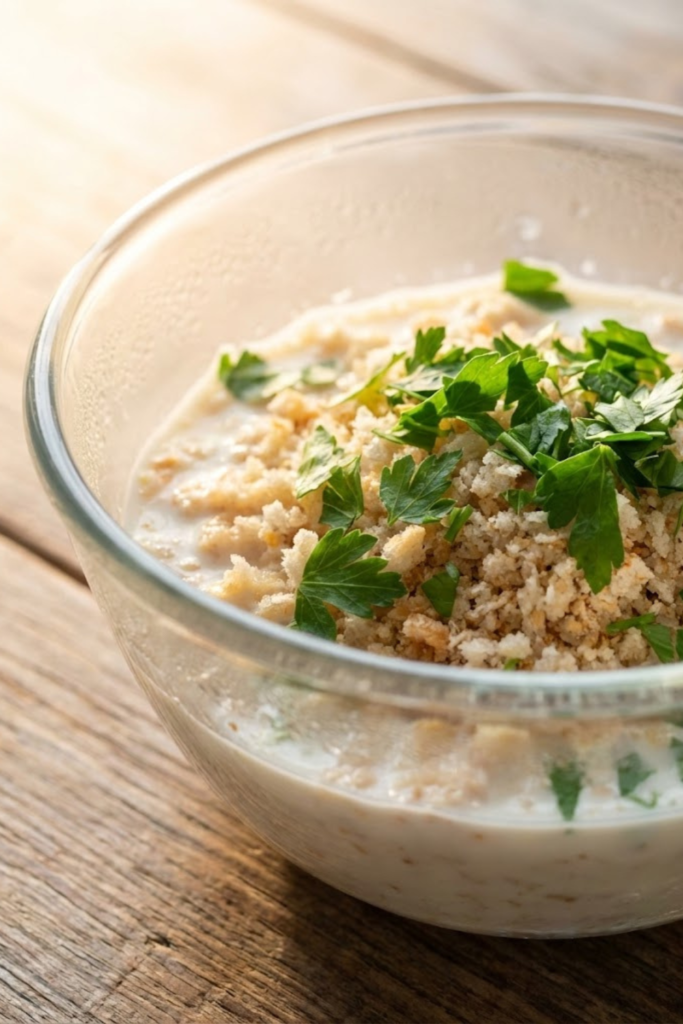
“Panade” is a fancy French culinary word, but don’t let that scare you off. It’s literally just a mash of starch and liquid. In our case, it is breadcrumbs (or stale bread) and milk. That’s it.
I prefer using slices of stale white bread with the crusts cut off, torn into little pieces. It absorbs the milk better than the dry stuff from a can. But if you only have Panko or regular breadcrumbs, that works too! You just mix the bread and milk in a small bowl and let it sit for about 10 minutes. It turns into this weird, soggy paste. It looks gross, I know. But trust the process. This soggy mess is the key to the moist meatballs you are craving.
Why It Works
Here is the thing about meat proteins: when you cook them, they want to tighten up and squeeze out moisture. That is why overcooked burgers get tough. The panade acts like a little cushion between the protein strands.
When you mix that milk-soaked bread into the ground beef, it physically prevents the meat fibers from binding too tightly together. It keeps the structure loose. Think of it like a sponge holding water inside the meatball. If you skip this step, you are basically making mini hamburgers, not meatballs. And nobody wants a boiled hamburger in their pasta sauce.
Seasoning the Mix
Another mistake I made for years was dumping my spices right onto the meat. The problem with that is you have to mix the meat a lot to get the garlic and herbs distributed evenly. And over-mixing makes meat tough (we’ll get to that later).
Instead, add your flavor bombs directly to the panade paste. I throw my fresh parsley, dried oregano, and garlic powder right into the milk and bread mixture. Mash it all up into a seasoned sludge. This way, when you add the meat, the flavor is already evenly distributed, and you don’t have to work the beef as hard. It is a small tweak, but it makes a massive difference in the final texture.
Mixing and Shaping Your Meatballs Like a Pro
I have a confession to make. The first few times I made meatballs, they looked more like lumpy asteroids than spheres. I was in my tiny kitchen, trying to impress some friends, and I was sweating bullets because the meat was sticking to everything—my hands, the counter, the spoon. I got so frustrated I nearly threw the whole bowl in the trash! It was a total disaster, and by the time I served them, they were varying sizes, meaning some were burnt and others were raw in the middle. Talk about a nightmare dinner party.
It took me years to realize that the shaping process is just as important as the ingredients. You can have the best beef in the world, but if you manhandle it, it’s game over.
The Gentle Hand Technique
Here is the golden rule of meatball making: treat the meat like it’s fragile. I used to squeeze the life out of the meat mixture, thinking I needed to really mash everything together to get the flavors to stick. That was a huge mistake.
When you overwork the meat, you compress the proteins too much. This leads to tough meatballs that bounce rather than crumble. Nobody wants a bouncy meatball! When you are combining your meat with the panade and egg, use your fingertips. I like to pretend I’m playing the piano in the bowl. Just gently toss and fold until it’s just combined. If you see a few flecks of unmixed breadcrumbs, leave them. It is better to under-mix than over-mixing, which ruins the texture completely.
Using a Cookie Scoop
If you are like me and have zero spatial awareness, making balls that are the same size is impossible. I used to eyeball it, and I’d end up with golf balls next to marbles. This is bad news for cooking because they won’t cook evenly. The small ones turn into charcoal while the big ones are still pink inside.
Do yourself a favor and buy a cookie scoop. I use a medium-sized one (about 2 tablespoons). It scoops the exact same amount of meat every single time. It speeds up the process like crazy, too. I can crank out three dozen meatballs in ten minutes now, whereas it used to take me thirty. Plus, having uniform size meatballs just looks way more professional when you plate them up. It’s a little cheat that makes you look like a pro chef.
The Wet Hands Trick
Okay, this is the tip that saved my sanity. Meat paste is sticky. It’s gross. It gets under your fingernails and feels impossible to wash off. I used to coat my hands in oil, but that just made everything slippery and added unnecessary grease.
The solution is simple: cold water. Keep a small bowl of cold water next to your station. Before you start rolling meatballs, dip your hands in the water. The water creates a barrier so the fat doesn’t stick to your skin. You’ll be able to roll smooth, perfect rounds without the meat sticking to your palms. Re-dip your hands every 3 or 4 meatballs. It’s one of those kitchen hacks that seems too simple to work, but it absolutely does. Trust me, your hands (and your sanity) will thank you later.
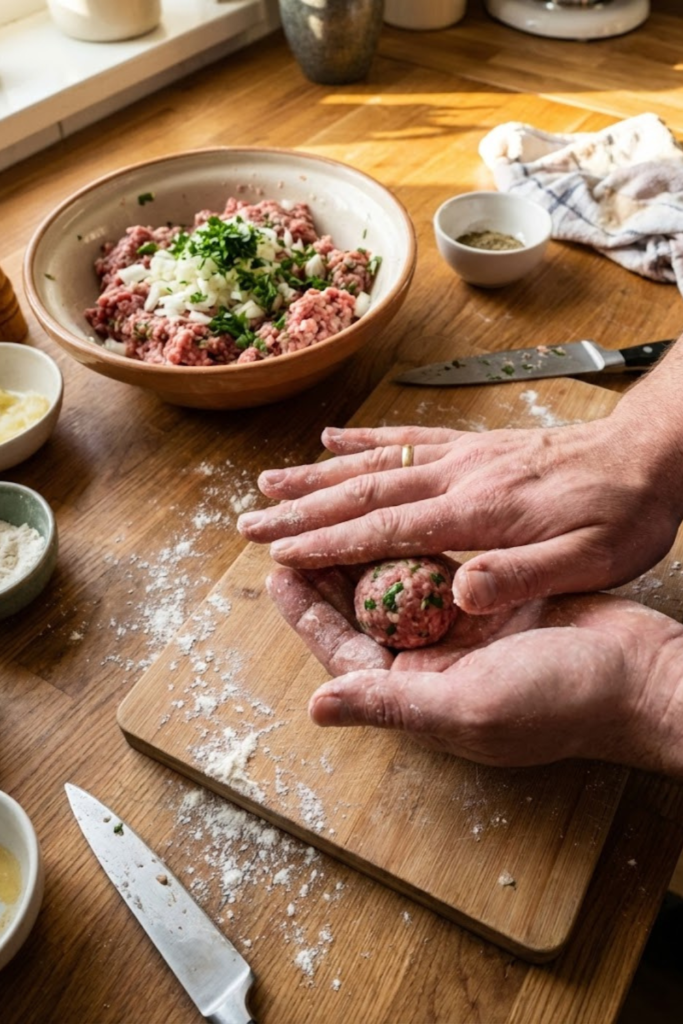
Cooking Methods: Baking vs. Pan-Frying
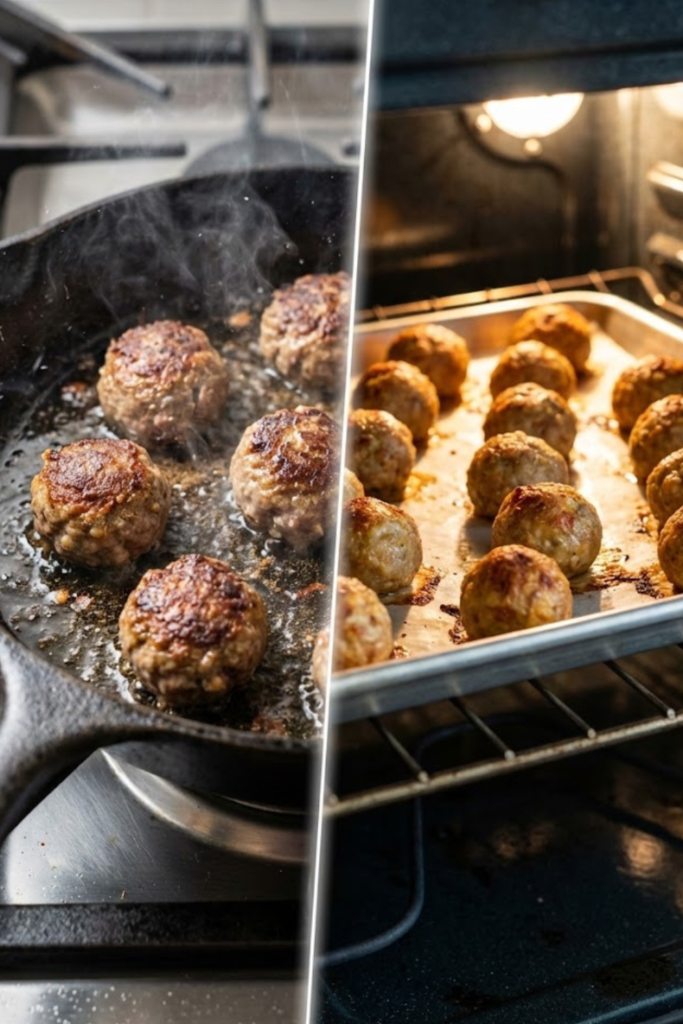
This is probably the biggest debate in the meatball world, right up there with “does pineapple belong on pizza?” (It doesn’t, by the way). When I started cooking, I was a die-hard pan-fryer. I thought that if I didn’t stand over a hot stove getting popped by hot oil, I wasn’t really cooking. My stovetop looked like a grease bomb went off, and I usually ruined a shirt or two. But man, those crispy edges were tasty.
Then I got lazy. I started throwing everything in the oven because I was tired of scrubbing my backsplash. The result? Well, it was different. Over the years, I’ve learned there is a time and place for both methods, and honestly, the “right” way depends on how much energy you have left in the tank.
The Case for Frying
If you want maximum flavor, you have to fry. There is this science thing called the Maillard reaction. It’s basically just a fancy term for when food gets brown and tasty. When you sear meatballs in hot olive oil, the surface caramelizes and creates a delicious crust. That crust adds a texture contrast to the soft interior that you just can’t get any other way.
However, it is high maintenance. You have to cook them in batches so you don’t crowd the pan. If you put too many in at once, they steam instead of sear, and then you just have grey, sad meat. Plus, the balls tend to lose their round shape because they flatten out on the bottom. I usually pull out my cast iron skillet for this when I’m trying to impress company or when I have plenty of time to clean up the mess afterwards.
The Case for Baking
On the flip side, baking is the hero of weeknight dinners. You just line a baking sheet with parchment paper, arrange your rows of meatballs, and pop them in the oven. No splatters, no standing by the stove, no flipping halfway through if you don’t want to. It is incredibly easy and efficient, especially if you are making a double batch to freeze for later.
The downside is you miss out on that crispy exterior. Baked meatballs are softer and more uniform in color. They are still delicious, but they lack that depth of flavor from the sear. But hey, if it means I don’t have to scrub grease off my cabinets, sometimes that’s a trade I’m willing to make. I find that baking works best if you plan to drown them in sauce anyway, or if you are making them for subs where the bread provides the crunch.
The Hybrid Method
Okay, if you want the absolute best result, you have to combine them. This is what I do when I want 5-star quality. I quickly brown the meatballs in a pan just to get that color on two sides—maybe two minutes total. They will still be raw in the middle.
Then, I gently drop them directly into a pot of simmering sauce to finish cooking. This way, you get the flavor from the crust, but the meat finishes cooking gently in the liquid, absorbing all that tomato goodness. It keeps them incredibly moist because they aren’t subjected to the dry heat of the oven or the harsh heat of the skillet for too long. It takes a few extra pots, but the flavor payoff is huge. It’s the only way I cook them for Sunday dinner now.
Simmering in the Perfect Marinara Sauce
You know that scene in movies where the Italian grandmother is standing over a bubbling pot for six hours? That used to intimidate the heck out of me. I thought if I didn’t spend my entire Sunday watching a pot of tomatoes, I wasn’t doing it right. I remember one time I tried to make a “quick” sauce and cranked the heat up way too high. I scorched the bottom of the pot, and the whole batch tasted like burnt tires. I was so mad I could have cried.
But here is the truth I’ve learned after ruining more pots than I care to admit: the sauce is where the meatballs actually come alive. It is not just a topping; it is the final cooking vessel.
Homemade vs. Store-bought
Let’s be real for a second. We are all busy. Sometimes, making a sauce from scratch feels like climbing Mount Everest. If it is a Tuesday night and I’m exhausted, I have absolutely no shame in cracking open a jar of high-quality marinara sauce. Just look for one with no added sugar.
However, if you have twenty minutes, making your own tomato sauce is stupid easy and tastes a million times better. My go-to move is grabbing a can of San Marzano crushed tomatoes. Sauté some garlic in olive oil, dump in the tomatoes, add a pinch of salt and maybe a basil sprig. That’s it. You don’t need a degree in culinary arts to make a sauce that tastes like “Sunday gravy.” It’s fresher, and you control the salt, which is a huge win.
Flavor Infusion
This is the part that feels like magic. When you drop those seared (but still raw inside) meatballs into the sauce, something amazing happens. It’s a two-way street of flavor. The fat and juices from the meat leach out into the tomatoes, cutting the acidity and making the sauce rich and meaty.
At the same time, the acidic tomato juice penetrates the meat, keeping it tender and adding zest. I used to cook them separately and just combine them on the plate. Big mistake. You miss out on that marriage of flavors. You want them to get to know each other in the pot. It turns a basic pasta night into something that tastes like it simmered all day.
Time Management
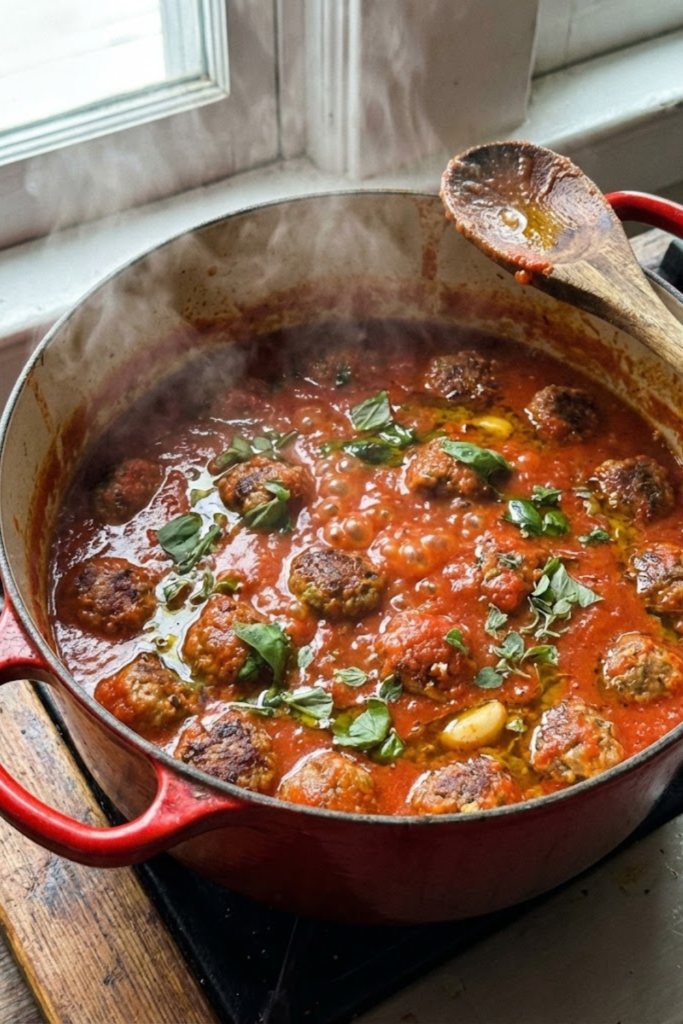
Here is where I messed up a lot early on. I thought “simmer” meant “boil the heck out of it.” Nope. You want a gentle bubble, like a lazy river, not a jacuzzi. If you boil them hard, the agitation will break your beautiful meatballs apart, and you’ll end up with meat sauce.
Once you add the meatballs to the dutch oven or pot, let them simmer for about 20 to 30 minutes. That is usually the sweet spot. They cook through, but they don’t turn into mush. And for the love of everything holy, do not stir them with a spoon like you’re mixing cement. Gently shake the pot back and forth to move them around. If you go in there with a spoon while they are soft, you’re gonna decapitate them. Treat them like fragile little eggs until they firm up.
Serving Suggestions and Storage Tips
There is nothing quite like the feeling of looking at a giant pot of meatballs and realizing you have dinner sorted for the next three nights. It feels like winning the lottery, honestly. But I’ll admit, I used to get stuck in a rut. I served them with spaghetti every single time until my family practically begged for mercy. I learned the hard way that even the best food gets boring if you don’t switch it up.
You have to get creative if you want to keep the magic alive. These little flavor bombs are way more versatile than people give them credit for.
The Classics (and a Few Curves)
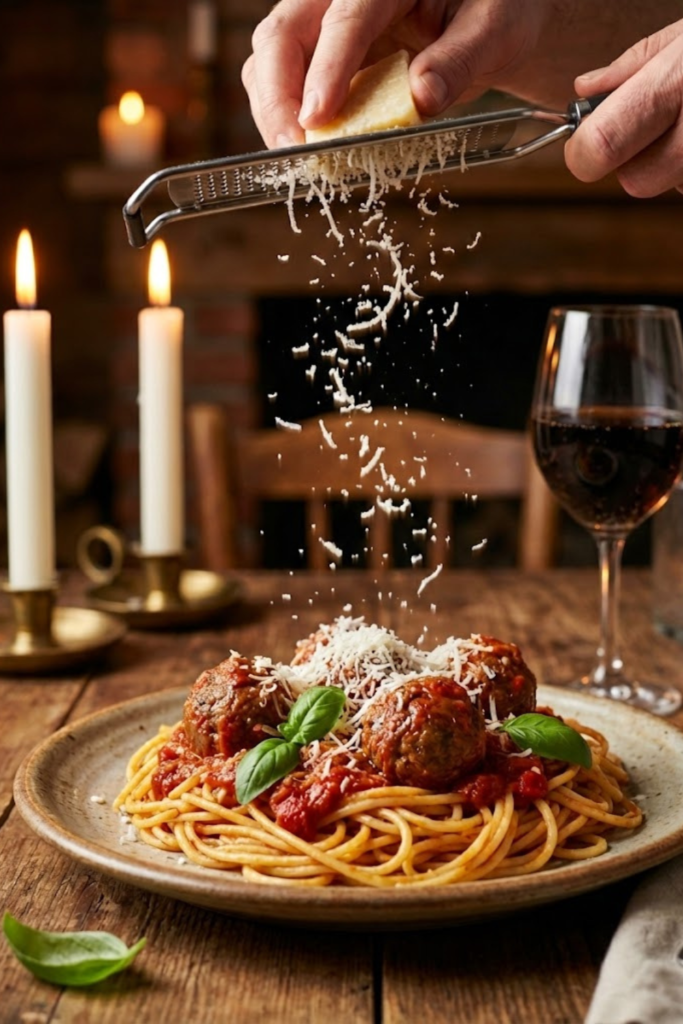
obviously, spaghetti and meatballs is the undisputed champion of comfort food. It’s a classic for a reason. But if you want to elevate the meal, you cannot skip the crusty garlic bread. I’m serious. You need something to mop up that extra sauce at the bottom of the bowl. It is practically a crime to leave it there.
If you have leftovers (which is a big “if”), my absolute favorite thing to do is make meatball subs the next day. Get a soft hoagie roll, load it up, throw a slice of provolone on top, and broil it until it bubbles. It beats a sad ham sandwich any day of the week. I’ve even smashed them up and used them as a pizza topping when I was feeling particularly lazy on a Friday night.
Freezing for a Rainy Day
I used to be terrible at meal prepping. I’d throw all my leftover meatballs into a single freezer bag and toss it in the deep freeze. Fast forward two weeks, and I’d have a solid brick of meat-ice that took three days to thaw. Don’t be like me.
If you are into meal prep meatballs, the trick is to freeze them individually first. Lay them out on a baking sheet (raw or cooked, doesn’t matter) and freeze them until they are solid. Then you can dump them into a bag. This way, you can grab just four or five for a quick lunch without thawing the whole batch. I find that freezing them cooked is easier for weeknight emergencies, but freezing them raw keeps them tasting fresher if you plan to cook them within a month.
The Reheat Reality Check
We need to talk about the microwave. It is the enemy of good meat. If you nuke a meatball on high for two minutes, it turns into a rubber bullet. I’ve ruined perfectly good leftovers this way, and it’s heartbreaking.
The best way to reheat is low and slow on the stove. Put the meatballs and sauce in a small pot, maybe add a splash of water if the sauce got too thick, and cover it. Let it warm up gently. If you must use the microwave, cut the meatballs in half first and use 50% power. It keeps the moist meatballs from drying out and exploding all over the inside of your microwave. Trust me, nobody wants to scrub dried tomato sauce off the ceiling of their appliance.
So, there you have it. You now have the roadmap to making the absolute best meatballs recipe of your life. It is funny how something so simple can take so long to get right, isn’t it? I spent years eating dry, tasteless meatballs before I finally cracked the code with the panade and the right meat blend. But that is the beauty of cooking; you learn more from the burnt pans and rubbery dinners than you do from the successes.
Whether you choose to bake them for a quick weeknight win or fry them in olive oil for that Sunday feast, the most important thing is that you made them yourself. Don’t let the process scare you. Just remember the big three: keep your ingredients cold, use a gentle touch, and let them simmer in that sauce until they are happy. Your kitchen is going to smell amazing, and honestly, seeing people scrape their plates clean is the best feeling in the world.
Now, it is your turn to get messy in the kitchen. Go grab some fresh parsley and get rolling!
If you found these tips helpful, do me a huge favor and share this to your “Best Dinner Recipes” board on Pinterest! It helps other home cooks find us and saves you from losing the recipe when the craving hits.