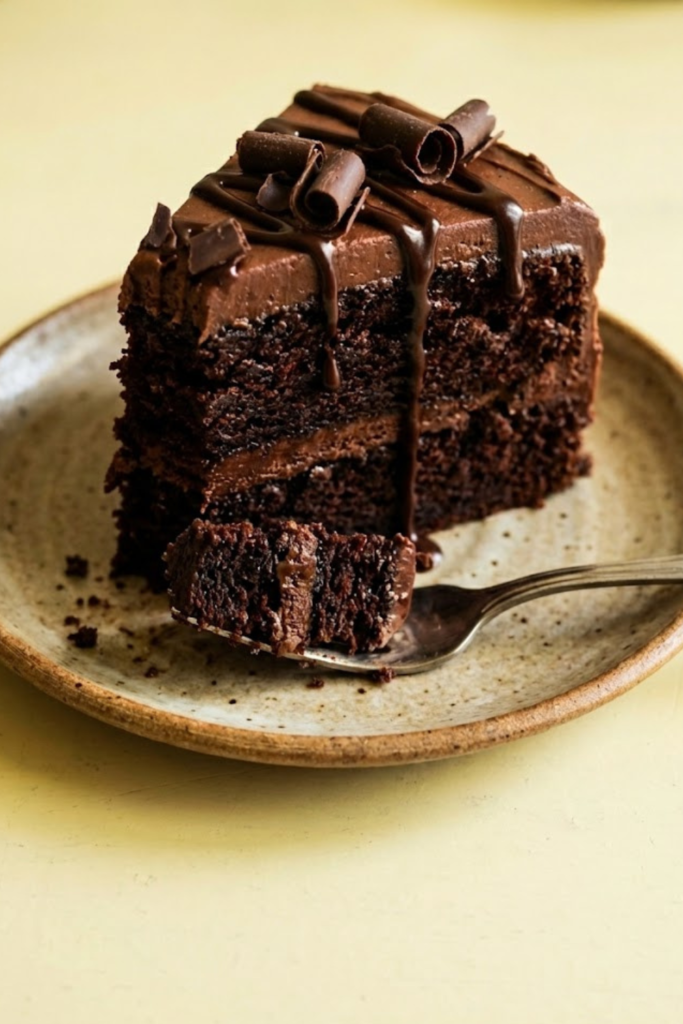
Have you ever tasted a dessert that literally stopped you in your tracks? That is exactly what happens when you take your first bite of this Triple Chocolate Layer Cake! I remember the first time I baked this; I actually dropped a layer on the floor and cried—not because of the mess, but because I wasted such precious chocolate gold. This isn’t just another cake recipe; it is a journey into the heart of cocoa. Whether you are a baking novice or a seasoned pro, this guide will help you create a showstopper. We are talking about moist, fudgy cake layers, a decadent filling, and a frosting that dreams are made of. Let’s get baking!
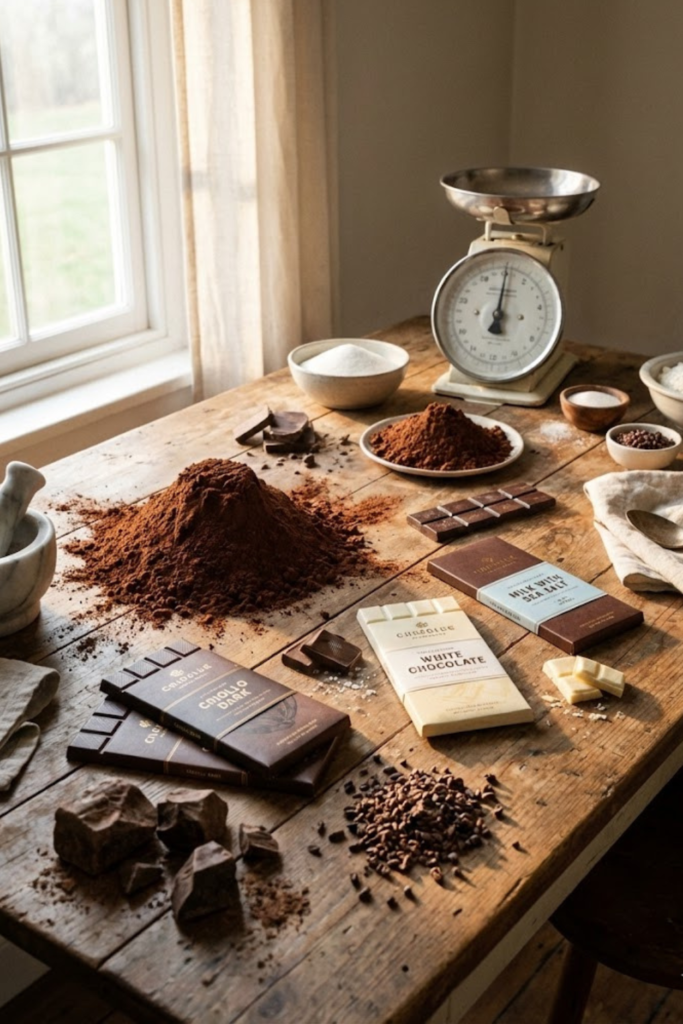
Choosing the Best Cocoa Powder and Chocolate
I used to think all chocolate was created equal. Seriously, I’d just grab whatever brown powder was on sale at the grocery store and call it a day. Then I baked a cake for my best friend’s birthday, and it tasted like… dust. It was dry, pale, and sad. I was mortified! That’s when I learned that for a triple chocolate layer cake, the ingredients you pick are everything. Standing in the baking aisle can be super confusing with all the labels, but I’ve done the trial and error so you don’t have to.
The Great Cocoa Debate: Dutch vs. Natural
Okay, here is the deal. You’re gonna see “Dutch-process” and “Natural” cocoa powder. I used to ignore this, and my cakes paid the price. Natural cocoa is lighter and acidic. It’s got a sharp taste. Dutch-process has been treated with an alkali to neutralize that acid. It’s darker, fudgier, and way smoother.
For this recipe, you really want to grab the Dutch-process stuff. It gives you that deep, Oreo-like color and flavor we all crave. I once swapped them without adjusting my baking soda, and the cake didn’t rise right. It was a dense brick. Since we are using baking powder in this recipe, the Dutch cocoa works perfectly to keep things moist without messing up the baking chemistry.
Ditch the Chips, Grab the Bars
I know, chocolate chips are convenient. I have a bag in my pantry right now for late-night snacking. But please, put the chips down! Chocolate chips are designed to hold their shape in cookies, so they contain stabilizers that prevent them from melting smoothly.
If you want a high-quality chocolate flavor in your frosting or ganache, use baking bars or “couverture” chocolate. I usually buy the big blocks of semi-sweet or dark chocolate (look for 60% to 70% cocoa) and chop them up myself. It’s a bit messy, and I definitely eat a few chunks while chopping, but the melt is superior. The higher cocoa butter content makes the texture silky rather than waxy. Trust me, your tongue knows the difference.
The Magic Trick: Blooming Your Cocoa
This is the secret weapon I wish I knew ten years ago. It’s called “blooming.” Most people just toss cocoa powder in with the flour. Don’t be that person. Cocoa powder is actually made of tiny solids. To release the full flavor, you need to mix it with a hot liquid first.
I always mix my cocoa with hot coffee or boiling water before adding it to the batter. It wakes up the chocolate flavor and makes it intense. If you skip this, your triple chocolate layer cake might taste a bit flat. It’s an extra step, but totally worth it for that bakery-style richness.
Fat Content Is Your Friend
Don’t try to cut calories here. We are making cake, not a salad! The fat in your cocoa and chocolate adds moisture. A higher fat cocoa powder (look for 20-22% fat) prevents the sponge from drying out. I’ve tried using low-fat cocoa before, and the crumb was just crumbly and dry. Stick to the good stuff. You deserve a slice of cake that melts in your mouth.
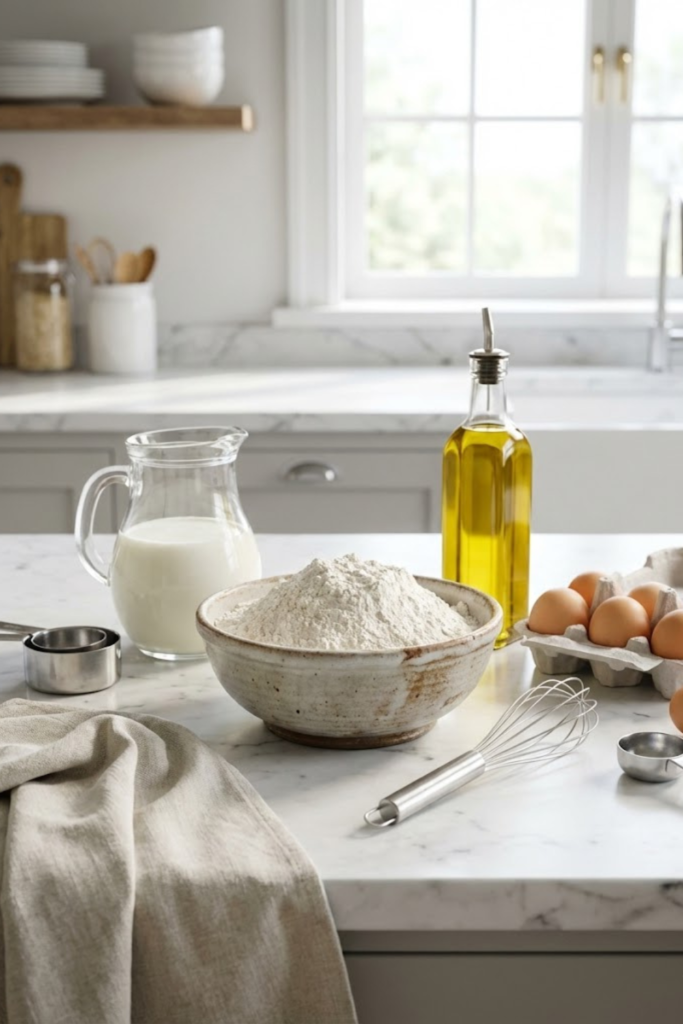
Essential Ingredients for a Moist Chocolate Sponge
I have a confession to make. For years, my chocolate cakes were more like chocolate cornbread. They were dry, crumbly, and honestly, a bit of a choking hazard. I remember serving a slice to my husband, and he politely asked for a second glass of milk just to wash it down. It was embarrassing! I felt like a total failure in the kitchen. But after obsessively testing recipes, I realized that achieving that perfect moist chocolate sponge isn’t magic; it’s just chemistry. You have to use the right stuff.
Why You Need Buttermilk
If you open my fridge, you will always find a carton of buttermilk tucked in the back. I used to think I could just swap it for regular milk, but that was a huge mistake. Regular milk doesn’t have the acidity you need.
Buttermilk is acidic, which does two things. First, it reacts with the baking soda to help the cake rise tall and fluffy. Second, that acid breaks down the long strands of gluten in the flour. This makes the crumb super tender rather than tough. If you are out of buttermilk, you can make a substitute with milk and vinegar, but the real stuff is always better for a triple chocolate layer cake.
Oil Beats Butter (Yes, Really)
This is a hill I am willing to die on. Butter tastes amazing, I know. But for a chocolate cake that stays moist for days, you need vegetable oil.
Here is the thing: butter is mostly fat, but it also has water and solids. When it gets cold, it goes hard. Oil stays liquid at room temperature. This means your cake stays soft even if you put it in the fridge. I usually do a mix—mostly oil for moisture, and a little bit of butter for that rich flavor. It’s the best of both worlds. I’ve tried all-butter chocolate cakes, and they just dry out way too fast.
The Secret Ingredient: Hot Coffee
Okay, don’t scroll past this part if you hate coffee! I promise your cake will not taste like a morning latte. Adding hot coffee is a non-negotiable step for me now.
The hot liquid blooms the cocoa powder, like we talked about earlier. But specifically, the coffee intensifies the chocolate flavor. It makes it taste darker and richer. I usually mix a teaspoon of espresso powder for baking into boiling water. My kids eat this cake all the time and have no idea there is coffee in it. They just know it tastes super chocolatey.
Room Temperature Matters
I am the worst at planning ahead. I’m usually rushing to bake at the last minute. But throwing cold eggs into your batter is a recipe for disaster.
When ingredients are cold, they don’t emulsify—or mix together—very well. You end up with a batter that looks curdled and separates. Room temperature eggs and dairy trap air better, which gives you a lighter structure. If I’m in a rush, I put my eggs in a bowl of warm water for ten minutes. It’s a lifesaver. Taking the time to let your ingredients warm up makes a huge difference in the final texture of your triple chocolate layer cake.
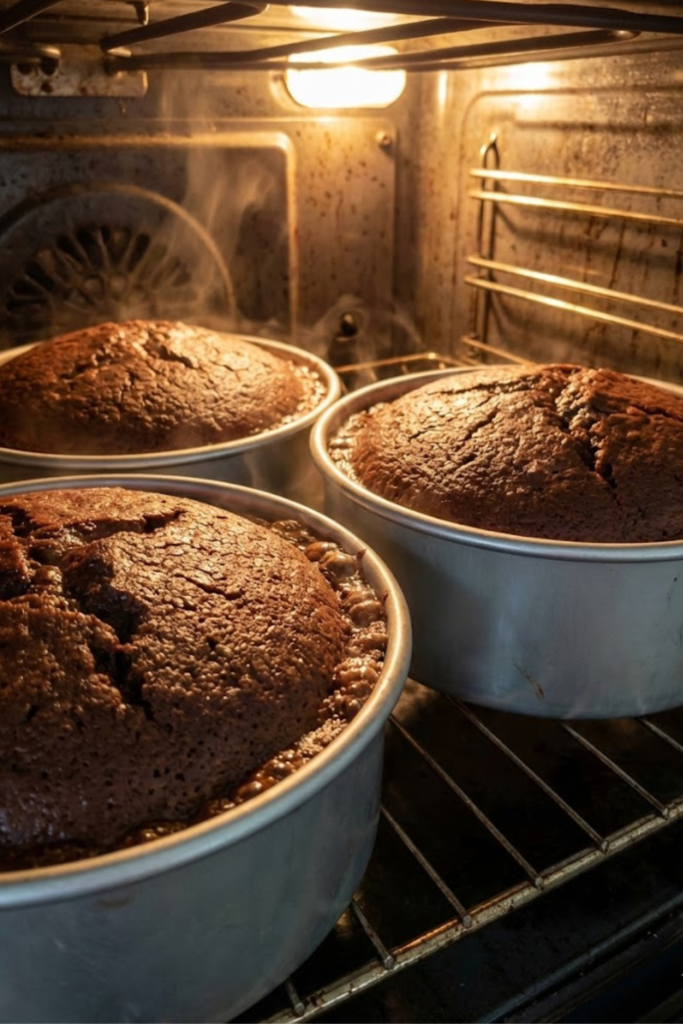
Step-by-Step: Baking the Perfect Cake Layers
I have cried over spilled milk, but I have sobbed over broken cake. There is nothing worse than spending hours measuring and mixing, only to have half the cake stay stuck inside the pan when you flip it. I once had to glue a layer back together with frosting and pray nobody noticed. (Spoiler: they noticed.) It was a disaster. Through all those flops, I learned that baking the perfect triple chocolate layer cake isn’t just about the recipe; it is about how you treat the batter once it leaves the bowl.
Preparing Your Pans Like a Pro
I used to just rub some butter on the pan and hope for the best. That was a rookie move. If you want your cakes to slide out effortlessly, you need a system.
Now, I don’t trust my pans further than I can throw them. I always grease the pan, add a little cocoa powder (so you don’t have white flour streaks on your dark cake), and line the bottom. Using parchment paper rounds is non-negotiable for me. You can buy them pre-cut or just trace your pan and cut them out yourself. It guarantees the bottom won’t stick. It’s a small step that saves me a ton of heartache later.
The Danger of Overmixing
I own a stand mixer, and I love watching it spin. It’s mesmerizing. But leaving it running while you check your phone is a great way to ruin a cake.
When you mix flour with wet ingredients, you start creating gluten development. A little gluten is good—it holds the cake together. Too much gluten makes the cake tough and chewy, like bread. Nobody wants chewy cake. I mix on low speed just until the flour disappears. Sometimes there are still tiny lumps, and that is okay! It’s better to have a few lumps than a rubbery sponge.
Is Your Oven Lying to You?
My old oven was a total liar. I would set it to 350°F, but it was actually running at 375°F. My cakes would come out with burnt edges and raw centers. I was so frustrated I almost quit baking.
I finally bought a cheap hanging thermometer to put inside. It turns out oven temperature accuracy is huge. If your oven is too hot, the cake rises too fast and cracks. If it’s too cool, it sinks in the middle. Now I adjust the dial based on what the thermometer says, not what the oven beeps. If you want flat, even layers, keep an eye on that temp.
The Hardest Part: Waiting
This is where I struggle the most. Patience is not my virtue. I used to try and dump the cakes out immediately because I wanted to see them.
Big mistake. Hot cake is fragile cake. You need to let them cool in the pan for about 10 to 15 minutes. This lets the structure set slightly. Then, flip them onto a wire cooling rack to cool completely. If you try to frost a warm cake, the butter will melt, and your layers will slide off like a mudslide. I’ve been there, and it’s not pretty. Let them cool, grab a coffee, and wait.
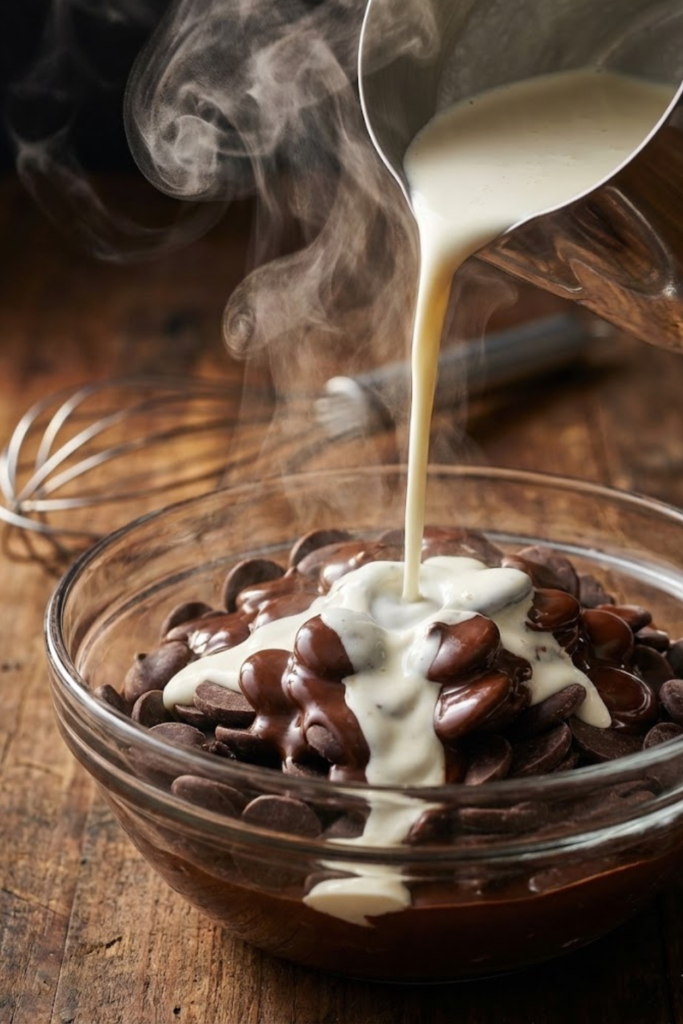
Crafting the Silky Chocolate Ganache Filling
I remember the first time I tried to make ganache. I thought I was being so fancy, like a French pastry chef. I wasn’t. I overheated the chocolate, and it seized up into a hard, oily rock that looked like gravel. I actually tried to save it by adding cold water (don’t do that!), and it just got worse. I ended up eating the failed mess with a spoon while crying in the kitchen. Since then, I’ve learned that chocolate ganache is temperamental, but once you get it right, it is the best thing on earth.
It All Comes Down to Ratios
I hate math, but I love chocolate, so I make an exception here. For a filling that doesn’t squish out the sides of your triple chocolate layer cake, you need a 1:1 ratio.
That means equal parts chocolate and cream by weight. If you just eyeball it, you might end up with chocolate soup or a chocolate brick. I use a kitchen scale baking approach here because cups can be deceiving. A cup of chips weighs different than a cup of chopped blocks. If you use too much cream, the filling won’t set, and your layers will slide around. Stick to the scale.
The Pour and The Wait
Here is where I always rushed. You heat the heavy cream until it just starts to simmer—do not let it boil over! Then pour it over your semi-sweet chocolate and do nothing.
Seriously. Just let it sit there for five minutes. I used to start whisking immediately, and that cools the cream down too fast, leaving you with little unmelted chunks. By letting it sit, the heat penetrates the chocolate gently. When you finally whisk, start in the center and work your way out in small circles. You will be rewarded with a dark, glossy ganache that looks like a mirror. It’s so satisfying to watch it come together.
Spiking the Flavor
Plain ganache is great, but flavored ganache is next level. Sometimes I stir in a tablespoon of chocolate liqueur or even a little bourbon.
It cuts through the sweetness and adds a warm kick. Just add it at the very end so it doesn’t mess up the emulsion. If you aren’t into alcohol, a splash of vanilla or a pinch of sea salt works wonders too. It makes the chocolate taste more like… chocolate.
Letting It Set Properly
You can’t use the ganache right away. Warm ganache is a liquid. For a filling, it needs to be the consistency of peanut butter.
I leave mine on the counter for a few hours. This requires serious willpower not to dip my finger in every time I walk by. If you are in a hurry, you can pop it in the fridge, but you have to stir it every 10 minutes. If you forget about it in the fridge (which I have done many times), it will turn into a solid block. I’ve broken a wooden spoon trying to stir cold ganache. Learn from my mistakes and keep an eye on it!
Whipping Up the Fluffy Chocolate Buttercream
I have ruined more batches of frosting than I care to admit. There was one birthday where my buttercream was so gritty it felt like eating sweetened sand. Another time, I didn’t let the butter soften enough, and I had these tiny, stubborn yellow chunks floating in a sea of brown. It looked gross. I tried to pass it off as “confetti” style, but nobody was buying it. After years of sugary disasters, I finally cracked the code to making chocolate buttercream frosting that is smooth, light, and actually tastes good.
The Butter Situation
Getting the butter right is half the battle. If your butter is too cold, it won’t mix. If it’s melted, you will get a greasy puddle.
I use unsalted butter for baking because it gives me total control over the saltiness. You want it to be “cool room temperature.” That means if you press your finger into it, it makes a dent but doesn’t slide right through. If the butter is too shiny or oily, pop it back in the fridge for ten minutes. I’ve tried to rush this by nuking it in the microwave, and let me tell you, that is a gamble you will lose 99% of the time.
The Step I Hate (But Do Anyway)
I am lazy when it comes to prep work. I hate sifting. It makes a mess, and sugar dust gets everywhere. But for this recipe, you have to do it.
Powdered sugar and cocoa powder love to clump up in the bag. If you dump them straight into the mixer, those little rocks won’t break down. You will end up with white specs in your dark frosting. I grab a fine-mesh sieve and push the sifted cocoa powder and sugar through it. My kitchen usually looks like a sugar bomb went off by the end, but the super smooth texture is worth the cleanup.
Whip It Good
Most people stop mixing as soon as the ingredients come together. That is a rookie mistake! You need to beat the heck out of it.
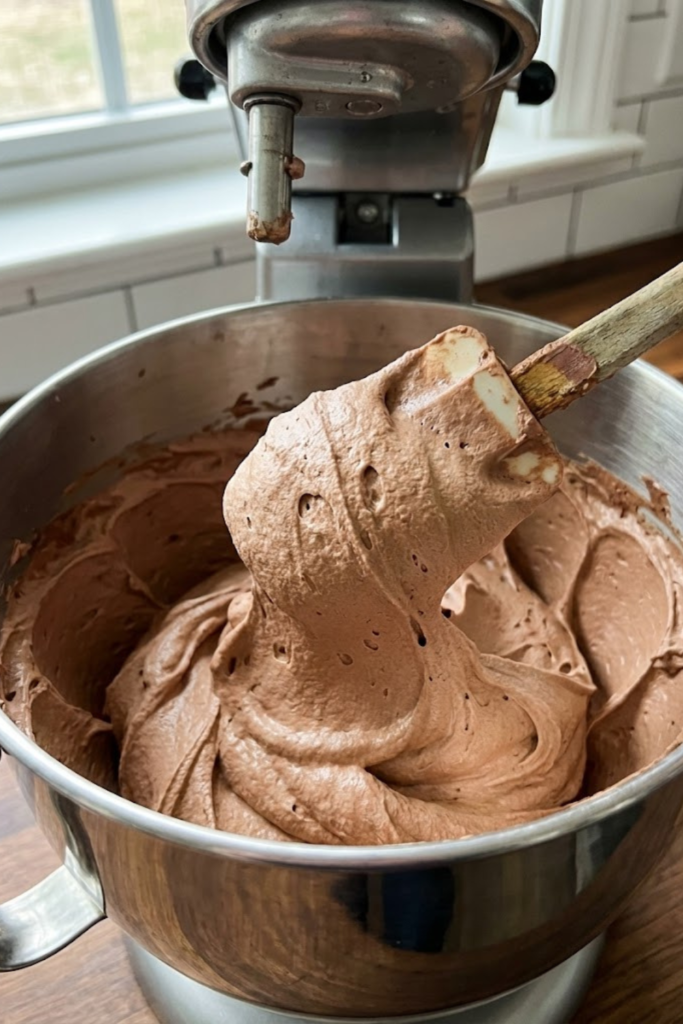
I set my timer for a full five minutes. It feels like an eternity, but something magical happens around minute four. The mixture changes from dark and dense to pale and fluffy. You are physically forcing air into the fat, creating an aerated buttercream. This makes it less sweet on the tongue and way more melt-in-your-mouth. If you skip this, your frosting will be heavy and fudge-like, which is okay, but not what we are going for here.
Troubleshooting on the Fly
Sometimes, even when you follow the rules, things go weird. It happens to the best of us. The humidity in your house can mess with the texture.
If the frosting is too stiff and tearing your cake, add a teaspoon of milk or heavy cream. If it’s too runny and sliding off the spoon, add more sugar. I usually keep a little extra heavy cream ganache or milk nearby just in case. Don’t panic if it looks wrong at first; buttercream is pretty forgiving if you just keep whipping it.
Assembly and Decoration for a Professional Look
I have built some truly ugly cakes in my life. I remember making a birthday cake for my sister that leaned so hard to the left, we had to prop it up with a juice box just to take a picture. It looked like the Leaning Tower of Pisa, but made of chocolate. I was so embarrassed I wanted to hide under the table. Decorating is where things can go from “wow” to “what happened?” very quickly. But over time, I learned that cake assembly tips aren’t just for pros. You can fake it until you make it if you know a few tricks.
Leveling: The Scary Part
Okay, grab a big knife. This part always makes me nervous. When cakes bake, they dome in the middle. If you try to stack rounded cakes, they will wobble and eventually slide apart.
I use a long serrated knife to saw off the tops. You have to get down at eye level with the cake to see what you are doing. I usually spin the cake stand slowly while I cut. The best part? You get to eat the scraps! I call it the baker’s tax. Having flat, even layers is the only way to get a stable structure that doesn’t look like it’s about to topple over.
The Magic of the Crumb Coat
For years, I wondered how bakeries got their frosting so smooth without little cake bits showing through. I was just slapping frosting on and making a mess. Then I learned about the crumb coat technique.
Think of this as a primer for your walls. You apply a very thin layer of frosting all over the cake to trap the crumbs. It looks messy, and that is totally fine. Then—and this is the important part—you have to put the cake in the fridge for 30 minutes. The frosting hardens and locks those crumbs in jail. Once it’s cold, you can add your final thick layer of frosting with an offset spatula, and it will glide on perfectly smooth. It takes extra time, but it changes everything.
Mastering the Drip
The chocolate ganache drip is super trendy, but it can be a nightmare. I once poured ganache that was too hot, and it melted the whole side of my cake. It looked like a chocolate avalanche.
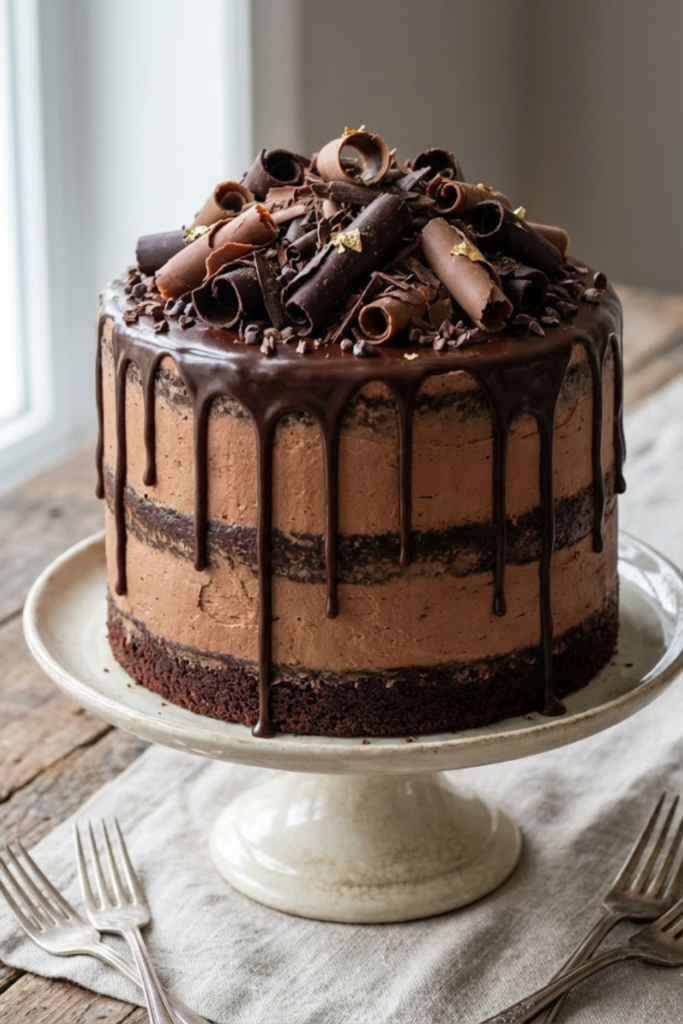
The trick is temperature. The ganache needs to be fluid but not hot. I test a single drip on the back of the cake first. If it runs all the way to the bottom plate, it’s too hot. Let it cool for five more minutes. If it stops halfway down, it’s perfect. I use a spoon to gently push small amounts over the edge. It takes patience, but when you get those perfect drips, you feel like a rockstar.
Hiding Your Mistakes
Here is a secret: I am terrible at smoothing frosting. I can never get it perfectly flat. That is why garnish is my best friend.
If the top looks rough, pile on some chocolate shavings or fresh berries. If the bottom edge is uneven, press some sprinkles or nuts into it. No one needs to know you messed up! I usually finish this triple chocolate layer cake with some chocolate curls I made using a vegetable peeler. It looks fancy, but it took me two seconds. The goal is to make it look delicious, not perfect. Imperfections just show it’s homemade with love (and a little bit of stress).
The Final Slice: Serving, Storing, and Savoring
Look, I am going to be real with you. When I look at the sink full of chocolate-covered bowls and spatulas after making this, I sometimes question my life choices. It looks like a mud wrestling match happened in my kitchen. But then I sit down, take a forkful of this triple chocolate layer cake, and the chaos just fades away. It is that good. Baking this beast is a labor of love, but the look on my family’s faces makes every minute of scrubbing dishes worth it.
Don’t Rush the Cut
I know you want to dive in immediately. I have been there, standing with a knife in one hand and no patience in my body. But if you cut this cake while it is still warm or right after frosting, it can be a messy slide.
For the absolute cleanest slices, I actually pop the whole cake in the fridge for about 30 minutes before serving. This firms up the chocolate buttercream frosting and the ganache filling just enough to hold everything together. Then, I run my knife under hot water and wipe it dry before every single cut. It sounds tedious, but it gives you those sharp, bakery-style edges that look amazing on Instagram.
Dealing with Leftovers (If You Have Any)
It is rare, but sometimes we can’t finish the whole thing in one sitting. I used to just wrap the cut side with plastic wrap, but that always dried out the moist chocolate sponge.
The best way to store this cake is in an airtight container at room temperature if you plan to eat it within two days. The vegetable oil in the batter keeps it soft. If you need it to last longer, put it in the fridge, but let it come back to room temperature before eating. Cold cake tastes like chocolate wax; the flavor is muted. I usually just hide a slice in the back of the fridge behind the broccoli so my kids don’t find it. That is my little secret mom tax.
A Final Word on Ingredients
If there is one thing I hope you take away from this whole long ramble, it is that ingredients matter. I spent years wondering why my cakes didn’t taste like the ones from the fancy downtown bakery.
It wasn’t magic; it was the Dutch-process cocoa powder and the real buttermilk. Don’t swap them out for the cheap stuff. You are putting in the effort, so give yourself the best chance at success. I’ve tried cutting corners to save a few bucks, and I always regretted it when the cake came out bland. Treat yourself to the good chocolate. You deserve it.
Let’s Get Baking!
Okay, I have talked enough. My mouth is watering just typing this out, and I think I need to go make another batch right now. This recipe has been a journey for me, from my early disasters to finally nailing the perfect decadent dessert recipes.
I really hope you give this a try for your next birthday party, anniversary, or just because it’s a Tuesday and you need chocolate. If you do bake it, please don’t keep it a secret! I would be absolutely thrilled if you could share it on Pinterest. It helps other chocolate lovers find this recipe and prevents them from suffering through dry, sad cakes. Pin it, bake it, and enjoy every single bite!