I used to think all American buttercreams were gritty sugar bombs, but then I discovered the magic of adding melted chocolate! Did you know that adding white chocolate actually improves the stability of your frosting while cutting down on that overwhelming sweetness? This white chocolate buttercream frosting is luscious, creamy, and surprisingly easy to master. Whether you are piping intricate roses or just slathering it on a birthday cake, this recipe is going to be your new best friend! Let’s dive into the sweetest kitchen adventure you’ll have this year.
Selecting the Best Ingredients for Silky Frosting
Look, I’ve been there. You’re standing in the baking aisle, staring at the wall of chocolate options, and you just grab a bag of white chips because they’re easy. Big mistake. I learned this the hard way a few years ago when I tried to whip up a batch of white chocolate buttercream frosting for my niece’s birthday. The result? A grainy, clumpy mess that refused to melt properly. I was so frustrated I almost threw the whole bowl in the trash!
The truth is, your frosting is only going to be as good as the stuff you put into it. Since we aren’t using a ton of ingredients here, each one really has to pull its weight.
The Real Deal on White Chocolate
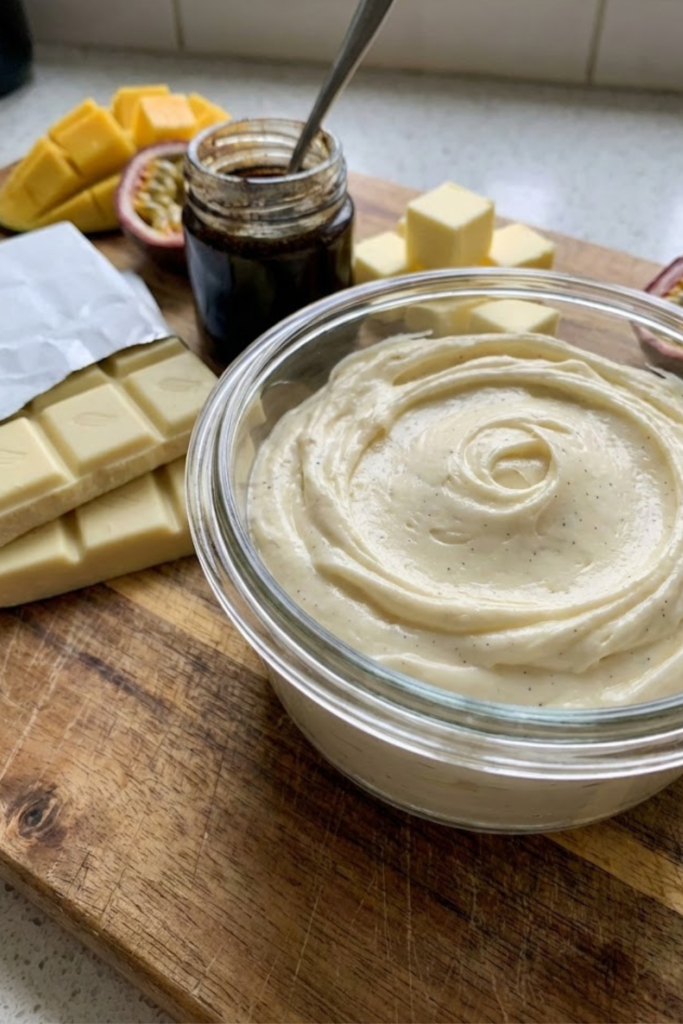
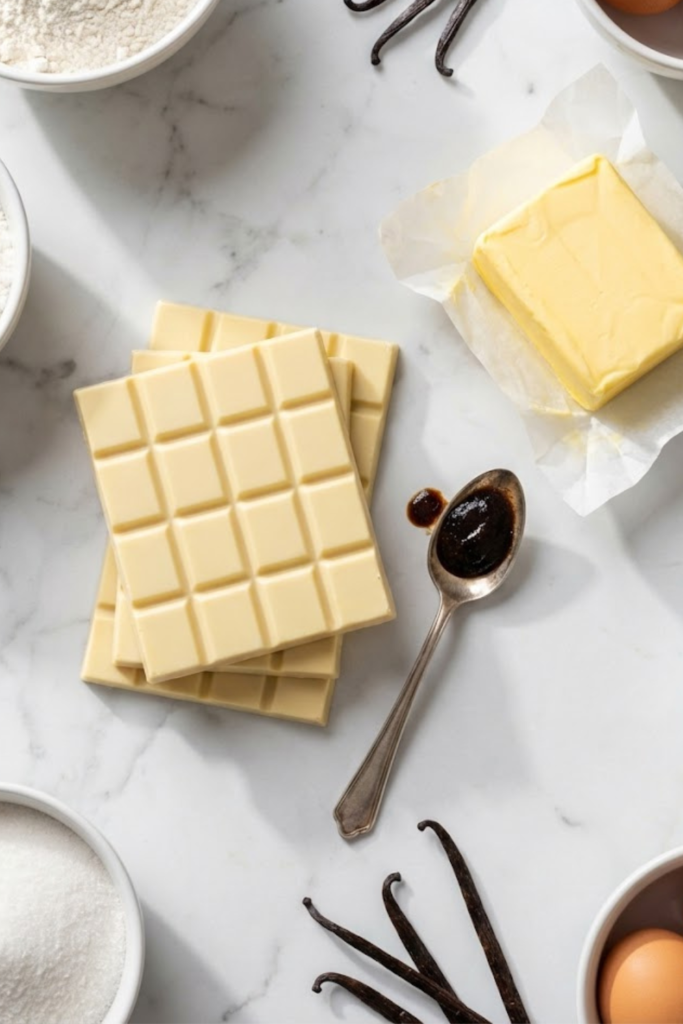
Here is the most important lesson I’ve learned: do not use white chocolate chips. Seriously, put them back. Chips are designed to hold their shape in cookies, which means they are packed with stabilizers that resist melting. When you try to melt them down for white chocolate buttercream frosting, they turn into a thick sludge rather than a silky liquid.
Instead, you need to grab high-quality baking bars. I usually go for brands like Ghirardelli or Lindt.
- Check the label: You want to see “cocoa butter” listed as one of the main ingredients.
- The texture factor: Real cocoa butter melts smoothly and incorporates into the butter without seizing up.
Butter Basics
Now, let’s talk about the other half of the equation. I always use unsalted butter. I know, it’s annoying to buy a specific type if you usually keep salted on hand for toast, but trust me on this one. Different brands add different amounts of salt, and you want to control the flavor yourself.
Also, your butter needs to be boringly room temperature. Not slightly cold, and definitely not melted. If it’s too soft, your white chocolate buttercream frosting will be soupy and won’t hold a pipe. If it’s too cold, you’ll get lumps. I usually leave mine on the counter the night before just to be safe.
The Flavor Balancers
Since white chocolate is basically pure sugar and fat, it can be overwhelmingly sweet if you aren’t careful. This is where your supporting actors come in.
- Vanilla Bean Paste: I prefer this over extract because seeing those little black specks makes the frosting look fancy, like you bought it at a bakery.
- Fine Sea Salt: This is non-negotiable. The salt cuts through the sugar and actually makes the chocolate taste more like chocolate.
It took me a lot of trial and error to get this right, but once you switch to baking bars and manage your butter temp, the difference is night and day. You’ve got this!
Melting White Chocolate Without Seizing
I used to hold my breath every single time I had to melt white chocolate. It is honestly such a diva compared to dark or milk chocolate. You turn your back for one second, and suddenly it’s a scorched, clumpy disaster. I remember ruining a massive batch of white chocolate buttercream frosting right before a bake sale because I got impatient and cranked the heat up. I ended up making a midnight run to the grocery store in my pajamas. Not my finest moment.
The trick is understanding that white chocolate burns at a much lower temperature than regular chocolate. It’s mostly cocoa butter and sugar, which makes it delicate. Treat it gently, and it will behave.
The Double Boiler Method (My Preferred Way)
If you are nervous about burning it, this is the safest route. You don’t need a fancy bain-marie pot; I just use a regular saucepan and a heatproof glass bowl.
- Fill the pot with about an inch of water and get it to a gentle simmer.
- Place your bowl of chopped chocolate on top.
- Crucial tip: Make sure the bottom of the bowl does not touch the water.
You want the steam to melt the chocolate, not the direct heat of the water. Stir it constantly with a rubber spatula. Once it’s mostly melted with just a few little lumps left, take it off the heat. The residual warmth will finish the job.
The Microwave Shortcut
Okay, I’ll be honest, I usually use the microwave because I hate washing extra pots. But you have to be careful here. If you zap it for a full minute, you will burn it.
- Put your chocolate in a microwave-safe bowl.
- Heat it on 50% power for 20-second intervals.
- Stir between every single interval.
I mean it, stir it even if it looks like nothing happened. The heat starts in the center, and stirring distributes it. If you skip this, the middle will burn while the outside looks solid. It takes a bit of patience, but it saves you from that gritty, burnt taste that ruins white chocolate buttercream frosting.
The “Cool Down” Period
This is the step that tripped me up for years. You absolutely cannot pour hot melted chocolate into your butter. If you do, the butter will melt instantly, and you’ll be left with a greasy, soupy mess that no amount of whipping can fix.
You have to let the melted chocolate sit on the counter until it comes to room temperature. It should still be liquid and pourable, but it shouldn’t feel warm to the touch. I usually melt the chocolate first, then let it hang out while I prep my butter and sugar. By the time I’m ready to add it, it’s usually at the perfect temp.
Saving Seized Chocolate
Water is the enemy here. If even a tiny drop of water splashes into your bowl, the chocolate will “seize” and turn into a weird, hard paste. It’s heartbreaking. If this happens, you can sometimes save it by stirring in a teaspoon of vegetable oil or shortening to loosen it up again. But for frosting? It’s usually better to just start over. Keep your bowls and spatulas bone dry!
Whipping It Up: The Mixing Method
I have a confession to make: I used to be a “dump and mix” kind of baker. I figured if all the ingredients ended up in the bowl eventually, what difference did the order make? Well, it turns out it makes a huge difference. My early attempts at white chocolate buttercream frosting were heavy and yellow, tasting more like a stick of butter than a cloud of frosting. I realized that patience is actually an ingredient.
You really can’t rush this part. If you want that professional, bakery-style texture that holds up on a cupcake, you have to follow the steps. Grab your stand mixer recipes because your arm will fall off if you try this by hand!
Beat the Butter First
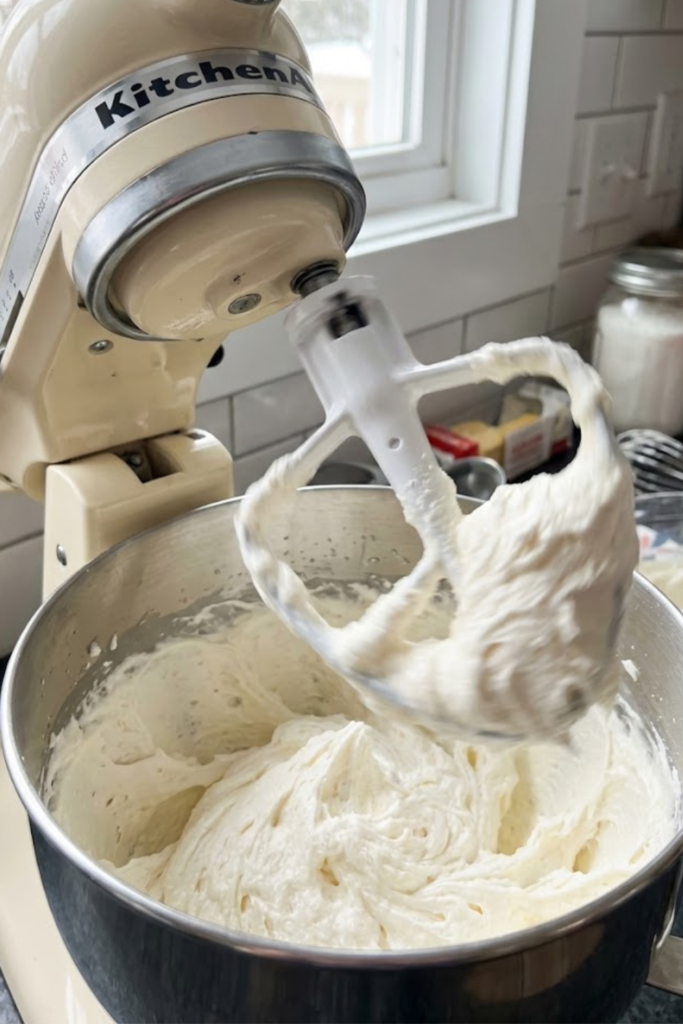
This is the step that most home bakers skip or rush through. You need to beat the butter all by itself before you add a single grain of sugar. I usually let my mixer run on medium-high speed for a solid 5 to 7 minutes.
I know, it feels like an eternity when you just want to eat frosting. But watch the transformation. The butter will go from yellow to a very pale, almost white color. It should look aerated and creamy. This base is what gives you that light, whipped buttercream texture later on. If you skip this, your frosting will feel dense and greasy on the tongue.
The Sugar Storm
Okay, turn your mixer down to the lowest setting. Seriously, unless you want your kitchen to look like it snowed inside, keep it low. I’ve made the mistake of cranking it up too fast and inhaling a lungful of sugar dust. Not fun.
Gradually add your powdered sugar. And yes, you really should be sifting confectioners sugar beforehand. I know it’s a pain and I hate washing the sieve, but little clumps of sugar will clog your piping tips later. Once the sugar is incorporated, I crank the speed back up to high for another 2-3 minutes to get it nice and fluffy.
The Marriage of Ingredients
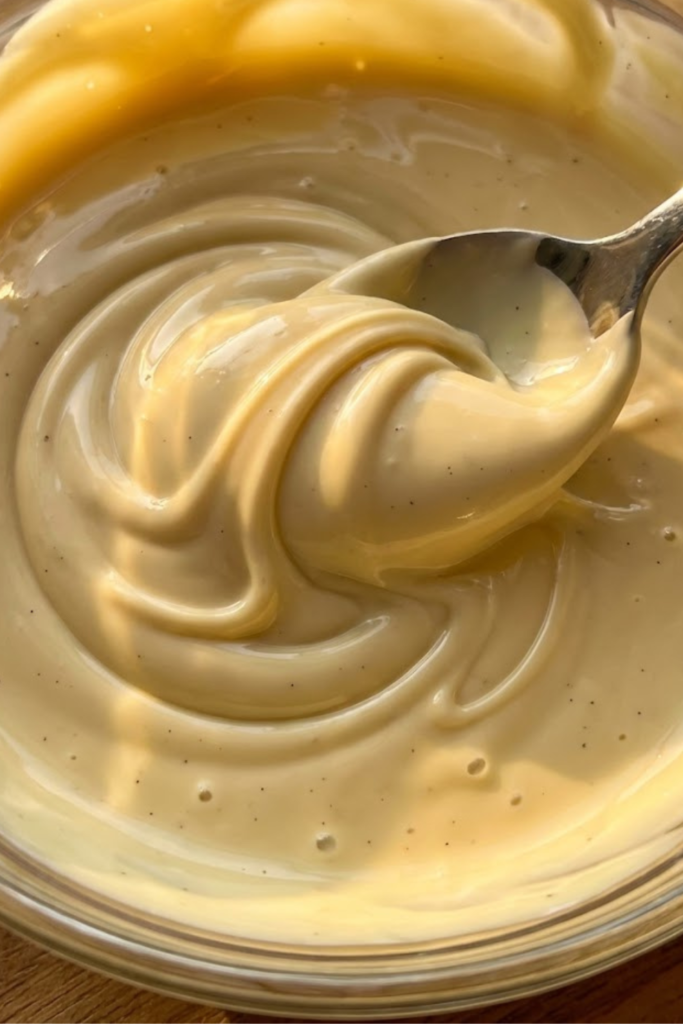
This is the moment of truth. With the mixer on low, slowly pour in your cooled (remember: room temp!) melted chocolate. This is where the magic happens. The mixture will instantly become silky and glossy.
Stop the mixer and scrape down the sides and bottom of the bowl. Me and my spatula are best friends here because the paddle attachment always misses that little pocket of butter at the very bottom. Give it one final whip to make sure everything is combined.
Beating Out Air Bubbles
If you plan on piping roses or smooth sides on a cake, air bubbles are your enemy. You don’t want your cake to look like a sponge. Once everything is mixed, I turn the mixer down to the absolute lowest stir speed.
Let it run for about 2 minutes. This knocks the big air bubbles out and pushes the frosting against the side of the bowl, creating that super smooth, dense consistency perfect for cake design. It’s a small detail, but it makes your white chocolate buttercream frosting look like it came from a pro kitchen.
Troubleshooting Common Buttercream Problems
I have cried over frosting before. I’m not even kidding. I was making a cake for my best friend’s baby shower a few years back, and right when I added the white chocolate, the whole bowl turned into a separated, watery mess that looked like scrambled eggs. I panicked. I thought I had wasted twenty dollars worth of chocolate and almost threw the mixer bowl in the sink.
But here is the good news: buttercream is actually really forgiving. Almost anything can be fixed if you know the science behind why it is acting up. Don’t throw it out! Let’s save your white chocolate buttercream frosting.
Help, It Looks Like Cottage Cheese!
If your frosting looks curdled or separated, it is almost always a temperature fight. Usually, this means your butter was too cold or the chocolate was too hot when you combined them. The fat solids have separated from the liquid, and they aren’t playing nice.
Here is my favorite curdled buttercream fix that feels like magic: grab a hair dryer. Yep, the one from your bathroom.
- Turn the mixer on low speed.
- Point the hot air at the outside of the metal bowl for about 30 to 45 seconds.
- Watch as the edges melt slightly and the mixture comes back together.
If you don’t have a hair dryer handy, you can scoop out a tiny bit of the frosting (about 1/4 cup), melt it in the microwave until it’s liquid, and pour it back into the whipping mixer. The warm liquid helps everything emulsify again.
It’s Too Runny to Pipe
This usually happens to me in the summer when my kitchen turns into a sauna. You are looking for stiff peaks that hold their shape, but instead, you have a drooping puddle. If you try to pipe this, your roses will look like sad pancakes.
Don’t keep adding sugar! That just makes it gritty and way too sweet. Instead, pop the whole bowl in the fridge for 10 to 15 minutes. It cools the butter down just enough to firm up. Whip it again, and you should see those nice soft peaks turn into firm ones that are ready for cake design.
My Teeth Hurt (Too Sweet)
White chocolate adds a lot of sugar to an already sugary recipe. Sometimes you taste it and it just feels like a cavity waiting to happen. If you find you have too sweet frosting, don’t worry, you can balance it out.
I always add a little bit more salt than the recipe calls for. But if that isn’t enough, try adding a teaspoon of fresh lemon juice. You won’t taste the lemon flavor, but the acidity cuts right through the heavy sugar. It really balances out the richness and makes it much more edible.
Why Is It Crunchy?
There is nothing worse than gritty frosting. This usually happens when your powdered sugar doesn’t dissolve into the fats properly. This is one of those baking hacks 2026 relies on: use the right sugar.
- Make sure you sift your sugar to break up hard lumps.
- Mix on low speed for longer to let the friction dissolve the crystals.
If you are using organic powdered sugar, sometimes the tapioca starch in it is grittier than cornstarch. I learned that the hard way. Just keep your mixer running on low for an extra 5 minutes to help it smooth out.
Perfect Flavor Pairings and Cake Combinations
I learned a hard lesson about flavor balance at my own birthday party a few years ago. I made a sweet vanilla bean cake, filled it with marshmallow fluff, and covered the whole thing in white chocolate buttercream frosting. It sounded amazing in my head. In reality? It was a sugar bomb. My guests were polite, but I saw a lot of half-eaten slices left on plates. It was just too much sweet on sweet.
Since this frosting is incredibly rich and creamy, it needs a partner that can stand up to it. You don’t want the frosting to drown out the cake; you want them to high-five each other.
Tart Fruits Are Your Best Friend
If you want to look like a genius baker, pair this frosting with something sour. The acidity cuts right through the fat and sugar. Raspberry and white chocolate is probably my all-time favorite combination. I like to put a layer of tart raspberry jam between the cake layers before frosting the outside.
A lemon cake pairing is also killer. The zing from a fresh lemon sponge makes the creamy white chocolate taste even smoother. I’ve also tried it with passion fruit curd as a filling, and let me tell you, it was a game changer. It tastes like a tropical vacation.
The Dark Side
Sometimes you need to go to the opposite end of the spectrum. I love creating a “tuxedo” effect by slathering this white frosting onto a dark, bitter chocolate fudge cake. The contrast is beautiful, sure, but the flavor is the real winner.
The bitterness of the cocoa in the cake balances the sweetness of the white chocolate. It’s one of those dessert recipes that feels fancy but is actually super simple to pull off. It reminds me of those expensive truffles you get in a gold box.
Spiced Cakes for the Holidays
When holiday baking rolls around, everyone reaches for the cream cheese frosting for their carrot cakes or pumpkin cupcakes. But honestly? I think that’s played out.
Try swapping it for white chocolate buttercream. The warm spices like cinnamon, nutmeg, and ginger pair surprisingly well with the milky, vanilla notes of the white chocolate. I made pumpkin gourmet cupcakes with this frosting last Thanksgiving, and my family actually fought over the last one. It feels a little more elegant than the usual tangy cream cheese topping.
Don’t Forget the Crunch
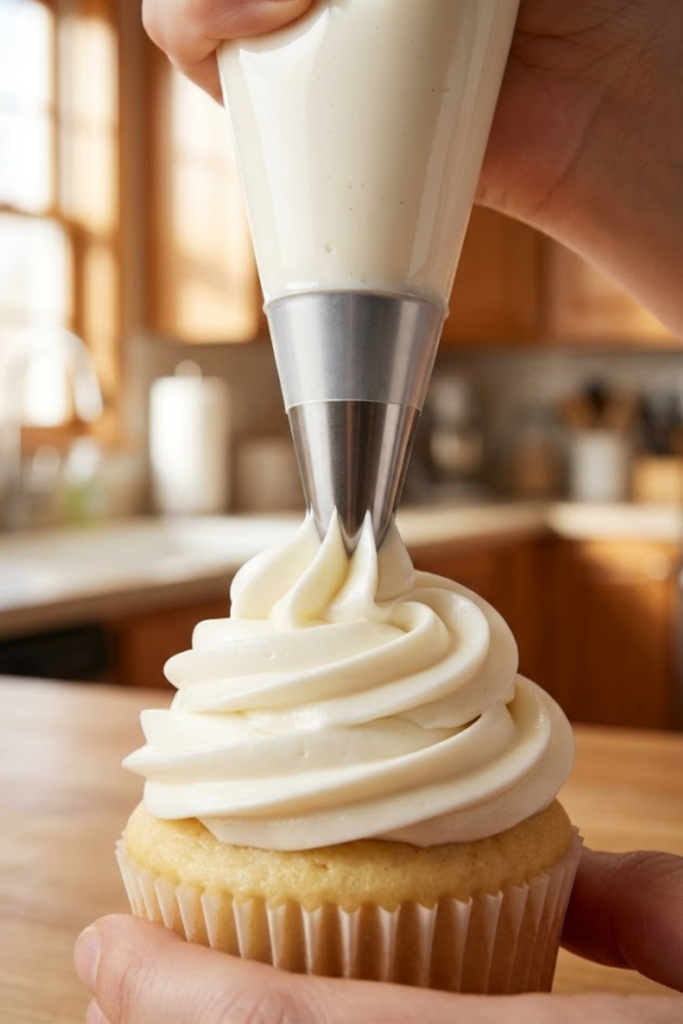
Since white chocolate buttercream frosting is so silky (if you whipped it right!), I like to add some texture on top. It breaks up the softness.
- Nuts: Chopped macadamia nuts or pistachios look great and add a nice salty crunch.
- Crisp: Freeze-dried berries or white chocolate shavings.
Just don’t overdo it. You want to give people a hint of what’s inside, not bury your beautiful piping work under a mountain of toppings. Keeping it simple is usually the best move.
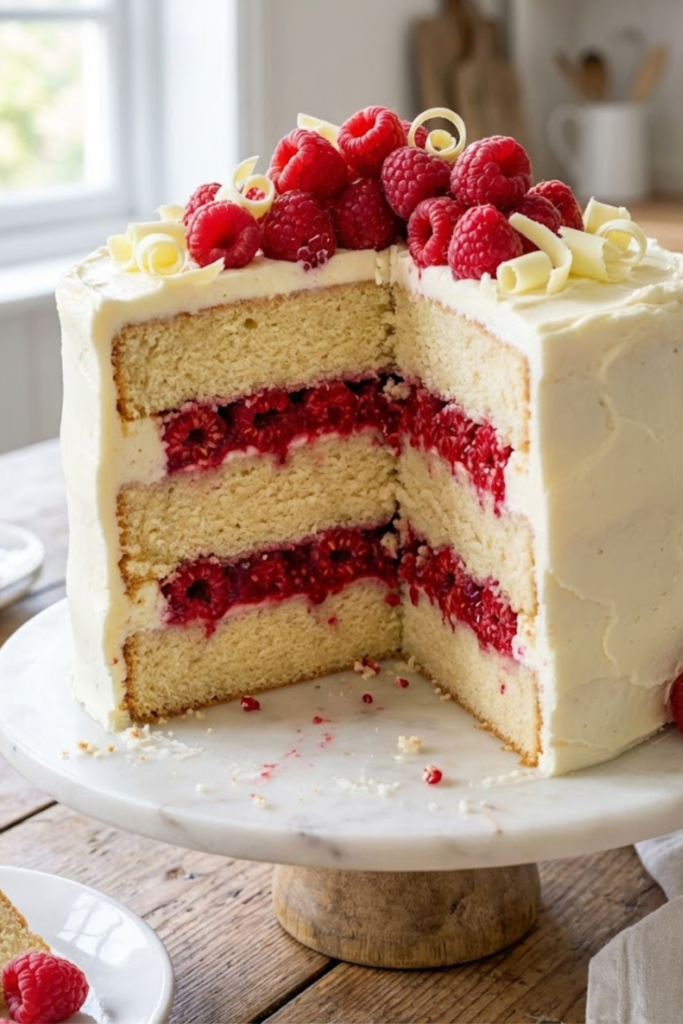
Mastering white chocolate buttercream frosting comes down to using high-quality baking bars with real cocoa butter instead of chips and ensuring your unsalted butter is whipped for five to seven minutes until pale and airy. The secret to a silky, stable texture is gently melting the chocolate and allowing it to cool to room temperature so it doesn’t melt the butter upon contact, while fixing any curdling issues with a quick blast of heat from a hair dryer. To keep the flavor gourmet rather than cloying, balance the sweetness with vanilla bean paste and a pinch of salt, making this rich frosting the perfect companion for tart fruit fillings or spiced cakes, and remember that it stores beautifully in the freezer for months if you want to prep ahead.