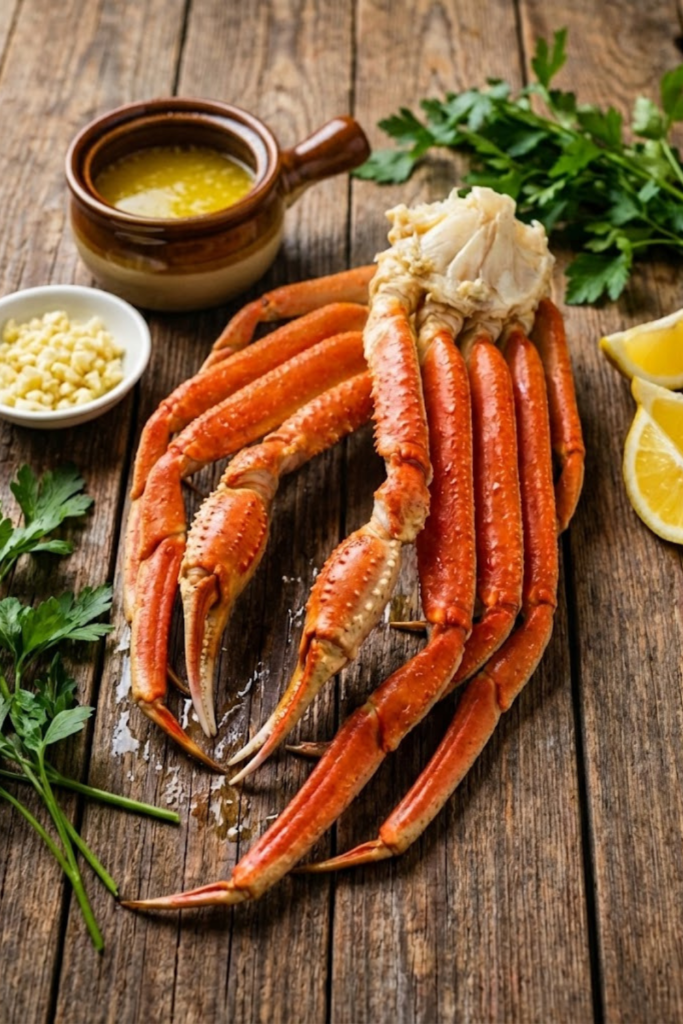
I’ll never forget the first time I saw the bill for a fancy seafood dinner—my wallet actually wept! But here is a wild stat for you: you can literally make that same luxurious feast at home for a fraction of the price. In this post, we are diving deep into the world of juicy crab legs, exploring everything from selecting the best clusters to mastering the perfect steam. Whether you prefer massive King Crab or sweet Snow Crab, I’m going to show you exactly how to prepare them so they are sweet, succulent, and never rubbery. We’ll even cover the garlic butter recipe that changes everything—so let’s get cracking!
Choosing the Best Catch: King Crab vs. Snow Crab
I used to stand in front of the seafood counter staring at the ice bed like it was some kind of alien landscape. I remember one specific time, I dropped nearly a hundred bucks on what I thought were the “best” options, only to get home and realize I’d bought old, freezer-burned junk that tasted like salty cardboard. It was a total disaster, and honestly, I wanted to cry. I learned the hard way so you don’t have to make the same expensive mistakes I did.
When you are looking for crab legs, the choices can be super confusing if you don’t know what you’re looking for. You usually see two main contenders: King Crab and Snow Crab, and they are definitely not created equal.
The Royal Rumble: King vs. Snow
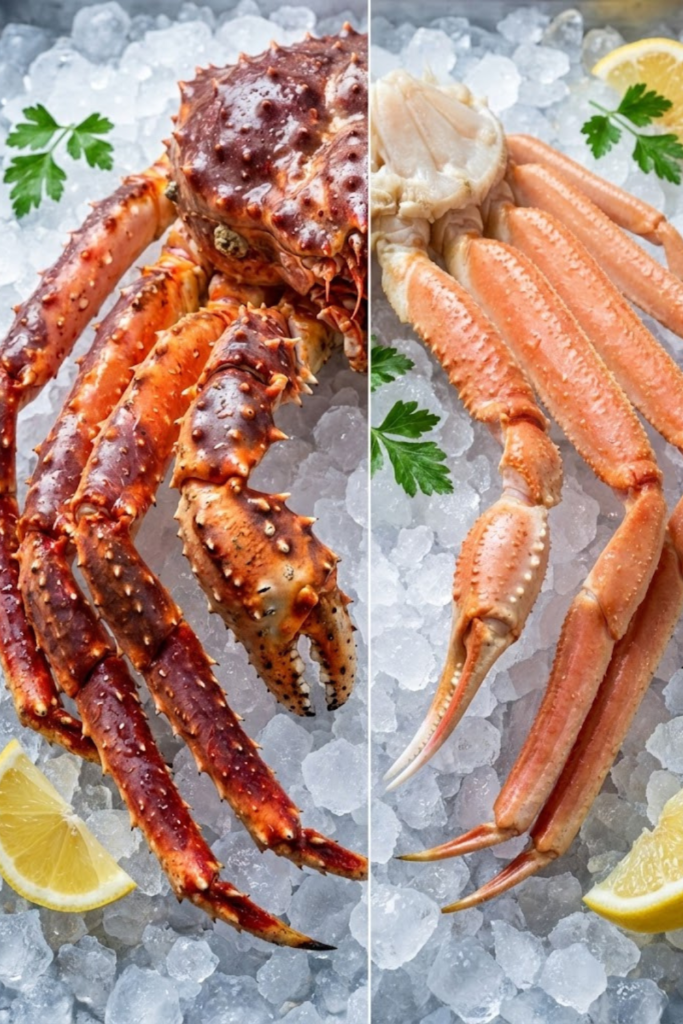
First off, let’s talk about the big guys. Alaskan King Crab is massive, spiky, and impressive as heck, but it comes with a price tag that might make you faint. The meat is chunky and firm, which is awesome, but extracting it can be a bit of a workout because those shells are thick.
On the other hand, you have Snow Crab clusters. These are what I usually grab for a Tuesday night treat or a casual dinner with friends. The shells are thinner and easier to snap, and personally, I think the meat is sweeter and more fibrous than the King variety. If you are new to cooking seafood at home, Snow Crab is much more forgiving on your wallet and your patience.
The “Fresh” Myth You Need to Ignore
Here is a secret that fishmongers might not always tell you upfront. Unless you literally live on a boat in the Bering Sea, the “fresh” crab legs in the display case were almost certainly shipped frozen and thawed out at the store.
I used to think buying them from the display case was the fancy way to go. Big mistake. You have no idea how long they have been sitting there losing flavor.
Ideally, you want to buy them frozen. Look for bags in the freezer section where you can check for ice crystals inside the package. If you see a ton of ice crystals or “snow” inside the bag, put it back immediately; that means it has thawed and refrozen, which ruins the texture.
How Much Should You Actually Buy?
This is where I always messed up in the beginning. I would buy one cluster per person and everyone would be looking at me like, “Is that it?”
Since a lot of the weight is just shell, you need to account for that. A good rule of thumb I follow now is to buy about 1.5 pounds of crab legs per person. It sounds like a lot, but once you get cracking and shucking, it is the perfect amount to leave everyone feeling full but not stuffed.
If you are serving heavy sides like corn and potatoes, you might get away with 1 pound per person. But honestly, nobody ever complained about having leftover crab meat for breakfast omelets the next day!
How to Properly Thaw Frozen Crab Legs
I have a confession to make that still haunts me. The first time I hosted a dinner party, I completely forgot to take the food out of the freezer. In a total panic, I threw a bunch of expensive crab legs into a pot of boiling water while they were still rock hard.
The result? The outside was tough, the inside was cold, and the meat stuck to the shell like it was superglued. It was embarrassing, frustrating, and a total waste of money. I’ve learned my lesson since then, so you don’t have to ruin your dinner like I did.
Getting the thaw right is actually the most critical step. If you mess this up, it doesn’t matter how good your garlic butter is.
The Overnight Refrigerator Method
This is the gold standard, folks. If you have the time and the foresight, this is how you should always do it. It keeps the meat tender and ensures it doesn’t get waterlogged.
simply place your frozen crab legs in a large bowl or on a rimmed baking sheet. You definitely want something with a rim because as they thaw, they release a lot of water. Cover them loosely with plastic wrap and shove them in the fridge.
I usually let them sit for about 8 to 12 hours. It requires patience, I know. But slow thawing preserves the texture better than any other method. When you pull them out, you’ll notice a lot of liquid in the pan—that’s good! You want that water out of the shell, not in your pot.
The “Oh No, I Forgot” Method
Okay, we’ve all been there. It’s 5:00 PM, guests are coming at 6:00, and your main course is essentially a block of ice. Don’t panic. You can save this.
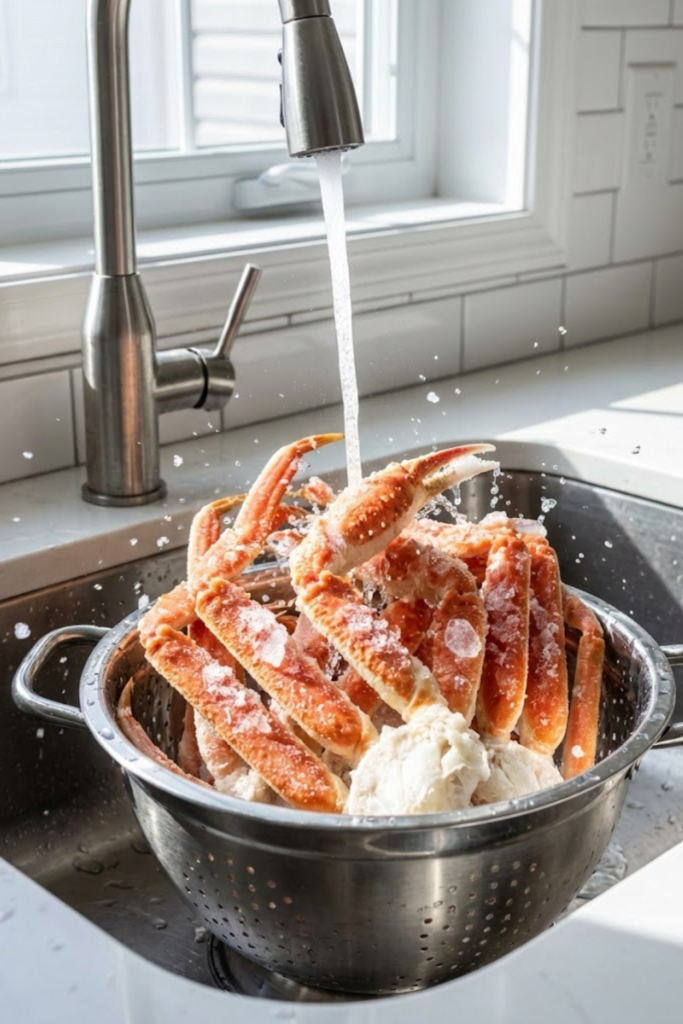
The best quick-thaw technique is the cold water method. Put the legs in a clean sink or a large bowl and run cool tap water over them. Do not—and I repeat, do not—use warm or hot water.
Hot water might seem faster, but it starts cooking the meat unevenly and encourages bacteria, which is gross. Just let the cool water run over them for about 15 to 20 minutes. I usually rotate them halfway through to make sure the water hits every spot. It’s a bit wasteful with water, I admit, but it saves the meal.
The Microwave Mistake
Please, for the love of good food, keep these things away from your microwave. I tried nuking crab legs on the “defrost” setting once.
It steamed the meat inside the shell before it was even fully thawed. The texture turned into rubbery mush. Just don’t do it.
Once your crab legs are thawed, give them a quick rinse. They are often frozen with a salty brine or “ice glaze” to prevent freezer burn. Rinsing them off ensures your final dish isn’t overly salty. Now they are ready for the pot!
Steaming Crab Legs for Maximum Flavor
I used to be a “boiler.” There, I said it. For years, I would just toss expensive seafood into a pot of rolling water and wonder why it tasted a bit like… well, nothing. It wasn’t until I visited a friend in Maryland that I realized I was doing it all wrong. She looked at me like I had three heads when I reached for the water tap. She taught me that when you boil crab legs, you are basically washing away all that incredible, briny flavor that you paid good money for.
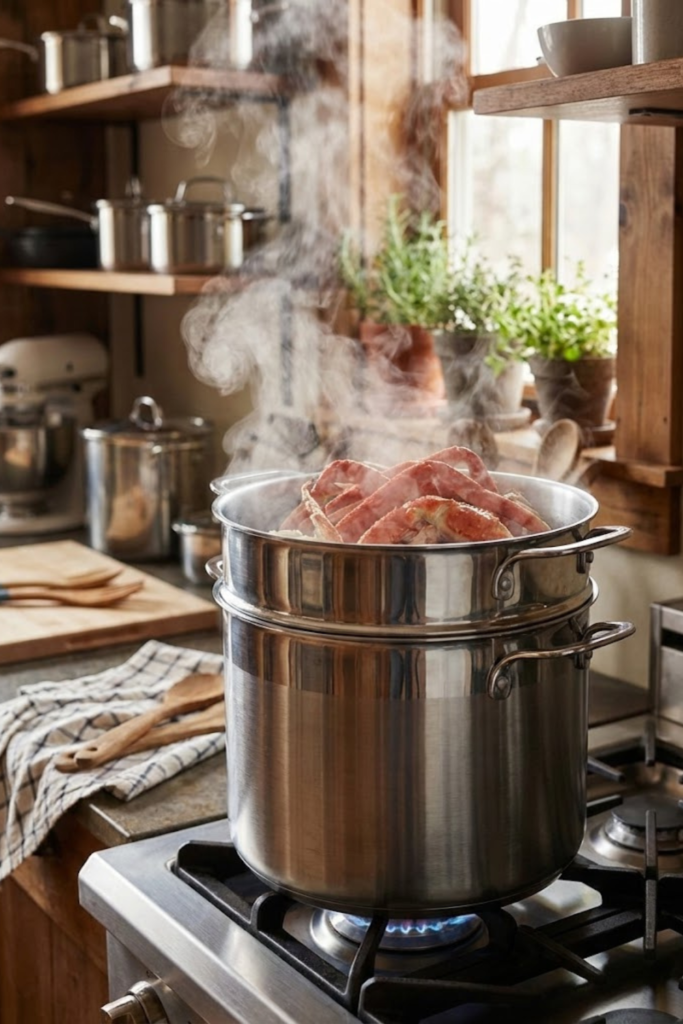
Steaming is where it’s at. It’s a total game changer. It cooks the meat gently and keeps all those sweet juices locked inside the shell where they belong.
The Setup You Actually Need
You don’t need fancy equipment to pull this off. I use a beat-up, large stockpot that I’ve had since college and a simple metal steamer basket. If you don’t have a basket, I’ve literally crumpled up balls of aluminum foil and placed them at the bottom of the pot to hold the legs up. It looked ridiculous, but it worked!
The goal is simple: keep the crab legs out of the water. You want them suspended in the hot air, getting a sauna treatment, not a bath.
Fill your pot with about two inches of water. If the water touches the bottom of the basket (or your foil contraption), pour some out. You want a gap.
Don’t Just Use Water
Here is a tip I learned by accident when I ran out of white wine. Flavor the steaming liquid! While plain water works, adding aromatics makes the kitchen smell insane and adds a subtle hint of flavor to the meat.
I like to toss in a halved lemon, a few cloves of garlic, and a heavy tablespoon of Old Bay seasoning right into the water. Sometimes, if I’m feeling wild, I’ll swap half the water for a cheap lager beer. The alcohol cooks off, but it leaves this yeasty, rich aroma that pairs perfectly with shellfish.
Bring that mixture to a rolling boil before you even think about adding the crab. You want the steam to be heavy and hot immediately.
Timing Is Everything (Seriously)
This is the part where I usually panic, but you shouldn’t. Since most crab legs you buy are already precooked (look for the bright red color), you are essentially just reheating them.
I used to steam them for 20 minutes, thinking I was “making sure” they were done. Big mistake. The meat came out dry and stuck to the shell. It was a tragedy.
For average-sized clusters, 5 to 7 minutes is the sweet spot. If you are dealing with massive King Crab legs, maybe go 8 or 9 minutes. But no more.
Cover the pot with a tight lid. This is crucial. If steam is escaping, the heat isn’t doing its job. I sometimes throw a kitchen towel over the lid if it’s loose to trap the heat (just be careful not to burn the towel).
The Sniff Test
When they are done, you will know. The smell of hot, sweet seafood will fill the room. Open the lid carefully—steam burns are no joke—and use tongs to pull them out.
They should be hot to the touch and glistening. I usually let them rest on a platter for a minute or two just so I don’t burn my fingerprints off trying to crack them open.
Once you switch to steaming, you will never go back to boiling. The meat stays fluffy, moist, and tender. Plus, it’s actually faster than waiting for a giant pot of water to boil. Win-win.
Baking and Roasting Methods for a Richer Taste
I actually stumbled upon this method by total accident during a chaotic Thanksgiving dinner. My stovetop was completely occupied by mashed potatoes and gravy, and I had absolutely nowhere to cook the crab legs I had promised everyone. In a moment of desperation, I shoved them in the oven.
To my surprise, they came out tasting even better than the steamed ones I usually make. Who knew? Baking or roasting seafood concentrates the flavor in a way that water-based methods just can’t compete with. It’s deeper, richer, and honestly, it feels a little more “chef-y” with half the effort.
The Foil Packet Hack
If you are terrified of drying out expensive seafood (and believe me, I get that anxiety), the foil packet method is your safety net. It is basically foolproof.
You rip off a large sheet of heavy-duty aluminum foil and pile your clusters in the center. I like to drizzle them with a little melted butter and a splash of white wine right there in the packet. Then, you crimp the edges together tightly to create a sealed pouch.
What happens inside is magic. The crab legs steam in their own juices and the butter, infusing the meat with flavor that has nowhere to escape. I bake these packets at 400°F (about 200°C) for around 10 to 12 minutes. When you open that foil at the table, the steam hits you, and it smells like heaven.
Roasting for Intensity
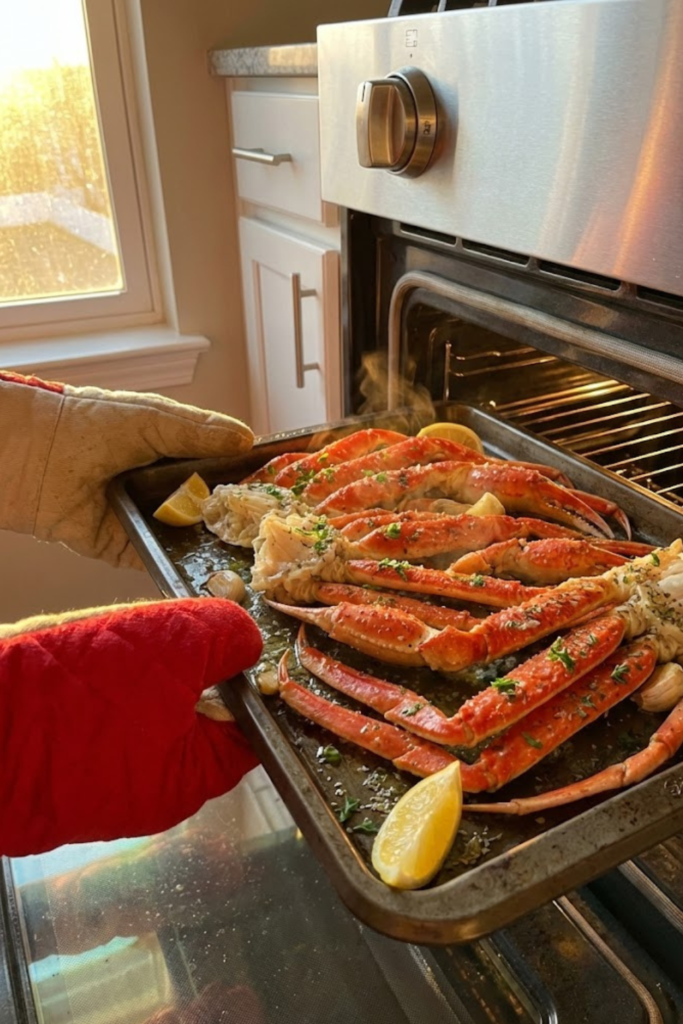
Now, if you want to live on the wild side, try roasting them open on a sheet pan. I prefer this when I want a texture that’s a little less wet and a flavor that’s more concentrated.
Lay the legs out in a single layer on a baking sheet. Here is the trick though: you have to protect them. The dry heat of the oven can turn your succulent crab meat into seafood jerky if you aren’t careful.
I mix up a quick baste of olive oil, minced garlic, and herbs, and I brush it generously over the shells. It sounds weird to season the shell that you aren’t going to eat, but as the heat rises, that aromatic oil drips into the cracks and crevices, flavoring the meat inside.
Pop the tray in the oven at 375°F for about 10 minutes. Keep an eye on them. You want them hot, but if you smell burning shells, you’ve gone too far.
Why I Love the Oven
The best part about using the oven? Cleanup is a joke. If you use the foil method, you literally just toss the foil away. No giant pot to scrub, no steamer basket to clean.
Plus, you can cook way more at once. If I’m feeding a crowd, I can fit two or three sheet pans in the oven, whereas my stockpot can only handle maybe three clusters at a time. If you are hosting a dinner party, oven baked crab is absolutely the way to go to make sure everyone eats at the same time.
The Secret Garlic Butter Dipping Sauce
I used to wonder why the butter at seafood restaurants tasted so much better than the stuff I melted in the microwave at home. My home version always looked cloudy, separated into a weird watery layer, and made the crab legs taste kinda greasy instead of rich.
It drove me nuts until a chef friend finally took pity on me. He told me the secret isn’t the brand of butter; it’s clarifying it.
Clarifying is Key (Don’t Skip This)
If you just melt a stick of butter, it has milk solids and water in it. That’s the white foam floating on top and the milky liquid at the bottom. You want to get rid of that junk.
I grab a couple of sticks of unsalted butter—yes, unsalted, because crab legs are already salty enough—and melt them slowly in a small saucepan over low heat. Don’t rush it or it will burn.
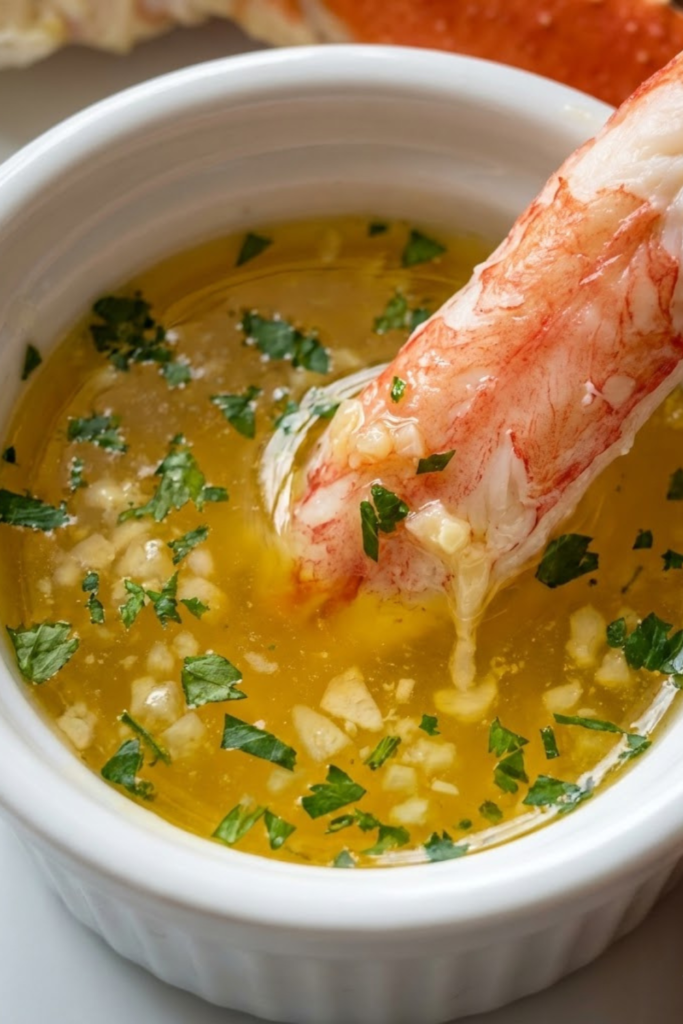
Once it’s melted, you’ll see foam on top. Skim that off with a spoon. Then, carefully pour the golden yellow liquid into a bowl, leaving the white milky stuff at the bottom of the pan. That golden liquid is liquid gold (aka ghee). It coats the meat perfectly and doesn’t separate.
Adding the Flavor Bomb
Now that you have your base, you gotta dress it up. Plain butter is fine, but garlic butter is life.
I mince up fresh garlic—don’t use the jarred stuff, it tastes like preservatives—and toss it into the warm clarified butter. I let it steep for a few minutes so the flavor infuses without burning the garlic. A little lemon zest is also a total game changer. It cuts through the richness and brightens up the whole bite.
If I’m feeling spicy, I’ll throw in a pinch of paprika or even some Cajun seasoning. It gives it a nice little kick that wakes up your palate.
Keeping It Warm
Here is a struggle I faced constantly: the butter getting cold and solidifying halfway through dinner. There is nothing sadder than dipping warm crab legs into cold, waxy sludge.
I finally invested in those little ceramic butter warmers with the tealight candles underneath. They were cheap, and honestly, they make the dinner feel fancy. If you don’t have those, using heavy ceramic ramekins helps hold the heat longer than plastic or glass bowls.
Trust me, taking the extra five minutes to clarify your butter makes the meal feel restaurant-quality. You’ll never go back to microwave-melted butter again.
How to Crack and Eat Crab Legs Like a Pro
I have a vivid memory of a date I went on in my twenties. We ordered the seafood tower, and I spent the next hour wrestling with a crab leg that refused to open. At one point, a piece of shell literally flew across the table and landed in his water glass. I was mortified.
Since then, I’ve refined my technique. Eating crab shouldn’t look like a construction project. It’s actually an art form, and once you get the hang of it, it’s super satisfying.
The Tool You Actually Need
Most people reach for those metal crab crackers that look like nutcrackers. While they are useful for the hard claws, I honestly think they crush the meat more often than they help.
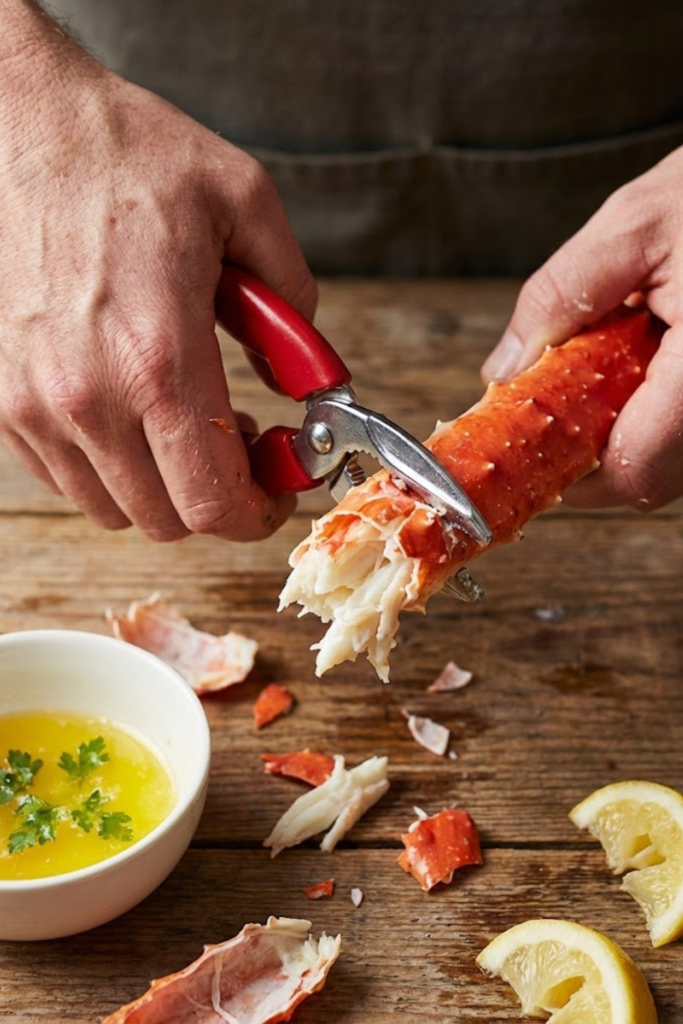
My secret weapon? Kitchen shears. Seriously, good sturdy scissors change the game.
Instead of smashing the shell and getting tiny shards mixed in with your succulent seafood, you just snip down the length of the leg. It’s like unzipping a jacket. You get a clean opening, and the meat lifts right out in one beautiful, solid piece. It’s so much cleaner and faster.
The “Snap and Pull” Technique
If you don’t have shears handy, you can use your hands, but there is a trick to it. Don’t just bend it anywhere.
Look for the joints. I grab the leg on either side of a joint and snap it backward, against the natural bend. If you do it gently, a tendon usually pulls out with the joint, which means you don’t have to pick it out of your teeth later.
Then, for the main leg sections, I use a little pressure to crack the shell in the middle, then gently wiggle it apart. If you are lucky (and patient), you get that “trophy” pull—where the whole cylinder of pink and white meat slides out intact. It feels like winning the lottery.
Watch Your Fingers
I have to warn you: King Crab and even some Snow Crab can be sharp. I’ve definitely ended dinner with a few scratches on my thumbs because I was too aggressive.
The spines on the shells are no joke. If you are dealing with really spiky legs, don’t be afraid to use a kitchen towel to hold the shell while you crack it. It gives you a better grip and saves your skin.
Embrace the Mess
Here is the thing about hosting a crab boil: table manners go out the window. You can’t eat this with a knife and fork, and you shouldn’t try.
I always set the table with a big empty bowl for shells (we call it the “bone bowl” in my house) and plenty of paper towels. Maybe even a wet wipe or two.
Using seafood forks helps get those tricky bits out of the knuckles, but mostly, you’re going to be using your fingers. And that’s okay! Part of the fun is getting messy, dipping that sweet meat into the butter, and just enjoying the feast. If you aren’t licking your fingers by the end, you probably didn’t do it right.
I still remember the feeling of absolute terror I had the first time I decided to host a seafood night. I stood in my kitchen, looking at a pile of frozen crab legs, convinced I was about to ruin a hundred dollars’ worth of food. But looking back now, I realize that fear was completely unfounded. As we’ve covered in this guide, making restaurant-quality seafood at home isn’t just possible—it’s actually one of the easiest, most rewarding meals you can cook.
We’ve traveled a long way together in this post. We started by navigating the confusing world of the seafood counter, learning that “fresh” isn’t always best and that frozen snow crab clusters are often the superior (and smarter) choice for landlocked cooks. We debunked the myths about boiling—seriously, promise me you’ll never drown your crab in a pot of water again!—and discovered that steaming crab legs or roasting them in the oven is the only way to preserve that sweet, briny flavor we all crave.
And let’s not forget the real MVP of the dinner: that garlic butter sauce. It sounds so simple, but taking the time to clarify the butter and infuse it with fresh garlic and lemon zest transforms a good meal into a “roll your eyes back in your head” experience. It’s those little details—the snipping of the shell with kitchen shears, the warmth of the butter, the messiness of the feast—that make this dish so special.
Honestly, the best part about cooking crab legs isn’t even the food itself; it’s the experience. There is something incredibly communal and disarming about dumping a pile of food on the table, rolling up your sleeves, and eating with your hands. It forces everyone to put their phones down, get a little messy, and actually connect. Whether you are planning a romantic date night or a loud, chaotic family gathering, this meal sets a tone that lasagna or steak just can’t match.
So, here is my final challenge to you: don’t wait for a birthday or an anniversary to try this. Go to the store, grab a bag of frozen legs, and treat yourself on a random Tuesday. You deserve that luxury, and your wallet will thank you for skipping the markup at the local seafood shack.
If you found this guide helpful (and I really hope you did!), please do me a huge favor. Pin this image to your Seafood Recipes board on Pinterest. It helps other home cooks find these tips, and it saves this guide so you can pull it up the next time the craving hits. Now, go get cracking!