“Is there anything more heartbreaking than spending hours roasting a beautiful slab of meat, only to have the skin turn out chewy instead of crispy? I’ve been there, and let me tell you—it hurts! Pork belly is the undisputed king of roasts, but it demands respect. Did you know that pork consumption accounts for over 36% of the world’s meat intake? It’s a global obsession for a reason. Whether you are looking for that perfect Sunday roast or a decadent appetizer, getting that skin to shatter like glass while keeping the meat buttery soft is an art form. But don’t worry! I’m going to walk you through every single step.”
Choosing the Perfect Cut of Pork Belly
I used to think all pork belly was created equal. Boy, was I wrong. A few years back, I grabbed a random shrink-wrapped slab from the discount bin at my local grocery store without really looking at it. I was just excited to get home and cook.
Big mistake.
When I sliced into it after three hours of roasting, it was basically a block of hot gelatin. There was almost no meat, just wobble. My family was polite about it, but we ended up ordering pizza that night. It was super frustrating, but I learned a valuable lesson: the cooking process actually starts at the store. You can’t fix a bad cut with good seasoning.
The Meat-to-Fat Ratio Game
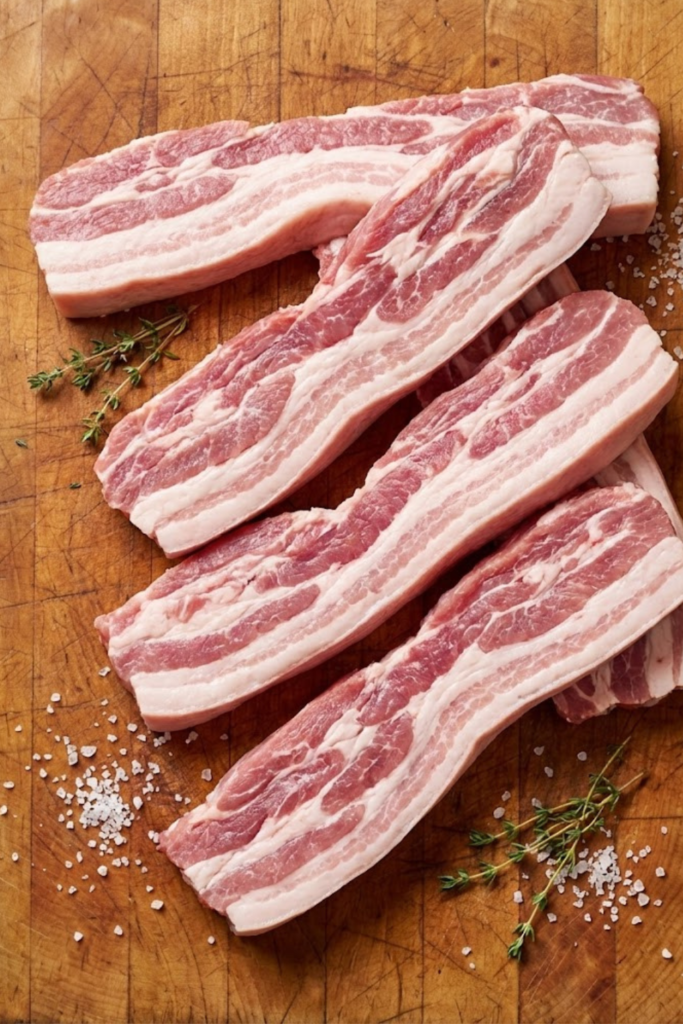
You gotta look at the side profile of the meat. You are looking for a nice, even distribution. I usually aim for a 50/50 split between the pink meat and the white fat.
If you see a piece that is 80% white, put it back unless you are specifically trying to make lard. You want those distinct layers because the fat renders down and bastes the meat, keeping it juicy. But you still need actual meat to eat! It’s a balance. Don’t be shy about asking the butcher to flip the piece over so you can see the cross-section.
Watch Out for the Skin
If you want that legendary crispy pork belly skin, inspection is key. The skin should be smooth and dry-looking. Avoid pieces that look wet or slimy in the package.
Also, check for bristles. I know, it’s kinda gross to think about, but sometimes the processing plant misses a spot. I’ve definitely spent twenty minutes with tweezers plucking a roast because I didn’t check beforehand. It’s not fun. You want a clean, pale rind that looks uniform.
Bone-In or Boneless?
This is where people often get stuck. Honestly, both work, but they do different things for your dinner.
- Bone-in: The ribs act as a heat shield. They keep the meat underneath incredibly moist. It takes a bit longer to cook, but the flavor is often deeper.
- Boneless: This is way easier to carve. If you are stressed about slicing neat squares for a dinner party, go boneless.
I usually stick with boneless just for the convenience, to be honest. It lays flatter in the pan, which helps the skin cook evenly without pooling oil in the corners.
The Sniff Test
Fresh pork should smell… well, like nothing really. Maybe a little metallic. If you catch a whiff of anything sour or ammonia-like, run away. The fat should be bright white, not yellow or grey. Grey fat means it’s old, and it’s gonna taste funky no matter how much spice you throw on it.
Take your time choosing. It makes all the difference in the world.
The Secret Science of Crispy Crackling
There is absolutely nothing—and I mean nothing—more disappointing than pulling a roast out of the oven, tapping the skin with a spoon, and hearing a dull thud instead of a hollow tock. I’ve been there too many times.
I remember one Christmas, I tried to impress my in-laws with a fancy roast. The meat was fine, but the skin had the texture of a boiled football. It was chewy, leather-like, and totally stuck to everyone’s teeth. I wanted to crawl under the table. Since that disaster, I’ve become obsessed with the science of pork crackling.
It turns out, getting that glass-like shatter isn’t magic. It’s mostly about moisture management.
Moisture is the Enemy
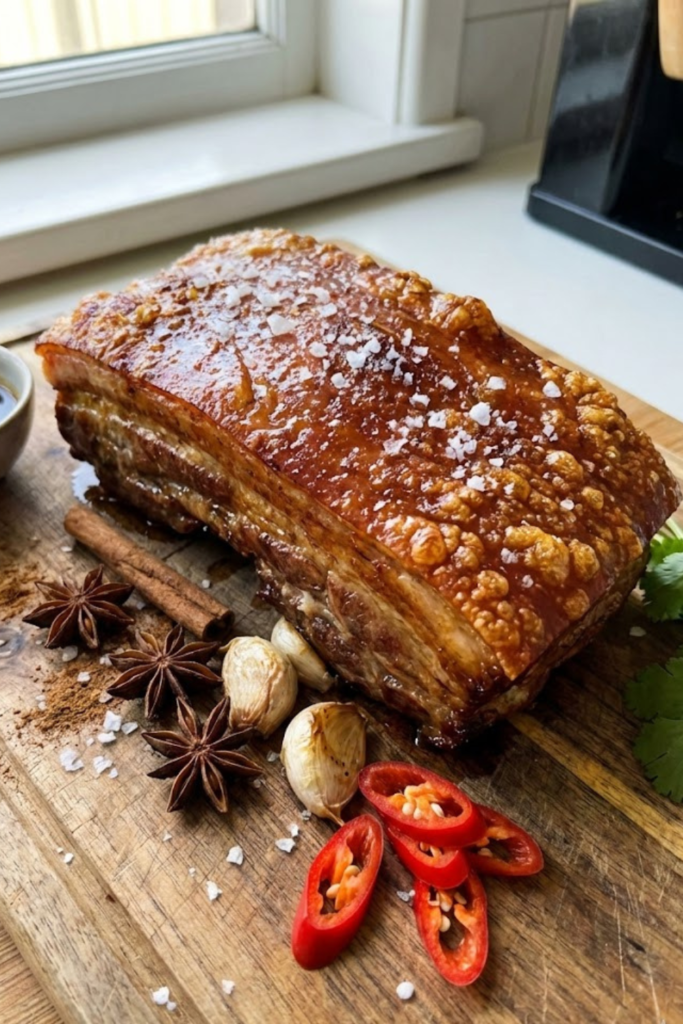
Here is the biggest secret I learned the hard way: water ruins the crunch. If your pork belly skin is wet when it goes into the oven, it steams instead of frying in its own fat. Steamed skin is rubbery skin.
So, here is what you have to do.
Take the meat out of the packaging the day before you plan to cook. Pat it down with paper towels like your life depends on it. Then, put it on a plate or a rack in the fridge, uncovered. Leave it there overnight. The cold air in the fridge circulates and dries out the rind until it feels hard and tacky to the touch. This step alone changed my game entirely.
The Scoring Debate
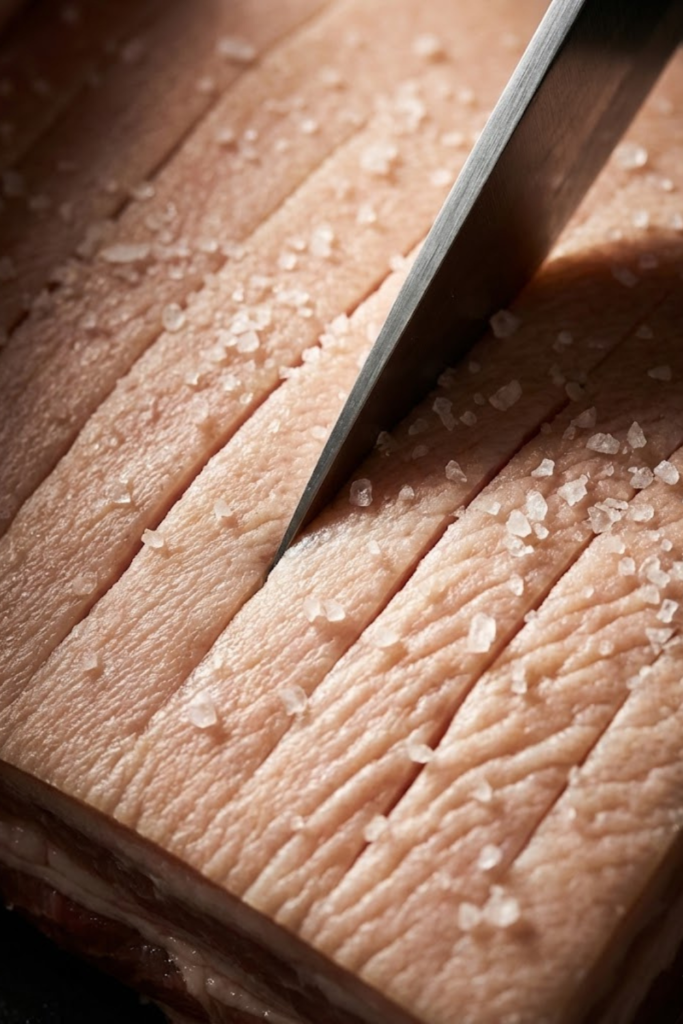
For years, I used a dull steak knife to score diamond patterns into the skin. It looked cool, but I often messed up.
If you cut too deep and pierce the meat layer, juices will bubble up during roasting. Those juices will make the skin soggy again, ruining all your hard work. You only want to cut through the fat, not the flesh.
Lately, I’ve switched to the “pricking” method. I use a sharp skewer or one of those jaccard meat tenderizers (the thing with lots of needles) to poke hundreds of tiny holes in the skin. This lets the rendering fat bubble up and fry the skin from the top, without risking a meat breach. It’s way safer.
The Salt and Vinegar Solution
Okay, this sounds weird, but stay with me. Before roasting, I brush a little white vinegar on the skin. The acid helps break down the tough skin fibers.
Then comes the salt. Use sea salt flakes or kosher salt, not table salt. You need to be generous here. The salt draws out even more moisture. Some people do a “salt crust” where they bury the skin in a layer of salt for the first half of cooking, then knock it off.
I usually just rub oil and plenty of salt into the scores or holes. Just make sure you don’t rub the salt off the sides onto the meat, or your roast will be too salty to eat.
Getting perfect crackling is a battle against moisture. Dry it out, poke it, and salt it. If you do those three things, you are 90% of the way there.
Marinades and Flavor Profiles
When I first started cooking pork belly, I treated it like a steak. I’d throw everything into a bag—soy sauce, sugar, herbs—and just let it swim. It tasted great, but the skin? It was a soggy, brown mess that refused to crisp up no matter how high I cranked the heat.
I learned the hard way that flavoring this cut is a surgical operation. You have to treat the meat and the skin as two completely separate entities. The meat wants moisture and flavor; the skin wants to be dry as a bone.
Going the Asian Route
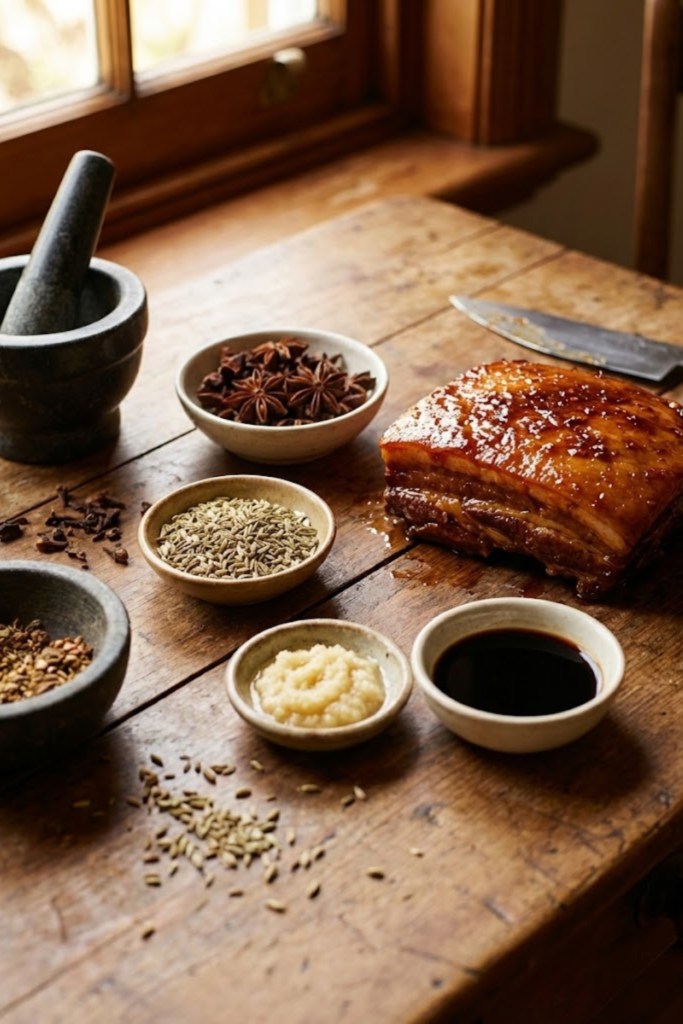
My absolute favorite way to prepare this dish is with Chinese flavors. There is something about the combo of rich fat and five-spice powder that just hits different.
I usually mix a paste of fermented bean curd, a splash of Shaoxing wine, sugar, and five-spice. Here is the trick, though: I flip the belly meat-side up and rub this paste only on the meat. If even a drop gets on the skin side, wipe it off immediately with a paper towel. Seriously, be paranoid about it.
I once got sloppy and let some soy sauce drip onto the rind. That exact spot burned black in the oven while the rest was golden. It looked terrible, and I was so mad at myself.
The Western Classic
If I’m doing a traditional Sunday roast, I switch gears. I grab a handful of fennel seeds, some dried sage, and black pepper. I toast the seeds in a dry pan first until they smell amazing—don’t skip this, or the flavor is weak.
I crush them up and mix them with olive oil to make a sludge. Then, I massage it deep into the meat.
A quick tip on garlic: fresh garlic burns really fast at high temps. I ruined a perfectly good roast once because the minced garlic on the outside turned bitter and acrid. Now, I use garlic powder or I bury the fresh garlic deep inside the cuts or underneath the roast where it’s protected from the direct heat.
The Foil Boat Hack
This is the best advice I can give you for marinades. Make a little boat out of aluminum foil.
Fold the foil up around the sides of the pork so it hugs the meat tightly but leaves the skin exposed at the top. This lets the meat sit in its juices and marinade without the liquid splashing up onto the skin. It’s a game-changer.
You can let it sit like this in the fridge for hours. The meat absorbs all that salty, savory goodness, and the skin stays bone dry, waiting to turn into that perfect crackling. It’s the best of both worlds, and it saves you a lot of heartache when serving time comes.
Step-by-Step Roasting Method
I used to just shove the tray in the oven and pray. That strategy works about 10% of the time. The other 90%, you end up with a roast that’s burnt on one side and soggy on the other.
One time, I had a piece of belly that was slightly thicker on one end. I didn’t think it mattered. When I took it out, the oil had pooled in the middle of the skin like a greasy lake. That spot never crisped up. It was just boiled skin. Gross.
The Leveling Strategy
You have to make sure the surface of the skin is completely flat. If it dips in the middle, oil pools there and prevents crackling. If it slopes, the oil runs off too fast.
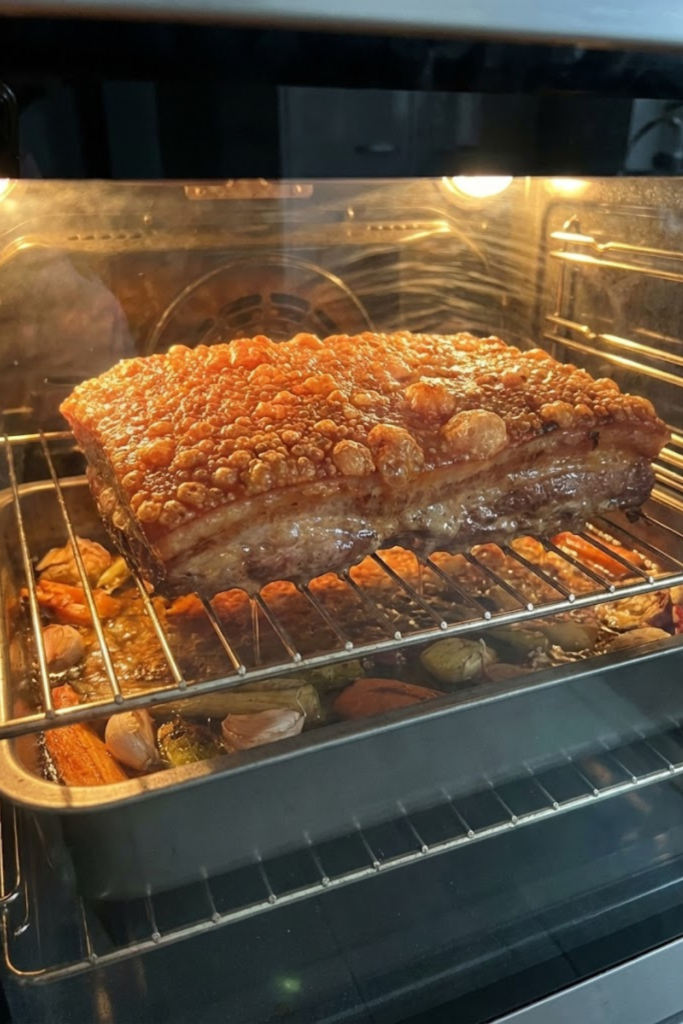
I use wadded-up balls of aluminum foil to prop up the meat from underneath. It feels a bit like engineering, but it works. You can also use a wire rack, which I highly recommend. It lets the heat circulate all around the meat, cooking it more evenly.
Start Low and Slow
Patience is everything here. I know you want to blast it and eat, but don’t.
I start my oven at a lower temperature, around 300°F (150°C). This phase is all about rendering pork fat. You want that white layer to slowly melt and baste the meat from the inside out.
If you hit it with high heat right away, the muscle fibers seize up and get tough. We want the meat to be soft enough to eat with a spoon. I usually let it ride at this temp for about 2 to 2.5 hours, depending on the size. You’ll see the meat shrink a bit as the fat renders out. That’s a good sign.
The High Heat Blast
This is the fun part. Once the meat is tender, take the roast out. Crank your oven up as high as it goes—I’m talking 460°F (240°C) or more.
While the oven heats up, I check the skin. If there is any moisture or oil pooling, dab it gently with a paper towel. Then, pop it back in.
This is when the magic happens. In about 20 minutes, the skin will puff up and bubble. It sounds like popcorn popping. Keep an eye on it, though! It can go from golden to burnt in seconds. I’ve set off my smoke alarm more than once doing this.
Don’t Guess, Measure
Please, buy a meat thermometer. Using the “poke test” is just guessing.
You are looking for an internal temperature of around 190°F to 200°F (88°C – 93°C). This is the sweet spot where the tough collagen breaks down into gelatin. That is what gives oven roasted pork belly that melt-in-your-mouth texture. If you pull it at 145°F (standard pork temp), it will be tough and chewy. Trust the numbers.
Serving and Pairing Ideas
I’ll never forget the first time I nailed the roast but ruined the serve. I carried this gorgeous, golden slab of meat to the table, feeling like a total rockstar. My friends were oohing and aahing.
Then, I took my big chef’s knife and tried to chop through it like I was on a cooking show.
Bad move. The crispy pork belly skin didn’t slice; it shattered. Huge chunks of crackling flew across the table, hitting the wine glasses. The meat below squished out under the pressure. It looked like a car crash on a platter. I was mortified. After all that work, the presentation was a total flop.
The Surgery: How to Cut It
Cutting this stuff is tricky. Don’t use a regular straight-edge knife unless it is razor sharp. The hard skin will deflect the blade, and you might cut yourself.
I’ve found that a serrated knife (like a bread knife) is actually the best tool for the job. You have to saw through the skin gently. Once you get through the hard top layer, then you can push down through the meat.
Another trick I learned is to flip the roast skin-side down on a cutting board. It sounds backward, but it stops the skin from shattering as much because the soft meat absorbs the pressure. Just make sure your board is clean!
Balancing the Richness
Pork belly slices are incredibly rich. It’s basically meat candy. If you serve it with creamy mashed potatoes and buttered corn, your guests are going to fall asleep at the table. It’s just too much fat.
You need acid to cut through that heaviness.
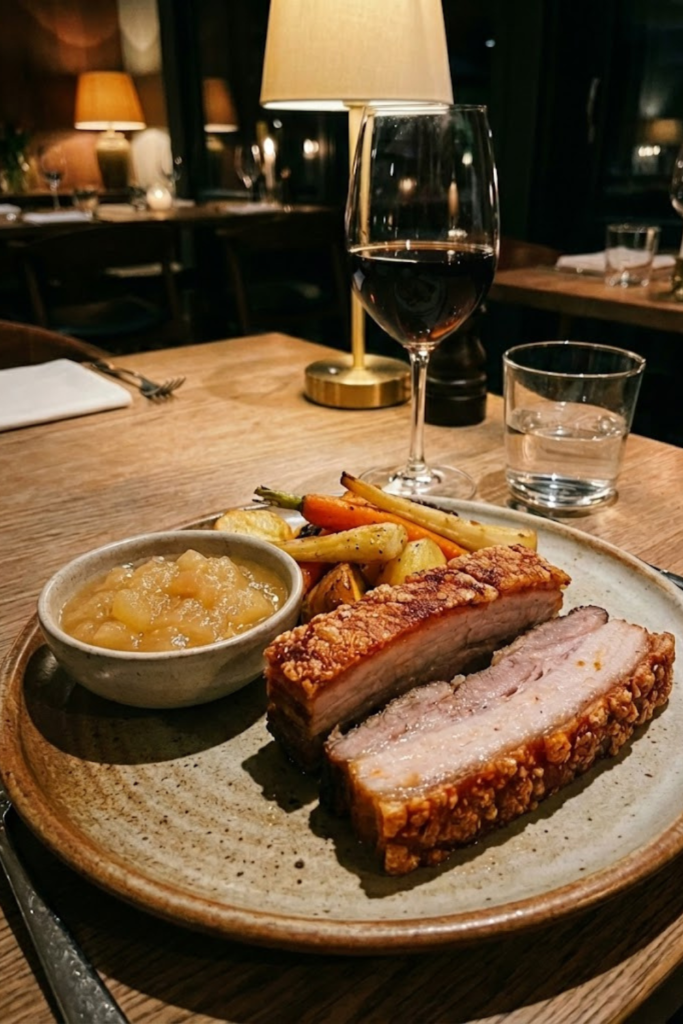
My go-to is a sharp, tangy apple sauce. It’s a classic for a reason. The sweetness and acidity wake up your palate. If I’m doing the Asian-style belly, I mix black vinegar with fresh chili and ginger. That spicy, sour kick makes the fatty meat taste lighter.
For side dishes, think green and crisp. A cucumber salad with vinaigrette or some steamed bok choy works wonders. You want something that provides a “crunch” that isn’t made of fat.
The Leftover Dilemma
Let’s be real, you probably won’t have leftovers. But if you do, don’t put them in the microwave.
Microwaving leftover pork turns that beautiful crispy skin into a chewy, rubbery nightmare. It’s heartbreaking to watch.
The best way to bring it back to life is the air fryer or a toaster oven. I usually throw slices in at 350°F for about 5 minutes. The fat re-renders, and the skin crisps right back up. It’s almost better the second day because the flavors have had time to meld.
Just don’t eat it cold out of the fridge. Cold pork fat has a weird texture that sticks to the roof of your mouth. Trust me on that one.
The Crunch is Worth the Wait
Mastering pork belly is a journey, not a sprint. I’ll be honest with you—it took me years to get it right consistently. I’ve served soggy skin, I’ve served dry meat, and I’ve even set off the smoke alarm enough times that my neighbors probably think I’m an arsonist. But that first time you nail it? That moment when you tap the rind with a knife and it sounds like hollow wood? It is the best feeling in the world.
If you take only one thing away from this whole guide, let it be the “dry skin” rule.
I can’t stress this enough. You can have the best five spice powder rub and the most expensive cut of meat, but if that skin is wet, you are doomed. Patience is your best friend here. Leaving it in the fridge overnight feels like a hassle, but it’s the difference between chewy leather and perfect crackling.
Also, don’t be afraid of the fat. I know we live in a world where everyone is counting calories, but oven roasted pork belly is meant to be an indulgence. That fat is what keeps the meat tender during the long cook. It is flavor. Embrace it. Just balance it out with those acidic sides we talked about, like the apple sauce or the chili vinegar.
Cooking this dish has taught me to slow down. It’s not a 30-minute meal. It’s a Sunday roast event. It forces you to pay attention to the details—the scoring depth, the oven temperature, the resting time. Speaking of resting, please let the meat rest for at least 20 minutes before you carve it. If you cut it too soon, all those juices run out on the board, and the meat goes dry. I learned that the hard way when I was too hungry to wait.
You’ve got this. You know the science, you have the meat thermometer guide, and you know the tricks. Now, go turn that oven on and create some magic. Your kitchen is going to smell amazing.
Pin This for Later!
Did this guide make you hungry? If you found these tips helpful (and I really hope you did), please share this on Pinterest! Pin it to your “Holiday Recipes” or “Meat Lover” boards so you can easily find the secret to the perfect crunch whenever you need it.