Raise your hand if you’ve ever risked a stomach ache just to taste the raw batter—I know I’m definitely guilty of “quality control” every single time I bake! That obsession is exactly why I developed these Molten Cookie Dough Cupcakes, combining a fluffy vanilla base with a gooey, safe-to-eat cookie dough center (yes, we actually heat-treat the flour first!) . I have to admit, my first attempt at these was a total disaster—I ended up with a greasy, hollow mess because I didn’t realize the absolute secret is freezing the dough balls solid before baking so they don’t melt away . Now that I’ve learned from those mistakes, I can promise this recipe delivers that perfect nostalgic texture without the flop, giving you a dessert that is practically guaranteed to disappear from the table in seconds .
Why You Will Love These Stuffed Cupcakes
I have to be honest with you—I used to be terrified of making “stuffed” anything. I had this irrational fear that if I tried to put something inside a cupcake, it would either sink to the bottom like a sugary anchor or explode all over my oven. But once I actually tried these molten cookie dough cupcakes, I realized I had been worrying for nothing. Not only are they surprisingly forgiving, but the payoff is also absolutely incredible.
A Texture Match Made in Heaven
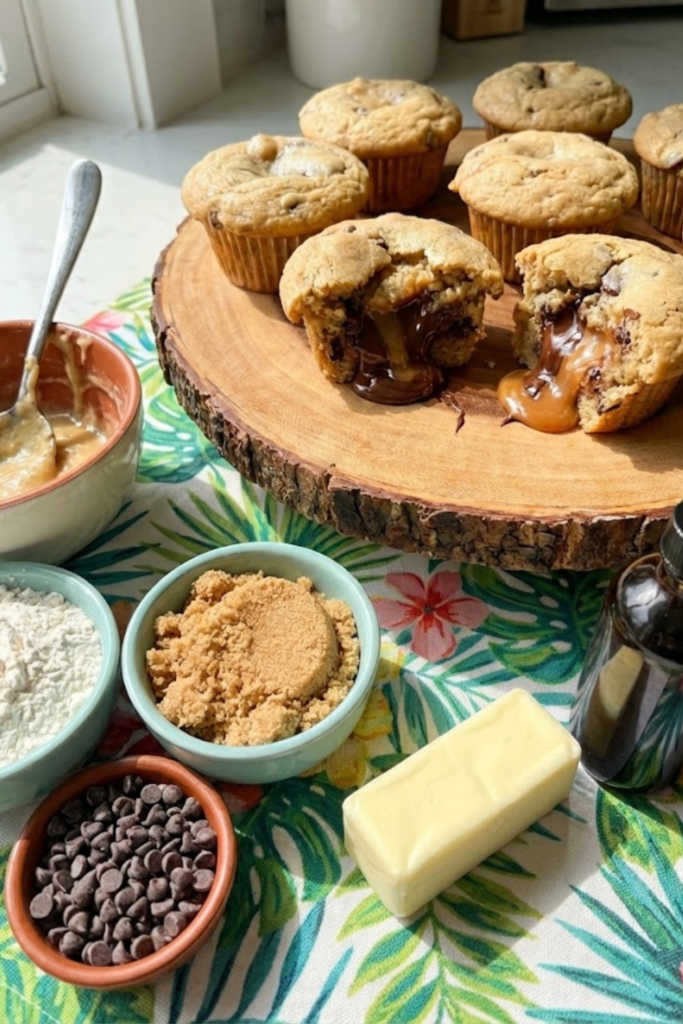
The main reason you are going to fall in love with this recipe is the texture. There is something magical about biting into a light, fluffy vanilla cake and suddenly hitting that dense, sugary pocket of cookie dough filling. It’s that contrast between the airy crumb of the cake and the slight grit of the brown sugar in the dough that gets me every time.
I remember bringing a batch of these to my neighbor’s block party last summer. I watched a grown man take a bite, stop mid-chew, and actually look at the cupcake in his hand like it was an alien artifact. He asked me, “Is this… raw dough?” The look on his face when I told him it was safe to eat cookie dough was priceless. He ate three of them.
Easier Than It Looks (I Promise)
Here is the secret that professional bakers don’t want you to know: these are incredibly easy to fake. You don’t need fancy equipment or years of culinary school. If you can scoop ice cream, you can make these.
The trick relies entirely on temperature, not skill. By freezing the cookie dough balls before baking, you are doing 90% of the work before you even turn on the oven. I used to try to spoon room-temperature dough into the batter, and it was a disaster—total grease pit. 17 But once you freeze them? It works every single time.
The Ultimate Party Trick
Another reason these are a staple in my kitchen is that they look impressive with zero extra effort. 19When you cut one open, it looks like something you bought at a high-end bakery. I love serving these at birthdays because they solve the “cake vs. cookies” debate—you get both!
Plus, you can make the dough balls weeks in advance. I actually keep a stash of frozen dough balls in a zipper-lock bag in my freezer just for emergencies. You know, for those days when you need a decadent dessert instantly but don’t have the energy to start from scratch. Just whip up a quick batter, drop in the frozen bombs, and you look like a hero.
Essential Ingredients for the Cookie Dough Center
I used to think that making cookie dough was just about throwing butter and sugar into a bowl and hoping for the best. I was wrong. When you are stuffing it inside a cupcake, the chemistry changes completely. You need the filling to stay gooey without melting into a greasy puddle, and most importantly, it needs to be safe.
I’ve wasted so many batches of ingredients trying to get this right. I once used coarse sugar that never dissolved, and the center tasted like sand. Not my finest moment. So, let’s break down exactly what you need to avoid my disasters.
The Deal with Heat-Treated Flour
We need to have a serious talk about flour. I know, I know—we all grew up eating raw batter from the spoon. But did you know raw flour is actually a bigger health risk than raw eggs? It can carry bacteria like E. coli . Since we aren’t baking the center of these cupcakes long enough to kill everything in the middle (that’s the point of “molten”), we have to heat-treat the flour first.
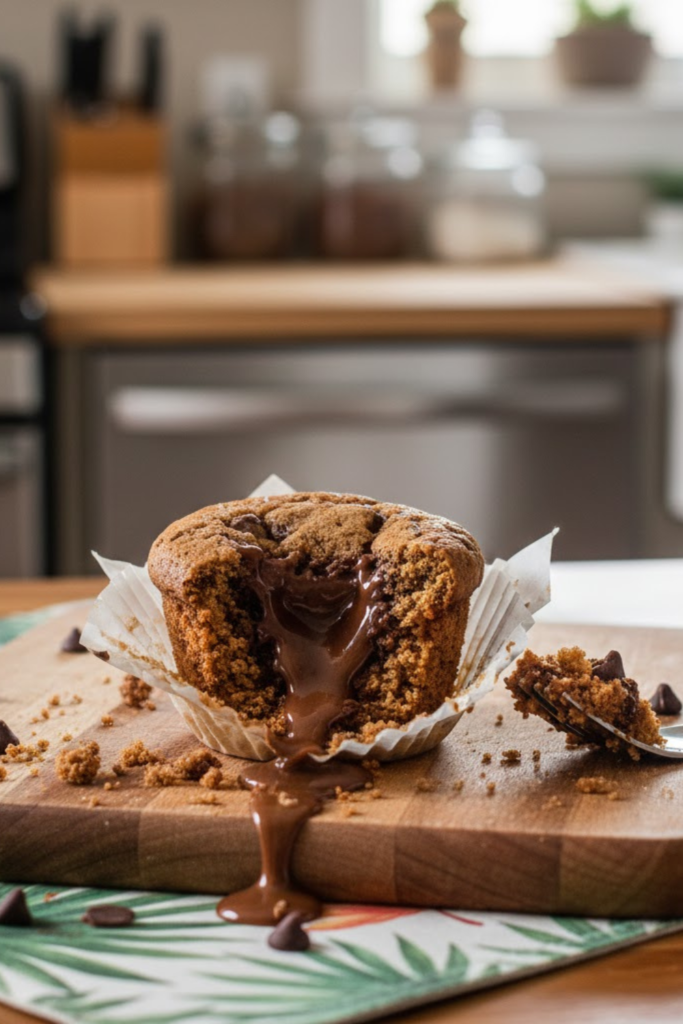
Don’t panic; it’s easy. I just spread the flour on a baking sheet and pop it in the oven for 5 minutes at 350°F. You can also microwave it in 30-second bursts. It gives the flour a slightly nutty, toasted flavor that makes the cookie dough center taste even better. Trust me, skipping this step isn’t worth the stomach ache.
Why Brown Sugar is Non-Negotiable
For that classic, gritty, comforting cookie dough taste, you have to use brown sugar . I tried using only white granulated sugar once because I was too lazy to go to the store. The result? A pale, sad filling that tasted just like sweet butter.
The molasses in the brown sugar adds that depth of flavor and moisture we are looking for. I usually do a mix of brown and white sugar, but the brown sugar does the heavy lifting here. It keeps the texture dense and fudge-like, which contrasts perfectly with the fluffy vanilla cupcake surrounding it.
The Mini Chocolate Chip Rule
Here is a mistake I made so you don’t have to: do not use regular-sized chocolate chips. When I used full-sized chips, they were too big for the small dough balls. You ended up with like, two chips per cupcake, and they were hard lumps in the middle of the soft dough.
You need mini chocolate chips . They distribute evenly throughout the dough, so you get chocolate in every single bite. Plus, they melt slightly better, adding to that “molten” experience we are aiming for. If you only have regular chips, chop them up. Seriously, take a knife to them. Your future self will thank you.
Butter and Vanilla
Finally, use unsalted butter . This allows you to control the salt level. I like to add a pinch of sea salt to the dough to cut through the sweetness. And please, use real vanilla extract . The imitation stuff tastes like chemicals when it’s not fully baked out. Since this center is barely cooked, the quality of your vanilla really shines through.
Step-by-Step: Making the Safe-to-Eat Dough Balls
This is the part where you have to exercise some serious self-control. I can’t tell you how many times I’ve started making these cookie dough balls intended for cupcakes, only to eat half the batch before they ever made it to the freezer. It’s a hazard of the job, right? But if you can resist the urge to snack, the process is actually super simple.
We are basically making a standard cookie dough, but we are leaving out the eggs and using that heat-treated flour we talked about earlier.
The Mixing Method
First things first: your butter needs to be room temperature, not melted. I made the mistake once of melting the butter in the microwave because I was impatient (classic me). The dough ended up greasy and wouldn’t hold its shape. You want the butter soft enough to leave a thumbprint in, but not liquid.
Grab a medium bowl and cream together your butter and brown sugar. I use a hand mixer for this because I’m too lazy to drag out the big stand mixer for such a small amount. Beat it until it’s creamy and pale. This usually takes about 2 minutes. Then, mix in your vanilla extract and a pinch of salt.
Next, stir in your flour. The dough might look a little crumbly at first, and that is totally normal. Just keep mixing. If it is way too dry—like sand—you can add a teaspoon of milk, but go easy. We want a stiff dough, not a wet batter. Finally, fold in those mini chocolate chips. I use a rubber spatula for this so I don’t crush them.
Size Matters (Don’t Go Big)
Here is where I messed up big time on my second attempt. I thought, “More cookie dough is better, right?” So I made these massive, golf-ball-sized scoops.
Do not do this.
When I baked them, those heavy boulders sank straight to the bottom of the cupcake liner and stuck to the paper. It was a mess to peel them. You want your cookie dough balls to be small—think teaspoon size, or about the size of a large marble.
I actually use a slightly rounded teaspoon to scoop mine now. It keeps them uniform, which helps them float in the middle of the batter rather than sinking like a stone. You should get about 12 to 14 balls from this batch.
The Freezer is Your Best Friend
Once you have your little balls rolled out, place them on a plate or a small baking sheet lined with parchment paper. Now, put them in the freezer.
This is not a suggestion; it is a requirement.
You need to freeze them for at least 30 minutes, or until they are rock hard. If you put soft, room-temperature dough into the oven, it will melt into the cupcake batter before the cake has a chance to set. You’ll lose that distinct “cookie dough” center and just end up with a chocolate chip cupcake.
I usually make the dough balls the night before. That way, they are frozen solid, and I can just grab them when I’m ready to bake the vanilla cupcakes. Plus, it breaks up the work so the kitchen doesn’t look like a tornado hit it all at once.

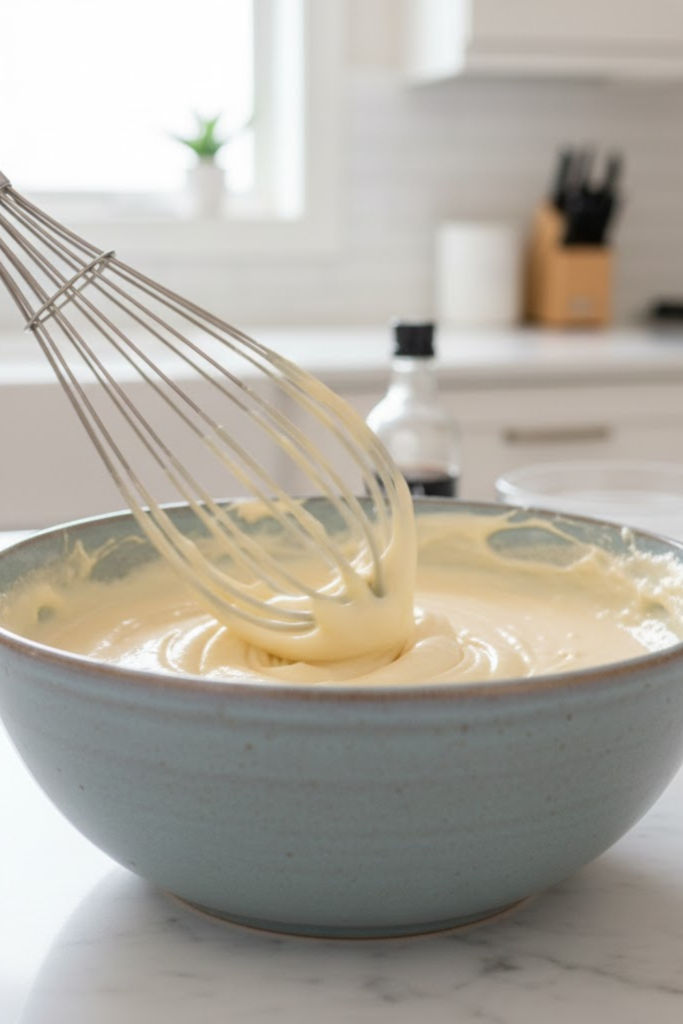
Whipping Up the Vanilla Cupcake Batter
Alright, now that our dough balls are chilling out in the freezer, it is time to focus on the “shell”—the vanilla cupcake itself. I used to think any old boxed mix would work, but let me tell you, if the cake is too light, it won’t hold up that heavy center. I learned that the hard way when I ended up with a tray of “cupcake pancakes” after the batter collapsed under the weight of the dough! +4
The Dry and the Wet
First, grab two bowls. In the first one, whisk together your flour, baking powder, and a dash of salt. I always tell my students that sifting isn’t just for show; it actually helps prevent those annoying little flour clumps that ruin a smooth bite.
In the other bowl, you want to cream your butter and sugar until it looks pale and fluffy. Here is a tip I learned from a fellow baker: make sure your eggs and milk are at room temperature. I once tried to rush it with cold milk straight from the fridge, and the batter curdled instantly into a chunky, unappetizing mess. It still tasted okay, but the texture was totally off.
Don’t Over-Work It
Once you start adding the dry ingredients to the wet ones, put the mixer away and use a spatula. If you over-mix the batter, you develop too much gluten, and you’ll end up with a cupcake that’s as tough as a hockey puck. We want these to be soft and pillowy to contrast with that dense cookie dough.
I usually stop mixing the second I see the last streak of flour disappear. It feels like you should keep going, but trust me, leave it alone! A few small lumps are perfectly fine and actually lead to a better crumb in the finished decadent dessert.
The Vanilla Factor
Since these are vanilla cupcakes, please don’t be stingy with the vanilla extract. I usually add an extra splash because I love that bakery-style aroma filling the house. It makes the whole process feel more like a treat and less like a chore, even when I’m staring at a pile of dirty dishes later.
Assembling and Baking Your Molten Treats
This is the moment of truth where all our prep work finally comes together. I used to get so nervous during this part, like I was performing some kind of delicate surgery on my dessert. But honestly, once you get the rhythm down, it is actually pretty fun—sort of like hiding a delicious secret inside every liner.+4
The Layering Technique
First, grab your muffin tin and line it with your favorite paper liners. You want to start by putting about one large tablespoon of the vanilla cupcake batter into the bottom of each cup. Don’t fill them up too high yet! I made the mistake once of filling the liners halfway before adding the dough, and the cookie dough balls ended up sitting on top like a weird hat.+1
Now, take those rock-solid frozen dough balls out of the freezer and press one right into the center of the batter in each cup. Give it a tiny little nudge so it’s nestled in there. Then, take another scoop of batter and cover the dough ball completely. You want the liner to be about three-quarters full in total. This gives the cake room to rise and wrap around that molten center.
Watching the Oven Like a Hawk
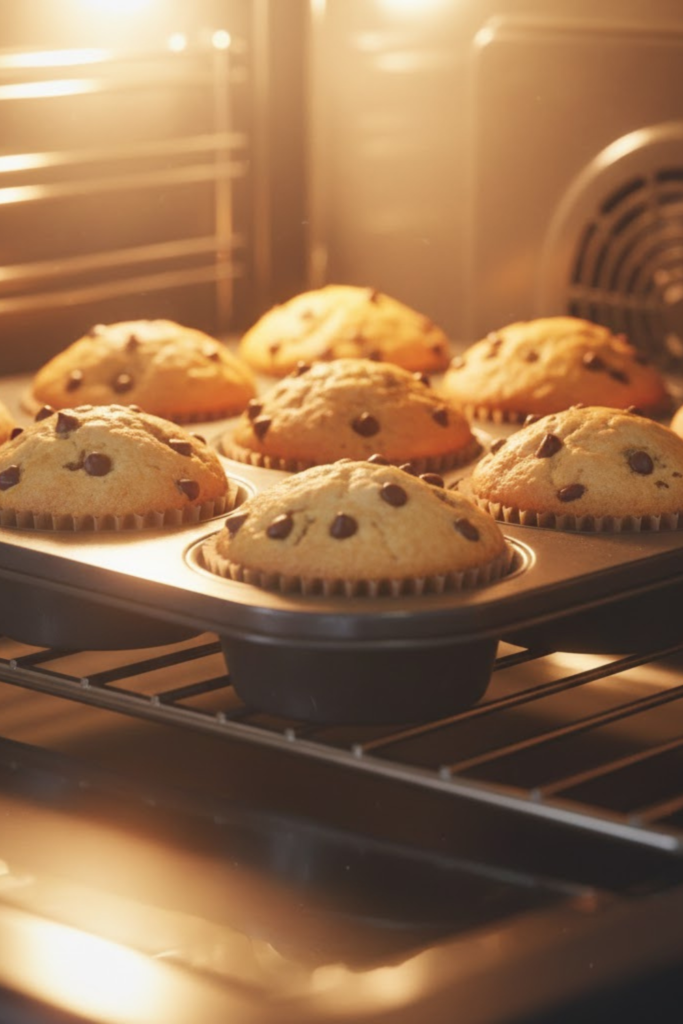
Pop them into the oven, but don’t just walk away and forget them. I used to rely strictly on the timer, but every oven is a little different. Around the 18-minute mark, start checking them. You’re looking for golden brown edges and a top that springs back when you touch it lightly.+3
Here is the tricky part: the toothpick test. Since we want a molten cookie dough center, if you stick a toothpick right in the middle, it’s going to come out wet. That doesn’t mean the cake isn’t done! Always test the “cake” part near the edge of the liner. If that comes out clean, you are good to go.+2
The Five-Minute Rule
When you pull them out, they are going to smell absolutely heavenly—like a bakery and a cookie shop had a baby. But please, for the love of all things sweet, do not try to eat one immediately. I burned my tongue so badly once because I couldn’t wait to see the “molten” effect.+3
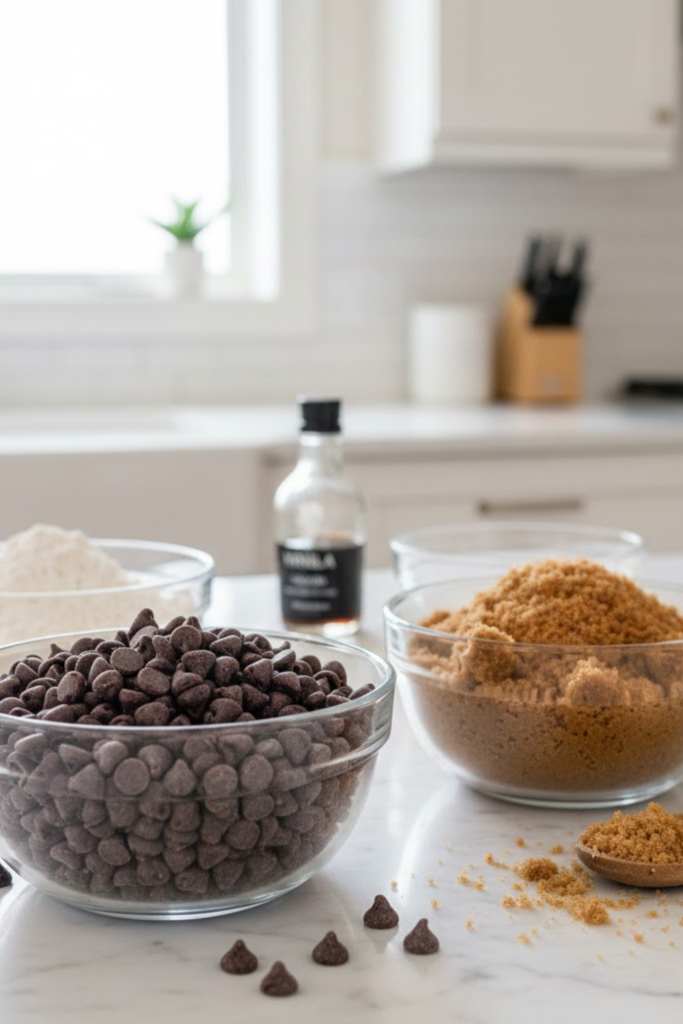
Let them sit in the tin for exactly five minutes. This allows the cupcake to firm up just enough so it doesn’t fall apart when you move it to a wire rack. As it cools slightly, the chocolate chip cookie dough filling settles into that perfect, gooey consistency that makes these so famous.
Frosting and Decorating Ideas
Now we get to the part where we make these beauties look as good as they taste! I used to think a plain cupcake was fine, but let’s be real—the frosting is the crown. If you’re already going for a molten cookie dough vibe, why not lean all the way into it? +4
The Ultimate Dough Frosting
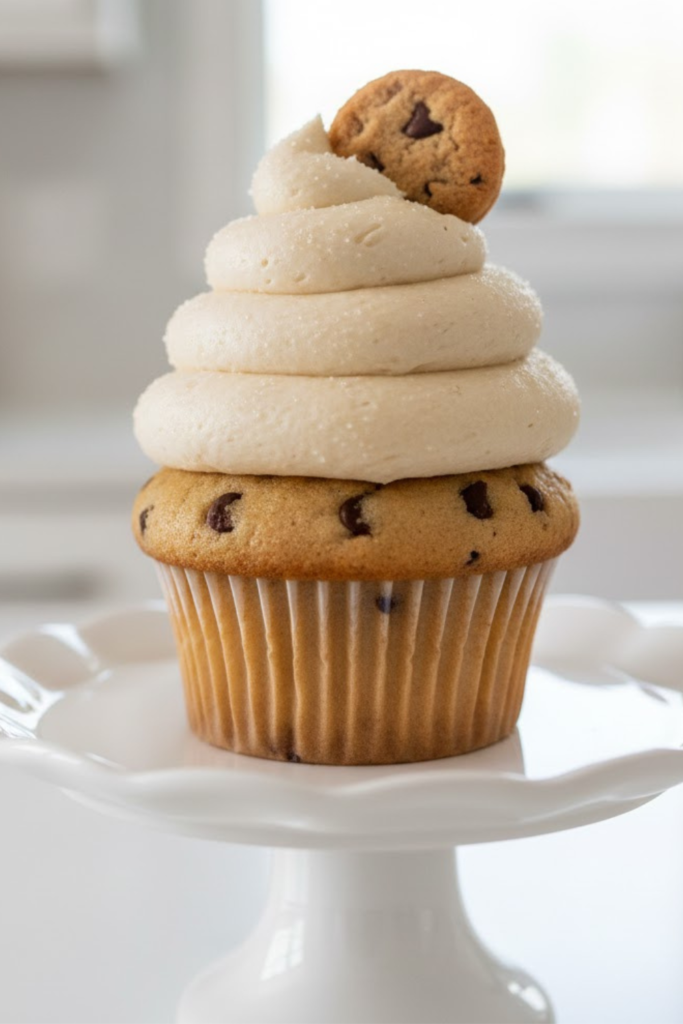
My absolute favorite way to top these is with a “cookie dough” buttercream. It sounds fancy, but it is just a standard frosting where you swap some powdered sugar for brown sugar and toasted flour. I messed up a batch once by using regular flour that wasn’t heat-treated in the frosting—bad move! Always toast that flour first to keep it safe and give it that “baked” flavor without the oven.
If you want a smoother look, a classic vanilla bean frosting works wonders too. I love seeing those tiny black speckles of vanilla bean against the white frosting. It makes the vanilla cupcake look like it came from a shop that charges eight dollars per treat.
Toppings That Tell a Story
I’m a big believer that the garnish should tell the person eating it what is inside. I once served these at a school bake sale without any toppings, and people were so confused when they hit the dough center! Now, I always stick a tiny, half-inch chocolate chip cookie right into the swirl of frosting.
Another pro tip: a drizzle of chocolate ganache. Just melt some mini chocolate chips with a splash of heavy cream and let it rain over the top. It covers up any “less than perfect” piping jobs you might have done—not that I’ve ever had to hide a messy swirl or anything!
Piping Like a Pro
Don’t stress if you aren’t a master with a piping bag. I used to just use a butter knife to schmear the frosting on like I was putting cream cheese on a bagel. It actually looks kind of “rustic” and cool that way. But if you want that bakery height, use a large round tip and just squeeze firmly in the center, letting the frosting build up into a mountain of sugary goodness.
Troubleshooting Common Baking Mishaps
Even though I’ve made these molten cookie dough cupcakes a hundred times, things still go sideways occasionally. I remember one Tuesday night I was so tired I forgot to freeze my dough balls entirely. It was a total mess! If your kitchen adventures don’t go perfectly, don’t sweat it—I’ve made all the mistakes for you already.
The Case of the Sinking Center
One of the most annoying things is when you bite into your cupcake and realize the cookie dough center has traveled all the way to the bottom and stuck to the paper. This usually happens for two reasons: either your dough balls were way too big and heavy, or your vanilla cupcake batter was too thin. If your batter looks like soup, add a tablespoon more of flour next time to give it enough “muscle” to hold that dough in place.
Help, My Dough Disappeared!
If you bite into your treat and the dough seems to have vanished into the cake, you probably skipped the freezer step. I know it feels like a pain to wait 30 minutes, but putting room-temperature dough into a hot oven is a recipe for a “disappearing act”. The dough just melts into the batter and you end up with a regular chocolate chip cupcake. Still tasty, but definitely not the molten surprise we wanted.
Why is My Cake Dry?
Because we are so worried about the center being done, it’s really easy to over-bake the outside. If your cake feels like a sponge you’d use to wash a car, you probably left it in five minutes too long. Remember, the center is supposed to be gooey! Use the toothpick test on the very edge of the cake. If the edge is set, pull them out! They will continue to cook a bit in the hot pan while they sit on the counter.+4
Avoiding the “Grease Pit”
If you see a ring of yellow oil around the bottom of your liners, your butter was likely too warm when you mixed the dough. I’ve done this when I tried to use the microwave to soften butter and accidentally turned it into liquid gold. Stick to room-temperature butter that still has a bit of “snap” to it, and your decadent dessert will stay perfectly moist without being greasy.
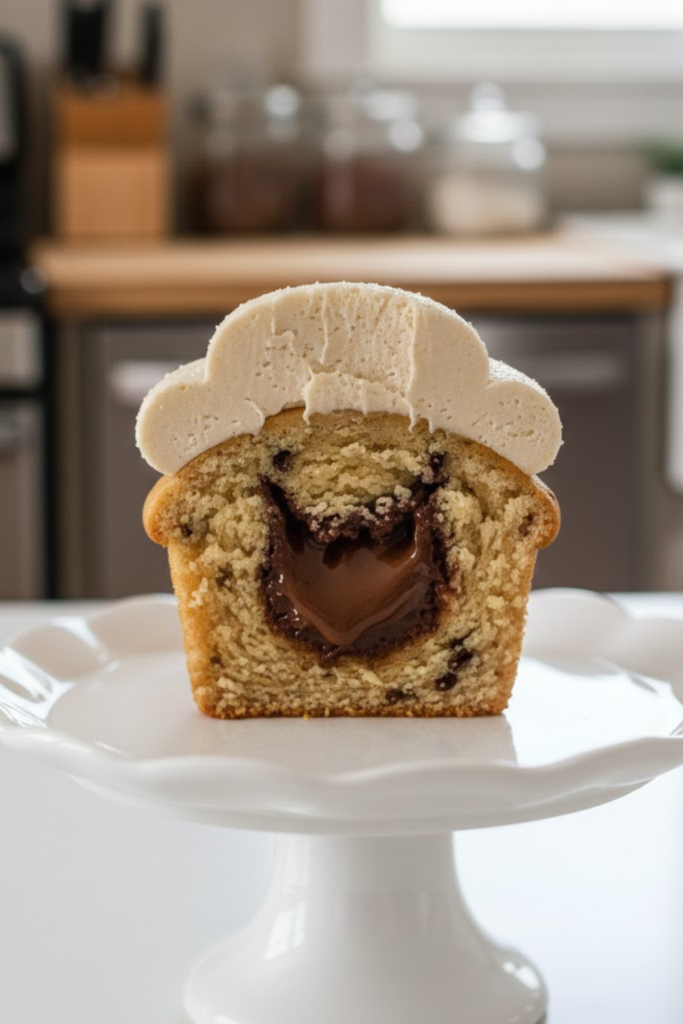
So there you have it—a cupcake that brings out the kid in all of us! I really hope you give these a try, even if you’re a little nervous about the “stuffed” part. Once you see that gooey, safe to eat cookie dough center for the first time, you’ll be hooked just like I am. It’s the kind of decadent dessert that makes people think you’re a professional baker, even if you’re just a messy enthusiast like me. +4
If you make these, please tell me how they turned out! I love hearing about your kitchen triumphs (and the messy “learning moments” too). Don’t forget to pin this to your Dessert board on Pinterest so you can find it the next time that cookie dough craving hits!