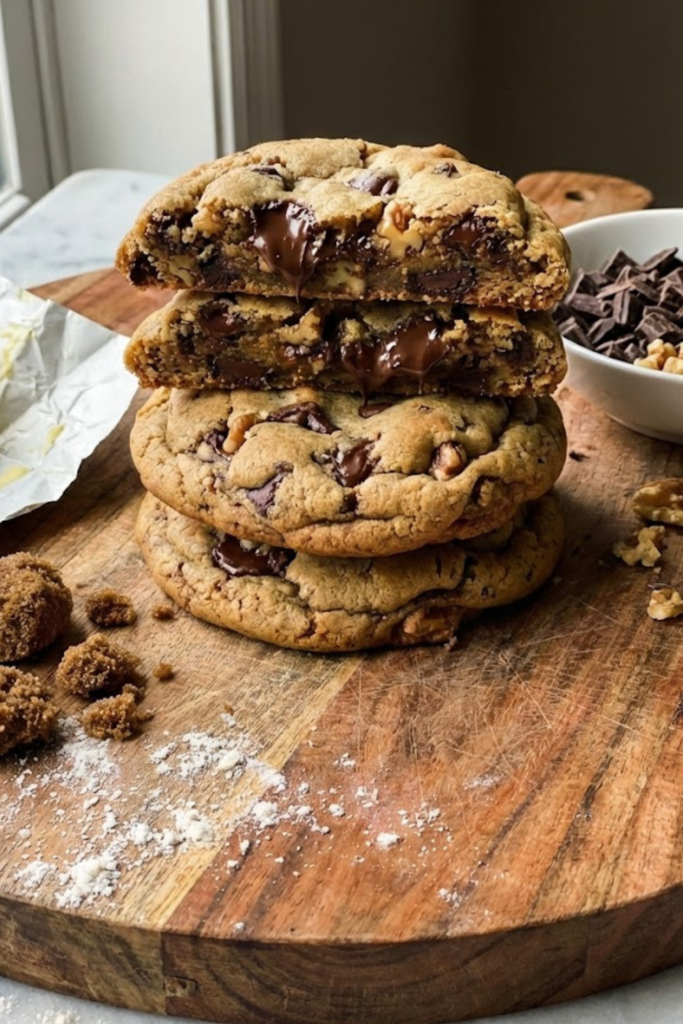
Did you know the average American will eat over 35,000 cookies in their lifetime? That is a staggering amount of sugar! But let’s be honest here, not all cookies are created equal. I’m talking about those massive, gooey, size-of-your-face treats you see in high-end boutique bakeries that cost $6 a pop. Today, we aren’t just baking; we are engineering the perfect giant chocolate chip cookies. I have spent years tweaking flour ratios (and eating way too much raw dough, oops!) to bring you this definitive guide. Get your milk ready, because this is going to be epic!
The Science Behind Bakery-Style Thickness
I gotta be real with you, for the longest time, my cookies were sad. I’m talking flat, greasy puddles that merged into one giant “uni-cookie” on the baking sheet. It was super frustrating! I stood there watching the oven, hoping they’d puff up, and they just… didn’t. I learned the hard way that baking is basically chemistry class, but with snacks at the end. If you want those giant chocolate chip cookies that look like they came from a fancy shop, you have to respect the science. It’s not magic, even though it tastes like it.
Why Cold Butter is King
Here is the thing I messed up for years. I thought room temperature butter was the law for baking. Nope. Not for these bad boys. For thick, bakery-style cookies, you need that butter cold. Like, straight from the fridge cold.
When you beat cold butter, it holds onto air better than soft butter. Then, when it hits the hot oven, the water inside the butter turns to steam. This creates little pockets of air. That structure is what keeps the cookie tall instead of spreading out all over the pan. If you melt the butter, your dough is already oily and loose. It’s gonna spread faster than gossip in a small town. Trust me on this one, keep it chilly.
The Flour Mix-Up
You might think flour is just flour, right? I did too. But if you use only all-purpose flour, you get a chewy, tough cookie. We want soft and thick. That’s where cake flour comes in. I started swapping half my flour for cake flour and it totally changed the game.
Cake flour has less protein than regular flour. Less protein means less gluten. And less gluten means your cookie stays tender and soft in the middle. It’s a small tweak, but it makes a huge difference in texture. It’s like the difference between a fluffy pillow and a brick. If you don’t have cake flour, you can fake it by adding a little cornstarch to your regular flour. It works in a pinch!
The Patience of Resting Dough
Okay, don’t get mad at me. I know you want a cookie now. I am the most impatient person ever. But you have to chill the dough. I once skipped this step because I was craving sugar, and the cookies fell flat. Literally.
Putting the dough in the fridge for at least 24 hours does two big things. First, it hydrates the flour so the dough is drier and spreads less. Second, the flavors get to know each other better. The toffee notes really come out after a long nap in the fridge. It is worth the wait, I promise. Just pretend you’re marinating a steak, but it’s chocolate.
Leavening Agents: Soda vs. Powder
Baking soda and baking powder aren’t the same thing. I used to swap them randomly when I ran out of one. Bad idea. Baking soda reacts with acid and spreads things out. Baking powder has its own acid and helps things puff up.
For these giants, we need a specific balance. Too much soda and they collapse. Too much powder and they taste like chemicals. We use just enough baking powder to give it that dome shape. You want lift, not spread. It took me a dozen batches to get the ratio right, but now you don’t have to guess!
Essential Ingredients for Gooey Centers
I used to think all chocolate chip cookies were basically the same. Flour, sugar, butter, throw in a bag of those yellow-label chocolate chips, and call it a day. Boy, was I wrong. I remember bringing a batch to a potluck once, and while people were polite, nobody went back for seconds. It stung a little. I wanted to be the person who brought the “OMG, who made these?” dessert. So, I went back to the kitchen and started experimenting. Turns out, the ingredients you choose matter just as much as how you bake them. If you want those melty, gooey centers that ruin you for all other cookies, you gotta upgrade your grocery list.
Ditch the Chips, Grab the Bar
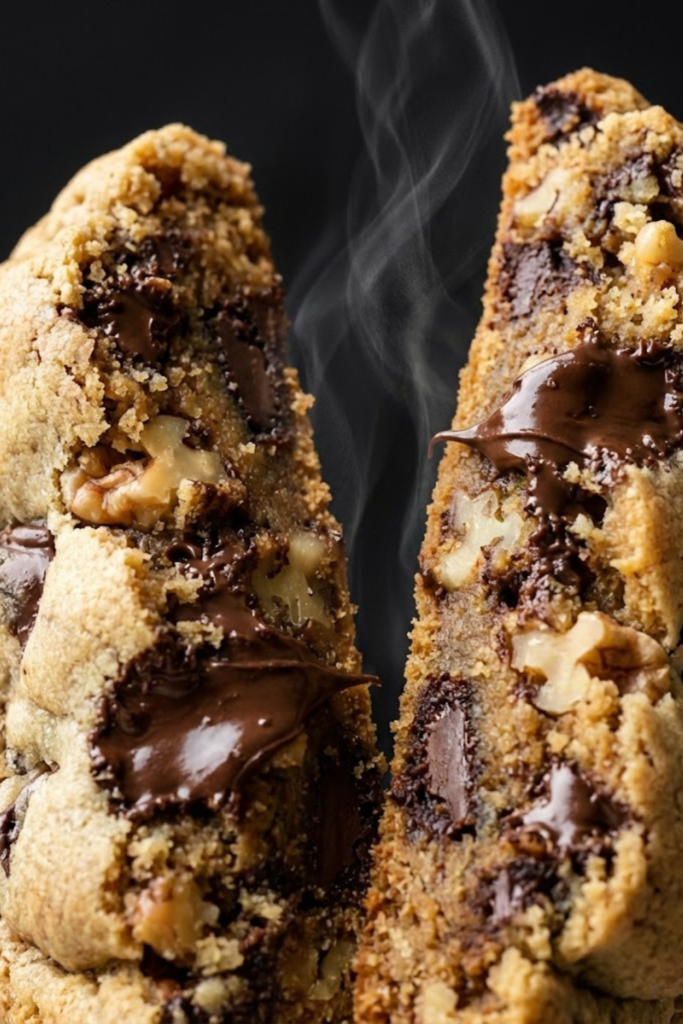
Here is a hill I will die on: chocolate chips are overrated. I know, they are convenient. But they are designed not to melt. They have stabilizers in them so they keep that cute little shape in the oven. That is fine for a bake sale, but we want pools of chocolate here.
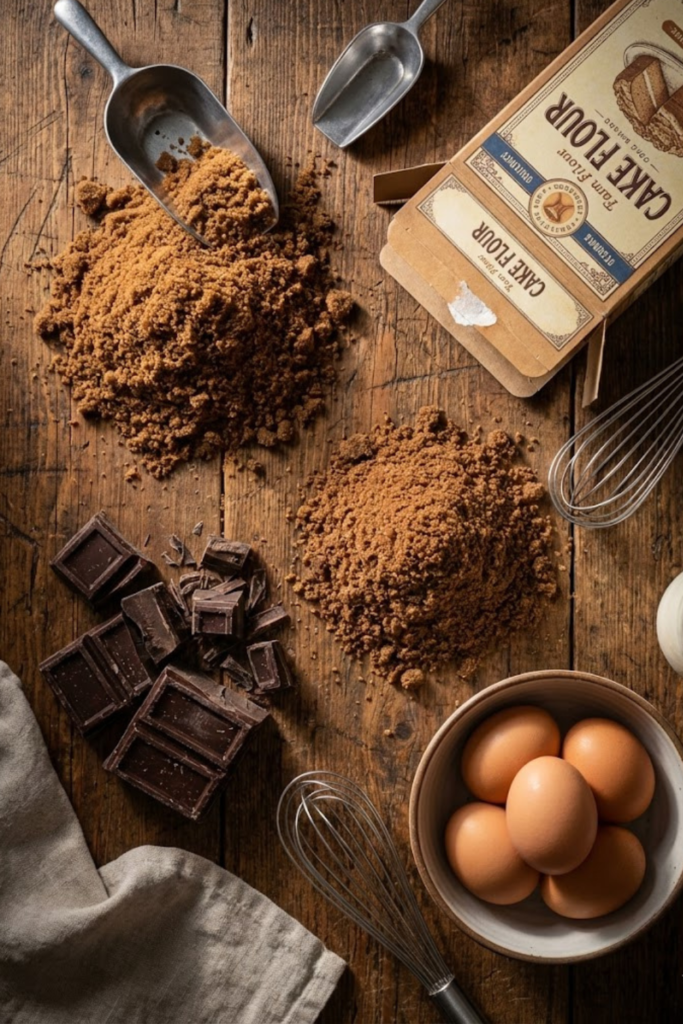
I started buying high-quality chocolate bars (around 60% or 70% cocoa) and chopping them up myself. It’s a bit messy, and I usually end up eating a few chunks while I chop, but it’s worth it. When you chop it yourself, you get all these little shards of chocolate dust that melt into the dough, plus big chunks that stay gooey. It creates this marbling effect that looks professional and tastes insane. Just try it once, and you won’t go back.
The Sugar Ratio Secret
For the longest time, I just used whatever sugar I had in the pantry. Usually, that meant granulated white sugar. My cookies came out crisp, pale, and frankly, a bit boring. I couldn’t figure out why they didn’t have that deep, caramel-like flavor I loved in bakery cookies.
Then I learned about the power of dark brown sugar. It has molasses in it, which adds moisture and acidity. For giant chocolate chip cookies, I bumped up the ratio to use way more brown sugar than white sugar. The moisture in the brown sugar keeps the center soft and chewy, while the white sugar helps the edges get crispy. It’s a balancing act. If you want that fudgy, almost underbaked texture in the middle, brown sugar is your best friend. Don’t be shy with it.
Eggs: The Room Temp Rule
Okay, confession time. I used to crack eggs straight from the fridge into my batter. I’m lazy, and planning ahead is hard. but cold eggs don’t mix well with room temperature butter. They seize up the fat and make the batter curdle. It looks gross, like cottage cheese.
Now, I always set my eggs out beforehand. If I forget (which happens a lot), I put them in a bowl of warm water for 5 minutes. Problem solved. Also, here is a pro tip I picked up: add an extra egg yolk. Just the yolk! It adds fat and richness without adding too much water. It makes the cookie denser and fudgier. It feels wasteful to toss the white, so I usually save it for an omelet later.
The Salt Finish
Putting salt on a cookie sounded weird to me at first. Like, isn’t this supposed to be dessert? But have you ever had a cookie that was just… sweetly one-note? It gets boring after two bites.
I started sprinkling flaky sea salt on top right when they come out of the oven. It is a game changer. The salt cuts through the sweetness and makes the chocolate flavor pop. It’s that “sweet and salty” combo that makes you want to keep eating. Plus, it looks fancy. You don’t need much, just a tiny pinch. It’s the final detail that takes your homemade cookies from “good” to “did you buy these?”
Mastering the Giant Scoop Technique
I used to think I could just eyeball cookie dough. I’d grab a spoon, fling some dough on the pan, and hope for the best. Big mistake. One cookie would be raw in the middle, and the one next to it would be burnt to a crisp. It was a disaster. If you want these giant chocolate chip cookies to actually turn out like the pictures, you have to stop guessing. Size matters here, people! You can’t just wing it and expect bakery results.
Get a Scale, Seriously
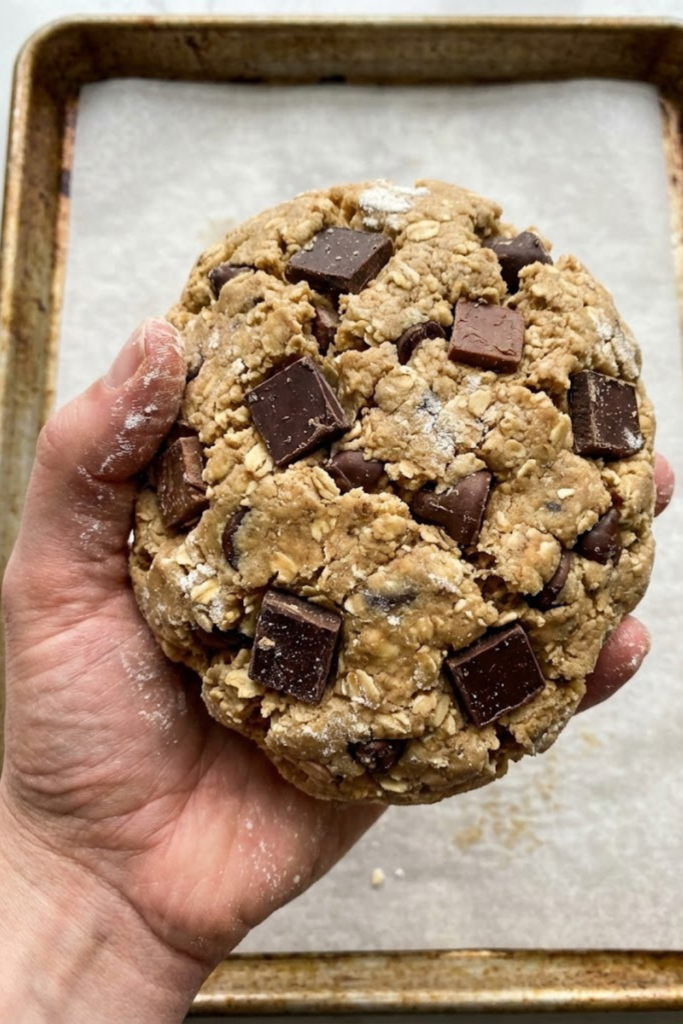
I resisted buying a kitchen scale for years. I thought it was “too professional” or just unnecessary clutter. I was so wrong. Weighing your dough is the only way to get them consistent. For these monsters, I weigh each ball to exactly 6 ounces (about 170 grams).
When you first scoop that much dough, it looks ridiculous. It feels like you are holding a baseball. You will think, “There is no way this is one cookie.” But stick with me. If you go smaller, you lose that magical contrast between the crispy edge and the molten center. If the dough ball isn’t massive, the heat penetrates too fast, and you lose the goo factor. Just trust the scale.
The Vertical Stack Trick
Here is a weird trick I learned from watching bakery videos at 2 AM. Don’t just make a round ball. Make it tall. I stack the dough vertically, almost like a little cylinder or a tall mound. It looks kind of unstable on the baking sheet, to be honest.
Why do we do this? Because gravity is going to pull that cookie down in the hot oven. If you start with a flat disc, you end up with a pancake. If you start tall, it melts down slowly into that perfect thick puck. It gives the center more time to stay protected from the heat. My first batch of “tall” cookies looked like they were going to topple over, but they baked down beautifully.
Keep It Ugly
I used to roll my dough balls until they were perfectly smooth spheres. I wanted them to look neat and tidy. Wrong move! Smooth balls bake into smooth, boring cookies. We want those craggy, rocky tops that catch the light and get crispy.
Now, I keep the dough rough. I barely shape it. I leave jagged edges and big pieces of chocolate sticking out awkwardly. Those rough bits toast up faster than the rest of the cookie, giving you that amazing texture variation. It’s supposed to look messy going into the oven. If it looks too perfect, mess it up a little.
The Freezer Nap
Once I shape these giant mounds, I want to throw them in the oven immediately. I can usually smell the chocolate already and I get impatient. But you have to freeze them. I pop the whole tray of shaped dough in the freezer for about 30 minutes.
This chills the outside fat so the cookie holds its shape longer before melting. It’s like setting the structure before the heat hits it. I once skipped this because I was in a rush, and my giant chocolate chip cookies spread way too much. It was heartbreaking. The freezer step is the final test of patience, but the payoff is huge.
Baking and Cooling for Perfection
I used to have a love-hate relationship with my oven. It felt like a gamble every time I slid a baking sheet in there. I’d stare through the dirty glass window, praying they wouldn’t burn or turn into weird blobs. But after ruining more batches than I care to admit, I realized that the baking part is actually the most critical step. You can have the best dough in the world, but if you mess up the heat, it’s game over. Getting these giant chocolate chip cookies right requires a little bit of bravery and a lot of trust.
The High Heat Shock
Most cookie recipes tell you to bake at 350°F. Ignore that. Seriously, throw that advice out the window for this recipe. If you bake these massive mounds of dough at 350°F, they will melt slowly and spread into giant pancakes before the edges can set. We don’t want pancakes; we want thick, chunky cookies.
I crank my oven up to 410°F (210°C). It feels aggressive, I know. But that high heat “shocks” the dough. It sets the outside crust almost immediately, locking the dough in place so it can’t spread too much. The inside stays protected and gooey while the outside gets that beautiful golden brown color. It was scary the first time I did it, but the results were undeniable. Just make sure your oven is actually at that temp—get an oven thermometer if you aren’t sure!
The Art of Underbaking
Here is the hardest part: taking them out. You have to pull these cookies out when they still look raw in the middle. I mean, they should look wobbly and wet, like they aren’t even close to being done. My instinct used to scream, “Leave them in for two more minutes!”
Don’t do it. If they look done in the oven, they are overbaked. Remember, the baking sheet is still scorching hot. The cookies will continue to cook for another 10 to 15 minutes after you take them out. This is called carryover cooking. I used to wait until they looked firm, and by the time they cooled, they were hard as rocks. You have to trust the process. Pull them when the edges are golden but the center looks like molten lava.
The “Cookie Scoot” Trick
Have you ever wondered how bakery cookies are perfectly round? Mine used to come out looking like amoebas or sad ovals. Then I saw a video of a baker using a round cutter to fix them, and my mind was blown.
Immediately after you pull the tray from the oven, while the cookies are still super hot and soft, grab a large round cookie cutter or even a glass. Place it over the cookie and gently swirl it in a circular motion. This “scoots” the edges in and makes the cookie perfectly round. It pushes any weird bumps back into place. You only have a window of about a minute to do this before they set, so you gotta move fast. It is oddly satisfying to do.
The Torture of Waiting
I am not going to lie, this step is torture. You have these amazing smelling, giant chocolate chip cookies sitting right there, and you can’t touch them. I have burned the roof of my mouth so many times because I couldn’t wait. Learn from my pain.
Because these cookies are so big and underbaked, they are extremely fragile when hot. If you try to pick one up, it will fall apart in your hands. You need to let them cool on the baking sheet for at least 10 minutes to firm up. Then, move them to a cooling rack and wait—I’m serious—another hour. They need time for the structure to set so you get that chewy texture instead of hot dough. Go for a walk, fold laundry, do anything to keep yourself away from the kitchen for 60 minutes. It will be worth it.
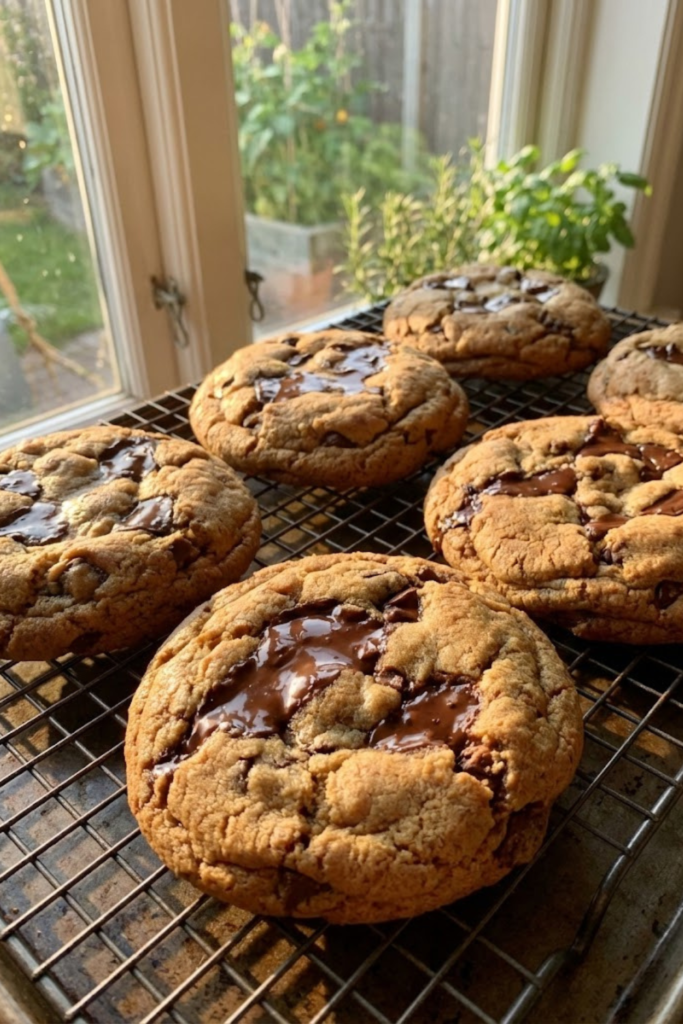
Well, we made it to the end. My kitchen is usually a disaster zone of flour dust and empty chocolate wrappers by this point, and I bet yours is too. But honestly? It is totally worth the mess. We covered a lot today, from why cold butter is the absolute secret weapon to why you really need to weigh those massive scoops to get that professional look. It feels a bit like a science experiment, I know. But once you take that first bite of a warm, thick, gooey giant chocolate chip cookie that you made from scratch, you’ll get it. You really can’t get this kind of flavor or texture from a plastic package at the grocery store.
Don’t beat yourself up if the first batch isn’t Instagram-perfect. Baking is all about trial and error (and eating the errors, which is the best part). If you found this guide helpful—or if you just enjoyed my rant about why chocolate chips are inferior—please do me a huge favor and save this recipe to your “Best Desserts” board on Pinterest. It helps other cookie lovers find us, and it saves you from scrolling endlessly next time the craving hits. Happy baking, my friends!