Have you ever walked past a Greek street food cart and felt instantly mesmerized by that spinning cone of meat? I know I have! There is absolutely nothing like the smell of savory, spiced meat roasting on a vertical rotisserie. But here is the shocking truth: you don’t need fancy industrial equipment to recreate that magic at home. In this article, I am going to show you exactly how to make mouthwatering gyro meat right in your own kitchen. We are going to mix ground beef and lamb with aromatic spices to create a loaf that slices just like the real deal. Get your pita bread ready, because this is going to be a game-changer for your dinner routine!
What Exactly is Authentic Gyro Meat?
I still remember the first time I tried to make gyro meat at home about ten years ago. I was so confident. I just mixed some ground beef with oregano, shaped it into a loaf, and threw it in the oven. When I took it out, I didn’t have that beautiful, tight rotisserie meat I loved from the street carts. I had a Greek-flavored meatloaf that crumbled the second I looked at it. It was tasty, sure, but it was a total texture fail. I was so frustrated I actually ordered takeout that same night just to compare.
That’s when I learned the hard truth: authentic gyro meat isn’t just about the ingredients; it’s about physics.
It’s All About the Squeeze
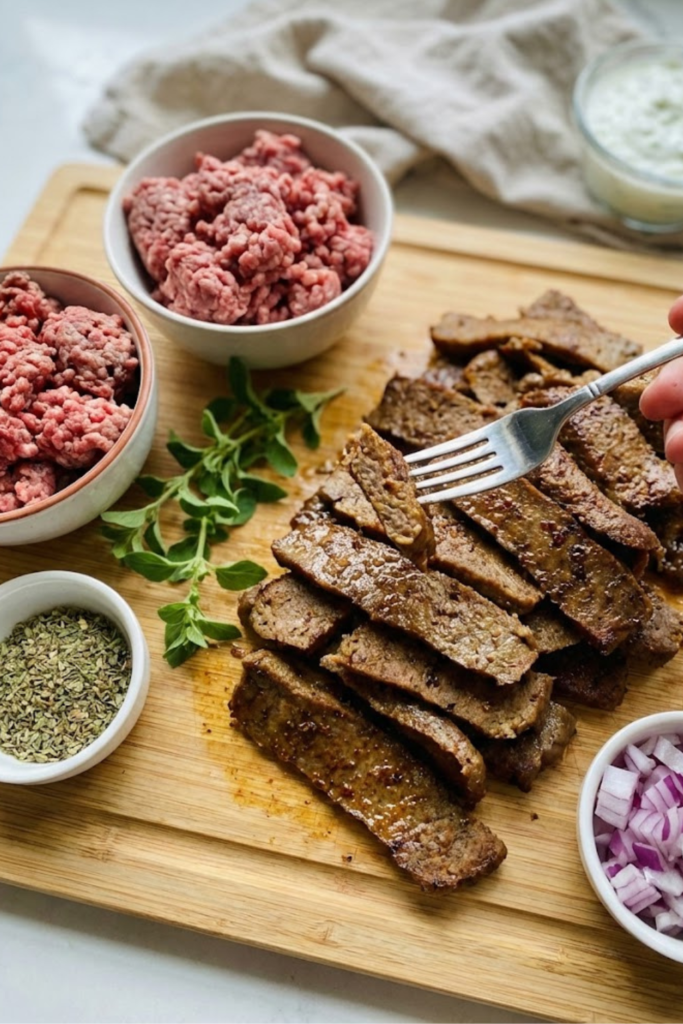
The biggest mistake people make is treating this like a burger or a meatball. It’s not. If you look closely at the spinning cones in a restaurant, the meat looks almost solid, right? That is because it has been compressed.
To get that springy, sliceable texture at home, you have to change the structure of the meat. You can’t just mix it by hand. You have to process the meat into a sticky paste. This releases proteins that act like glue. When I finally started using my food processor to really pulverize the meat mixture, the difference was night and day. Suddenly, I could slice it thin without it falling apart into sad little crumbles.
The Greek vs. American Style
Here is a fun fact that blows people’s minds. In Greece, gyros are often made with stacked slices of pork or chicken. It’s delicious, but it’s different. The gyro meat most of us know and love here in the States—that blend of beef and lamb—is actually an American-Greek invention.
It was popularized in places like Chicago and New York. This style uses a ground meat mixture that is seasoned heavily and roasted on a vertical spit. Since most of us don’t have a vertical rotisserie standing in our kitchen (I wish!), we have to cheat a little to get that result.
Know Your Meat Cousins
People get confused between Gyros, Doner Kebab, and Shawarma all the time. I used to mix them up too.
- Gyros: Usually Greek, heavy on oregano and garlic, often served with tzatziki.
- Doner Kebab: Turkish origin, the granddaddy of them all, usually seasoned differently.
- Shawarma: Middle Eastern, often uses warmer spices like cardamom or turmeric.
They are all technically meat roasted on a spit, but the flavor profile of gyro meat is very specific. It relies on that punch of marjoram and oregano. Once you understand that you are making a seasoned meat emulsion rather than a burger, you are halfway to victory. It took me a few messy tries to get it right, but trust me, the effort is worth it.
Here is the next section of your article, written with that personal, experienced touch.
Essential Ingredients for Flavorful Gyro Meat
I used to think I could just throw whatever ground meat I had in the fridge into a bowl and call it a day. Boy, was I wrong. My early attempts tasted like a weird, dry hamburger that was trying too hard. Through a lot of trial and error (and some very disappointing dinners), I learned that the ingredients you pick make or break the final result. You can’t just wing it if you want that authentic taste.
The Meat Ratio Matters
When I first started, I tried using lean ground beef to save on calories. Huge mistake. The meat came out like a hockey puck. Gyro meat needs fat to stay juicy during the cooking process.
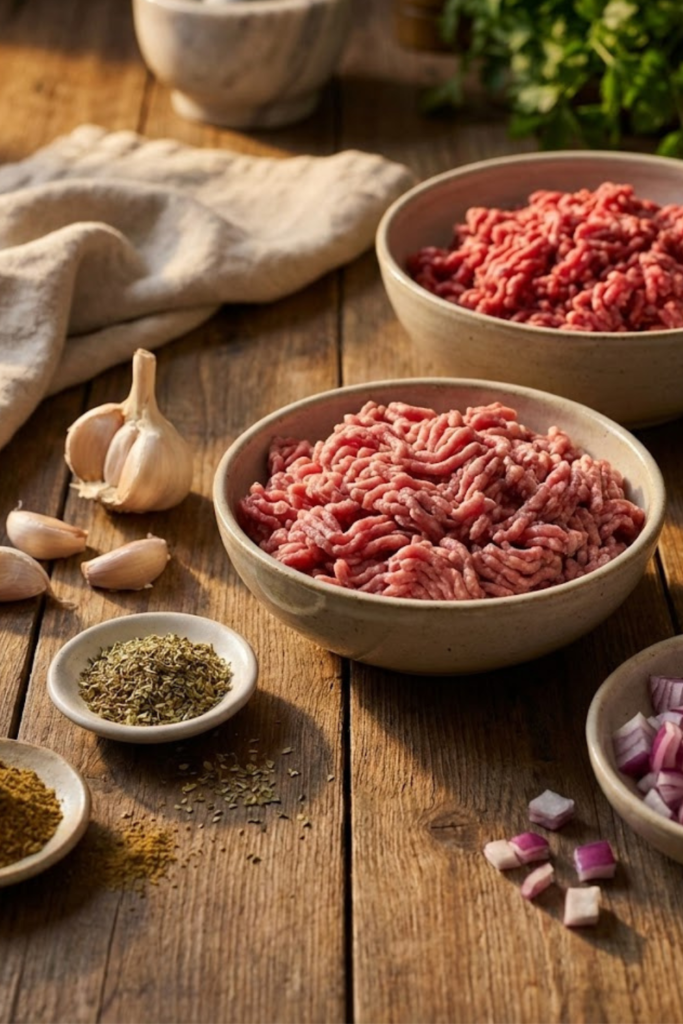
I’ve found the absolute sweet spot is a 50/50 mix of ground beef and ground lamb. The lamb provides that distinct, slightly gamey flavor that screams “Greek food,” while the beef gives it structure. If you can, grab beef that is 85% lean. Don’t go leaner than that! You need that fat to render out and baste the loaf from the inside. If you skip the lamb, you’re just making spiced meatloaf.
The Onion Situation
Here is a trick that changed my life. The first time I made this, my meat loaf was a soggy mess. It wouldn’t slice; it just mashed. The culprit? The onions.
Onions are full of water. If you just chop them up and throw them in, they release all that liquid while baking, effectively boiling your meat from the inside. Gross, right?
- The Fix: You need to pulse your onion in a food processor until it is mush.
- The Workout: Then, put that mush in a clean kitchen towel or cheesecloth and squeeze it.
- The Result: Squeeze until your hands shake and you think you can’t squeeze anymore. You want dry onion pulp.
Discard the juice (or save it for a soup stock) and use only the dry pulp in the meat mixture. This single step stops the meat from becoming a watery disaster.
The Holy Trinity of Spices
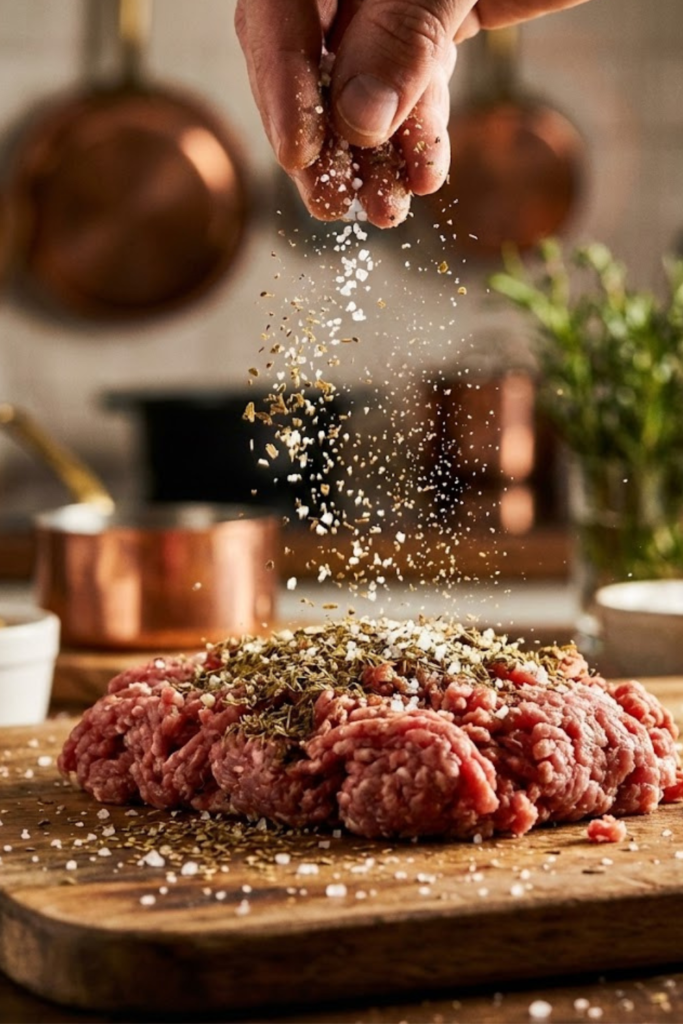
You might think you have the spices covered, but there is one specific herb that people often forget. It’s marjoram.
I remember looking at a recipe years ago and thinking, “Eh, I have oregano, that’s close enough.” It isn’t. Marjoram has this floral, sweet pine flavor that differentiates gyro meat from Italian sausage. You need a heavy hand with dried oregano, cumin, garlic powder, and marjoram. And don’t be shy with the salt. Since we are compressing this meat, the seasoning needs to be aggressive to stand out. If you taste the raw mixture (just a tiny bit on your tongue) and it doesn’t punch you in the face with flavor, add more.
Mastering the Technique: Processing and Baking
If you take anything away from this post, let it be this section. I remember staring at my first attempt years ago, wondering why it looked like a crumbly burger instead of that smooth, dense meat you get at the Greek spot. I was so confused. I had the right ingredients, but the texture was all wrong.
It turns out, I was being too gentle. To get authentic gyro meat, you have to treat the meat a little rough.
The Paste Method
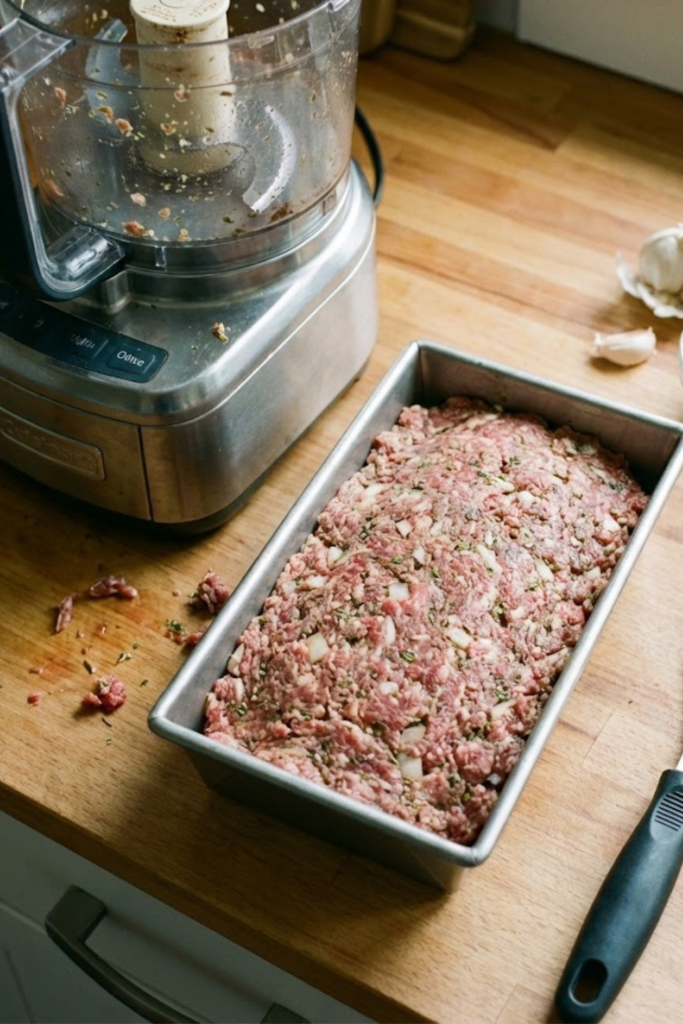
Here is the secret: you can’t just mix this by hand unless you want to workout for an hour. You have to change the protein structure. I throw my ground beef and lamb mixture into the food processor and let it rip for a good minute.
It goes from looking like normal ground meat to a sticky, pale pink paste. It looks unappealing, honestly. But that stickiness is protein extraction. That’s the glue that holds your gyro meat together so it can be sliced thin later. If you skip this, you are just making a loaf of spiced hamburgers.
Compacting the Loaf
Once you have your paste, don’t just dump it in the loaf pan. You have to pack it. I mean really pack it.
I slam the meat down into the pan to force out any air pockets. If you leave air inside, the fat pools in those holes and the loaf falls apart when you slice it. I usually take a spatula and press down as hard as I can. It’s surprisingly therapeutic after a long day.
The Water Bath Trick
For baking, I’ve tried two ways. Roasting it straight up works, but sometimes the edges dry out too fast. The pro move I learned? Use a water bath.
I put my loaf pan inside a larger roasting dish filled with boiling water. This cooks the gyro meat gently and keeps it incredibly moist. It takes a bit longer, usually about an hour until the internal temp hits 165°F, but the texture is smoother. Just be careful not to splash boiling water on yourself like I did last Thanksgiving.
How to Slice and Sear for That Rotisserie Finish
I am about to tell you something that goes against every instinct you have. When that loaf of gyro meat comes out of the oven, smelling like garlic and oregano heaven, you are going to want to slice into it immediately.
Don’t do it. Seriously. Put the knife down.
I learned this the hard way. I once pulled a loaf out for a dinner party, sliced it piping hot, and watched in horror as my beautiful creation disintegrated into a pile of seasoned ground beef. It tasted fine, but it looked like sloppy joes, not gyros. I was so embarrassed I almost ordered pizza.
Cooling is Key
The meat needs time to set. The proteins need to relax and bind together as they cool. I usually let my loaf rest for at least 20 to 30 minutes on the counter.
If you want to be a real pro, let it cool completely and put it in the fridge for a few hours. Cold meat slices way thinner than hot meat. It’s a game of patience, and I am not a patient person, but this step is non-negotiable. Sometimes, if I’m really planning ahead, I’ll bake it the day before. It makes dinner time way less stressful.
The Art of the Thin Slice
Once the meat is solid and cool, it’s time to slice. You want these shavings to be thin—like, see-through thin.
I use my sharpest chef’s knife for this. I’ve seen people try to use a serrated bread knife, and it just tears the meat up. Don’t do that. If you have a mandoline slicer, you can use that, but watch your fingers! I sliced the tip of my thumb once trying to get the perfect shaving. Not fun. Just go slow and aim for long, vertical strips. The thinner the slice, the crispier it gets in the pan.
The Pan Sear
This is the step that transforms “gray meatloaf” into authentic gyro meat. Since we don’t have a vertical rotisserie spinning against a heating element, we have to fake it.
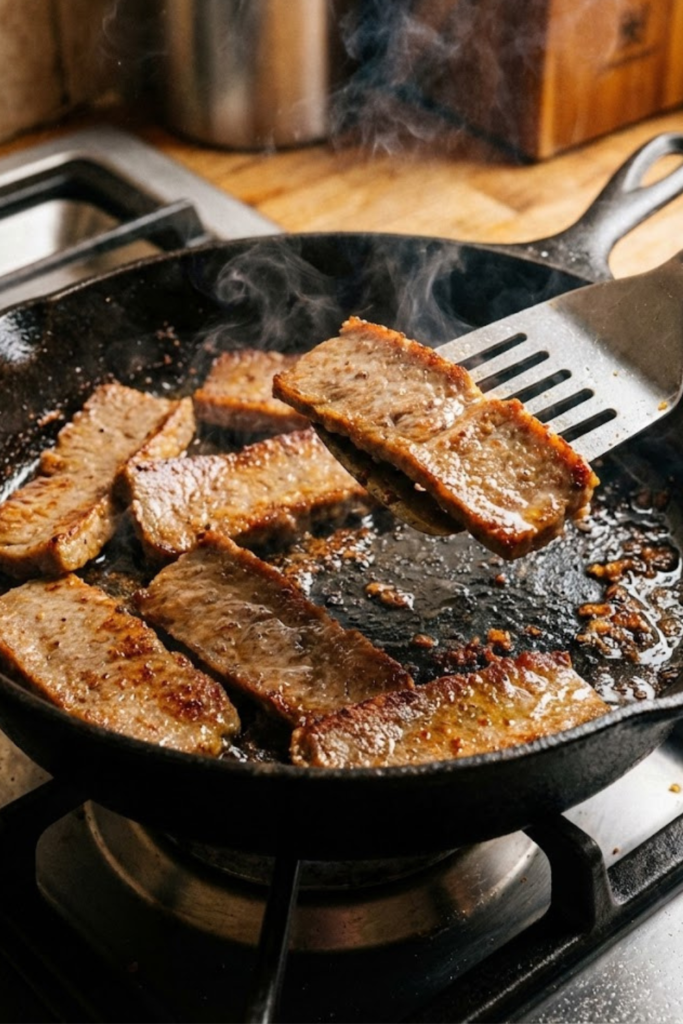
Grab a cast iron skillet if you have one. Get it hot—medium-high heat. You don’t even need much oil because the meat has plenty of fat in it. Throw the slices in effectively.
You want to hear a loud sizzle. Let them sit for a minute or two without moving them. You are looking for those dark, crispy, caramelized edges. That’s where all the flavor lives. Flip them over for just a few seconds on the other side. The contrast between the crispy edge and the tender center is exactly what you get from the street carts. When I smell that fat hitting the hot pan, I know it’s going to be a good night.
Building the Perfect Gyro Sandwich
I have ruined perfectly good gyro meat by wrapping it in cardboard. Okay, not literal cardboard, but I’m talking about those dry, thin pocket pitas you find in the generic bread aisle. You know the ones. I used to buy them thinking they were “authentic,” only to have them split down the middle the second I tried to fold them. It was tragic. Sauce dripped everywhere, the meat fell out, and my dinner turned into a sad taco salad.
After crying over spilled tzatziki one too many times, I realized that the vessel is just as important as the cargo. You’ve spent hours making this meat; don’t fumble the ball at the one-yard line.
The Bread Dilemma
If you want the real experience, you have to find Greek-style pita bread. This is the kind that doesn’t have a pocket. It is thick, fluffy, and soft. If your grocery store doesn’t have it in the bakery section, check the freezer aisle or find a local Middle Eastern market.
But here is the trick I missed for years: you have to steam or fry the bread. Cold pita is stiff and cracks easily. I usually throw a little bit of olive oil in the same skillet I used for the meat and toast the bread for 30 seconds on each side. It makes it pliable and warm. It effectively wakes the bread up.
The Sauce Is Boss
You cannot have a gyro without Tzatziki. I once tried to sub in ranch dressing because I was out of yogurt. Just… don’t do that. It was a crime against food.
The sauce needs to be cold. That temperature contrast between the sizzling hot gyro meat and the ice-cold, garlicky yogurt sauce is what makes the sandwich work. I make mine with grated cucumber (squeeze the water out!), lots of garlic, fresh dill, and full-fat Greek yogurt. Low-fat yogurt just makes it runny. You want it thick enough to stay on the sandwich, not run down your arm.
Toppings: Keep It Classic
I used to overcomplicate this part. I’d add lettuce, feta cheese, olives, and peppers. It was too much. The best gyros I’ve ever had are shockingly simple.
- Red Onion: Slice them thin. If they are too biting, soak them in cold water for ten minutes to tame the flavor.
- Tomatoes: You want ripe, juicy slices. They add the acid that cuts through the fatty meat.
- The Secret Weapon: French fries. Yes, you read that right. Authentic Greek street gyros often come with a few french fries stuffed right inside the sandwich. It is carb-on-carb action, and it is glorious.
The Fold
Don’t overstuff it. I know it’s tempting to load that thing up like a burrito, but you will regret it. Place your meat in the center, top with onions, tomatoes, and a generous dollop of sauce. Then, fold it like a taco and wrap the bottom half in parchment paper or foil. This keeps everything tight and saves your shirt from sauce drips.
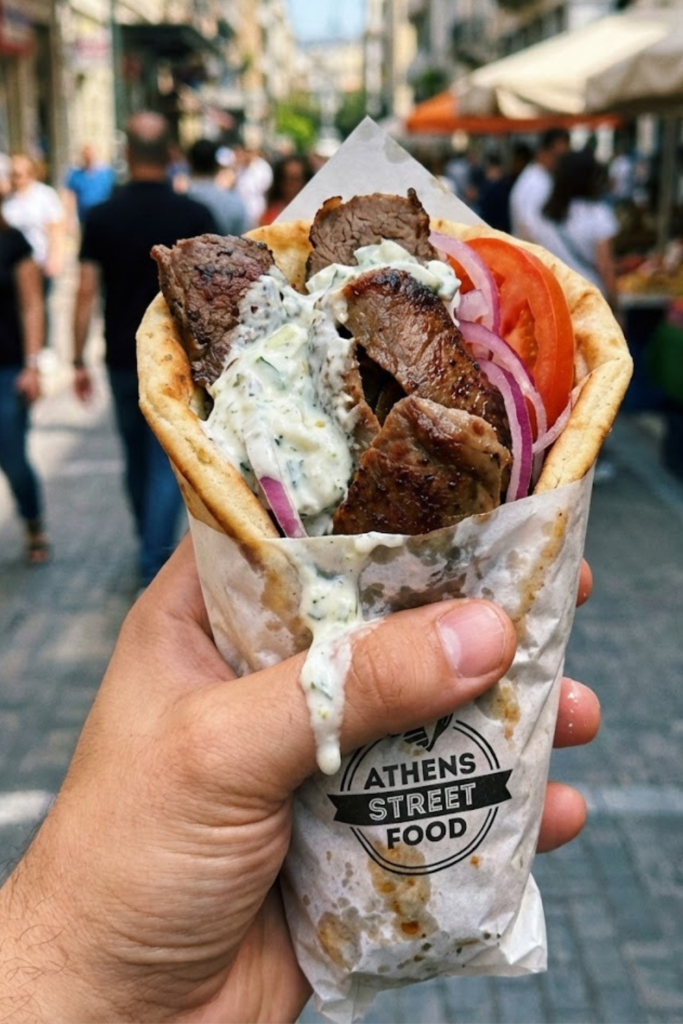
So there you have it. You don’t need a plane ticket to Athens or even a trip to the mall food court to get your fix. Making authentic gyro meat at home is one of those kitchen projects that feels intimidating until you actually do it. Then, you wonder why you waited so long.
Sure, it takes a little bit of effort to squeeze those onions dry and process the meat into a paste, but the first time you take a bite of that crispy, salty, rosemary-infused lamb, you will know it was worth it. I’m telling you, this recipe has saved my dinner routine more times than I can count. It’s perfect for meal prep, too!
If you make this, do me a huge favor. Take a picture of your masterpiece (even if it’s a little messy!) and pin it to your “Dinner Ideas” board on Pinterest. It helps other people find the recipe, and honestly, I just love seeing what you guys create. Now, go get that food processor spinning!