Did you know that over 60% of home bakers admit to being “terrified” of the dreaded sponge crack? I’ve been there—staring at a broken mess of cocoa and cream on my counter! But honestly, once you nail the technique, this Chocolate Cake Roll is the most rewarding thing you’ll ever bake. It’s light, airy, and looks like it came straight from a high-end patisserie. Whether you’re making it for a holiday or just a Tuesday treat, let’s get into the tips that make this recipe a winner every single time!
I remember my first attempt; I was so nervous I almost didn’t want to flip the pan! I’ve learned that the secret isn’t some fancy equipment, but just having the right flow in your kitchen. If you follow these steps, you’ll be serving up a gorgeous spiral that will make everyone think you spent years in pastry school. Seriously, don’t let the fear of a little tear stop you from making this absolute showstopper of a dessert! It is the kind of recipe that makes you feel like a total kitchen rockstar once you master that perfect roll.
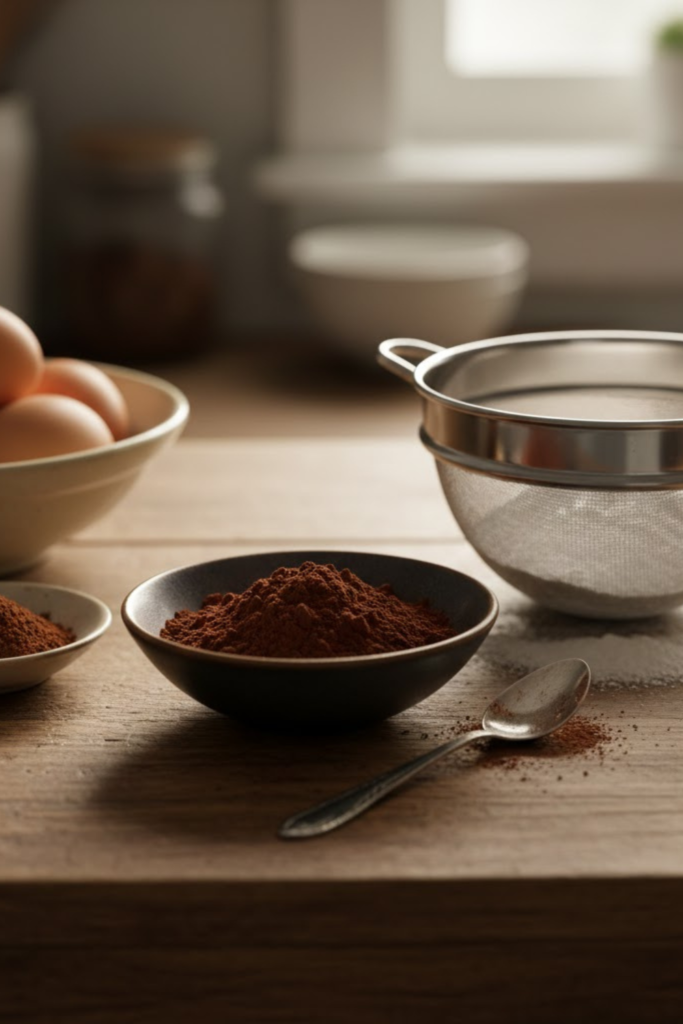
Essential Ingredients for a Moist Chocolate Sponge
I remember the first time I tried making a chocolate roll; it was a total disaster because I thought I could just use cold eggs straight from the fridge. Big mistake! My sponge turned out like a flat, sad pancake instead of the fluffy cloud I was dreaming of. Now, I always make sure my eggs sit out for at least an hour to reach room temperature.
Why Room Temp Matters
Using room temperature eggs is honestly a game changer for getting that airy volume we need. When you beat them, they trap way more air than cold ones do. I usually plop mine in a bowl of warm water for ten minutes if I’m in a rush. It’s a little shortcut that saves me every single time!
Choosing Your Cocoa
You’ve gotta use Dutch-processed cocoa powder if you want that deep, dark color that looks so good in photos. Regular cocoa is fine, but it’s a bit too acidic and doesn’t give you that rich “Oreo” look. I once used cheap store-brand cocoa and the cake tasted like nothing. Totally disappointing after all that work whisking!
Flour and Flavor Boosters
- Cake Flour: I prefer this over all-purpose because it has less protein. It makes the crumb super tender so it doesn’t snap when you start rolling.
- Espresso Powder: Don’t worry, it won’t taste like coffee! A teaspoon just makes the chocolate taste more like… well, chocolate.
- Granulated Sugar: This isn’t just for sweetness; it helps stabilize those egg whites you’re gonna whip up.
I’ve learned that being picky about these basics is the difference between a “meh” cake and a “wow” cake. It’s not about being fancy, it’s about making sure the ingredients can do their job. Trust me, your taste buds will thank you later!
The Secret Technique to a Crack-Free Cake Roll
Man, I cannot tell you how many times I cried over a cracked cake before I figured this out. It’s like, you do all that work, and then snap—your beautiful dessert looks like a tectonic plate shift. One time, I tried to roll it cold, and it just crumbled into chocolate croutons. I ended up just throwing it in a bowl with some whipped cream and calling it a “deconstructed trifle” to save face.
The Magic of the Hot Towel
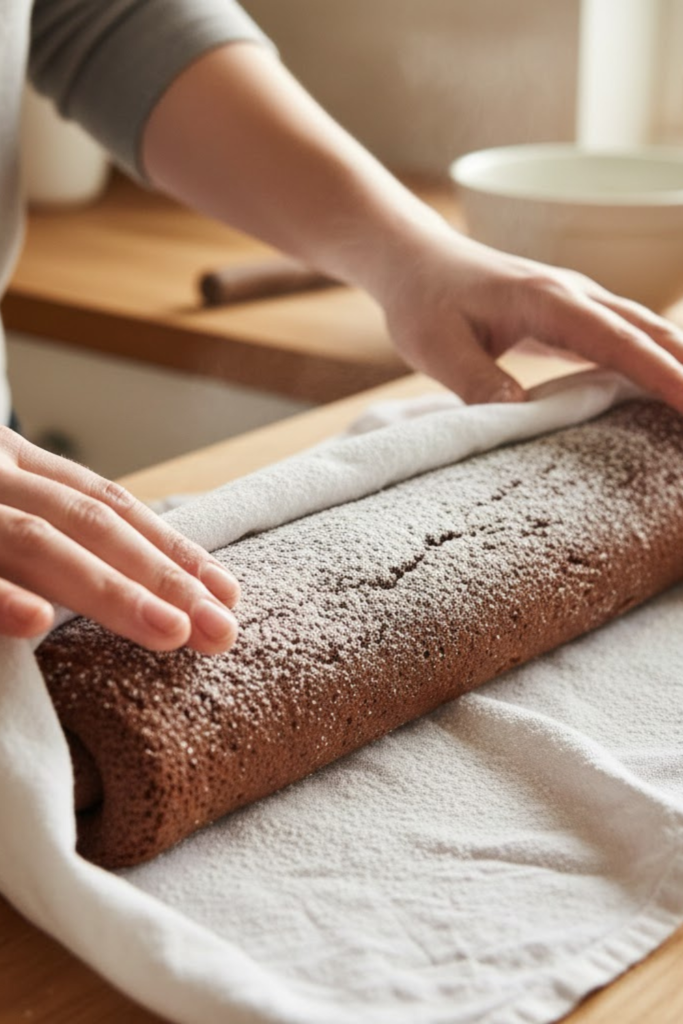
The biggest lesson I learned is that heat is your best friend. You have to roll that cake while it’s still steaming hot from the oven. If you wait even five minutes too long, the structure sets, and you’re toast. I use a clean kitchen towel—not the fuzzy ones that leave lint everywhere, yuck—and dust it heavily with powdered sugar.
Step-by-Step Rolling
- Flip the cake onto the sugar-dusted towel immediately after baking.
- Peel off the parchment paper slowly; if you rip it, you’ll tear the skin of the sponge.
- Gently roll the cake and the towel together starting from the short end.
- Let it sit on a wire rack until it is completely cold to the touch.
I used to think I could skip the towel and just use the parchment paper, but the towel absorbs the extra steam. Without it, the cake gets soggy and sticks to everything. It’s a bit of a mess, and my kitchen usually looks like a powdered sugar bomb went off, but that spiral is so worth it.
If it does crack a little, don’t sweat it. We are going to cover the whole thing in ganache later anyway, so nobody has to know about our little accidents. It’s like a baker’s little secret.
Whipping Up the Fluffy Whipped Cream Filling
I’ll be real with you, I used to think whipped cream was just… well, cream that you whipped. But after one too many times of my Chocolate Cake Roll turning into a runny, leaky mess on the serving platter, I realized I needed a bit more “oomph” in my filling. There is nothing more frustrating than watching your beautiful spiral deflate because the cream couldn’t hold its own weight. Now, I’m a total convert to adding a little stabilizer to keep things perky.
Keeping It Steady
To avoid that tragic “wilting cream” situation, I usually fold in a bit of mascarpone or a tiny bit of gelatin. It makes the filling feel way more professional and robust (wait, I shouldn’t say robust—it makes it hold up better). I once tried to over-whip the cream to make it stiffer, and I ended up with sweet butter. It was gross. If you see it getting grainy, stop immediately! It’s better to have it a little soft than to have sweet, chunky grease inside your cake.
Flavoring Your Cloud
- Vanilla Bean: I love using actual vanilla bean paste because those little black specks look so fancy against the white cream.
- Peppermint: If it’s around the holidays, a drop of peppermint extract makes this taste like a giant thin mint cookie.
- Mocha Swirl: Sometimes I fold in a tablespoon of cooled espresso if I’m feeling like I need an extra caffeine kick.
The Spreading Technique
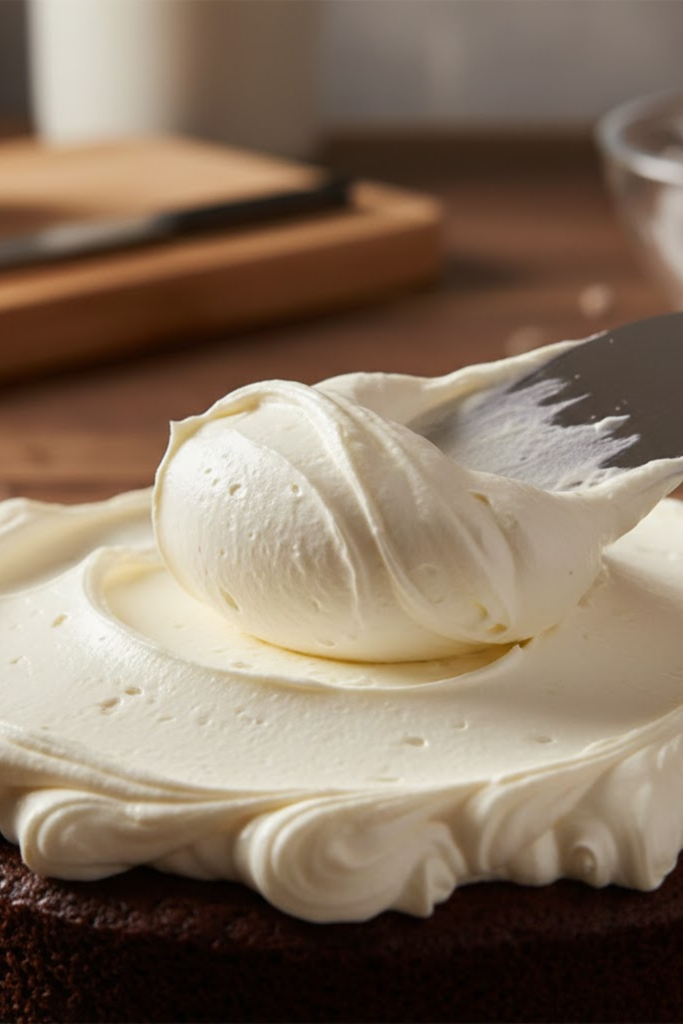
When you go to fill the cake, make sure the sponge is totally cold. If it’s even a little bit warm, the cream will melt faster than an ice cream cone in July. Use an offset spatula to spread it thinly and leave about an inch of space at the edges. If you put too much filling, it’s just gonna squirt out the sides when you roll it back up, and that is a sticky situation nobody wants to deal with.
I’ve made the mistake of being too greedy with the filling before, and let’s just say it looked more like a “chocolate explosion” than a “chocolate roll”. Just keep it even, keep it cool, and you’ll be golden.
Finishing Touches: Ganache Glaze and Decorations
I used to be so impatient that I’d try to pour the glaze on while the cake was still a bit warm, and it would just slide right off into a puddle on the counter. What a waste of good chocolate! Now, I wait until that roll is completely set. Honestly, the ganache is the best part because it hides all those little cracks and imperfections that happened during the rolling phase.
The Two-Ingredient Wonder
Making a shiny glaze is actually pretty simple if you don’t overthink it. I just heat up some heavy cream until it’s almost boiling and pour it over a bowl of semi-sweet chocolate chips.
- Let it sit for a few minutes before stirring so the chocolate melts evenly.
- Stir slowly from the center to get that mirror-like shine.
- If you stir too fast, you’ll get air bubbles, and nobody wants a bumpy cake.
Making It Pretty
I love adding fresh raspberries on top because the tartness cuts through all that rich chocolate. Sometimes I’ll even do some big chocolate shavings using a vegetable peeler on a chocolate bar. One time I tried to use sprinkles, but they just looked kind of cheap, so I stick to the berries or a simple dusting of sugar now.
The Perfect Slice
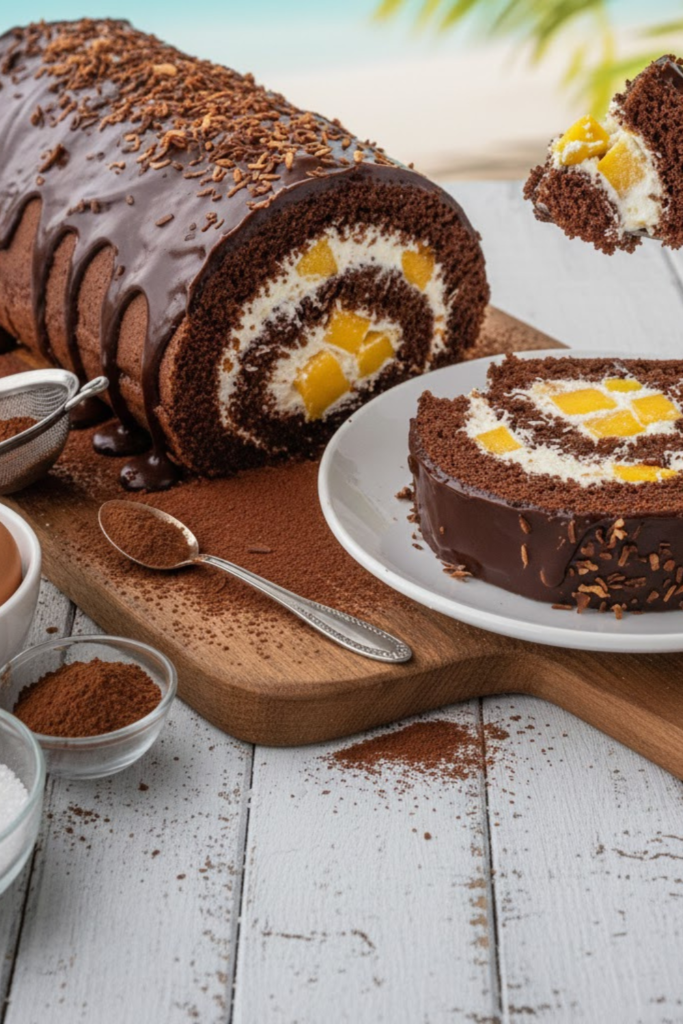
To get those sharp spirals you see in magazines, use a hot knife. I dip my knife in hot water and wipe it dry between every single slice. It’s a bit of a pain and takes forever, but it’s the only way to keep the white cream from getting smeared with the dark chocolate glaze. It makes such a huge difference when you go to serve it to your friends!
Don’t worry if the first slice looks a bit wonky—that’s the “baker’s snack” that you get to eat while nobody is looking. Just keep the rest in the fridge until you’re ready to eat so the ganache stays nice and firm.
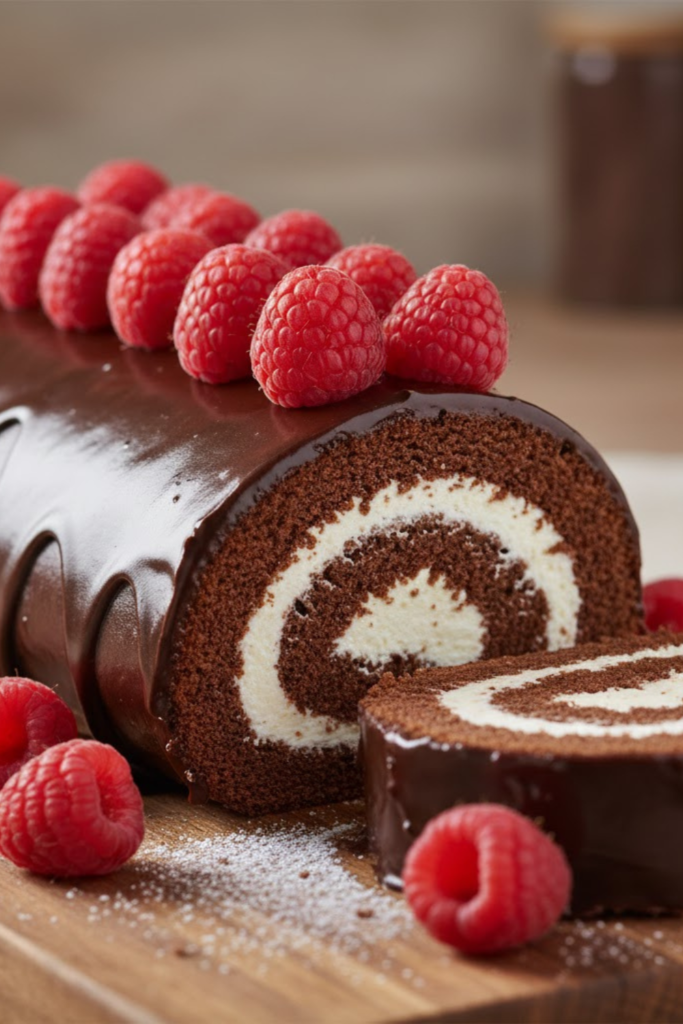
Baking the perfect Chocolate Cake Roll is all about patience and a little bit of “baker’s intuition”. Don’t let the roll-up scare you—even a cracked cake tastes delicious under a layer of ganache! It’s funny because I used to think every little tear was a disaster, but now I realize those tiny flaws just mean it’s homemade with love. Whether you’re serving this as a stunning Yule log for the holidays or just a sweet weekend project, that light chocolate sponge and creamy filling are a match made in heaven.
I’ve made more than my fair share of “chocolate scrambles” before I finally got that perfect, tight spiral, so don’t be hard on yourself if your first one isn’t a masterpiece. The more you bake, the more you’ll get a feel for when the cake is just at that right temperature to roll without a hitch. There is truly nothing more satisfying than slicing into that log and seeing those clean, beautiful swirls of cream and cocoa staring back at you.
I can’t wait to see your beautiful creations in your own kitchens, and I’d love to hear how yours turned out! If you enjoyed this recipe and found these tips helpful, please save it to your favorite board and share it on Pinterest so other bakers can master the roll too!