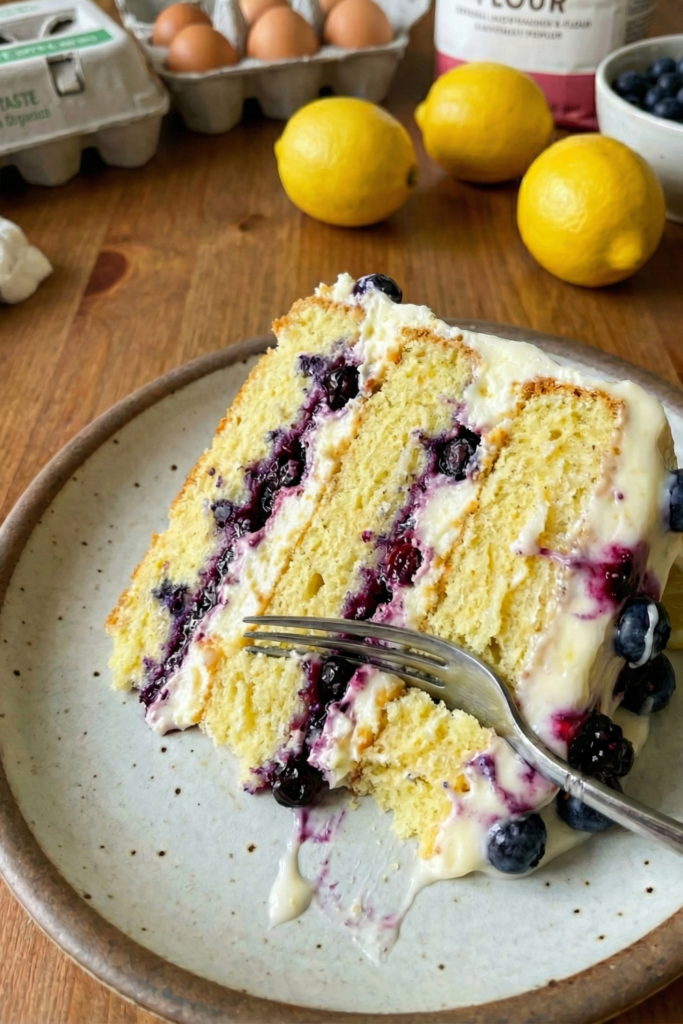
I read somewhere that the scent of lemon is a proven mood booster, and I honestly believe it . But getting that sunshine into a cake wasn’t always easy for me. My first attempt at a lemon blueberry layer cake was a total disaster. I threw fresh berries right into the batter without thinking, and they all sank to the bottom. I ended up with a soggy purple mess at the base and a bone-dry top . It was pretty embarrassing cutting into that at a potluck!
Why This Recipe Works
After that failure, I learned the simple kitchen science needed to keep fruit suspended and the crumb tender. The secret lies in coating the berries and using buttermilk for that tangy moisture . This recipe delivers three tall, golden layers with juicy pops of blueberry in every bite, all smothered in smooth cream cheese frosting. It’s a foolproof method to make sure you don’t repeat my soggy-bottom mistakes and get a perfect slice every time .
Essential Ingredients for a Moist Lemon Blueberry Cake
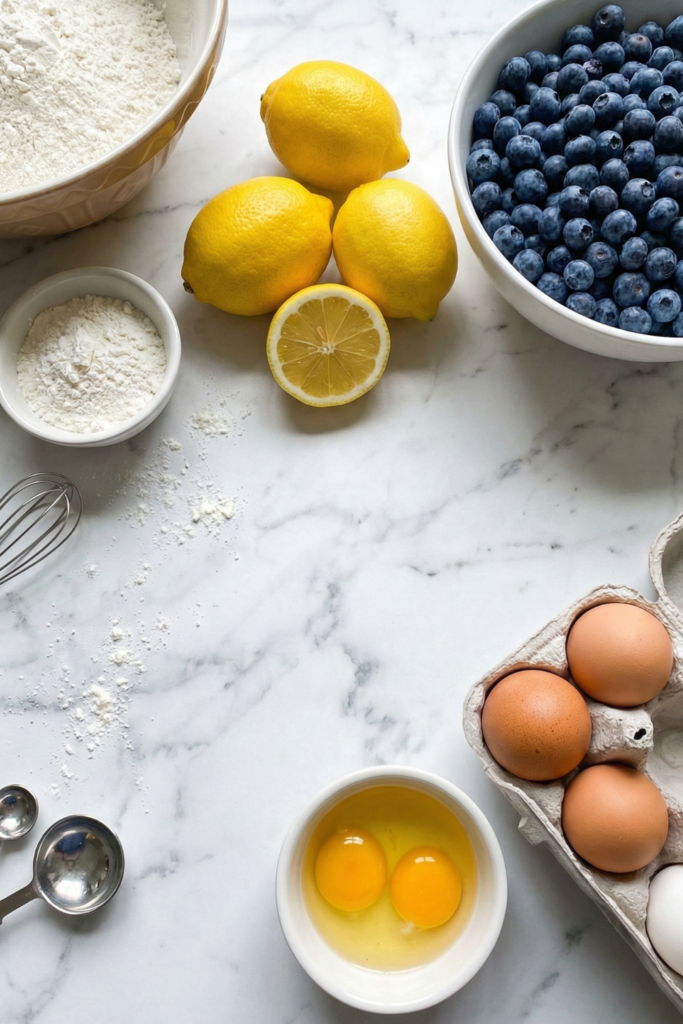
I used to think that flour was just flour and sugar was just sugar. Man, was I wrong. When I first started baking, I grabbed whatever was in the pantry to make a cake. I once used bread flour because I ran out of the regular stuff. The result tasted like a lemon-flavored bagel . It was chewy in all the wrong ways.
To get that perfect moist lemon blueberry cake, you have to be a little picky with your grocery list. It’s not about buying the most expensive stuff, but buying the right stuff. Here is what I’ve learned after ruining a few batches.
Why Cake Flour Wins
You might be tempted to just use the standard all-purpose flour sitting in your cupboard. I get it, it’s easier. But cake flour vs all purpose is a huge difference in texture. Cake flour has less protein, which means less gluten forms when you mix it .
If you use regular flour, your cake might come out heavy or tough. I found this out the hard way when my layers came out dense as a brick. If you absolutely can’t find cake flour, you can hack it by removing two tablespoons of flour and adding cornstarch. But honestly? Just buy the box of cake flour. It makes the crumb super tender.
The Berry Situation: Fresh or Frozen?
I love fresh blueberry baking because the berries tend to hold their shape better. There is a satisfying “pop” when you bite into a fresh berry that has been baked. However, fresh berries can cost a fortune when they aren’t in season.
If you use frozen, do not thaw them! I repeated this mistake so many times. If you thaw them, they release too much juice and you get purple streaks everywhere . It looks like a tie-dye project gone wrong. Use them rock hard from the freezer. Also, if you can find wild blueberries, grab them. They are smaller, so they don’t sink as easily as the big cultivated ones.
The Secret to Real Lemon Flavor
Please, put down the plastic lemon juice bottle. It has a weird, metallic aftertaste that ruins the vibe. You need real, fresh lemons for this.
A little trick I learned is to rub the lemon zest into the sugar with your fingers before you add the butter. It releases the essential oils into the sugar crystals. It makes the whole kitchen smell amazing before the oven is even on. It adds a depth of flavor that extract just can’t match.
The Moisture Maker
We are using buttermilk for this recipe. If you don’t have it, don’t just use water. The acid in the buttermilk breaks down the gluten and makes the cake soft .
I’ve tried using regular milk with vinegar as a substitute. It works in a pinch, but real, full-fat buttermilk creates that buttermilk cake recipe texture that melts in your mouth. Sour cream is another good option if you want it extra rich. Just don’t skimp on the fat; fat equals moisture in the baking world.
Step-by-Step Instructions to Bake the Perfect Layers
I used to rush through the mixing process like I was on a timed cooking show. I’d throw cold eggs in with soft butter and wonder why my batter looked like curdled soup. It was gross. Baking isn’t a race; it’s chemistry, and I learned that the hard way when my cakes turned out dense and rubbery .
If you want those bakery-style layers, you have to slow down. Here is exactly how I get that tender crumb without losing my mind.
The Mixing Method That Changed My Life
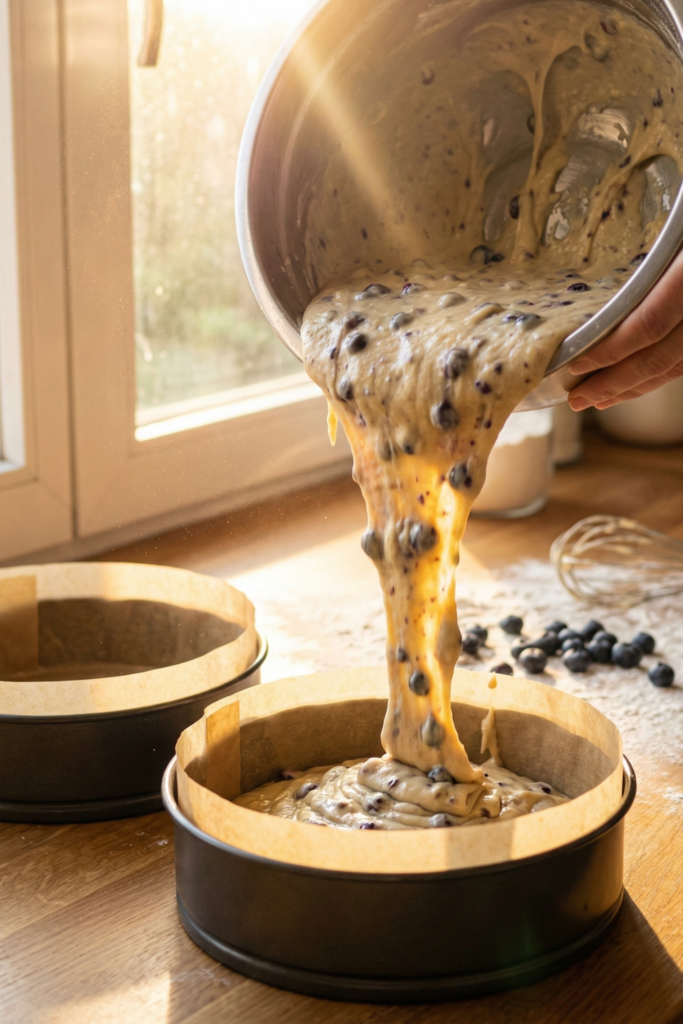
For this lemon blueberry layer cake, how you mix the batter matters just as much as the ingredients. I used to do the traditional method where you cream sugar and butter first. It works, but sometimes it creates large air pockets.
Now, I’m a huge fan of the reverse creaming method for sturdy layers. This is where you mix the dry ingredients and then beat in the butter before adding the liquids . It coats the flour particles in fat, which limits gluten development.
The result? A velvety texture that is sturdy enough to stack but soft enough to melt in your mouth. Just make sure your butter is actually room temperature. If it’s too cold, you’ll get lumps. If it’s melted, your cake will be greasy.
Stopping the Blueberry Sink
There is nothing sadder than cutting into a cake and seeing all the fruit at the bottom. I call it the “sad fruit bottom.” To prevent this, you need to create friction.
Toss your blueberries (fresh or frozen) in about a tablespoon of your flour mixture before folding them in . This coat your blueberries trick gives the berries a rough surface so they grip the batter while baking. It works every time. Also, be gentle when you fold them in! If you smash the berries, you’ll get grey streaks in your beautiful yellow cake.
Oven Temperatures and Timing
My oven lies to me. I set it to 350°F, but it’s actually 375°F inside. This used to burn the edges of my cakes while the middle was still raw batter. I finally bought a cheap oven thermometer, and it saved my baking life.
You want a nice golden-brown finish on these layers. Check them about 5 minutes before the recipe says they should be done. Stick a toothpick in the center. If it comes out with a few moist crumbs, pull them out. If the toothpick is totally clean, you might have actually overbaked it slightly.
The Patience Test: Cooling
This is the hardest part for me. I am impatient. Once, I tried to frost a cake that was still slightly warm because I was running late. The frosting literally slid off the side of the cake and pooled on the counter . It was a disaster.
You have to let the layers cool in the pans for about 10 minutes, then flip them onto a wire rack to cool completely. If you touch the cake and it feels even a tiny bit warm, walk away. Go fold laundry or something. Frosting warm cake is a rookie mistake that I’ve made too many times .
Whipping Up the Lemon Cream Cheese Frosting
Honest truth time: I have cried over frosting. There is nothing more heartbreaking than baking perfect layers, only to ruin them with a runny, lumpy mess of icing. I used to think lemon cream cheese frosting was the easiest thing in the world. You just dump it all in a bowl and mix, right?
Wrong. My first attempt looked like sweet soup. It slid right off the cake and pooled on the counter. It was humiliating . But after ruining about five pounds of cream cheese over the years, I finally figured out the texture.
Temperature is Everything
If there is one thing you take away from this, let it be this: temperature is boss. You can’t cheat it. I used to try microwave hacks to soften my butter because I forgot to take it out of the fridge. Don’t do it.
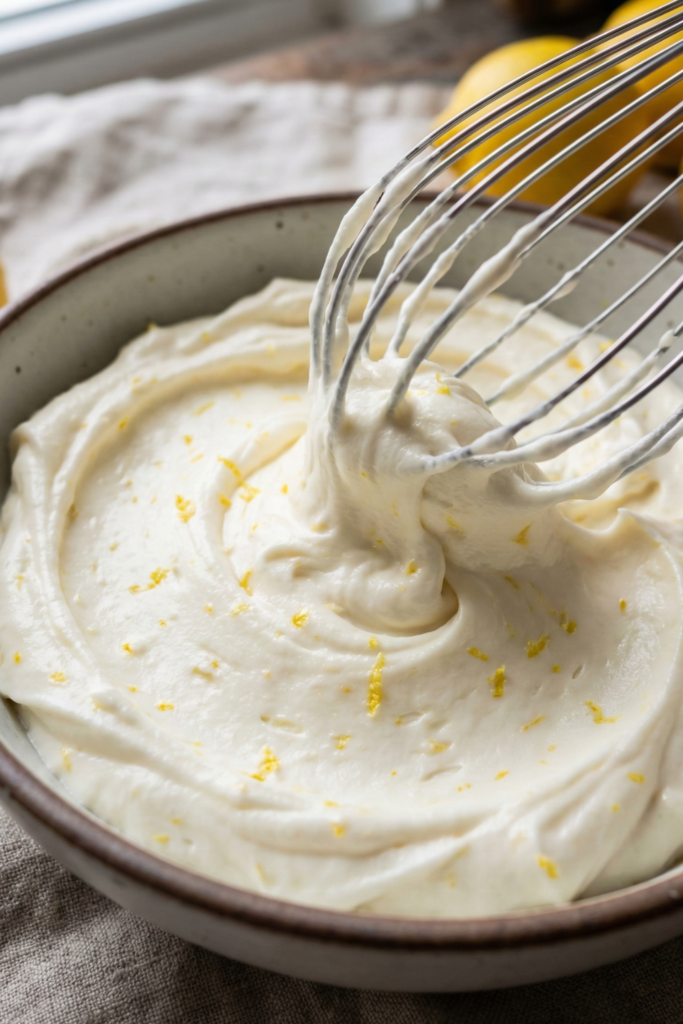
For a smooth cream cheese icing recipe, your unsalted butter and cream cheese need to be the same temperature . If the butter is too cold, you get tiny, hard lumps that refuse to blend. If the cream cheese is too warm, the whole thing turns into a puddle. I usually leave them on the counter for about an hour before I start. If you can press your finger into the butter and it leaves an indent without sliding through, it’s ready.
The Sugar and Lemon Balance
Here is where I messed up a lot. I used to just dump powdered sugar icing straight from the bag into the mixer. Big mistake. You end up with gritty frosting.
You have to sift the sugar. I know, it’s annoying and makes a cloud of dust in the kitchen, but it makes the frosting silky. Also, be careful with the lemon juice. The acid in the juice can break down the structure of the cheese. I add the lemon juice one teaspoon at a time while the stand mixer recipes suggest running on low speed. Taste as you go. You want that tang, but you don’t want to compromise the structure.
Troubleshooting a Split Mess
Sometimes, even when you do everything right, the frosting splits. It looks curdled and gross. This usually happens if you overbeat it or if the kitchen is too hot. I used to just throw it away in a rage, but you can save it.
If it looks curdled, pop the bowl in the fridge for 15 minutes. Then, whip it again on low speed. It usually comes back together. If it’s too runny to hold a shape for piping frosting techniques, try adding a tablespoon of cornstarch. It thickens it up without making it too sweet. Trust me, nobody will know.
Assembling and Decorating Your Layer Cake
I have a confession to make. My first few layer cakes looked less like a bakery treat and more like the Leaning Tower of Pisa. I tried to stack the layers without leveling the tops, and the whole thing slid sideways in the fridge . It was a hot mess.
I used to think that layer cake assembly was just stacking and slapping on frosting. But if you want a professional look, you have to follow a few rules. Don’t worry, you don’t need a degree in architecture, just a little patience.
Leveling the Playing Field
When cakes bake, they dome in the middle. If you try to stack domed cakes, they will wobble. I learned this the hard way when my top layer literally slid off onto the floor .
You need to cut that dome off. Use a long serrated knife and a gentle sawing motion. I usually get down at eye level with the counter to make sure I’m cutting straight. You want a perfectly flat surface. Plus, the best part is that you get to eat the scraps as a “chef’s tax” while you work .
The Crumb Coat Is Not Optional
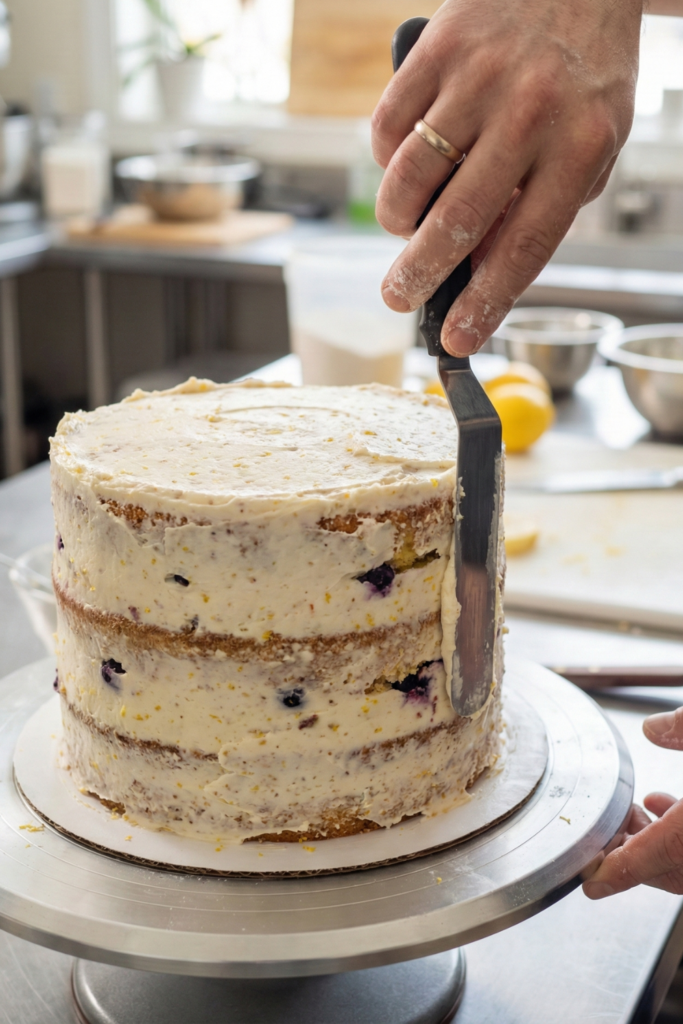
For the longest time, I thought the “crumb coat” was just an extra step for fancy people. I skipped it to save time. The result? My beautiful white frosting was full of yellow cake crumbs and blue smears .
The crumb coat technique is simply a thin layer of frosting that traps all the loose crumbs. Apply it, then put the cake in the fridge for 20 minutes until it sets hard. This locks everything in. Once it’s chilled, you can apply your final layer of frosting, and it will glide on smooth as silk without pulling up any cake .
Keeping Decoration Simple
I am not a professional cake decorator. My piping skills are shaky at best. But I’ve found that simple garnishes often look the most elegant.
For this cake, I love using thin lemon slices and a handful of fresh berries on top. If you want to get fancy with cake decorating tips, try using edible flowers garnish. A few pansies or nasturtiums make the cake look like it came from a garden party. Just make sure they are actually edible and haven’t been sprayed with pesticides! A rustic swirl with the back of a spoon is often better than trying to be perfect and failing .
Expert Tips for Storage and Freezing
I used to think that the best way to store cake was just to eat it all in one sitting. While that is a valid strategy, sometimes my stomach disagrees. I’ve also learned the hard way that you can’t just throw a slice in the fridge uncovered and expect it to taste good later. I once ate a piece of leftover cake that tasted exactly like the onions sitting on the shelf next to it . It was nasty.
Proper storage is the difference between a sad, dry crumb and a slice that tastes just as fresh on day three. Here is how I keep my lemon blueberry layer cake tasting amazing.
Room Temp vs. Fridge
This is the big debate. Usually, I say leave cakes on the counter because the fridge dries them out. But—and this is a big but—this cake has cream cheese frosting.
You cannot leave cream cheese out at room temperature for days. It will spoil. I learned this when I left a cake out during a summer heatwave and came back to a sour, melted disaster . For cake storage tips, you can leave it out for a few hours during the party, but then it needs to go into the refrigerator. The sugar acts as a preservative, but don’t push your luck.
Freezing Cake Layers for Later
If you want to be a superhero of make ahead desserts, freeze the layers before you frost them. I do this all the time to break up the work.
Wrap each cooled layer tightly in plastic wrap. I mean tightly—go around it twice. Then, wrap it again in aluminum foil. This double-layer armor prevents freezer burn. You can keep them in there for up to 3 months. When you are ready to use them, thaw them in the fridge overnight. Honestly, chilling the layers actually makes them easier to stack and frost later .
Saving the Leftovers
If you have slices left over (which is rare in my house), don’t just stick the plate in the fridge. The air will suck the moisture right out of the crumb.
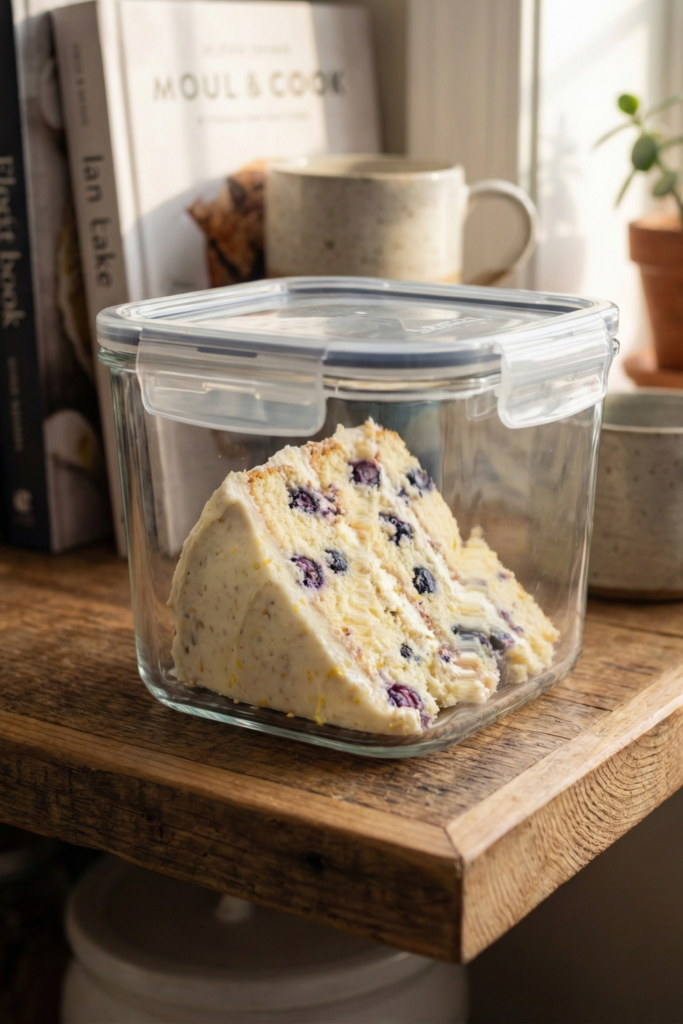
I use airtight glass containers for individual slices. If you have a cut cake still on the stand, press a piece of plastic wrap directly against the exposed cake part to seal it. This keeps the air out and the moisture in. It should stay good for about 4 days, but let’s be real, it won’t last that long .
We have covered a lot of ground today, from rubbing lemon zest into sugar to the art of the crumb coat. I hope you feel a little more confident about tackling this baking project. I know it can seem like a lot of steps, but once you take that first bite of zesty, moist cake, you’ll know it was worth the effort .
Baking is supposed to be messy and fun, so don’t stress if your frosting isn’t perfectly smooth or your layers are a little crooked. It’s homemade, and that is what makes it special.
If you enjoyed this guide and want to save the recipe for later, please pin this lemon blueberry layer cake to your dessert board on Pinterest! It helps other bakers find us and keeps the kitchen inspiration going. Happy baking, friends!