You know that feeling when you bite into a cupcake and the frosting just… sticks to the roof of your mouth like sweet cement? Yeah, I hate that. That is exactly why I fell in love with whipped frosting! It’s like eating a cloud.
Did you know that nearly 40% of home bakers struggle with whipped cream “weeping” or melting before they even serve dessert? It’s heartbreaking to watch your beautiful creation slide right off the cake. But don’t worry! I’ve been there, crying over a bowl of soupy cream, and I have figured out exactly how to fix it. In this guide, we are going to master the art of stable, fluffy, and delicious whipped frosting that actually holds its shape. Let’s get mixing!
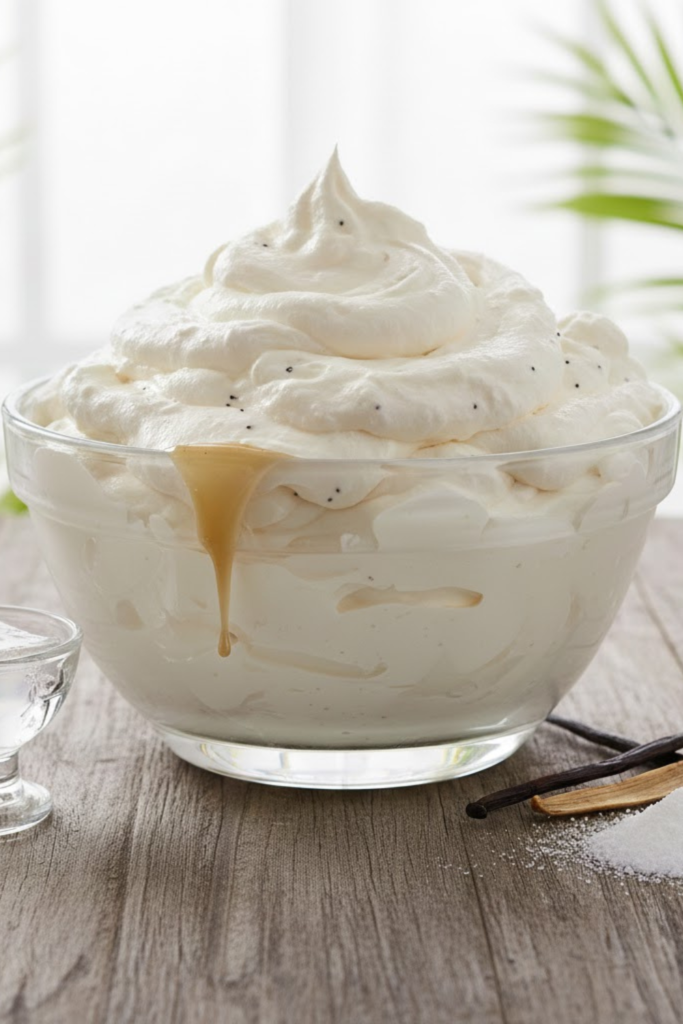
Essential Ingredients for Stabilized Whipped Cream
I remember the first time I tried to make a “simple” whipped topping for my niece’s birthday cake. I walked into the grocery store, grabbed the first carton that said “cream” on it, and went home feeling confident. Big mistake.
The frosting turned into a sad, milky puddle within twenty minutes. I was so frustrated I almost threw the bowl across the kitchen. It turns out, not all ingredients are created equal, and I learned that lesson the hard way so you don’t have to.
The Fat Content Matters
Here is the deal: you cannot skimp on the fat. If you grab a carton labeled just “whipping cream” (which is usually around 30% fat), you are setting yourself up for failure. It’s great for your coffee, but it won’t hold a stiff peak to save its life.
You need to look specifically for Heavy Whipping Cream. This stuff has about 36% to 40% milk fat. That extra fat is what traps the air bubbles and creates that sturdy structure we need for whipped frosting. If you use anything lighter, the structure collapses, and you’re left with soup. Trust me, check the label twice.
Sugar Selection: Powdered vs. Granulated
I used to think sugar was just sugar. Wrong again. I once used granulated sugar because I was out of the fluffy stuff, and the texture was gritty and awful. It felt like eating sand mixed with clouds.
Always use powdered sugar (also called confectioners’ sugar). Not only does it dissolve instantly for a smooth texture, but it also usually contains a tiny bit of cornstarch. That little bit of starch acts as a hidden stabilizer for your stabilized whipped cream. It’s a win-win.
The Secret Weapon (Stabilizers)
This is the part that changed my life. Plain whipped cream is delicious, but it is also weak. It weeps if you look at it wrong. To fix this, you need a stabilizer.
- Gelatin: This is the pro move, but honestly? It’s a pain. You have to bloom it and melt it carefully. I’ve ended up with rubbery strings of gelatin in my frosting more times than I’d like to admit.
- Instant Pudding Mix: This is my absolute favorite cheat code. Adding a tablespoon of vanilla pudding mix makes the frosting incredibly stable. It’s foolproof.
- Mascarpone Cheese: If you want to feel fancy, whip in some mascarpone. It makes the frosting rich and holds shape beautifully, though it’s a bit pricier.
Flavoring
Since this recipe basically has three ingredients, your flavor needs to be on point. Don’t use the fake imitation stuff.
I splurge on vanilla bean paste because seeing those little black specks makes me feel like a legitimate pastry chef. It adds a depth that plain extract just can’t match.
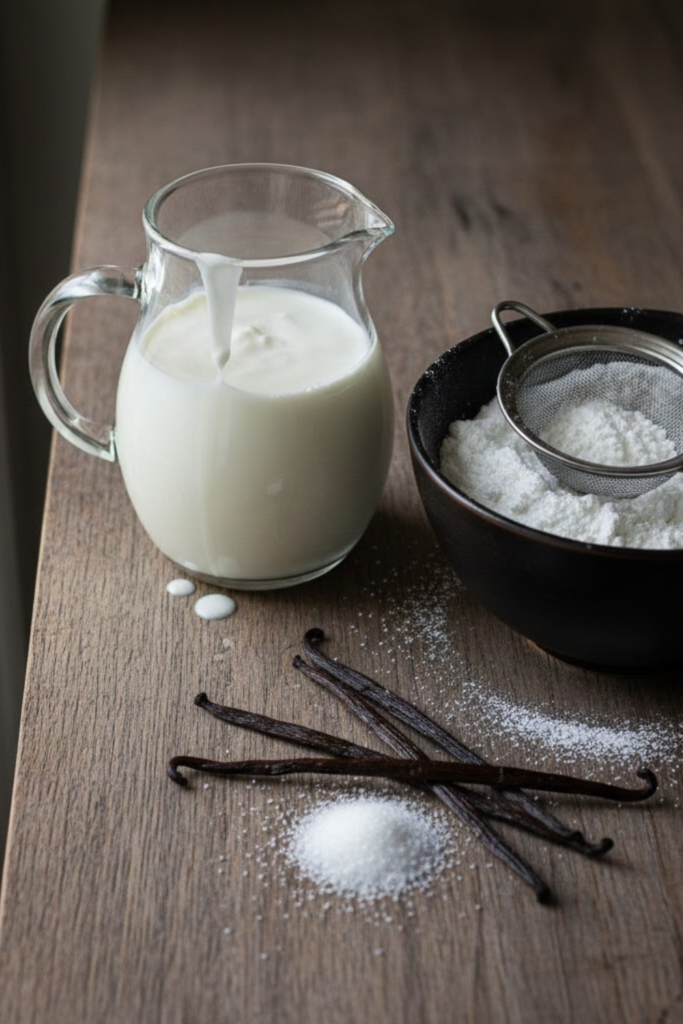
Step-by-Step: How to Make Whipped Frosting From Scratch
Honesty time: I used to think making whipped cream was just “dump it in a bowl and turn the mixer on.” I was so naive.
I remember one summer afternoon, my kitchen was blazing hot because I had the oven on for the cake. I tried to whip room-temperature cream in a warm bowl. It was a disaster. The cream just splashed around and refused to thicken, staying a sad, soupy mess. I ended up running to the store to buy a tub of the frozen stuff in shame.
I learned the hard way that temperature is everything. Since then, I’ve developed a routine that works every single time.
Prep Work: Chill Out
Before you even look at the heavy cream, you need to prep your tools. I’m serious about this.
Take your mixing bowl (stainless steel is best) and your whisk attachment, and shove them in the freezer. Leave them there for at least 15 to 20 minutes.
If your bowl is warm, the fat in the cream softens, and it won’t hold air. By chilling everything, you keep that fat solid, which creates a stable structure for your whipped frosting. It’s a small step that makes a massive difference.
The Whipping Process
Once your tools are frosty, pour your cold cream, powdered sugar, and vanilla into the bowl.
Start your stand mixer on low speed. Please, learn from my mistakes here. If you crank it to high immediately, you will paint your kitchen walls with sugary milk. I’m still finding sticky spots on my backsplash from the “Great Cream Explosion of 2018.”
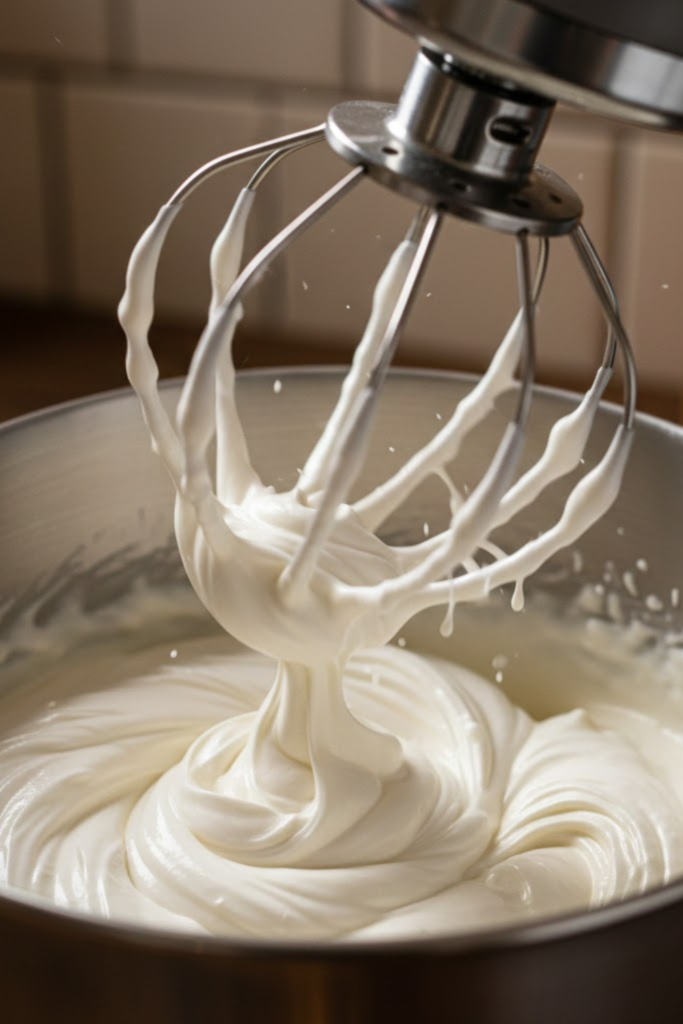
Once the mixture gets bubbly, increase the speed to medium-high. You’ll see it go through stages. First, it gets frothy. Then, you’ll see “trails” or lines from the whisk showing up in the cream.
Watching for the Peaks
This is where you have to pay attention. You are looking for stiff peaks.
Stop the mixer and pull the whisk up. If the cream stands straight up like a little mountain and doesn’t flop over, you are done. If the tip curls over like a hooked nose, those are soft peaks—you need another minute.
But be careful! If you go too far, the cream will start to look chunky and yellow. That means you’re making butter. I’ve done this right before a dinner party. Let me tell you, sweetened vanilla butter does not taste good on a strawberry shortcake.
Folding in the Good Stuff
If you are adding stabilizers like gelatin or pudding mix (which we talked about earlier), or maybe some fruit puree, do it right before you hit those stiff peaks.
Use a rubber spatula to gently fold it in by hand at the very end. If you use the electric mixer for this part, you risk knocking out all the air bubbles you just worked so hard to create.
Treat the whipped frosting like a fragile baby bird. Gentle motions only. It sounds dramatic, but being gentle keeps it light and fluffy instead of dense.
Troubleshooting Common Whipped Icing Disasters
There is nothing worse than watching your hard work literally dissolve. I made a gorgeous cake for a summer BBQ once, feeling like a total champion. By the time I carried it to the patio table, the frosting was sliding off the sides like a slow-motion avalanche.
Everyone was polite about it, but I wanted to crawl into a hole. It was humiliating. Over the years, I’ve ruined countless batches of whipped icing, but each disaster taught me a lesson. If your frosting is acting up, don’t panic yet. Most mistakes can be fixed (or at least hidden).
Help! It looks like Cottage Cheese
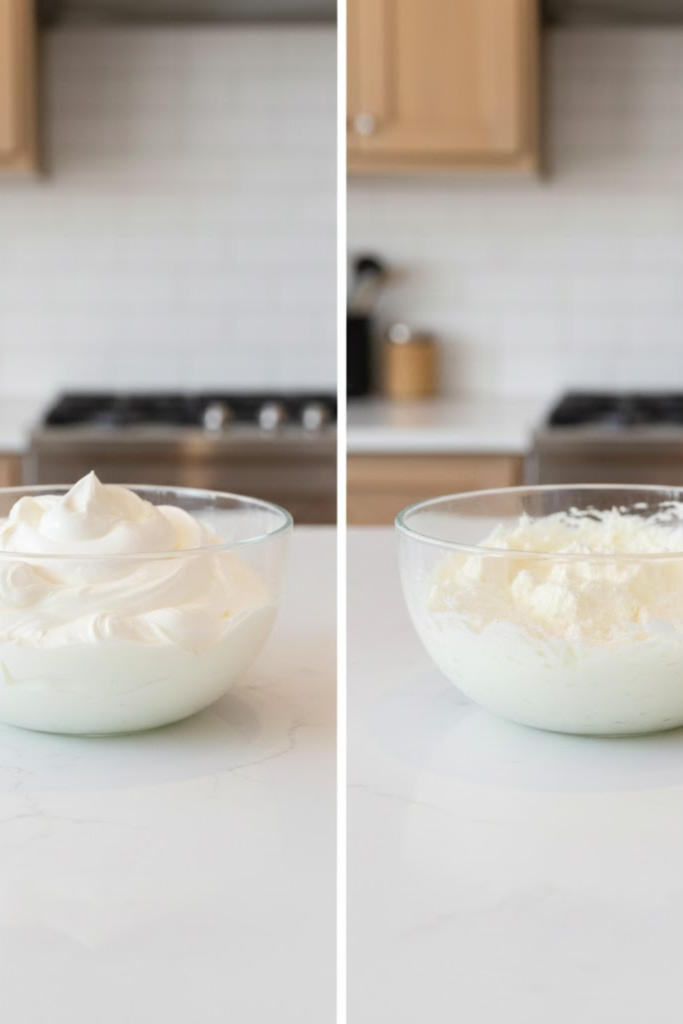
If your frosting looks chunky or grainy, you have over-whipped it. This happens to me when I get distracted by my phone while the mixer is running.
Basically, you have pushed the cream past the “stiff peak” stage and started making butter. But don’t throw it out! I used to toss it in the trash, but there is a magic fix.
Pour a tablespoon or two of cold, fresh liquid cream into the grainy mess. Then, take a hand whisk (do not use the electric mixer) and gently fold it in. The fresh cream smooths out the lumps, and you can usually save the texture. It’s a lifesaver.
Why is it Weeping?
“Weeping” is just a fancy way of saying your frosting is leaking water. This usually happens because it got too warm or wasn’t stabilized properly.
I learned the hard way that you cannot leave a cake with whipped frosting sitting on the counter like a buttercream cake. It needs the fridge. If you know the cake will be sitting out, you absolutely must use a stabilizer like gelatin or pudding mix.
If it’s already weeping on the cake, there isn’t much you can do except scrape it off and start over. I know, it hurts to hear that. Just keep it cold next time.
Coloring Gone Wrong
We all want beautiful, vibrant colors, but whipped frosting is picky.
I once tried to make a bright red frosting using those little liquid tear-drop bottles from the baking aisle. I had to use the whole bottle to get a decent red. The result? The extra liquid turned my fluffy frosting into a soup.
Here is the trick: only use gel food coloring. It is super concentrated, so you just need a tiny dab on a toothpick. It gives you the color without adding water.
Separation Anxiety
Sometimes, the frosting looks perfect in the bowl, but gets runny once I put it in the piping bag.
This happens because the heat from your hands warms up the bag. It’s super frustrating when you are trying to pipe pretty swirls.
My trick is to only fill the piping bag halfway. Keep the rest of the stabilized whipped cream in the fridge. If the bag starts feeling warm, pop it in the fridge for five minutes to firm up. It takes longer, but your decorations will actually stay put.
Delicious Flavor Variations for Your Whipped Topping
Look, I love vanilla. It’s classic, reliable, and goes with everything. But sometimes, vanilla is just… vanilla.
I used to be terrified to mess with my perfect whipped cream recipe. I thought adding anything extra would deflate it or turn it into a weird science experiment. And honestly? My first few attempts did exactly that. I once tried to pour melted chocolate directly into cold cream. It seized up instantly into hard, waxy chunks. It was gritty and gross.
But after ruining enough batches, I figured out how to get big flavor without wrecking the texture. Here is how you can mix things up.
Chocolate Dreams
Making a chocolate whipped frosting seems easy, but it can go wrong fast. Do not use melted chocolate unless you really know what you are doing (temperature control is a nightmare).
The trick is cocoa powder. But you can’t just dump it in! I did that once and ended up with bitter, dry clumps of cocoa that exploded when the mixer turned on. I looked like a chimney sweep.
You have to sift the cocoa powder with the powdered sugar first. This breaks up the lumps. Then, whip it with the heavy cream. It creates a texture almost like a light chocolate mousse. It is absolutely to die for on top of a devil’s food cake.
Fruity Twists
I love strawberry whipped cream, but fresh fruit is the enemy here. Strawberries are mostly water, and water makes your frosting weep.
I learned this when I tried to dump pureed raspberries into my bowl. The cream curdled immediately. It looked terrible.
The secret weapon is freeze-dried fruit. You can buy these little bags of dried strawberries or raspberries at most grocery stores now. Pulverize them in a food processor until they are a fine powder. Add that powder to your cream. You get a massive punch of tart berry flavor and a beautiful pink color, but no extra liquid to ruin the structure. It’s a total game changer.
Coffee Infusion
If you are making a chocolate cake, you need coffee whipped cream. It just makes the chocolate taste more… chocolatey.
Don’t pour brewed coffee in there! It’s too watery. Use instant espresso powder.
I dissolve a teaspoon of espresso powder in a tiny teaspoon of vanilla extract before adding it to the cream. It dissolves fully so you don’t get bitter coffee granules in your teeth. This is my go-to topping for brownies when I want to look fancy without actually doing much work.
Zesty Options
Lemon or orange cream is refreshing, especially in the summer. But if you just add juice, you might curdle the dairy. Acidity and cream don’t always play nice.
Instead, use the zest. I like to rub the citrus zest into the granulated sugar with my fingers before I even start. It releases the oils and smells amazing.
If you are using powdered sugar (which you should be), just toss the zest in at the start. It gives you a bright, aromatic flavor that cuts through the sweetness. Just make sure you don’t zest the white pith, or it will be bitter.

Decorating and Storage Tips for Whipped Cream Frosting
I used to look at those perfect swirls on bakery cupcakes and assume they used some kind of magic machine. My early attempts at decorating looked more like a toddler had attacked the cake with a spoon. It was embarrassing .
I remember trying to pipe frosting using a Ziploc bag with the corner cut off. It was a disaster. The hole stretched out, the whipped cream frosting came out in a blob, and my hands warmed it up until it turned into liquid. I learned that having the right tools—and knowing how to store your creation—is just as important as the recipe itself .
Piping Techniques That Actually Work
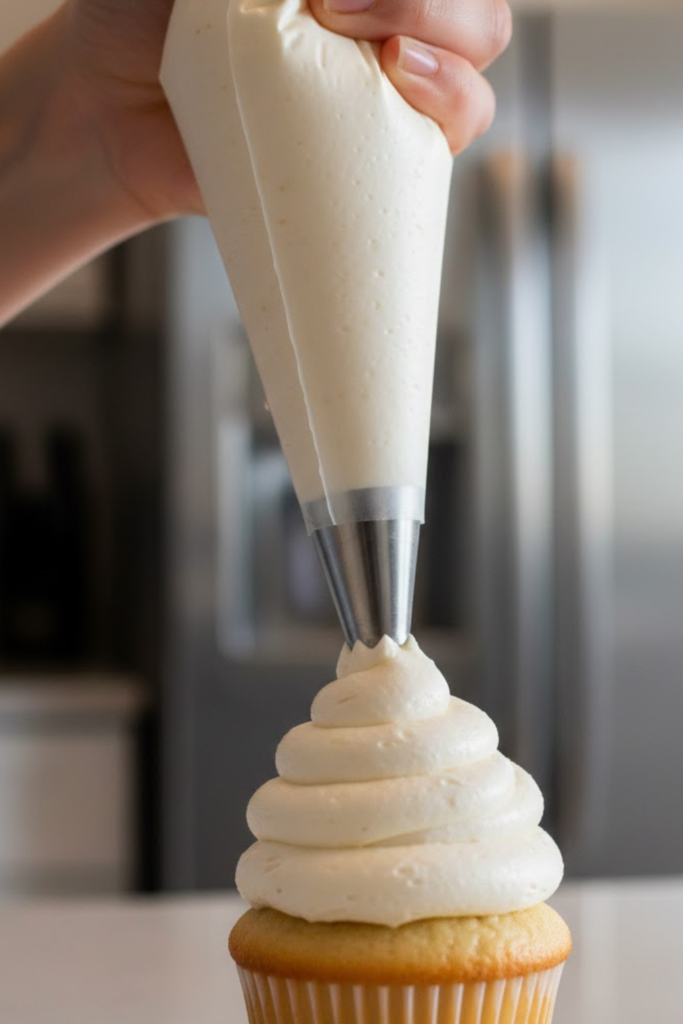
You do not need to be a pro to get that bakery look, but you do need a real piping bag and a metal tip. The Ziploc bag hack is a lie.
My go-to tip is the Wilton 1M tip or the 2D. These are the big “open star” tips that create those classic, professional swirls with zero effort. Because whipped frosting is softer than buttercream, you need a tip with a wide opening. If you use a tiny round tip, you’ll squeeze all the air out of the cream trying to force it through .
Also, work fast! The heat from your hands transfers to the bag quickly. If I’m doing a big batch of cupcakes, I sometimes wear a clean winter glove on my piping hand to insulate the bag. It looks ridiculous, but it works.
Fridge Life: The Clock is Ticking
Here is the hard truth: whipped icing does not last forever.
I once left a leftover cake in the fridge for five days. When I finally ate a slice, the cream tasted like the onions I had stored on the shelf below it. Fat absorbs odors like a sponge .
If you use a stabilizer (like pudding mix or gelatin), your frosting will hold its shape in the fridge for about 2 to 3 days. After that, it starts to lose volume and dry out. Always store your cake in an airtight container or a cake carrier. If you leave it exposed, it picks up “fridge flavor” overnight.
Freezing Cakes
Can you freeze a cake frosted with whipped cream? Yes, you absolutely can! I was shocked when I found this out.
I make icebox cakes and freeze them all the time. The trick is to “flash freeze” the cake first. Put the unwrapped cake in the freezer for about an hour until the frosting is rock hard. Then, wrap it gently in plastic wrap and foil.
When you want to eat it, thaw it in the fridge overnight. Do not thaw it on the counter, or the temperature shock will make the cream weep.
Serving Suggestions
This frosting is light, so pair it with desserts that are also light. It is the perfect match for angel food cake or a fresh fruit tart.
Just one final warning: never, ever put this frosting on a warm cake. I made this mistake when I was rushing for a party. The frosting hit the warm cake and instantly melted into a glaze. It tasted fine, but it looked like a sad puddle. Patience is your best friend here .
We have covered a lot of ground today, haven’t we? Mastering homemade whipped frosting might feel like a science experiment at first, but once you get the hang of it, you will never go back to those frozen plastic tubs again.
There is just something magical about watching liquid heavy cream transform into billowing, sweet clouds right in your own kitchen. Remember, the secret is keeping everything ice-cold and having the patience to stop right at those perfect stiff peaks. Don’t be discouraged if you accidentally make sweet butter on your first try; we have all been there! It’s all part of the process.
Now that you know how to make stabilized whipped cream that actually holds its shape, you are ready to top every cupcake, pie, and tart in sight.
Did you find these tips helpful? Please share this guide on Pinterest so you can save it for your next baking marathon!